The sample copy of this report is available for access.
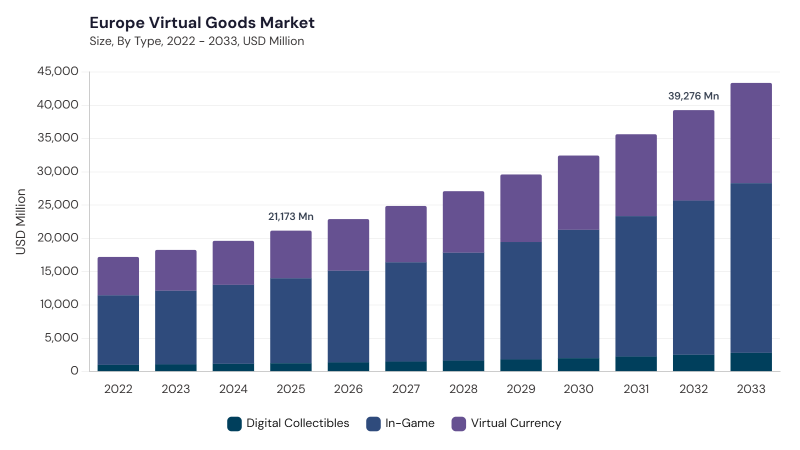
The Europe Virtual Goods Market is expected to reach USD 35.6 billion by 2031, growing at a CAGR of 9.5% during (2026 - 2033).
The Europe Virtual Goods Market originated in the early 2000s with the rise of online gaming platforms and digital content ecosystems, initially centered on in-game currency and basic cosmetic items. Early adoption was limited by basic digital distribution and payment systems, but increasing broadband penetration, mature digital payments, smartphones, blockchain, NFTs, AR, VR, and metaverse initiatives expanded virtual goods into more immersive and tradable digital assets. The market has since evolved into a blended ecosystem of entertainment, social interaction, gaming, commerce, personalization, and digital ownership.
Current market growth is shaped by blockchain-enabled ownership, NFTs, social metaverse environments, regulatory compliance, AR/VR adoption, and AI-driven personalization. Consumers are increasingly using virtual goods for identity expression, digital collectibles, avatar customization, gaming status, and interactive experiences across platforms. At the same time, European regulatory focus on data privacy, digital transactions, consumer protection, and transparent ownership is encouraging platforms to build secure, compliant, and trust-based virtual goods ecosystems.
Based on Type, the market is segmented into In-Game, Virtual Currency, and Digital Collectibles. The In-Game market dominated the Europe Virtual Goods Market by Type in 2025, and would continue to be a dominant market till 2033; thereby, achieving a market value of USD 21.1 billion by 2031, growing at a CAGR of 9.2 % during the forecast period. The Virtual Currency market is expected to witness a CAGR of 9.9% during (2026 - 2033). The Digital Collectibles market is expected to witness a CAGR of 10.7% during (2026 - 2033).
In-Game virtual goods remain central as users purchase skins, weapons, avatars, gameplay enhancements, event-based items, and customization assets that support engagement and recurring monetization. Virtual Currency maintains a considerable position as platform-specific digital money helps users purchase content, unlock features, access digital marketplaces, and complete microtransactions with lower payment friction. Digital Collectibles hold a promising role through NFTs, digital art, trading cards, exclusive virtual merchandise, entertainment-linked collectibles, and blockchain-supported ownership models that emphasize scarcity, provenance, and tradability.
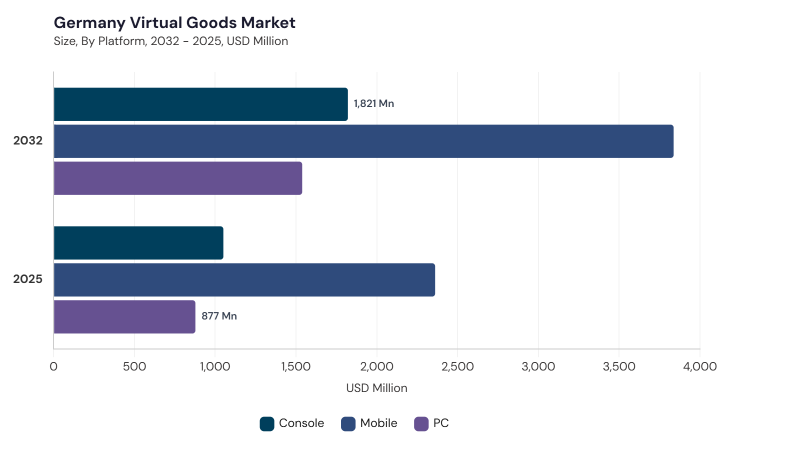
Based on Platform, the market is segmented into Mobile, Console, and PC. Mobile platforms remain highly important because casual gaming, social apps, in-app currency, subscription services, short-session entertainment, 5G connectivity, social commerce, and mobile wallets support frequent low-value virtual goods purchases.
Console platforms maintain a considerable share through PlayStation, Xbox, Nintendo, premium franchises, downloadable content, expansion packs, exclusive skins, subscription ecosystems, and persistent multiplayer environments. PC platforms hold a promising position through hardcore gaming communities, digital distribution platforms, mods, skins, virtual currencies, access passes, esports, streaming influence, blockchain applications, and user-driven marketplaces.
Free Valuable Insights: The Worldwide Virtual Goods Market is projected to reach USD 217.5 Billion billion by 2033, at a CAGR of 9.8%
Based on Country, the market is segmented into Germany, UK, France, Russia, Spain, Italy, and Rest of Europe. The Germany market dominated the Europe Virtual Goods Market by Country in 2025, and would continue to be a dominant market till 2033; thereby, achieving a market value of USD 6.6 billion by 2031, growing at a CAGR of 7.9 % during the forecast period. The UK market is expected to witness a CAGR of 8.6% during (2026 - 2033). Additionally, The France market is expected to witness a CAGR of 10.5% during (2026 - 2033).
Germany is supported by AR/VR adoption, blockchain-based ownership, NFTs, secure payment systems, and strong regulatory compliance, while the UK is shaped by NFTs, social platforms, metaverse experiences, esports, streaming culture, and consumer-protection scrutiny. France reflects blockchain authentication, AR/VR experiences, digital wallets, fintech-backed payments, and EU-aligned digital asset regulation, whereas Russia emphasizes mobile gaming, microtransactions, fintech partnerships, localized payment systems, and blockchain-based virtual assets. Spain is advancing through AR/VR-compatible goods, social media-linked digital identity, NFTs, consumer protection, and localized virtual goods experiences; Italy is driven by AI personalization, blockchain verification, secure transactions, and localized digital assets; and Rest of Europe is supported by mobile gaming, virtual currencies, NFTs, blockchain ownership, metaverse-linked assets, personalization, and stronger digital transaction transparency.

By Type
By Platform
By Country
Set to reach $35.6 Billion by 2031, growing at 9.5% CAGR during 2026-2033.
Germany leads with $6.6 billion by 2031, growing at a CAGR of 7.9% during the forecast period.
The In-Game segment will achieve $21.1 billion by 2031, growing at a CAGR of 9.2% during 2026-2033.
Expected to witness a CAGR of 10.7% during 2026-2033.
The UK market is expected to witness a CAGR of 8.6% during 2026-2033.
The Virtual Currency market is expected to witness a CAGR of 9.9% during 2026-2033.
Our team of dedicated experts can provide you with attractive expansion opportunities for your business.




 Unique Offerings
