The sample copy of this report is available for access.
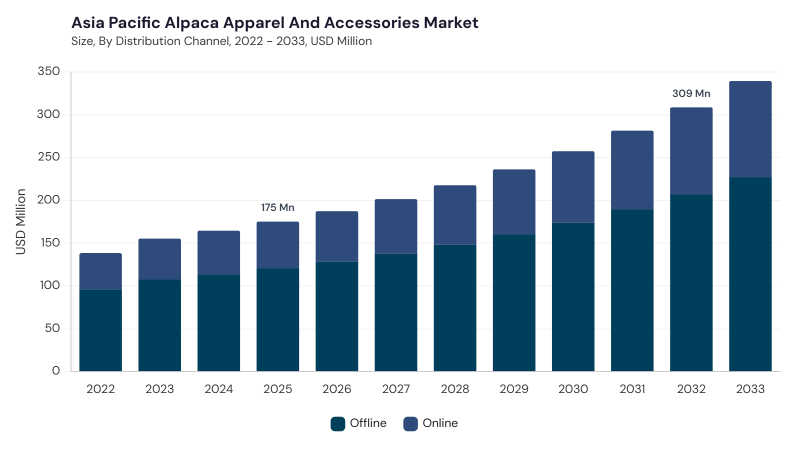
The Asia Pacific Alpaca Apparel And Accessories Market is expected to reach USD 257.4 million by 2030, growing at a CAGR of 8.9% during (2026 - 2033).
The Asia Pacific Alpaca Apparel And Accessories Market evolved from small-scale artisanal use of alpaca fiber toward a more sophisticated premium textile segment integrating advanced processing, functional fabrics, and contemporary fashion design. Early adoption focused on heritage products such as sweaters, scarves, and accessories valued for softness, thermal insulation, durability, and hypoallergenic characteristics. Improvements in spinning, blending, weaving, dyeing, and precision manufacturing gradually expanded alpaca applications beyond traditional luxury products into performance-oriented and lifestyle apparel. Rising middle-class purchasing power, premium fashion consumption, international trade linkages, and growing appreciation for sustainable natural fibers are further strengthening the region’s role within the global alpaca textile value chain.
Sustainable sourcing, premium natural fibers, advanced textile technology, regional localization, and digital commerce are shaping current market development. Consumers increasingly favor biodegradable, ethically sourced, traceable, and high-quality materials, encouraging manufacturers to integrate alpaca into luxury and eco-conscious collections. Performance blends, precision knitting, eco-friendly dyeing, digital design, automated manufacturing, traceability platforms, and supply-chain analytics are improving product functionality and responsiveness. Expansion into China, Japan, South Korea, India, and Southeast Asian markets is broadening consumer reach, while e-commerce and social media support direct engagement. However, import dependence, high raw material costs, trade complexity, limited consumer awareness, processing constraints, and uneven economies of scale continue to affect market expansion.
Based on Product, the market is segmented into Apparel and Accessories. The Apparel market dominated the Asia Pacific Alpaca Apparel And Accessories Market by Product in 2025, and would continue to be a dominant market till 2033; thereby, achieving a market value of USD 187.2 million by 2030, growing at a CAGR of 8.6 % during the forecast period. The Accessories market is expected to witness a CAGR of 9.6% during (2026 - 2033).
Apparel includes sweaters, cardigans, coats, dresses, thermal wear, scarves, and other garments utilizing alpaca fiber for lightweight warmth, softness, comfort, and premium appeal. Sustainability trends, improved finishing techniques, fiber blending, athleisure adoption, and expanding luxury consumption are widening its applications across diverse climatic conditions. Accessories include hats, gloves, scarves, socks, bags, and related products that provide comparatively accessible entry points into alpaca-based fashion while combining utility with premium styling. This category benefits from seasonal demand, gifting, personalization, innovative knitting patterns, and fashion-led product cycles, although price sensitivity and fiber consistency remain important considerations.
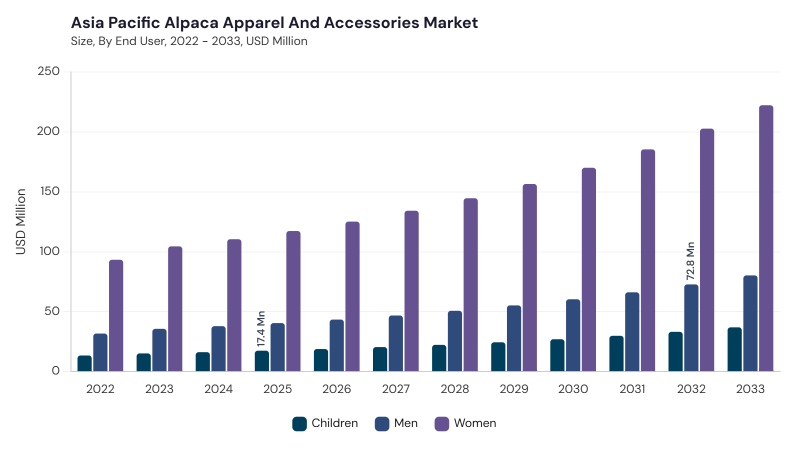
Based on End User, the market is segmented into Women, Men, and Children. The Women market dominated the Asia Pacific Alpaca Apparel And Accessories Market by End User in 2025, and would continue to be a dominant market till 2033; thereby, achieving a market value of USD 170.0 million by 2030, growing at a CAGR of 8.5 % during the forecast period. The Men market is expected to witness a CAGR of 9.2% during (2026 - 2033).
Women’s demand encompasses sweaters, coats, scarves, premium lifestyle accessories, and fashion-oriented garments influenced by sustainability, luxury positioning, and contemporary design. Men represent a growing segment focused on outerwear, knitwear, business-casual layering, hats, gloves, and other products that combine lightweight insulation, durability, functionality, and understated styling. Children constitute a specialized segment where softness, hypoallergenic properties, thermal regulation, and gentle fabric performance are important for sweaters, baby clothing, layering garments, and accessories. Across all groups, product development increasingly emphasizes sustainable sourcing, improved fiber processing, comfort, durability, and regional fashion adaptation.
Based on Distribution Channel, the market is segmented into Offline and Online. Offline distribution includes luxury retail outlets, specialty boutiques, artisanal stores, and department stores where consumers can physically assess alpaca fiber’s softness, quality, craftsmanship, and thermal properties before purchase. These channels remain important for premium positioning, personal service, brand storytelling, and authenticity assurance, particularly across established luxury markets such as Japan, South Korea, and China.
Online distribution is expanding rapidly through e-commerce platforms, brand websites, and digital marketplaces, supported by smartphone adoption, digital payments, improved logistics, social media marketing, virtual fitting tools, and influencer engagement. Online channels also extend alpaca product access to younger consumers and geographically dispersed markets while supporting broader assortment and direct-to-consumer strategies.
Free Valuable Insights: Alpaca Apparel And Accessories Market is Predicted to reach USD 1358.8 Million billion by 2033, at a CAGR of 8.2%
Based on Country, the market is segmented into China, Japan, India, South Korea, Singapore, Malaysia, and Rest of Asia Pacific. The China market dominated the Asia Pacific Alpaca Apparel And Accessories Market by Country in 2025, and would continue to be a dominant market till 2033; thereby, achieving a market value of USD 60.3 million by 2030, growing at a CAGR of 6.6 % during the forecast period. The Japan market is expected to witness a CAGR of 8.2% during (2026 - 2033). Additionally, The India market is expected to witness a CAGR of 9.6% during (2026 - 2033).
Across Asia Pacific, market development reflects varying combinations of premiumization, sustainability, textile innovation, localization, and digital retail. China emphasizes imported premium alpaca fiber, advanced spinning and weaving, sustainable production, luxury positioning, and expanding e-commerce, while Japan combines artisanal craftsmanship, ethical sourcing, hybrid textiles, customization, and advanced digital design. India focuses on sustainable fashion, improved dehairing and blending, indigenous textile integration, international collaboration, and digital retail, whereas South Korea emphasizes premium fusion yarns, AI-enabled design, virtual fitting, luxury consumption, and advanced textile processing. Singapore is advancing sustainable luxury, traceability, personalization, e-commerce, and eco-friendly fiber treatments, while Malaysia emphasizes breathable alpaca blends, climate-adapted products, traceable sourcing, digital marketing, and regional export potential. Rest of Asia Pacific continues to develop sustainable alpaca products, advanced fiber blends, localized designs, digital commerce, and diversified fashion and performance applications.

By Product
By End User
By Distribution Channel
By Country
Set to reach $257.4 Million by 2030, growing at 8.9% CAGR during 2026-2033.
China leads with $60.3 million by 2030, growing at a CAGR of 6.6% during 2026-2033.
The Apparel segment will reach $187.2 million by 2030, growing at a CAGR of 8.6% during 2026-2033.
The Women segment will achieve $170.0 million by 2030, growing at a CAGR of 8.5% during 2026-2033.
The India market is expected to witness a CAGR of 9.6% during 2026-2033.
The Accessories segment is expected to witness a CAGR of 9.6% during 2026-2033.
Our team of dedicated experts can provide you with attractive expansion opportunities for your business.




 Unique Offerings
