The sample copy of this report is available for access.
“Global Alpaca Apparel And Accessories Market to reach a market value of USD 1358.89 Million by 2033 growing at a CAGR of %”
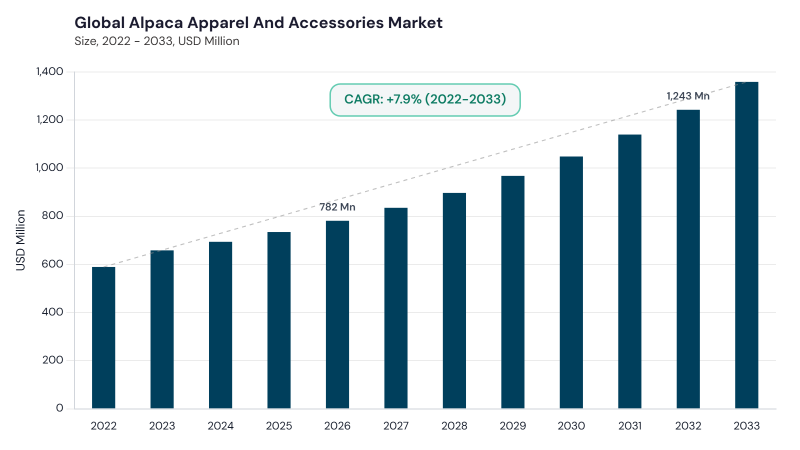
The Global Alpaca Apparel And Accessories Market is expected to reach USD 1358.9 million by 2033, growing at a CAGR of 8.2% during (2026 - 2033).
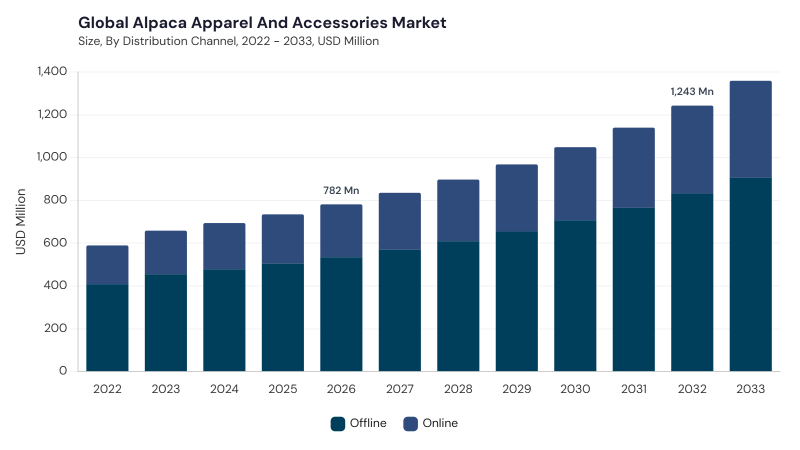
Growing consumer demand for premium natural fibers, sustainable fashion, luxury clothing, and high-quality cold-weather products is driving the Alpaca Apparel and Accessories Market across sweaters, coats, scarves, shawls, hats, gloves, socks, and other fashion accessories. Adoption is further strengthened by rising preference for softness, warmth, durability, hypoallergenic comfort, ethical sourcing, artisanal craftsmanship, traceable supply chains, contemporary designs, blended fabrics, and alpaca fiber as an alternative to conventional wool and synthetic materials.
Growth in the Alpaca Apparel And Accessories Market is driven by rising preference for natural, premium, durable, and environmentally responsible textiles. Alpaca fiber offers softness, warmth, lightweight insulation, durability, hypoallergenic characteristics, and luxury appeal, making it suitable for both high-end fashion and functional cold-weather apparel. Brands are using alpaca across sweaters, coats, scarves, shawls, socks, gloves, hats, outdoor wear, premium lifestyle goods, and gift-oriented accessories. Rising digital retail adoption, growing demand for ethical fashion, and stronger storytelling around Andean heritage are also helping smaller producers and specialist brands reach international consumers.
The competitive environment is heritage-led, premium-natural-fiber-oriented, and highly fragmented. Vertically integrated Peruvian textile groups, luxury fashion houses, specialist alpaca brands, artisan-led manufacturers, cooperatives, private-label suppliers, and regional producers compete across apparel, accessories, lifestyle products, and luxury collections. Incalpaca, Michell & Cía., and Peruvian Connection maintain strong visibility through Peruvian fiber expertise, branded apparel, artisan-based designs, and international market presence. PAKA Apparel, Alpaca Collections, Loro Piana, Spirit of the Andes, Shupaca, Alicia Adams Alpaca, and Alpaca Direct add competitive depth through outdoor apparel, luxury fashion, alpaca accessories, direct-to-consumer channels, farm-based identity, and broad alpaca product portfolios.

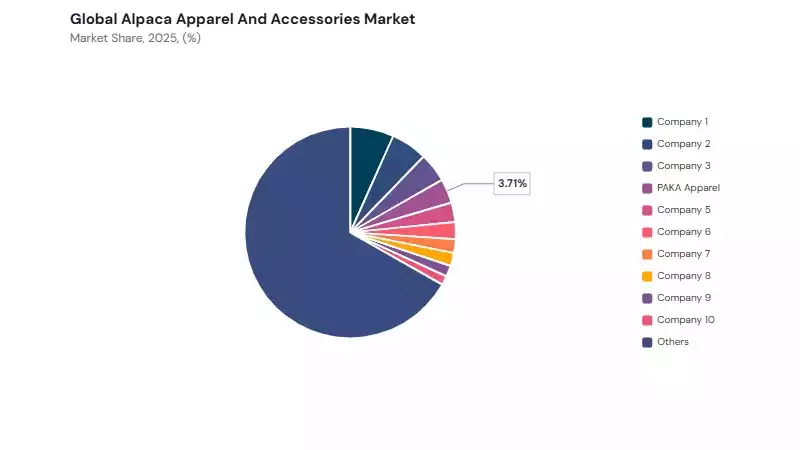
The global Alpaca Apparel And Accessories Market reflects a highly fragmented and heritage-driven competitive landscape, where specialist alpaca brands, vertically integrated Peruvian producers, luxury fashion houses, artisan cooperatives, independent designers, regional manufacturers, and online sellers collectively shape market activity. Incalpaca/KUNA & Alpaca 111 leads the identified competitive set through Peruvian heritage, fiber access, textile capabilities, branded fashion, and international product positioning. Michell & Cía./Sol Alpaca strengthens the market through fiber processing, yarn production, premium finished products, and Sol Alpaca’s consumer-facing platform. Peruvian Connection maintains differentiation through artisan-inspired designs, alpaca knitwear, direct-to-consumer distribution, and strong recognition in North American and European markets.
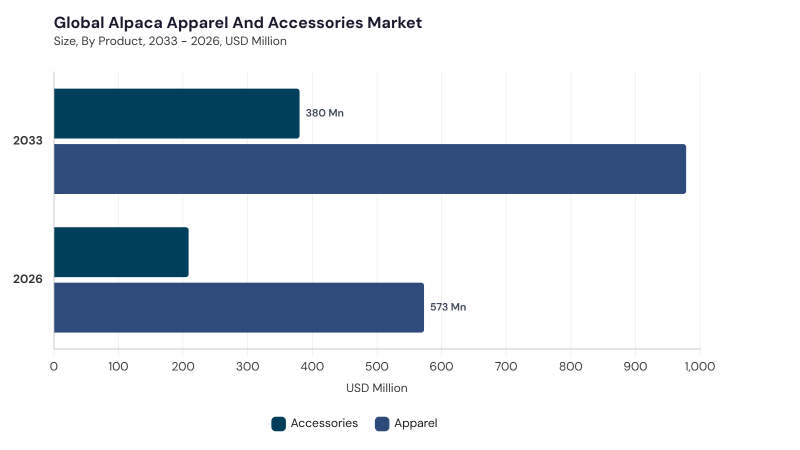
Based on Product, the market is segmented into Apparel and Accessories. The Apparel market dominated the Global Alpaca Apparel And Accessories Market by Product in 2025, and would continue to be a dominant market till 2033; thereby, achieving a market value of USD 978.6 million by 2033, growing at a CAGR of 7.9 % during the forecast period. The Accessories market is expected to witness a CAGR of 9% during (2026 - 2033).
Apparel remains a major product category as alpaca fiber is widely used in sweaters, coats, cardigans, scarves, shawls, outerwear, knitwear, ponchos, wraps, and other premium garments. Demand is supported by alpaca’s warmth, softness, lightweight insulation, hypoallergenic nature, durability, and luxury perception. Apparel also benefits from fashion-led seasonal collections, premium natural-fiber positioning, sustainable wardrobe preferences, and growing interest in cold-weather products with ethical and artisanal value. Accessories represent an important complementary category, covering hats, gloves, socks, shawls, scarves, bags, slippers, and gift-oriented lifestyle products. This segment broadens consumer access to alpaca fiber and supports brands through lower-entry premium products, seasonal gifting, tourism-linked purchases, and artisanal storytelling.
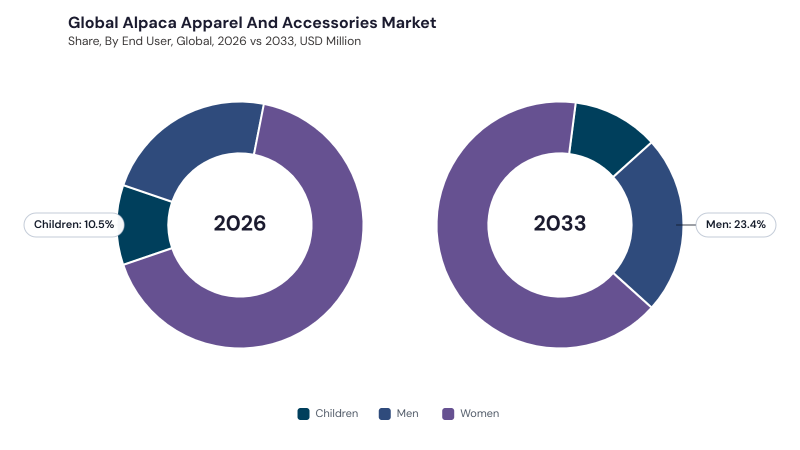
Based on End User, the market is segmented into Women, Men, and Children. The Women market dominated the Global Alpaca Apparel And Accessories Market by End User in 2025, and would continue to be a dominant market till 2033; thereby, achieving a market value of USD 888.2 million by 2033, growing at a CAGR of 7.9 % during the forecast period. The Men market is expected to witness a CAGR of 8.5% during (2026 - 2033).
Women represent a key end-user category due to broad demand for luxury, stylish, sustainable, and versatile alpaca apparel and accessories. Products such as sweaters, shawls, scarves, coats, wraps, dresses, and premium accessories benefit from women’s strong engagement with natural fibers, ethical fashion, seasonal style, and tactile comfort. Men’s demand is developing through functional sweaters, jackets, hats, gloves, outdoor apparel, and semi-formal alpaca clothing that combines warmth, durability, comfort, and natural-fiber appeal. Children’s products serve a niche but meaningful segment, supported by demand for soft, safe, lightweight, hypoallergenic, and warm clothing such as sweaters, mittens, hats, cardigans, blankets, and outerwear designed for sensitive skin and durable use.
Based on Distribution Channel, the market is segmented into Offline and Online. The Offline market dominated the Global Alpaca Apparel And Accessories Market by Distribution Channel in 2025, and would continue to be a dominant market till 2033; thereby, achieving a market value of USD 906.2 million by 2033, growing at a CAGR of 7.8 % during the forecast period. Additionally, The Online market is expected to witness highest CAGR of 9% during (2026 - 2033).
Offline distribution remains important because alpaca products often rely on tactile quality assessment, premium retail presentation, boutique selling, artisan engagement, luxury-store placement, and cultural storytelling. Specialty stores, boutiques, alpaca shops, high-end department stores, tourism-linked outlets, and curated retail formats help build trust around fiber quality, provenance, craftsmanship, and authenticity. Online distribution is gaining momentum through e-commerce platforms, brand-owned websites, digital marketplaces, social media marketing, and direct-to-consumer models. Online channels allow niche alpaca brands, small producers, and cooperatives to reach geographically dispersed consumers while using product descriptions, reviews, sustainability claims, and digital storytelling to communicate softness, warmth, origin, and ethical sourcing.
Free Valuable Insights: Alpaca Apparel And Accessories Market Size to reach $1358.8 Million by 2033
Region-wise, the Alpaca Apparel And Accessories Market is analyzed across North America, Europe, Asia Pacific, and LAMEA. The North America market dominated the Global Alpaca Apparel And Accessories Market by Region in 2025, and would continue to be a dominant market till 2033; thereby, achieving a market value of USD 485.0 million by 2033, growing at a CAGR of 7.7 % during the forecast period. The Europe market is expected to witness a CAGR of 8% during (2026 - 2033). Additionally, The Asia Pacific market is expected to witness a CAGR of 8.9% during (2026 - 2033).
North America benefits from rising demand for sustainable luxury apparel, natural fiber products, outdoor lifestyles, boutique retail, DTC alpaca brands, and premium cold-weather garments across the US, Canada, Mexico, and Rest of North America. Europe is supported by strong interest in ethical fashion, luxury knitwear, sustainable textiles, craftsmanship, traceability, and premium natural fibers across Germany, the UK, France, Russia, Spain, Italy, and Rest of Europe. Asia Pacific is expanding through rising disposable incomes, luxury fashion adoption, e-commerce growth, natural-fiber awareness, and increasing demand for differentiated premium apparel across China, Japan, India, South Korea, Singapore, Malaysia, and Rest of Asia Pacific. LAMEA is developing through alpaca heritage relevance, tourism-linked sales, sustainable fashion adoption, premium accessories, retail modernization, and growing interest in artisan-led natural fiber products across Brazil, Argentina, UAE, Saudi Arabia, South Africa, Nigeria, and Rest of LAMEA.
| Report Attribute | Details |
|---|---|
| Market size value in 2026 | USD 781.5 million |
| Market size forecast in 2033 | USD 1358.8 million |
| Base Year | 2025 |
| Historical Period | 2022 to 2024 |
| Forecast Period | 2026 to 2033 |
| Revenue Growth Rate | CAGR of 8.2% from 2026 to 2033 |
| Number of Pages | 442 |
| Tables | 330 |
| Report Coverage | Market Trends, Revenue Estimation and Forecast, Segmentation Analysis, Regional and Country Breakdown, Competitive Landscape, Market Share Analysis, Company Profiling, Companies Strategic Developments, SWOT Analysis, Product Life Cycle Analysis, Value Chain Analysis, Market Consolidation Analysis, Key Customer Criteria, Pandemic Impact Analysis, and Winning Imperatives |
| Segments Covered | Product, End User, Distribution Channel, and Geography |
| Country Scope |
|
| Companies Included | Incalpaca; Michell & Cía.; Peruvian Connection; PAKA; Alpaca Collections; Loro Piana; Spirit of the Andes; Shupaca; Alicia Adams Alpaca; Alpaca Direct |
By Product
By End User
By Distribution Channel
By Geography
The market is expected to reach USD 1358.9 million by 2033, growing at 8.2% CAGR during 2026-2033.
Apparel dominates the market, expected to maintain its leadership position through the forecast period.
Incalpaca, Michell & Cía., Peruvian Connection, PAKA, and Alpaca Collections are key players in this market.
North America is expected to dominate the market, driven by high consumer demand for sustainable textiles.
Sustainable production practices and demand for natural fibers are key growth drivers.
The market is projected to grow at 8.2% CAGR during the forecast period (2026-2033).
Our team of dedicated experts can provide you with attractive expansion opportunities for your business.






 Unique Offerings
