The sample copy of this report is available for access.
“Global Serial NOR Flash Market to reach a market value of USD 5650.68 Million by 2033 growing at a CAGR of %”
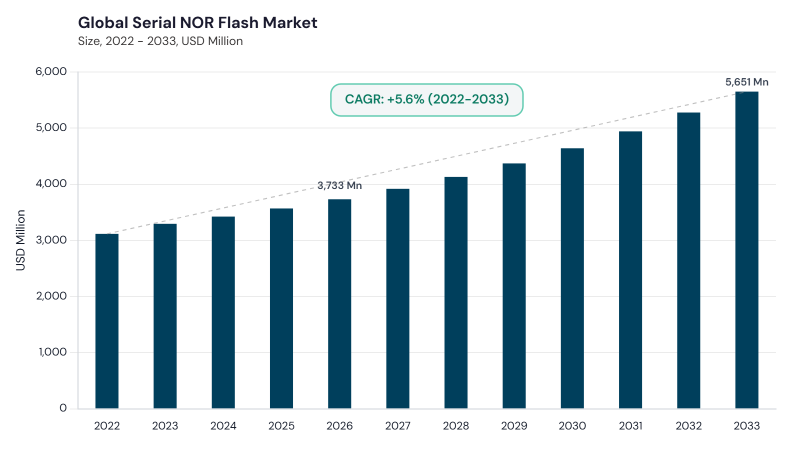
The Global Serial NOR Flash Market is expected to reach USD 5650.7 million by 2033, growing at a CAGR of 6.1% during (2026 - 2033).
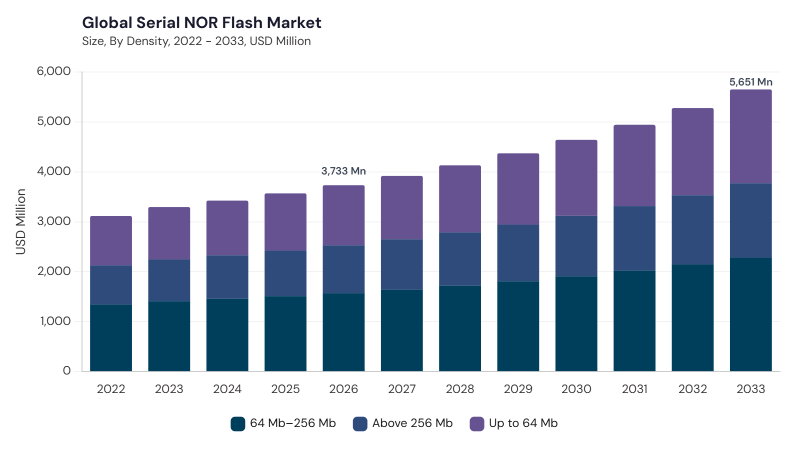
Serial NOR Flash demand is rising as automotive electronics, industrial systems, consumer devices, networking equipment, IoT products, and embedded applications require reliable, high-speed, and non-volatile memory for firmware, boot code, configuration data, and executable instructions. Its fast read performance, compact structure, dependable data retention, and low-power operation make it suitable for devices that need quick booting and secure code storage. Market growth is being supported by expanding automotive electronics, 5G infrastructure, edge computing, connected devices, and the need for higher-density and secure memory solutions.
Increasing firmware complexity, wider adoption of embedded intelligence, and expansion of connected devices are strengthening demand for Serial NOR Flash across multiple electronic systems. The technology remains important where fast random read access, execute-in-place capability, reliable boot storage, and compact integration are critical. Automotive electronics, industrial controls, consumer electronics, telecommunications equipment, and IoT devices are creating broader requirements for higher density, low voltage operation, extended temperature performance, and stronger data integrity. The market is also benefiting from secure firmware-update requirements and the need for long product lifecycles in industrial and automotive applications. As devices become more software-defined, Serial NOR Flash suppliers are focusing on capacity scaling, interface speed, low-power design, and security-driven differentiation.
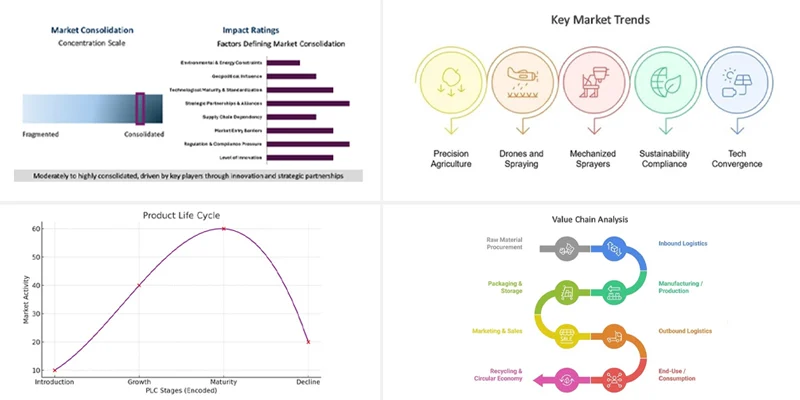
The competitive environment is moderately consolidated and shaped by product reliability, density scaling, interface speed, power efficiency, automotive qualification, and long-term availability. Leading companies compete through advanced SPI, QSPI, Octal SPI, HyperBus, and xSPI-compatible portfolios, while also improving endurance, security, and execute-in-place functionality. Partnerships with semiconductor foundries, microcontroller vendors, software ecosystem providers, and system developers help suppliers improve integration and accelerate design wins. Pricing pressure remains important in consumer and high-volume embedded applications, while automotive, industrial, aerospace, and secure embedded systems favor validated reliability and lifecycle support. Regional manufacturing strength and supply-chain diversification are also influencing customer sourcing strategies.

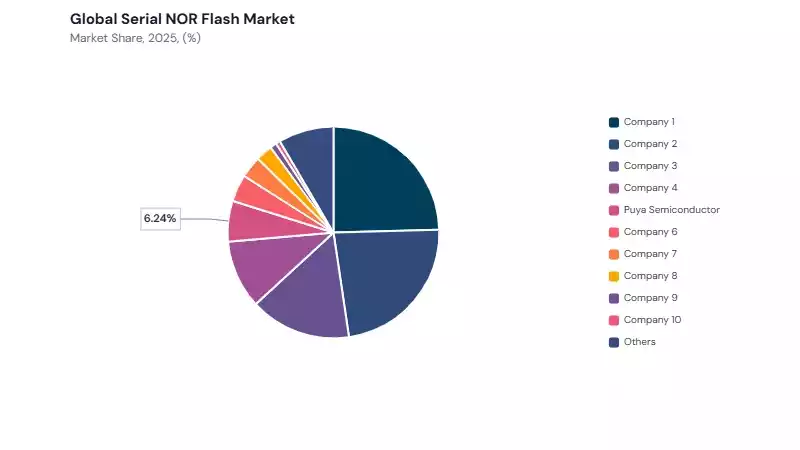
The global Serial NOR Flash market is highly concentrated, with established memory suppliers and embedded-semiconductor companies holding strong positions through manufacturing scale, product qualification, density coverage, and OEM relationships. Winbond Electronics, GigaDevice Semiconductor, Macronix International, and Infineon Technologies form the leading competitive tier, supported by broad Serial NOR portfolios and strong exposure to consumer, automotive, industrial, and connected-device applications. Puya Semiconductor and Wuhan XMC benefit from China’s growing semiconductor ecosystem, while Micron, ISSI, Renesas, and Alliance Memory compete through specialty memory, system integration, automotive-grade support, and long-lifecycle availability. Competition is increasingly shaped by secure boot support, high-density products, low-power operation, and supply-chain resilience.
Based on density, the market is segmented into 64 Mb–256 Mb, Up to 64 Mb, and Above 256 Mb. The 64 Mb–256 Mb market dominated the Global Serial NOR Flash Market by Density in 2025, and would continue to be a dominant market till 2033; thereby, achieving a market value of USD 2283.7 million by 2033, growing at a CAGR of 5.5 % during the forecast period. The Up to 64 Mb market is expected to witness a CAGR of 6.6% during (2026 - 2033).
The 64 Mb–256 Mb segment represents a balanced category for embedded systems requiring dependable firmware, boot code, and configuration storage without excessive cost or board-space requirements. Up to 64 Mb devices remain relevant in cost-sensitive microcontroller-based products, sensors, compact electronics, and applications with smaller code-storage needs. Above 256 Mb devices are gaining importance as firmware images, connected-device software, graphical interfaces, and security functions become more complex. Higher-density Serial NOR Flash supports advanced automotive electronics, industrial controllers, and sophisticated embedded systems while retaining fast random-read advantages. Density selection is therefore closely linked to software complexity, power requirements, device footprint, and lifecycle expectations.
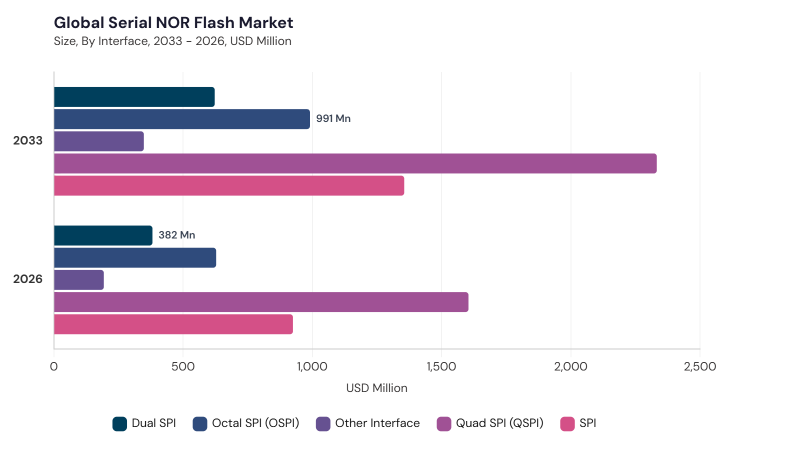
Based on interface, the market is segmented into Quad SPI (QSPI), SPI, Octal SPI (OSPI), Dual SPI, and Other Interface. The Quad SPI (QSPI) market dominated the Global Serial NOR Flash Market by Interface in 2025, and would continue to be a dominant market till 2033; thereby, achieving a market value of USD 2332.9 million by 2033, growing at a CAGR of 5.5 % during the forecast period. The SPI market is expected to witness a CAGR of 5.6% during (2026 - 2033). Additionally, The Octal SPI (OSPI) market is expected to witness highest CAGR of 6.7% during (2026 - 2033).
Quad SPI is widely adopted because it improves data throughput while preserving relatively simple implementation and broad compatibility with embedded processors and microcontrollers. SPI remains important for mature embedded platforms due to its established ecosystem, straightforward design, and low hardware complexity. Octal SPI is gaining traction in systems requiring faster boot performance, execute-in-place capability, and higher bandwidth for advanced processors. Dual SPI supports applications seeking better throughput than standard SPI without the complexity of wider configurations. Other interfaces address specialized, proprietary, or emerging requirements where performance, security, compatibility, or integration priorities differ from mainstream serial memory designs.
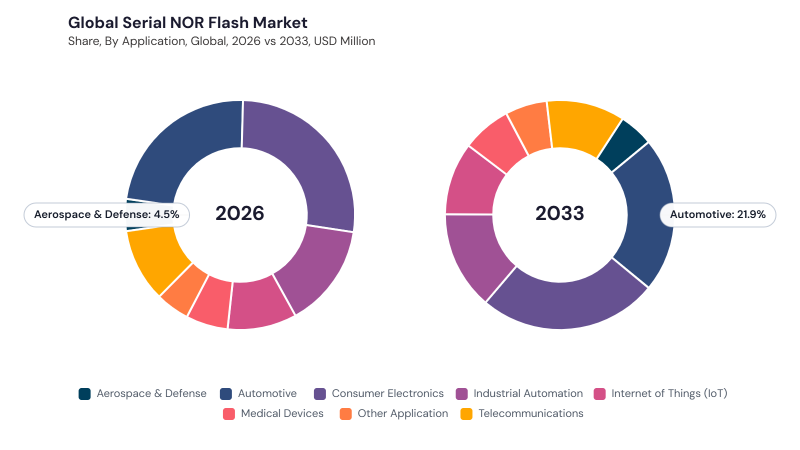
Based on application, the market is segmented into Consumer Electronics, Automotive, Industrial Automation, Telecommunications, Internet of Things (IoT), Medical Devices, Aerospace & Defense, and Other Application. The Consumer Electronics market dominated the Global Serial NOR Flash Market by Application in 2025, and would continue to be a dominant market till 2033; thereby, achieving a market value of USD 1428.7 million by 2033, growing at a CAGR of 5.1 % during the forecast period. The Automotive market is expected to witness a CAGR of 5.2% during (2026 - 2033). Additionally, The Industrial Automation market is expected to witness highest CAGR of 5.3% during (2026 - 2033).
Consumer electronics use Serial NOR Flash for firmware, boot storage, embedded code, configuration data, and reliable operation across smart devices, wearables, home electronics, and connected products. Automotive demand is supported by ADAS, digital cockpits, infotainment, connectivity modules, and electronic control units requiring robust memory. Industrial automation relies on dependable memory for controllers, robotics, factory equipment, and intelligent systems. Telecommunications equipment uses Serial NOR Flash for routers, switches, base stations, and networking infrastructure. IoT, medical devices, aerospace and defense, and other specialized applications depend on compact, secure, and durable non-volatile storage for increasingly connected and mission-critical systems.
Free Valuable Insights: Serial NOR Flash Market Size to reach $5650.7 Million by 2033
Region-wise, the Serial NOR Flash Market is analyzed across North America, Europe, Asia Pacific, and LAMEA. The Asia Pacific market dominated the Global Serial NOR Flash Market by Region in 2025, and would continue to be a dominant market till 2033; thereby, achieving a market value of USD 2944.0 million by 2033, growing at a CAGR of 6.4 % during the forecast period. The North America market is expected to witness a CAGR of 5.6% during (2026 - 2033). Additionally, The Europe market is expected to witness a CAGR of 5.1% during (2026 - 2033).
North America benefits from demand across automotive electronics, industrial automation, aerospace, networking, IoT, and high-reliability embedded systems. Europe is supported by automotive manufacturing, industrial electronics, environmental compliance, and secure embedded-system requirements. Asia Pacific remains central to semiconductor manufacturing, consumer electronics production, IoT expansion, communications equipment, and regional memory supply-chain development. LAMEA is gaining traction through digitalization, connected consumer devices, smart infrastructure, healthcare technology, industrial systems, and telecommunications modernization. Across regions, adoption patterns are influenced by embedded-device growth, availability of qualified suppliers, pricing sensitivity, regulatory requirements, and long-term product-support expectations.
| Report Attribute | Details |
|---|---|
| Market size value in 2026 | USD 3732.8 million |
| Market size forecast in 2033 | USD 5650.7 million |
| Base Year | 2025 |
| Historical Period | 2022 to 2024 |
| Forecast Period | 2026 to 2033 |
| Revenue Growth Rate | CAGR of 6.1% from 2026 to 2033 |
| Number of Pages | XX |
| Tables | XX |
| Report Coverage | Market Trends, Revenue Estimation and Forecast, Segmentation Analysis, Regional and Country Breakdown, Competitive Landscape, Market Share Analysis, Company Profiling, Companies Strategic Developments, SWOT Analysis, Product Life Cycle Analysis, Value Chain Analysis, Market Consolidation Analysis, Key Customer Criteria, Pandemic Impact Analysis, and Winning Imperatives |
| Segments Covered | Density, Interface, Application, and Geography |
| Country Scope |
|
| Companies Included | Winbond Electronics Corporation; GigaDevice; Macronix International; Infineon Technologies; Puya Semiconductor; Wuhan XMC; Micron Technology; Integrated Silicon Solution Inc. (ISSI); Renesas Electronics; Alliance Memory |
By Density
By Interface
By Application
By Geography
Expected to reach USD 5650.7 million by 2033, growing at 6.1% CAGR during the forecast period (2026-2033).
Consumer electronics segment is leading with a high demand for high-speed data access.
Winbond Electronics, GigaDevice, Macronix International, Infineon Technologies, and Puya Semiconductor are key players.
Asia Pacific is expected to dominate with increasing advancements in automotive electronics.
Increasing demand for high-speed data access and IoT devices requiring reliable embedded memory.
The market is expected to grow at 6.1% CAGR during the forecast period (2026-2033).
Our team of dedicated experts can provide you with attractive expansion opportunities for your business.






 Unique Offerings
