The sample copy of this report is available for access.
“Global Ophthalmology PACS Market to reach a market value of USD 329.13 Million by 2033 growing at a CAGR of %”
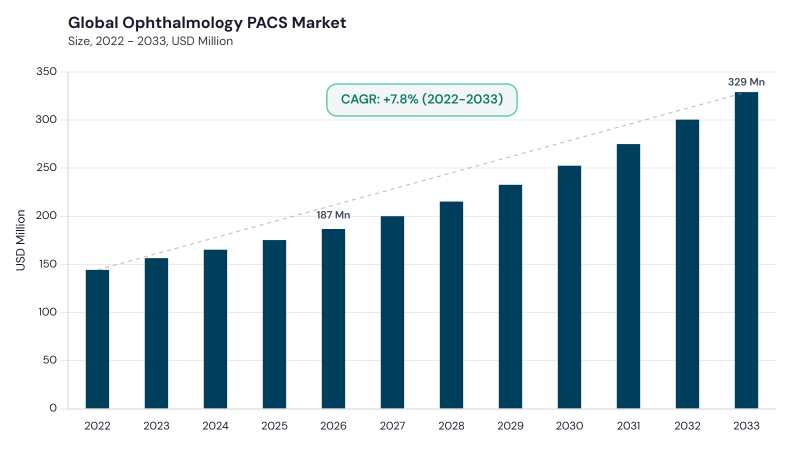
The Global Ophthalmology PACS Market is expected to reach USD 329.1 million by 2033, growing at a CAGR of 8.4% during (2026 - 2033).
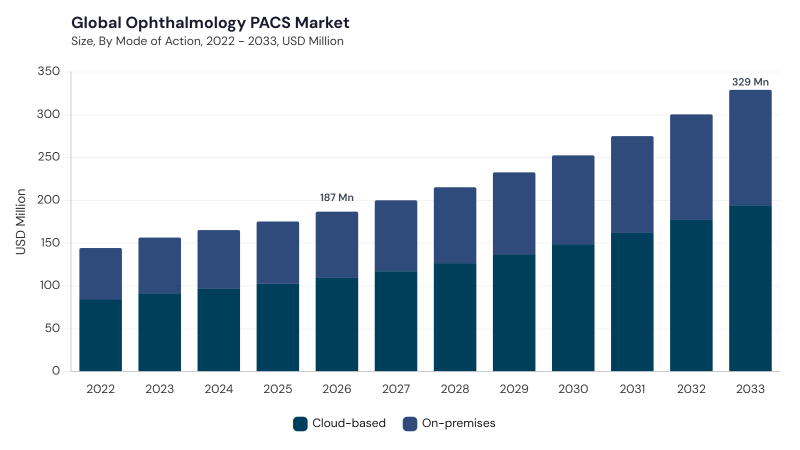
Growing ophthalmic imaging volumes, rising prevalence of eye disorders, and increasing need for centralized management of diagnostic images and patient information are driving the Ophthalmology PACS Market across hospitals, eye clinics, diagnostic centers, and specialty ophthalmology practices. Adoption is strengthened by wider use of OCT, fundus cameras, visual field analyzers, and other ophthalmic diagnostic systems. The market evolved from broader healthcare imaging systems into specialized platforms for eye-care diagnostics and longitudinal disease monitoring. Early systems mainly digitized and stored images from fundus cameras, OCT devices, slit-lamp imaging, and related diagnostic equipment, replacing manual or film-based workflows.
Rising prevalence of diabetic retinopathy, glaucoma, age-related macular degeneration, and other eye disorders is increasing the volume of ophthalmic diagnostic images generated across healthcare systems. PACS platforms help providers store, retrieve, compare, and share OCT scans, fundus photographs, visual field results, corneal images, and other eye-care data more efficiently. Growing screening initiatives and teleophthalmology programs are increasing demand for platforms that support remote image capture, specialist interpretation, and longitudinal patient monitoring. Cloud deployment is improving scalability and access across multi-site practices, while AI integration is expanding the role of PACS from image storage toward clinical decision support. These factors are moving ophthalmology PACS into the core of digital eye-care infrastructure.
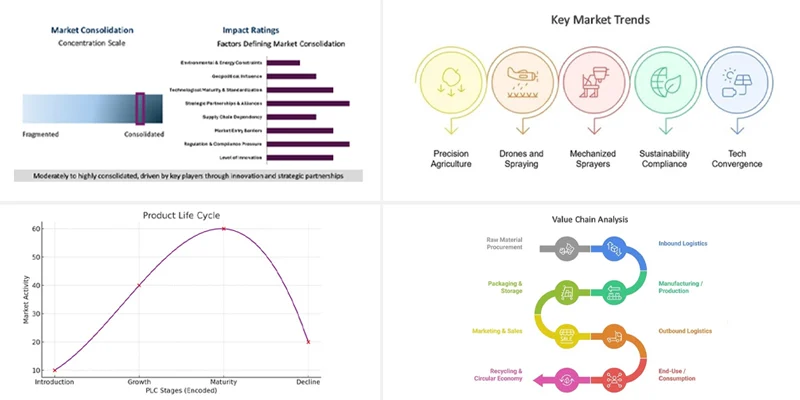
Competition is moderately consolidated, with ophthalmic device manufacturers, enterprise imaging vendors, retinal screening platforms, and healthcare IT suppliers competing through interoperability, AI integration, cloud capabilities, and clinical workflow depth. Vendors differentiate by supporting multimodal imaging, EHR connectivity, longitudinal disease monitoring, data security, and teleophthalmology workflows. Established ophthalmic imaging companies benefit from device-software ecosystems, while enterprise PACS providers compete by integrating ophthalmology into broader hospital imaging infrastructure. Pricing flexibility, subscription-based deployment, regional localization, and compliance with healthcare data regulations also influence purchasing decisions. Strategic acquisitions, partnerships, and cloud platform expansion are intensifying competition.

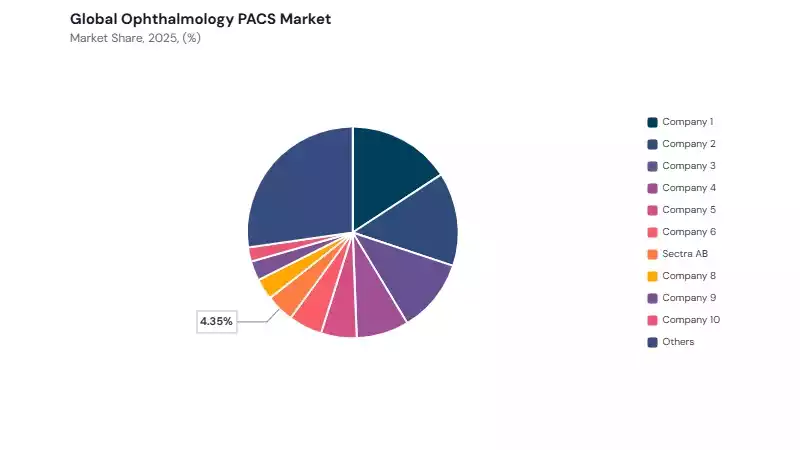
The Ophthalmology PACS Market is moderately concentrated, with leading ophthalmic imaging companies and enterprise imaging vendors holding strong positions. Carl Zeiss Meditec AG, Topcon Healthcare, and Heidelberg Engineering lead through established ophthalmic diagnostic ecosystems, device connectivity, and image-management capabilities. Optos plc, Haag-Streit Group, and NIDEK Co., Ltd. strengthen competition through retinal imaging, ophthalmic diagnostic platforms, and integrated workflow tools. Sectra AB and INFINITT Healthcare compete from the enterprise imaging side, while Sonomed Escalon and EyePACS serve specialized ophthalmology, retinal imaging, and teleophthalmology use cases. Future share gains will depend on interoperability, cloud access, AI workflow integration, cybersecurity, and longitudinal image management.
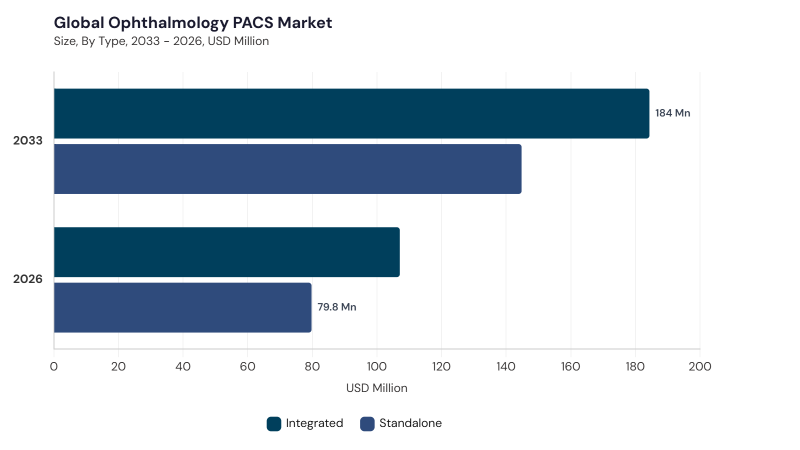
The Global Ophthalmology PACS Market, by type, is segmented into Integrated and Standalone. The Integrated market dominated the Global Ophthalmology PACS Market by Type in 2025, and would continue to be a dominant market till 2033; thereby, achieving a market value of USD 184.3 million by 2033, growing at a CAGR of 8.1 % during the forecast period. The Standalone market is expected to witness a CAGR of 8.9% during (2026 - 2033).
Integrated PACS systems connect ophthalmic imaging modalities with EHRs, hospital information systems, reporting tools, clinical workflows, and patient records, making them important for hospitals, large eye-care networks, and multi-site providers. These systems support centralized access, interoperability, collaborative diagnosis, teleophthalmology, and longitudinal tracking across multiple devices. Standalone PACS platforms focus specifically on ophthalmic image storage, retrieval, and management, offering simpler deployment and dedicated functionality. They remain relevant for specialty clinics, diagnostic imaging centers, and independent practices seeking focused ophthalmic imaging management without broad enterprise integration.
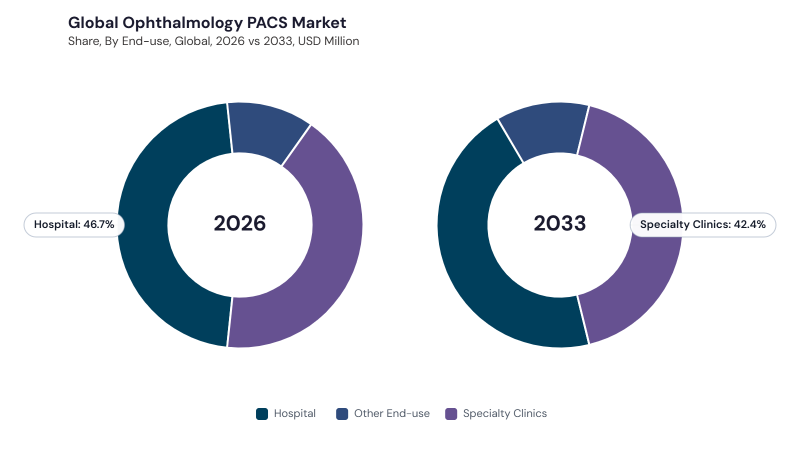
The Global Ophthalmology PACS Market, by end-use, is segmented into Hospital, Specialty Clinics, and Other End-use. The Hospital market dominated the Global Ophthalmology PACS Market by End-use in 2025, and would continue to be a dominant market till 2033; thereby, achieving a market value of USD 149.3 million by 2033, growing at a CAGR of 8 % during the forecast period. The Specialty Clinics market is expected to witness a CAGR of 8.6% during (2026 - 2033).
Hospitals require robust PACS platforms to manage large imaging volumes, integrate with EMRs, support multidisciplinary care, and maintain regulatory compliance across ophthalmology departments. Specialty Clinics prioritize user-friendly, ophthalmology-specific systems that support retina, glaucoma, cornea, pediatric ophthalmology, and outpatient diagnostic workflows. Other End-use includes diagnostic imaging centers, research institutions, academic hospitals, ambulatory settings, and telemedicine providers using PACS for large datasets, screening programs, teaching, and collaborative analysis. Each end-use group values secure access, workflow efficiency, imaging compatibility, and reliable data management.
The Global Ophthalmology PACS Market, by mode of action, is segmented into Cloud-based and On-premises. The Cloud-based market dominated the Global Ophthalmology PACS Market by Mode of Action in 2025, and would continue to be a dominant market till 2033; thereby, achieving a market value of USD 194.3 million by 2033, growing at a CAGR of 8.5 % during the forecast period. Additionally, The On-premises market is expected to witness highest CAGR of 8.2% during (2026 - 2033).
Cloud-based PACS platforms support remote access, scalable image storage, multi-site collaboration, teleophthalmology, subscription-based deployment, and easier software updates. They are increasingly adopted by clinics, imaging centers, and healthcare networks seeking flexible access to ophthalmic images across locations. On-premises PACS remains important for hospitals, academic centers, and institutions requiring local infrastructure control, customized integration, low-latency image access, and direct governance over imaging data. Deployment choice depends on infrastructure maturity, cybersecurity policy, data sovereignty, budget model, and clinical workflow requirements.
Free Valuable Insights: Ophthalmology PACS Market Size to reach $329.1 Million by 2033
Region-wise, the Ophthalmology PACS Market is analyzed across North America, Europe, Asia Pacific, and LAMEA. The North America market dominated the Global Ophthalmology PACS Market by Region in 2025, and would continue to be a dominant market till 2033; thereby, achieving a market value of USD 138.7 million by 2033, growing at a CAGR of 7.8 % during the forecast period. The Asia Pacific market is expected to witness a CAGR of 9.4% during (2026 - 2033). Additionally, The Europe market is expected to witness a CAGR of 8.2% during (2026 - 2033).
North America benefits from advanced healthcare IT infrastructure, enterprise imaging adoption, AI-enabled diagnostics, teleophthalmology growth, and strong regulatory emphasis on secure data management. Europe is supported by hospital digitalization, GDPR-driven data governance, ophthalmic imaging integration, and growing use of enterprise imaging platforms. Asia Pacific is witnessing expansion through healthcare digitization, rising eye disease burden, teleophthalmology needs, cloud deployment, and increasing investment in advanced eye-care infrastructure. LAMEA is developing through healthcare modernization, private hospital expansion, telemedicine adoption, cloud-based access, and growing demand for ophthalmic diagnostic imaging management.
| Report Attribute | Details |
|---|---|
| Market size value in 2026 | USD 186.8 million |
| Market size forecast in 2033 | USD 329.1 million |
| Base Year | 2025 |
| Historical Period | 2022 to 2024 |
| Forecast Period | 2026 to 2033 |
| Revenue Growth Rate | CAGR of 8.4% from 2026 to 2033 |
| Number of Pages | XX |
| Tables | XX |
| Report Coverage | Market Trends, Revenue Estimation and Forecast, Segmentation Analysis, Regional and Country Breakdown, Competitive Landscape, Market Share Analysis, Company Profiling, Companies Strategic Developments, SWOT Analysis, Product Life Cycle Analysis, Value Chain Analysis, Market Consolidation Analysis, Key Customer Criteria, Pandemic Impact Analysis, and Winning Imperatives |
| Segments Covered | Type, End-use, Mode of Action, and Geography |
| Country Scope |
|
| Companies Included | Carl Zeiss Meditec AG; Topcon Healthcare; Heidelberg Engineering; Optos plc; Haag-Streit Group; NIDEK Co., Ltd.; Sectra AB; INFINITT Healthcare Co., Ltd.; Sonomed Escalon; EyePACS, LLC |
By Type
By End-use
By Mode of Action
By Geography
Expected to reach USD 329.1 million by 2033, growing at 8.4% CAGR during 2026-2033.
The PACS software segment is anticipated to dominate, driven by technological advancements and integration capabilities.
Carl Zeiss Meditec AG, Topcon Healthcare, Heidelberg Engineering, and Optos plc lead the market.
North America is projected to maintain dominance, supported by advanced healthcare infrastructure and high adoption rates.
Integration of AI technologies and the rising prevalence of eye disorders boost market growth.
Increasing need for efficient workflow and data management in ophthalmology practices enhances market expansion.
Our team of dedicated experts can provide you with attractive expansion opportunities for your business.






 Unique Offerings
