The sample copy of this report is available for access.
“Global Cognitive Collaboration Market to reach a market value of USD 86,361.02 Million by 2033 growing at a CAGR of 21.8%”
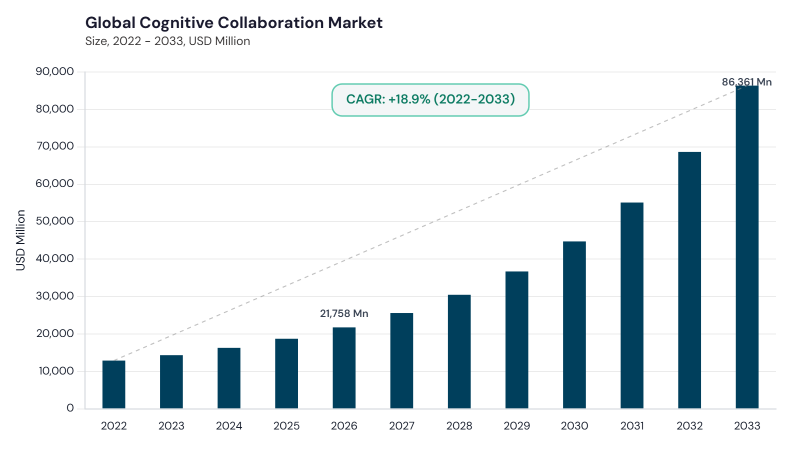
The Global Cognitive Collaboration Market is expected to reach USD 86.3 billion by 2033, growing at a CAGR of 21.8% during (2026 - 2033).
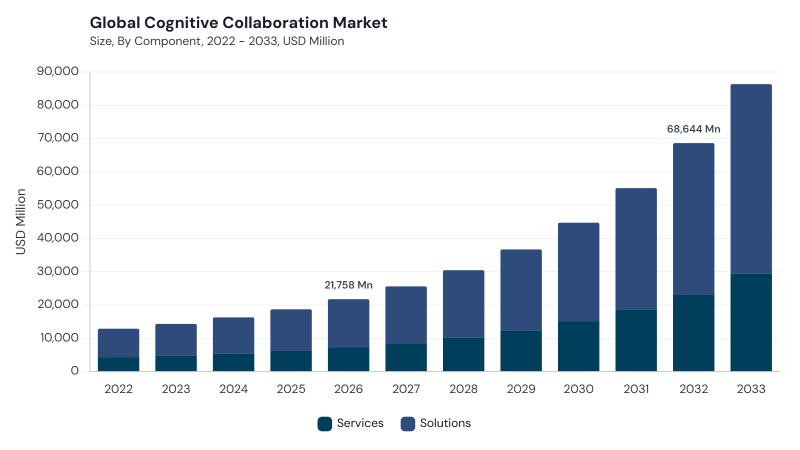
Growing need for intelligent workplace communication, automated knowledge sharing, hybrid work collaboration, faster decision-making, and AI-assisted productivity is driving the Cognitive Collaboration Market across enterprises, educational institutions, healthcare organizations, public-sector environments, and digital workplaces. Adoption is further strengthened by natural language processing, real-time transcription, intelligent meeting assistants, automated task management, contextual recommendations, multilingual communication, and integration with enterprise applications. The market originated from early computer-supported cooperative work systems designed to improve workplace interaction and team coordination. Initially, these tools focused on communication and task management within colocated teams.
Growth in the Cognitive Collaboration Market is driven by rising enterprise digitalization, distributed work models, cloud migration, and increasing deployment of AI-enabled workplace technologies. Organizations are adopting cognitive collaboration platforms to automate meeting administration, improve enterprise knowledge discovery, summarize conversations, extract action items, and reduce repetitive work. Generative AI, predictive analytics, conversational interfaces, workflow intelligence, and intelligent assistants are broadening enterprise use cases across communication, knowledge management, decision support, and employee productivity. Security, privacy, interoperability, AI governance, and data readiness remain important factors shaping enterprise implementation strategies.
The competitive environment is moderately consolidated and ecosystem-driven, with enterprise productivity-suite providers, unified communications vendors, AI-enabled workplace platforms, workflow automation companies, and digital collaboration specialists competing across the market. Microsoft leads through Teams, Microsoft 365 Copilot, SharePoint, Viva, Loop, Outlook, enterprise search, and Azure integration. Google competes through Workspace, Meet, Chat, Drive, Docs, and Gemini, while Cisco strengthens the market through Webex meetings, calling, messaging, devices, contact-center integration, and AI-powered meeting intelligence.
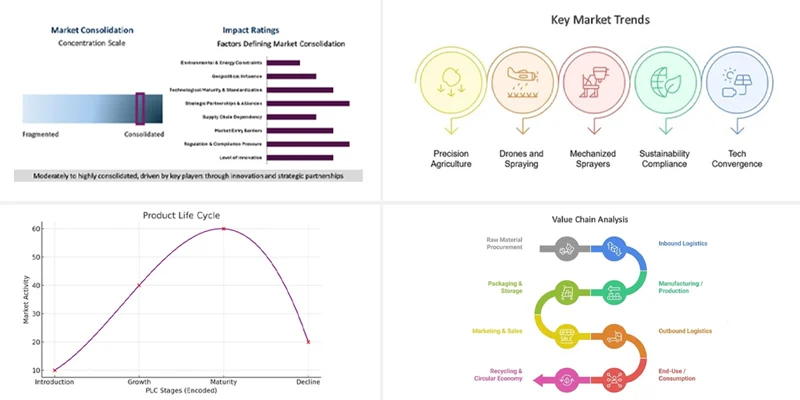

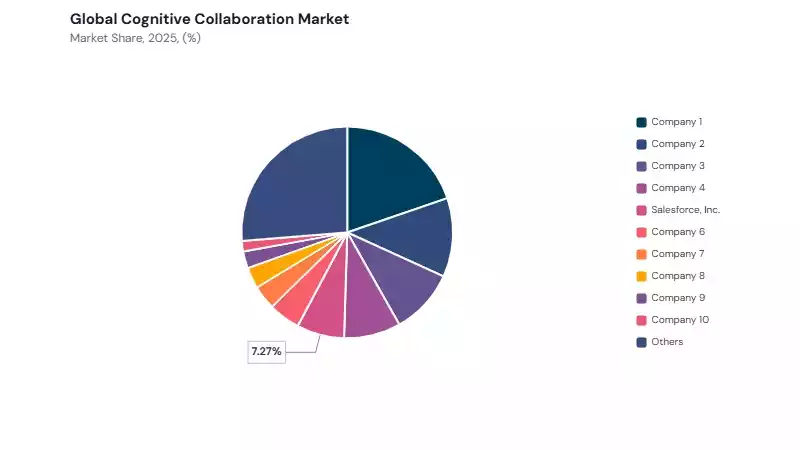
The global Cognitive Collaboration Market reflects a moderately consolidated and ecosystem-led competitive structure, with leadership concentrated among enterprise productivity, cloud collaboration, unified communications, AI workplace, and workflow automation providers. Microsoft holds the leading position through its deeply integrated Teams, Microsoft 365 Copilot, SharePoint, Viva, Loop, Outlook, and Azure ecosystem. Google, Cisco, Zoom, Salesforce, and Atlassian form the next major competitive tier through cloud-native collaboration, Webex, Zoom Workplace, Slack, Agentforce, Jira, Confluence, Loom, and AI-enabled enterprise workflows. RingCentral, ServiceNow, OpenText, and Unily compete through cloud communications, workflow intelligence, enterprise information management, and employee experience platforms.
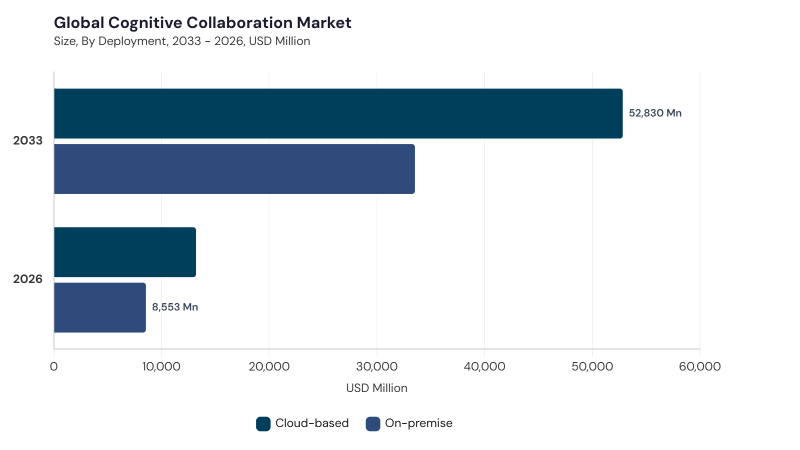
Based on Deployment, the market is segmented into Cloud-based and On-premise. The Cloud-based market dominated the Global Cognitive Collaboration Market by Deployment in 2025, and would continue to be a dominant market till 2033; thereby, achieving a market value of USD 52.8 billion by 2033, growing at a CAGR of 21.9 % during the forecast period. The On-premise market is expected to witness a CAGR of 21.6% during (2026 - 2033).
Cloud-based deployment remains the leading model because it supports scalable access, faster rollout, remote collaboration, real-time updates, and integration with AI-powered workplace ecosystems. It is highly suited to hybrid workforces, distributed teams, and enterprises seeking SaaS-based collaboration platforms with lower infrastructure burden. On-premise deployment remains relevant for government, BFSI, healthcare, defense, and regulated enterprises that require stronger control over sensitive data, internal systems, and compliance requirements. Both models are evolving toward hybrid structures as organizations balance cloud scalability with data governance, cybersecurity, and internal control requirements.
Based on Component, the market is segmented into Solutions and Services. The Solutions market dominated the Global Cognitive Collaboration Market by Component in 2025, and would continue to be a dominant market till 2033; thereby, achieving a market value of USD 56.9 billion by 2033, growing at a CAGR of 21.6 % during the forecast period. The Services market is expected to witness a CAGR of 22.2% during (2026 - 2033).
Solutions form the core of the market, covering AI-powered collaboration platforms, intelligent meeting tools, enterprise search, knowledge management, workflow orchestration, virtual assistants, contextual analytics, and decision-support systems. Demand is supported by organizations seeking faster communication, reduced cognitive load, better information retrieval, and AI-assisted productivity. Services include consulting, implementation, system integration, customization, training, managed services, and ongoing technical support. Services are essential as enterprises connect cognitive collaboration tools with existing business systems, manage change, address AI governance, and ensure smooth user adoption.
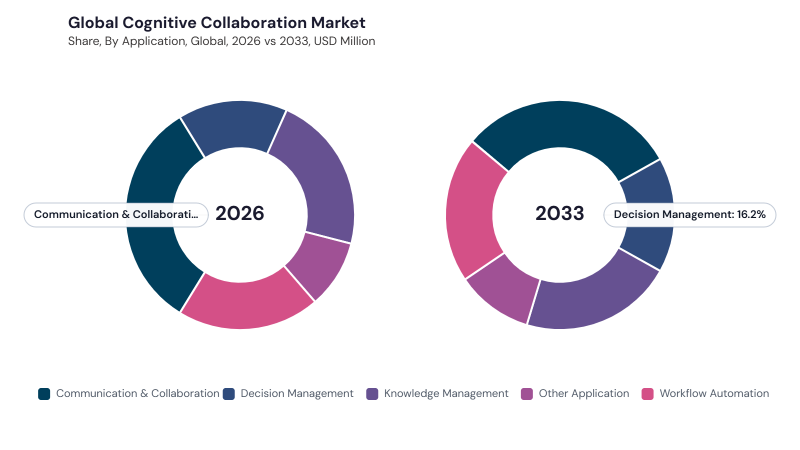
Based on Application, the market is segmented into Communication & Collaboration, Knowledge Management, Workflow Automation, Decision Management, and Other Application. The Communication & Collaboration market dominated the Global Cognitive Collaboration Market by Application in 2025, and would continue to be a dominant market till 2033; thereby, achieving a market value of USD 26.5 billion by 2033, growing at a CAGR of 20.8 % during the forecast period. The Knowledge Management market is expected to witness a CAGR of 21.1% during (2026 - 2033). Additionally, The Workflow Automation market is expected to witness highest CAGR of 22.2% during (2026 - 2033).
Communication & Collaboration remains the leading application as enterprises use intelligent meetings, real-time transcription, AI-assisted messaging, virtual assistants, automated summaries, and collaborative workspaces to support distributed teams. Knowledge Management is gaining importance as organizations seek semantic search, content discovery, expertise location, and contextual knowledge retrieval. Workflow Automation supports task routing, repetitive process automation, and cross-functional coordination, while Decision Management helps teams use predictive insights, scenario modeling, and AI recommendations. Other Application includes emerging use cases such as cognitive security collaboration, behavioral analytics, compliance monitoring, and specialized AI-supported collaboration workflows.
Based on End User, the market is segmented into IT and Telecom, BFSI, Retail, Manufacturing, Healthcare, and Other End User. The IT and Telecom market dominated the Global Cognitive Collaboration Market by End User in 2025, and would continue to be a dominant market till 2033; thereby, achieving a market value of USD 18.8 billion by 2033, growing at a CAGR of 20.5 % during the forecast period. The BFSI market is expected to witness a CAGR of 21.1% during (2026 - 2033). Additionally, The Retail market is expected to witness highest CAGR of 22.6% during (2026 - 2033).
IT and Telecom remains the leading end-user segment due to advanced digital infrastructure, distributed teams, complex service operations, and early adoption of AI-enabled communication and workflow tools. BFSI adoption is supported by secure collaboration, compliance monitoring, fraud investigation, risk management, and digital service delivery. Retail uses cognitive collaboration for workforce coordination, customer engagement, inventory visibility, and omnichannel execution. Manufacturing benefits from engineering collaboration, predictive maintenance coordination, supply-chain alignment, and production workflows. Healthcare and Other End User segments are expanding through secure knowledge exchange, care coordination, education, government collaboration, and professional-service workflows.
Free Valuable Insights: Cognitive Collaboration Market Size to reach $86.3 Billion by 2033
Region-wise, the Cognitive Collaboration Market is analyzed across North America, Europe, Asia Pacific, and LAMEA. The North America market dominated the Global Cognitive Collaboration Market by Region in 2025, and would continue to be a dominant market till 2033; thereby, achieving a market value of USD 31.4 billion by 2033, growing at a CAGR of 21.2 % during the forecast period. The Europe market is expected to witness a CAGR of 21.3% during (2026 - 2033). Additionally, The Asia Pacific market is expected to witness a CAGR of 22.4% during (2026 - 2033).
North America leads the global market due to strong AI adoption, advanced cloud infrastructure, hybrid work maturity, enterprise digitalization, and the presence of major collaboration-platform providers. Europe is shaped by data privacy rules, ethical AI requirements, enterprise modernization, Industry 5.0 thinking, and demand for compliant collaboration platforms. Asia Pacific is expanding through digital transformation, cloud adoption, large enterprise workforces, IT and telecom development, and growing use of AI-enabled productivity tools across China, Japan, India, South Korea, Singapore, and Malaysia. LAMEA is developing through enterprise modernization, public-sector digitization, mobile connectivity, cloud adoption, and growing demand for cost-effective intelligent collaboration solutions.
| Report Attribute | Details |
|---|---|
| Market size value in 2026 | USD 21.7 billion |
| Market size forecast in 2033 | USD 86.3 billion |
| Base Year | 2025 |
| Historical Period | 2022 to 2024 |
| Forecast Period | 2026 to 2033 |
| Revenue Growth Rate | CAGR of 21.8% from 2026 to 2033 |
| Number of Pages | 631 |
| Tables | 810 |
| Report Coverage | Market Trends, Revenue Estimation and Forecast, Segmentation Analysis, Regional and Country Breakdown, Competitive Landscape, Market Share Analysis, Company Profiling, Companies Strategic Developments, SWOT Analysis, Product Life Cycle Analysis, Value Chain Analysis, Market Consolidation Analysis, Key Customer Criteria, Pandemic Impact Analysis, and Winning Imperatives |
| Segments Covered | Deployment, Component, Application, End User, and Geography |
| Country Scope |
|
| Companies Included | Microsoft Corporation; Google LLC; Cisco Systems, Inc.; Zoom Communications, Inc.; Salesforce, Inc.; Atlassian Corporation Plc; RingCentral, Inc.; ServiceNow, Inc.; OpenText Corporation; Unily Group Ltd. |
By Deployment
By Component
By Application
By End User
By Geography
Expected to reach USD 86.3 billion by 2033, growing at 21.8% CAGR during 2026-2033.
Cloud-based segment leads, projected to achieve USD 52.8 billion by 2033.
Microsoft, Google, Cisco, Zoom, Salesforce, Atlassian, RingCentral, ServiceNow dominate the market.
Solutions segment leads, expected to reach USD 56.9 billion by 2033.
North America leads, projected to achieve USD 31.4 billion by 2033.
Increased AI-driven collaboration and demand for diverse thinking drive market growth.
Our team of dedicated experts can provide you with attractive expansion opportunities for your business.








 Unique Offerings