“Global Cloud Field Service Management Market to reach a market value of 6.49 Billion by 2032 growing at a CAGR of 10.1%”
The Global Cloud Field Service Management Market size is estimated at $3.30 billion in 2025 and is expected to reach $6.49 billion by 2032, rising at a market growth of 10.1% CAGR during the forecast period (2025-2032). Growth of this market is supported by rising demand for remote workforce management, real-time service tracking, and mobile technician solutions. Increasing cloud adoption, IoT integration, and digital transformation across utilities, telecom, healthcare, and manufacturing sectors are further accelerating market expansion through improved operational efficiency worldwide.
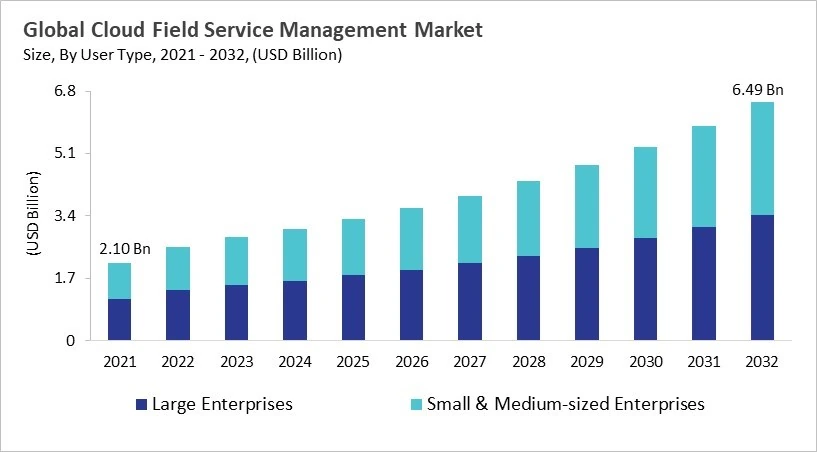
Cloud field service management refers to cloud-based software platforms developed to manage field operations like maintenance, installation, repairs, and inspections performed outside company premises. These platforms largely provide features including scheduling, dispatching, asset tracking, work order management, mobile workforce support, and inventory visibility. Early field service operations relied largely on manual scheduling boards, paper documentation, and phone dispatching, which often reduced operational visibility and caused delays. With the growth of cloud computing and broadband internet, field service systems shifted toward centralized digital platforms. The rapid adoption of mobile applications and smartphones further improved productivity, enabling technicians to update work orders, receive assignments, and communicate with back-office teams in real-time.
Major enterprise software providers like Salesforce, Microsoft, ServiceNow, IFS, and Oracle integrated field service capabilities into broader cloud ecosystems that connect enterprise resource planning (ERP), customer relationship management (CRM), and supply chain systems. Recent advancements include the use of AI for automated dispatching and intelligent scheduling, along with the integration of IoT technologies that allow predictive maintenance through connected equipment monitoring. Vendors also prioritize analytics, mobile-first tools, cybersecurity, and strategic partnerships to improve platform capabilities. The cloud field service management market has developed into a highly connected, data-driven ecosystem focused on real-time visibility, automation, and enhanced customer service delivery.
The major strategies followed by the market participants are Partnerships as the key developmental strategy to keep pace with the changing demands of end users. For instance, In January, 2024, Alibaba Cloud expands its partnership with Schaeffler to accelerate global digital transformation in manufacturing. Leveraging cloud infrastructure, AI, and digital intelligence, Schaeffler enhances its smart products, digital value chain, and cyber-physical equipment, driving innovation in the industry. Moreover, In April, 2025, Oracle Corporation has launched NetSuite Field Service Management, a new cloud-based solution designed to help organizations in Singapore and the Philippines streamline field operations and enhance customer experiences. The solution integrates scheduling, dispatch, asset and inventory management, financials, and real-time data access into a single platform. This product launch marks a significant expansion of NetSuite’s field service capabilities, aligning with the growing market demand for end-to-end service automation and digital transformation in field operations.
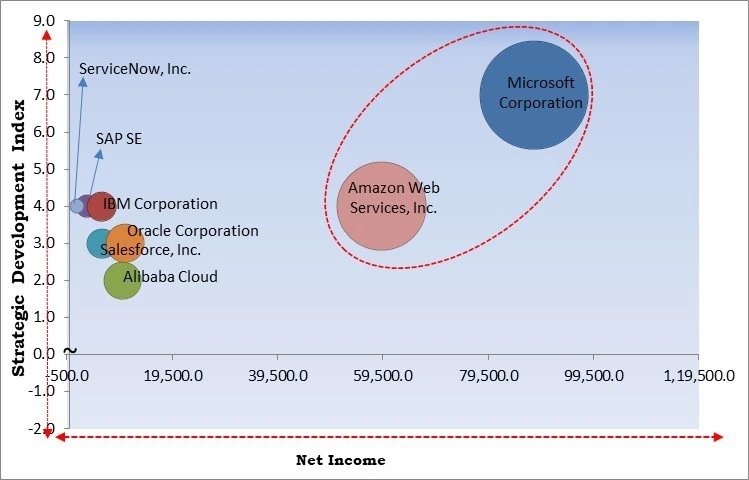
Based on the Analysis presented in the KBV Cardinal matrix; Microsoft Corporation and Amazon Web Services, Inc. are the forerunners in the Cloud Field Service Management Market. In July, 2024, Microsoft Corporation and Lumen Technologies came into partnership to expand network infrastructure to support AI growth, with Lumen adopting Microsoft’s cloud and AI tools for its digital transformation. While not directly targeting CFSM, it enhances cloud services critical for field service management efficiency. Companies such as Alibaba Cloud and Oracle Corporation are some of the key innovators in Cloud Field Service Management Market.
Lockdowns and movement restrictions disrupted on-site service operations across industries. Health and safety regulations caused many companies to halt field operations, reducing the need for immediate worker dispatch. Economic uncertainty prompted businesses to cut IT budgets and delay digital transformation projects, which postponed the rollout of cloud-based FSM platforms. Supply chain disruptions and travel restrictions increased the difficulty of procuring devices, integrating systems, and securing vendor support. Industries such as manufacturing, construction, and aviation experienced decreased demand for services, further reducing investment in efficiency tools. As a result, the early pandemic period saw a temporary slowdown in the adoption and growth of cloud field service management solutions. Thus, the COVID-19 pandemic had a negative impact on the market.

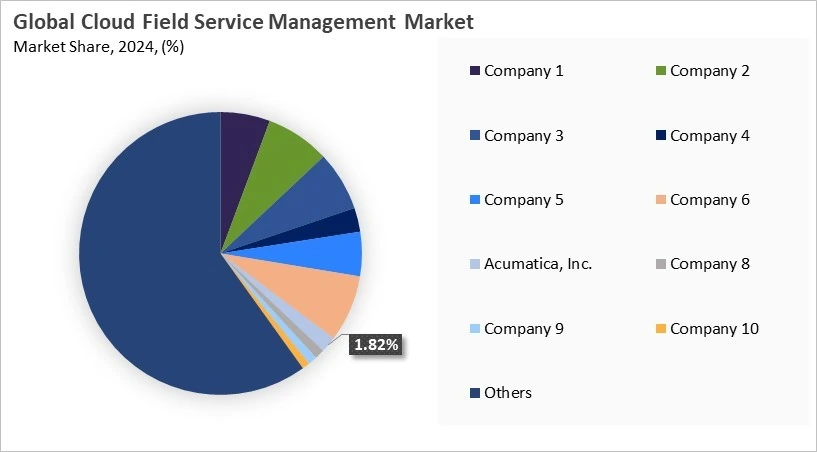
The leading players in the market are competing with diverse innovative offerings to remain competitive in the market. The above illustration shows the percentage of revenue shared by some of the leading companies in the market. The leading players of the market are adopting various strategies in order to cater demand coming from the different industries. The key developmental strategies in the market are Acquisitions, and Partnerships & Collaborations.
Based on User Type, the market is segmented into Large Enterprises and Small & Medium-sized Enterprises. The small & medium-sized enterprises segment attained 46% revenue share in the cloud field service management market in 2024. SMEs increasingly adopted cloud-based FSM platforms to modernize operations, streamline scheduling, and digitize work order management without heavy upfront infrastructure investments. SaaS-based deployment models were particularly attractive due to their affordability, scalability, and ease of implementation. Cloud-enabled mobile applications allowed smaller organizations to improve technician productivity and enhance customer responsiveness while maintaining lean operational structures.
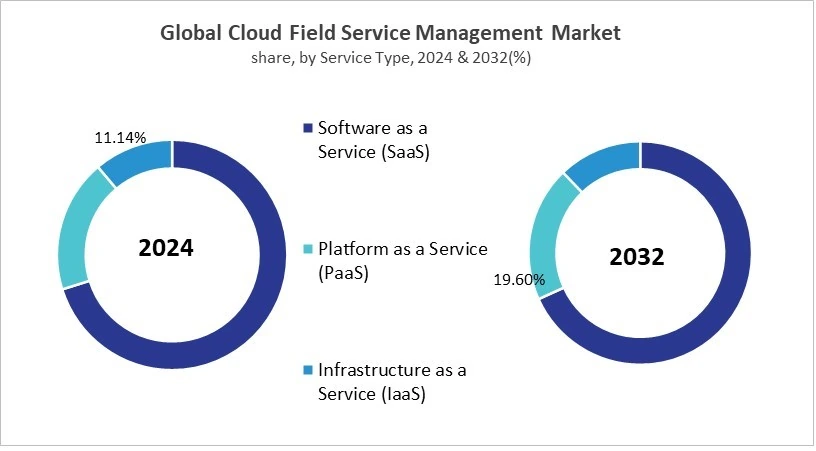
Based on Service Type, the market is segmented into Software as a Service (SaaS), Platform as a Service (PaaS) and Infrastructure as a Service (IaaS). The platform as a service (PaaS) segment recorded 19% revenue share in the cloud field service management market in 2024. PaaS offerings enabled enterprises to build, extend, and integrate field service applications tailored to specific operational requirements. This model was particularly attractive to large organizations and technology-driven service providers that required integration with IoT systems, analytics platforms, and legacy enterprise software. By leveraging PaaS frameworks, companies enhanced automation capabilities, developed specialized workflows, and created industry-specific extensions to support complex service ecosystems.
Free Valuable Insights: Cloud Field Service Management Market Size to reach $6.49 by 2032
Region-wise, the cloud field service management market is analyzed across North America, Europe, Asia Pacific, and LAMEA. The North America segment recorded 38% revenue share in the cloud field service management market in 2024. The cloud field service management market is predicted to capture prominent growth in the North America and Europe region. The market is driven by high cloud adoption, advanced IT infrastructure, and the presence of major technology providers like Salesforce, Microsoft, and Oracle.
Further, regional adoption is driving as industries like utilities, manufacturing, telecommunications, and healthcare largely deploy cloud-based platforms to automate scheduling, enhance technician productivity, and allow real-time service visibility. Strong investment in digital transformation, IoT-enabled field service solutions, and artificial intelligence is also driving the market expansion. Moreover, the European cloud field service management market is predicted to grow at a significant rate. This is because of the rising demand for efficient service operations and strong industrial development.
Regional nations such as the UK, Germany, and France are key adopters because of their focus on advanced manufacturing, Industry 4.0, and stringent data protection regulations like GDPR, which encourages secure cloud-based service management platforms. In the Asia Pacific, the cloud field service management market is predicted to grow at a prominent rate. The market growth is propelled by the expansion of telecommunication infrastructure, rapid industrialization, and surging digital transformation initiatives across the region.
Regional nations, including India, China, South Korea, and Japan, are largely investing in mobile workforce solutions, cloud computing, and connected infrastructure, which is surging the adoption of cloud field service platforms across industries including construction, utilities, manufacturing, and logistics. Additionally, the LAMEA cloud field service management market is estimated to experience expansion in the upcoming years. This is because enterprises are adopting cloud-based systems to reduce operational costs and enhance service efficiency. Further, increasing investment in IT infrastructure, expanding telecom and energy sectors, and smart city initiatives are propelling the adoption of cloud field service management market.
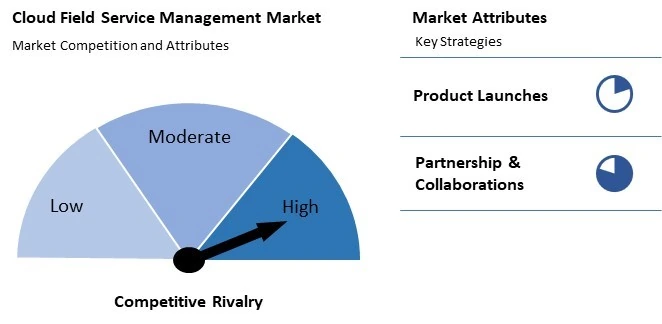
As businesses in all fields use digital tools to make field operations run more smoothly and improve service efficiency, competition in the Cloud Field Service Management market is steadily growing. To set themselves apart, providers focus on making their platforms more flexible, mobile-friendly, able to do real-time analytics, and able to work with enterprise systems without any problems. Automation, AI, and predictive maintenance are also changing how companies compete with each other. To get businesses looking for reliable and efficient field service management systems, vendors are putting more and more emphasis on user-friendly interfaces, scalable solutions, and strong customer support.
| Report Attribute | Details |
|---|---|
| Market size value in 2025 | USD 3.30 Billion |
| Market size forecast in 2032 | USD 6.49 Billion |
| Base Year | 2024 |
| Historical period | 2021 to 2023 |
| Forecast Period | 2025 to 2032 |
| Revenue Growth Rate | CAGR of 10.1% from 2025 to 2032 |
| Number of Pages | 714 |
| Tables | 577 |
| Report Coverage | Market Trends, Revenue Estimation and Forecast, Segmentation Analysis, Regional and Country Breakdown, Competitive Landscape, Market Share Analysis, Porter’s 5 Forces Analysis, Company Profiling, Companies Strategic Developments, SWOT Analysis, Winning Imperatives |
| Segments Covered | User Type, Service Type, Deployment Model, Functionality, Industry Vertical, Region |
| Country Scope |
|
| Companies Included | SAP SE, Salesforce, Inc., Microsoft Corporation, IBM Corporation, ServiceNow, Inc., Oracle Corporation, Acumatica, Inc., Amazon Web Services, Inc. (Amazon.com, Inc.), Alibaba Cloud (Alibaba Group Holding Limited), and Rackspace Technology, Inc. |
By User Type
By Service Type
By Deployment Model
By Functionality
By Industry Vertical
By Geography
Valued at USD 3.30 billion in 2025, reaching USD 6.49 billion by 2032 at 10.1% CAGR during 2025-2032.
Software as a Service (SaaS) captures maximum revenue, achieving $4.4 billion by 2032.
SAP SE, Salesforce, Inc., Microsoft Corporation, and IBM Corporation hold dominant positions.
North America leads with $2.3 billion by 2032; Europe grows at 9.7% CAGR during 2025-2032.
Scheduling & Dispatch leads with maximum revenue, reaching $1.5 billion by 2032.
Utilities segment grows at 8.9% CAGR during the forecast period across electricity, water, and gas providers.
Our team of dedicated experts can provide you with attractive expansion opportunities for your business.








 Unique Offerings