The sample copy of this report is available for access.
“Global Vibe Coding Market to reach a market value of USD 19,810.36 Million by 2033 growing at a CAGR of 16.9%”
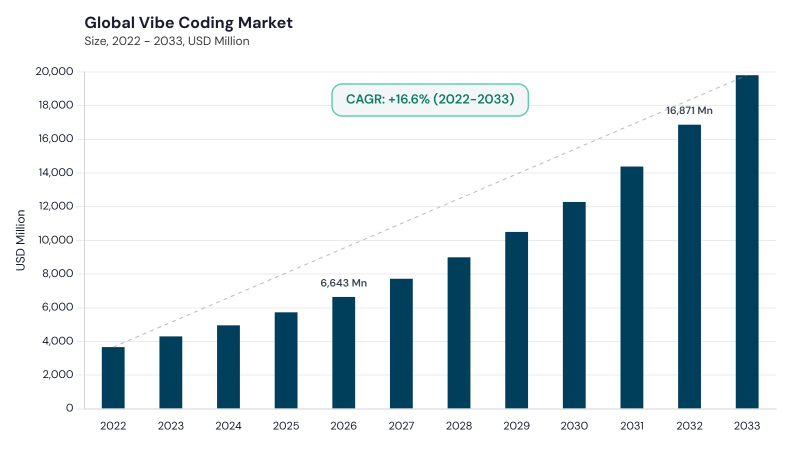
The Global Vibe Coding Market size is expected to reach USD 19,810.36 Million by 2033, rising at a market growth of 16.9% CAGR during the forecast period.
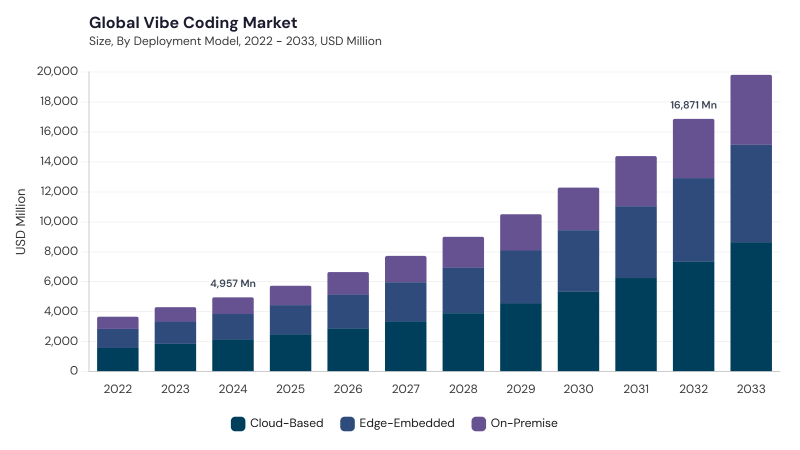
The Vibe Coding Market is emerging as one of the most transformative segments within the software development ecosystem, driven by increasing adoption of AI-powered coding assistants, natural language-based programming, agentic software engineering, and intelligent application development platforms. Vibe coding enables developers and non-technical users to create software applications by expressing requirements in natural language while AI systems generate, modify, test, and optimize code.
Today, vibe coding is evolving from AI-assisted programming toward AI-driven software creation. The market has progressed significantly from basic code-completion systems to sophisticated platforms capable of generating complete applications through conversational interfaces. Organizations across technology, finance, healthcare, manufacturing, and consumer industries are increasingly utilizing vibe coding tools to streamline software development, automate repetitive coding tasks, and improve collaboration between technical and non-technical stakeholders. The growing convergence of generative AI, cloud computing, intelligent automation, and software engineering continues to accelerate market growth globally.
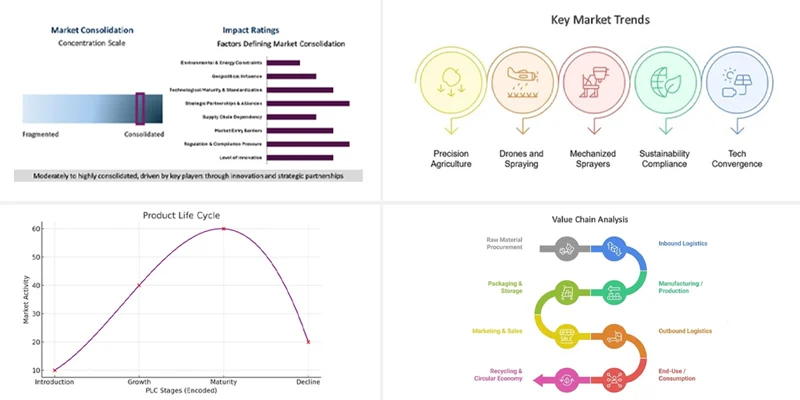
The major strategies followed by market participants are Generative AI Innovation, Autonomous Coding Agent Development, Strategic Partnerships, Cloud Platform Expansion, Enterprise Integration, AI Governance Enhancement, and Geographic Expansion. Leading companies continue investing in advanced foundation models, AI-native development environments, secure coding frameworks, intelligent workflow automation, and enterprise-scale software engineering solutions to strengthen their competitive positions.

Based on Programming Paradigm, the market is segmented into Object-Oriented Vibe Coding, Reactive Vibe Coding, Procedural Vibe Coding, Functional Vibe Coding, and Hybrid Paradigms.
The Object-Oriented Vibe Coding market dominated the Global Vibe Coding Market by Programming Paradigm in 2025, and would continue to be a dominant market till 2033; thereby, achieving a market value of USD 5636.9 million by 2033, growing at a CAGR of 15.6 % during the forecast period. The Reactive Vibe Coding market is expected to witness a CAGR of 17.1% during (2026 - 2033).
The Object-Oriented Vibe Coding segment dominated the Global Vibe Coding Market in 2025 and would continue to be a dominant segment throughout the forecast period. The growth of this segment is driven by increasing adoption of object-oriented development frameworks, enterprise application modernization initiatives, and AI-powered coding platforms designed to support modular and scalable software architectures. Organizations increasingly utilize object-oriented vibe coding environments to improve software maintainability, accelerate development cycles, and support enterprise-scale application creation.
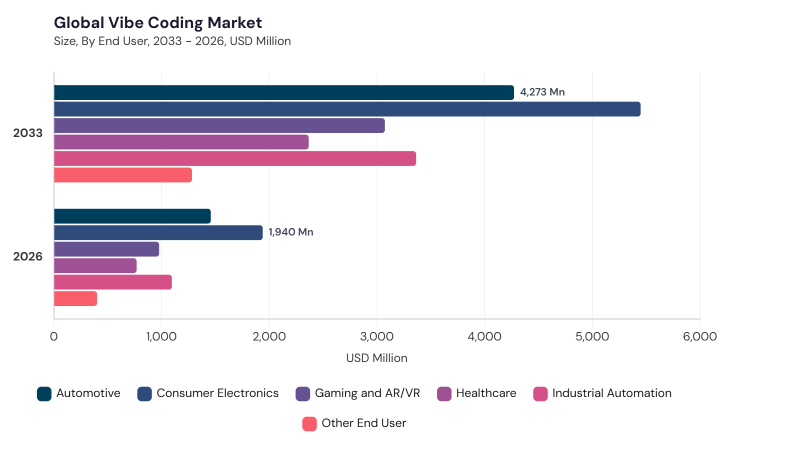
Based on End User, the market is segmented into Consumer Electronics, Automotive, Industrial Automation, Gaming & AR/VR, Healthcare, and Other End User.
The Consumer Electronics market dominated the Global Vibe Coding Market by End User in 2025, and would continue to be a dominant market till 2033; thereby, achieving a market value of USD 5448.7 million by 2033, growing at a CAGR of 15.9 % during the forecast period. The Automotive market is expected to witness a CAGR of 16.6% during (2026 - 2033).
The Consumer Electronics segment dominated the Global Vibe Coding Market in 2025 and would continue to be a dominant segment throughout the forecast period. Growth is driven by increasing development of AI-enabled applications, smart devices, connected ecosystems, and intelligent user experiences. Companies increasingly leverage vibe coding platforms to accelerate software innovation, improve product functionality, and support rapid deployment of digital products.
Based on Deployment Model, the market is segmented into Cloud-Based, Edge-Embedded, and On-Premise.
The Cloud-Based market dominated the Global Vibe Coding Market by Deployment Model in 2025, and would continue to be a dominant market till 2033; thereby, achieving a market value of USD 8625 million by 2033, growing at a CAGR of 17 % during the forecast period. The Edge-Embedded market is expected to witness a CAGR of 16.3% during (2026 - 2033).
The Cloud-Based segment dominated the Global Vibe Coding Market in 2025 and would continue to be a dominant segment throughout the forecast period. The growth of this segment is driven by increasing adoption of cloud-native development environments, scalable AI infrastructure, collaborative software engineering workflows, and enterprise demand for flexible deployment models. Cloud-based vibe coding platforms enable organizations to rapidly access advanced AI capabilities while minimizing infrastructure complexity.
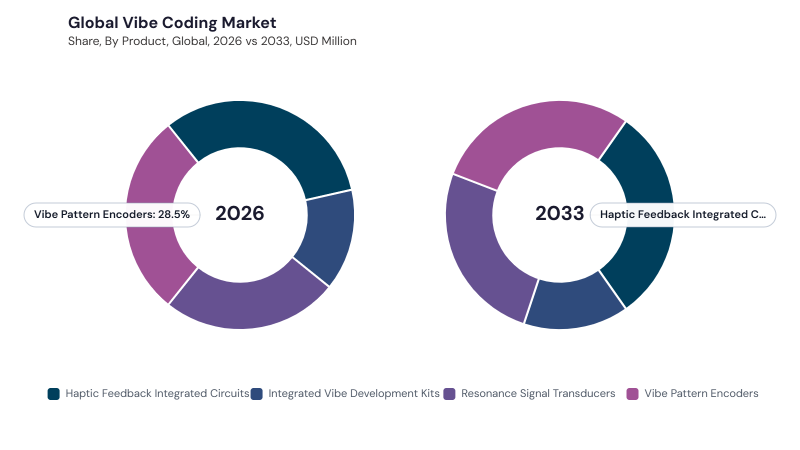
Based on Product, the market is segmented into Haptic Feedback Integrated Circuits, Vibe Pattern Encoders, Resonance Signal Transducers, and Integrated Vibe Development Kits.
The Haptic Feedback Integrated Circuits segment garnered the highest revenue share in the Vibe Coding Market in 2025. Growth is driven by increasing demand for advanced user interaction technologies, immersive digital experiences, and intelligent device ecosystems. Manufacturers increasingly integrate advanced haptic technologies to improve product functionality and support next-generation application development environments.
Free Valuable Insights: Vibe Coding Market Size to reach $19,810.36 Million by 2033
Region-wise, the Vibe Coding Market is analyzed across North America, Europe, Asia Pacific, and LAMEA.
The North America market dominated the Global Vibe Coding Market by Region in 2025, and would continue to be a dominant market till 2033; thereby, achieving a market value of USD 7024.2 million by 2033, growing at a CAGR of 16.3 % during the forecast period.The Asia Pacific market is expected to witness a CAGR of 17.4% during (2026 - 2033).
The North America market dominated the Global Vibe Coding Market in 2025 and would continue to be a dominant market till 2033. The region benefits from strong AI research ecosystems, increasing investments in generative AI technologies, widespread adoption of cloud computing, and the presence of major AI platform providers. Growing enterprise demand for intelligent software development solutions and increasing investments in AI-powered productivity technologies continue to support market expansion across the region.
Vibe Coding Market Coverage
| Report Attribute | Details |
|---|---|
| Market size value in 2026 | USD 6,643.45 Million |
| Market size forecast in 2033 | USD 19,810.36 Million |
| Base Year | 2025 |
| Historical Period | 2022 to 2024 |
| Forecast Period | 2026 to 2033 |
| Revenue Growth Rate | CAGR of 16.9% from 2026 to 2033 |
| Number of Pages | 737 |
| Tables | 900 |
| Report Coverage | Market Trends, Revenue Estimation and Forecast, Segmentation Analysis, Regional and Country Breakdown, Competitive Landscape, Market Share Analysis, Company Profiling, Companies Strategic Developments, SWOT Analysis, Value Chain Analysis, Product Life Cycle Analysis, Market Consolidation Analysis, Key Customer Criteria, Winning Imperatives |
| Segments Covered | Programming Paradigm, End User, Deployment Model, Product, Region |
| Country Scope |
|
| Companies Included | Microsoft Corporation; Anysphere, Inc. (Cursor); Anthropic PBC; OpenAI, LLC; Replit, Inc.; Google LLC (Alphabet Inc.); Amazon Web Services, Inc.; Lovable Labs Incorporated; StackBlitz, Inc.; Cognition AI, Inc. |
By Programming Paradigm
By End User
By Deployment Model
By Product
By Geography
The market is expected to reach USD 19,810.36 million by 2033, growing at 16.9% CAGR during 2026-2033.
Public cloud segment is projected to hit $188.02 billion by 2033.
Microsoft, Anysphere, Anthropic, OpenAI, Replit, Google, AWS, Lovable Labs, StackBlitz are leading companies.
North America is projected to lead the market by 2033.
Rapid software development via natural language interfaces and AI-powered productivity enhancement drive growth.
The market is set to grow at 16.9% CAGR during the forecast period (2026-2033).
Our team of dedicated experts can provide you with attractive expansion opportunities for your business.







 Unique Offerings