The sample copy of this report is available for access.
The North America Anti Stretch Mark Products Market is expected to reach USD 620.7 Million by 2032, growing at a CAGR of 4.3% during 2026 - 2033.
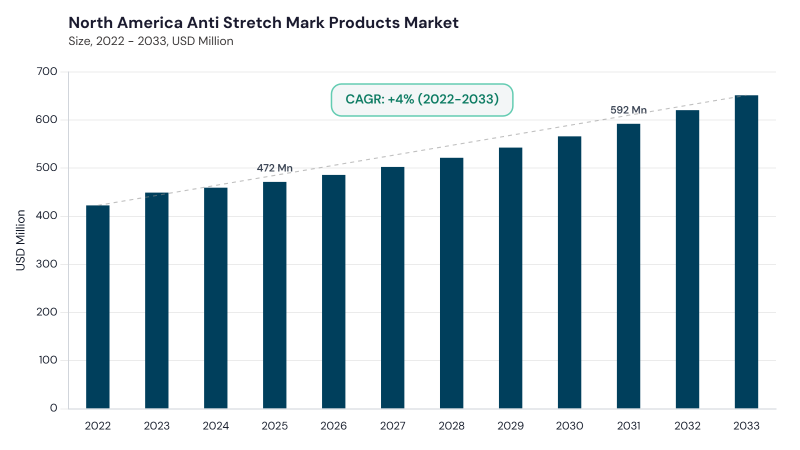
The North America Anti Stretch Mark Products Market is witnessing steady growth, supported by pregnancy and postpartum skincare needs, weight fluctuation concerns, fitness-related body changes, rising self-care spending, dermatology awareness, beauty retail expansion, and growing preference for preventive and restorative skin care solutions across daily personal care routines.
The US holds a major position in the North America Anti Stretch Mark Products Market, supported by mature skincare consumption, strong dermatology awareness, premium cosmetic product adoption, e-commerce penetration, clean beauty demand, and availability of clinically positioned stretch mark solutions. Canada is witnessing steady adoption through postpartum skincare demand, natural product preference, biotechnology-led formulations, online retail expansion, and growing male grooming participation, while Mexico is expanding through botanical ingredient use, affordability-focused products, sustainable packaging, and localized skincare innovation.
The current market is shaped by growing demand for clean ingredients, safe formulations, natural skincare, controlled-release delivery systems, digital personalization, AI-driven recommendations, and product formats that improve user convenience and visible outcomes. Consumers are increasingly seeking stretch mark products that support hydration, elasticity, skin repair, pregnancy-safe application, and long-term preventive care. Brands are responding through advanced formulations, dermatological partnerships, e-commerce engagement, ingredient transparency, sustainable packaging, and tailored offerings for maternity, postpartum, fitness, wellness, and general body care consumers.
Based on products, the market is segmented into Creams, Lotions, Massage Oil, Body Butter, and Serum. The Creams market dominated the North America Anti Stretch Mark Products Market by Products in 2025, and would continue to be a dominant market till 2033; thereby, achieving a market value of $ 195.9million by 2032, growing at a CAGR of 2.9 % during the forecast period. The Lotions market is expected to witness a CAGR of 4.5% during (2026 - 2033). Additionally, The Massage Oil market is expected to witness highest CAGR of 5% during (2026 - 2033).
Creams represent the leading product category, supported by rich texture, targeted application, skin barrier support, and strong consumer familiarity in pregnancy care, postpartum routines, weight-management skincare, and general body care. Lotions form an important segment, driven by lighter consistency, easy spreadability, quick absorption, and suitability for daily moisturizing across larger body areas. Massage Oil serves a distinct role, supported by nourishment, skin elasticity support, relaxation benefits, and use during pregnancy or body-care massage routines. Body Butter maintains steady demand, favored for intensive hydration, thicker consistency, and appeal among consumers with dry skin or preference for long-lasting moisture. Serum holds a specialized position, supported by concentrated formulas, active ingredients, premium skincare positioning, and demand from consumers seeking targeted treatment-oriented products.
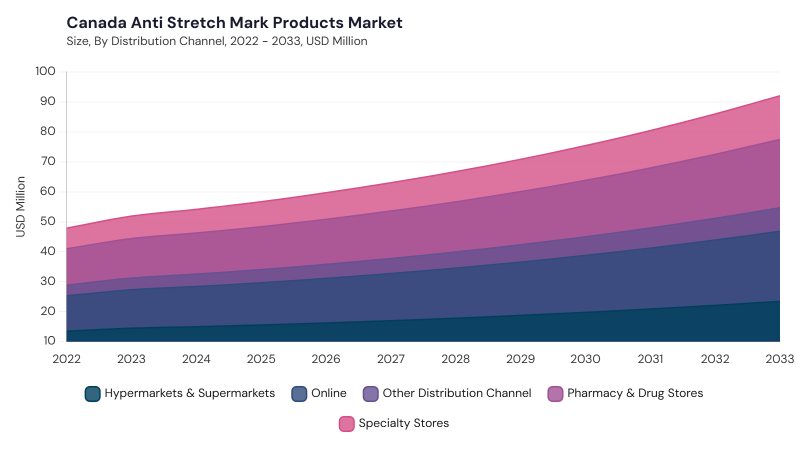
Based on distribution channel, the market is segmented into Hypermarkets & Supermarkets, Pharmacy & Drug Stores, Online, Specialty Stores, and Other Distribution Channel. The Hypermarkets & Supermarkets market dominated the North America Anti Stretch Mark Products Market by Distribution Channel in 2025, and would continue to be a dominant market till 2033; thereby, achieving a market value of $ 159.3 million by 2032, growing at a CAGR of 3.3 % during the forecast period. The Pharmacy & Drug Stores market is expected to witness a CAGR of 4% during (2026 - 2033). Additionally, The Online market is expected to witness highest CAGR of 4.5% during (2026 - 2033).
Hypermarkets & Supermarkets represent the foremost channel, supported by broad product visibility, convenient household shopping, competitive pricing, and placement near maternity, personal care, skincare, and wellness aisles. Pharmacy & Drug Stores form a strong channel, driven by consumer trust, pharmacist proximity, dermatology-linked product positioning, and demand for pregnancy-safe or sensitive-skin formulations. Online channels remain highly influential, supported by product comparisons, customer reviews, discreet purchasing, subscription options, direct-to-consumer brands, and access to premium or niche formulations. Specialty Stores serve focused demand through beauty retailers, maternity shops, wellness outlets, and skincare-focused stores offering curated product selections and brand guidance. Other Distribution Channel includes clinics, spas, departmental stores, independent retailers, and institutional sales that support selective product access and localized consumer needs.
Free Valuable Insights: The Global Anti Stretch Mark Products Market will hit USD 2,211.9 Million billion by 2033, at a CAGR of 4.9%
Based on country, the market is segmented into US, Canada, Mexico, and Rest of North America. The US is a major market for anti stretch mark products in North America, supported by advanced skincare formulations, clinical product positioning, natural and clean-label demand, AI-driven personalization, e-commerce growth, and multifunctional products combining stretch mark prevention with moisturizing, firming, and anti-aging benefits. Canada is witnessing steady growth through postpartum skincare demand, clean beauty preference, hypoallergenic product adoption, biotechnology-based formulations, bilingual and localized marketing, e-commerce access, and rising male consumer interest in skincare. Mexico is expanding through natural remedies, botanical actives, Centella Asiatica-based formulations, precision skincare, affordability-focused products, sustainable sourcing, and increasing demand for visible results beyond basic moisturization. Rest of North America is supported by pregnancy-related skincare, general body care adoption, silicone-based formulations, bioactive compounds, direct-to-consumer channels, ingredient transparency, gender-neutral skincare, and growing consumer awareness regarding stretch mark prevention and treatment.

By Products
By Distribution Channel
By Country
Set to reach $620.7 Million by 2032, growing at 4.3% CAGR during 2026-2033.
The Creams segment will achieve $195.9 million by 2032, growing at a 2.9% CAGR during 2026-2033.
The Lotions segment is expected to witness a 4.5% CAGR during 2026-2033.
Hypermarkets & Supermarkets will reach $159.3 million by 2032, growing at a 3.3% CAGR during 2026-2033.
The Online market is expected to witness the highest CAGR of 4.5% during 2026-2033.
Our team of dedicated experts can provide you with attractive expansion opportunities for your business.




 Unique Offerings