The sample copy of this report is available for access.
“Global Mobile Forensics Market to reach a market value of USD 9606.17 Million by 2033 growing at a CAGR of %”
The Global Mobile Forensics Market is expected to reach USD 9.6 billion by 2033, growing at a CAGR of 11.1% during (2026 – 2033).
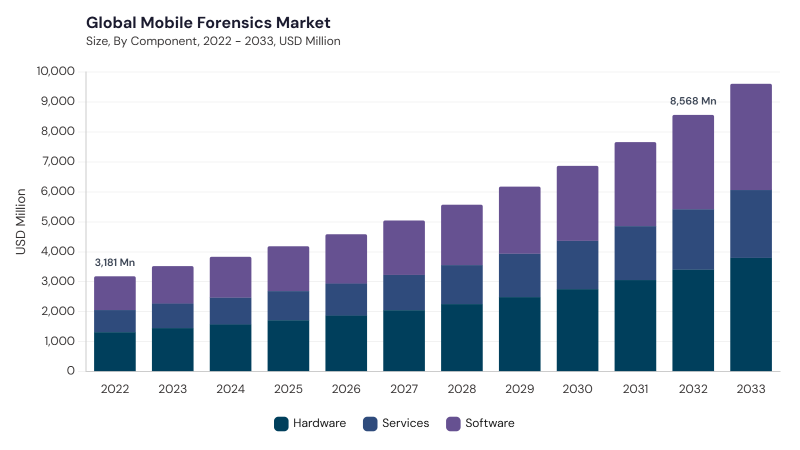
Rising cybercrime, growing use of smartphones in criminal and corporate investigations, and increasing demand for reliable digital evidence extraction are strengthening the Global Mobile Forensics Market. Investigators are prioritizing rapid data recovery, encrypted device access, application analysis, evidence preservation, and accurate reporting across law enforcement, government, defense, enterprise, and legal environments. Mobile forensic solutions are increasingly used to examine smartphones, tablets, SIM cards, cloud backups, mobile applications, location data, multimedia files, and messaging records. Growing mobile device penetration, rising cyber threats, and expanding digital investigations are widening demand for advanced extraction and analysis platforms.
The Mobile Forensics Market evolved from basic data extraction from early mobile phones and PDAs into a sophisticated digital investigation environment. Early forensic capabilities relied heavily on manual methods and physical extraction techniques, but the rapid shift toward smartphones expanded the complexity of recoverable evidence. The emergence of encrypted communications, deleted files, app-based data, cloud synchronization, and multi-layered mobile security created demand for advanced software and hardware tools. Regulatory emphasis on evidence integrity, chain of custody, and secure handling further pushed vendors to develop legally defensible solutions.
Increasing reliance on mobile devices as evidence sources is expanding the role of mobile forensics across criminal investigations, cybersecurity response, fraud analysis, corporate compliance, and legal proceedings. Smartphones now store extensive communication, financial, location, application, and multimedia data, making them central to modern investigations. AI and automation are improving evidence classification, pattern recognition, anomaly detection, and investigation turnaround times. Cloud-based tools are also gaining importance as mobile data increasingly resides in synchronized apps, backups, and distributed digital ecosystems. However, encryption, privacy rules, device fragmentation, and high tool costs continue to shape purchasing decisions. As a result, demand is shifting toward secure, scalable, interoperable, and legally defensible forensic platforms.
Competition in the Mobile Forensics Market is shaped by specialized forensic technology firms and broader cybersecurity companies. Vendors differentiate through device coverage, extraction depth, encrypted data access, AI-enabled analytics, cloud evidence handling, reporting quality, and chain-of-custody support. Strategic partnerships with law enforcement agencies, cybersecurity firms, legal technology providers, and device ecosystem participants help expand solution capabilities. Pricing strategies vary between premium advanced-access platforms and modular solutions for cost-sensitive agencies or enterprises. Regional players compete through localized compliance knowledge and tailored deployment support, while global firms rely on broad R&D capabilities, extensive device compatibility, and integrated investigation platforms.
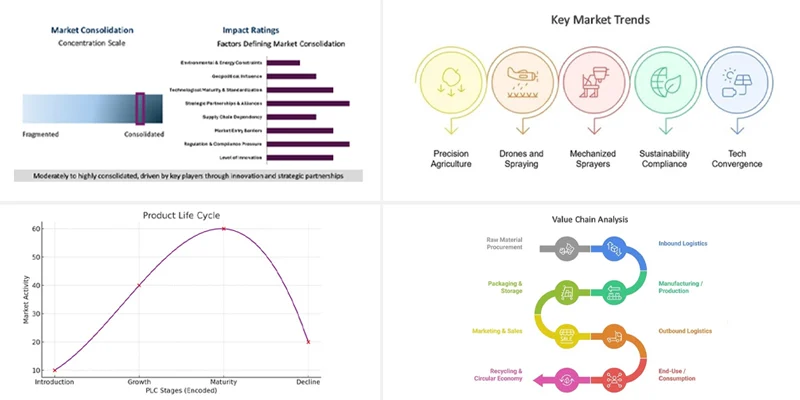


The Mobile Forensics Market is moderately consolidated, with established vendors competing alongside specialized providers focused on device access, evidence processing, cloud extraction, and investigative analytics. Cellebrite, Magnet Forensics, Oxygen Forensics, MSAB, Exterro, OpenText, SalvationDATA, ElcomSoft, Belkasoft, and Nuix represent key companies in the market. Leading players compete through advanced mobile access, broad OS compatibility, encrypted-data extraction, AI-assisted analysis, and evidence-management integration. Specialized vendors maintain relevance through platform-specific expertise, cloud and backup acquisition, and multi-source evidence workflows. Market positioning depends on accuracy, reliability, compliance readiness, training support, and the ability to keep pace with frequent mobile OS and device-security changes.
Based on Component, the market is segmented into Hardware, Software, and Services. The Hardware market dominated the Global Mobile Forensics Market by Component in 2025, and would continue to be a dominant market till 2033; thereby, achieving a market value of USD 3.7 billion by 2033, growing at a CAGR of 10.6 % during the forecast period. The Software market is expected to witness a CAGR of 11.6% during (2026 - 2033). The Services market is expected to witness a CAGR of 11.3% during (2026 - 2033).
Hardware includes specialized extraction devices, forensic workstations, adapters, and acquisition equipment used to access data from locked, damaged, or secured mobile devices. Software covers forensic platforms that support data parsing, decoding, deleted-file recovery, application analysis, reporting, AI-assisted review, and evidence visualization. Services include consulting, investigation support, training, technical assistance, device examination, and expert recovery for complex cases. Hardware remains important where physical acquisition and controlled device handling are required, while software is becoming increasingly central as evidence volumes and data complexity rise. Services strengthen adoption by helping agencies and enterprises use advanced forensic tools effectively and maintain legally defensible workflows.
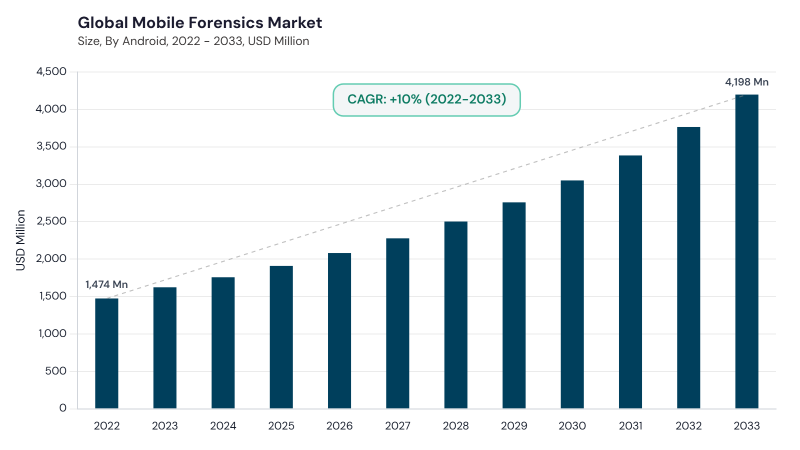
Based on Operating System, the market is segmented into Android, iOS, Windows, and Other Operating System. The Android market dominated the Global Mobile Forensics Market by Operating System in 2025, and would continue to be a dominant market till 2033; thereby, achieving a market value of USD 4.1 billion by 2033, growing at a CAGR of 10.5 % during the forecast period. The iOS market is expected to witness a CAGR of 11.3% during (2026 - 2033). The Other Operating System market is expected to witness a CAGR of 11.9% during (2026 - 2033).
Android creates substantial forensic demand due to its broad global device base, manufacturer diversity, OS fragmentation, customized interfaces, and varied application environments. iOS requires specialized forensic methods because Apple’s closed ecosystem, encryption, sandboxing, and frequent security updates influence evidence access. Windows remains relevant in selected enterprise, government, legacy, and specialized mobile-device environments where forensic teams must handle email, logs, application data, and system artifacts. Other Operating System covers niche platforms, feature-phone ecosystems, proprietary mobile systems, and emerging connected-device environments. Continuous changes in OS security, authentication, app storage, and cloud synchronization are driving demand for flexible cross-platform forensic tools.
Based on Deployment, the market is segmented into Cloud and On-premise. The Cloud market dominated the Global Mobile Forensics Market by Deployment in 2025, and would continue to be a dominant market till 2033; thereby, achieving a market value of USD 4.9 billion by 2033, growing at a CAGR of 10.6 % during the forecast period. The On-premise market is expected to witness a CAGR of 11.7% during (2026 - 2033).
Cloud deployment supports scalable evidence processing, centralized case management, remote access, distributed collaboration, and faster updates for forensic teams handling large mobile-data volumes. It is useful for organizations seeking flexible investigation workflows and the ability to process cloud backups, app data, and synchronized mobile evidence. On-premise deployment remains important for law enforcement, government, defense, and large enterprises requiring direct custody of sensitive evidence, internal infrastructure control, and strict compliance with chain-of-custody procedures. Security, data sovereignty, and confidentiality concerns sustain on-premise demand. Hybrid forensic workflows are also gaining relevance as organizations balance scalability with investigative control.
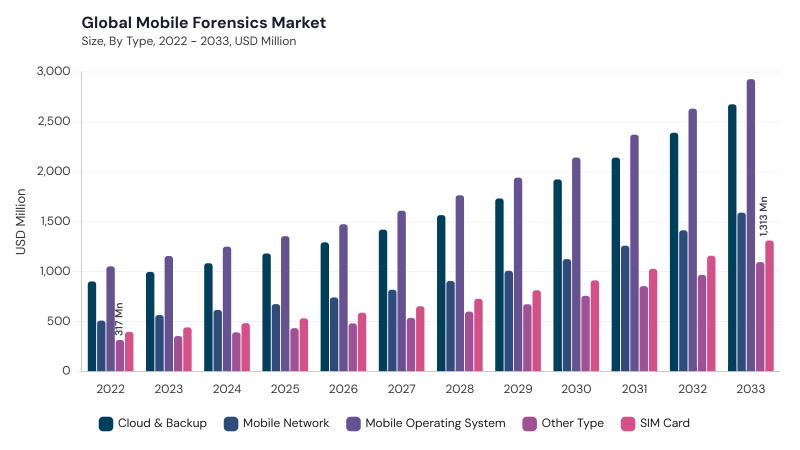
Based on Type, the market is segmented into Mobile Operating System, Cloud & Backup, Mobile Network, SIM Card, and Other Type. The Mobile Operating System market dominated the Global Mobile Forensics Market by Type in 2025, and would continue to be a dominant market till 2033; thereby, achieving a market value of USD 2.9 billion by 2033, growing at a CAGR of 10.3 % during the forecast period. The Cloud & Backup market is expected to witness a CAGR of 10.9% during (2026 - 2033). Additionally, The Mobile Network market is expected to witness highest CAGR of 11.5% during (2026 - 2033).
Mobile Operating System forensics focuses on extracting and analyzing device-level information such as messages, application databases, media files, system records, user activity, and location artifacts. Cloud & Backup forensics addresses evidence stored in synchronized apps, remote backups, cloud accounts, and online mobile services. Mobile Network forensics supports investigation of communication activity, connectivity records, and network-linked evidence, while SIM Card forensics assists in subscriber identification, contact recovery, and communication attribution. Other Type includes specialized mobile evidence sources connected with emerging devices, unconventional platforms, or niche investigation requirements. Together, these categories support multi-source reconstruction of mobile activity.
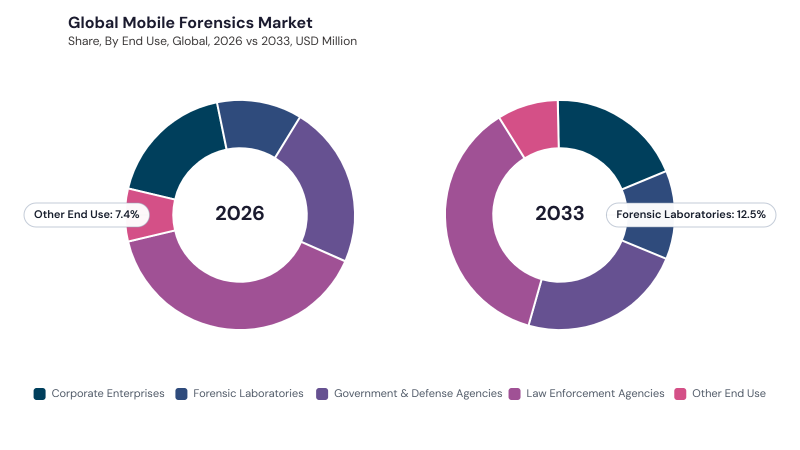
Based on End Use, the market is segmented into Law Enforcement Agencies, Government & Defense Agencies, Corporate Enterprises, Forensic Laboratories, and Other End Use. The Law Enforcement Agencies market dominated the Global Mobile Forensics Market by End Use in 2025, and would continue to be a dominant market till 2033; thereby, achieving a market value of USD 3.5 billion by 2033, growing at a CAGR of 9.9 % during the forecast period. The Government & Defense Agencies market is expected to witness a CAGR of 11.4% during (2026 - 2033). Additionally, The Corporate Enterprises market is expected to witness highest CAGR of 12% during (2026 - 2033).
Law enforcement agencies use mobile forensics to recover evidence for criminal investigations, cybercrime, fraud, trafficking, terrorism, and public safety cases. Government and defense agencies rely on mobile forensic tools for intelligence gathering, national security, counter-threat activities, and sensitive incident investigation. Corporate enterprises use these solutions for internal investigations, intellectual property protection, data breach response, compliance reviews, and BYOD-related risks. Forensic laboratories provide validated and technically advanced mobile-device examinations for public and private users. Other end users include academic institutions, private investigators, cybersecurity consultancies, insurance companies, and specialized research organizations.
Free Valuable Insights: Mobile Forensics Market Size to reach $9.6 Billion by 2033
Region-wise, the Mobile Forensics Market is analyzed across North America, Europe, Asia Pacific, and LAMEA. The North America market dominated the Global Mobile Forensics Market by Region in 2025, and would continue to be a dominant market till 2033; thereby, achieving a market value of USD 3.2 billion by 2033, growing at a CAGR of 10.5 % during the forecast period. The Europe market is expected to witness a CAGR of 10.7% during (2026 - 2033). Additionally, The Asia Pacific market is expected to witness a CAGR of 11.8% during (2026 - 2033).
North America benefits from advanced law enforcement capabilities, strong cybersecurity investment, extensive digital evidence use, and adoption of AI-enabled forensic tools. Europe is shaped by strict privacy regulations, GDPR-driven compliance, judicial evidence standards, and demand for secure forensic workflows across law enforcement and enterprise settings. Asia Pacific demand is expanding with rising smartphone penetration, cybercrime growth, digital payment adoption, government modernization, and increasing use of Android-based devices. LAMEA is developing through growing digital investigation needs, cybercrime response, public safety modernization, and demand for cost-effective forensic solutions. Across regions, adoption varies based on legal frameworks, device ecosystems, forensic maturity, budget capacity, and technical expertise.
| Report Attribute | Details |
|---|---|
| Market size value in 2026 | USD 4.5 billion |
| Market size forecast in 2033 | USD 9.6 billion |
| Base Year | 2025 |
| Historical Period | 2022 to 2024 |
| Forecast Period | 2026 to 2033 |
| Revenue Growth Rate | CAGR of 11.1% from 2026 to 2033 |
| Number of Pages | XX |
| Tables | XX |
| Report Coverage | Market Trends, Revenue Estimation and Forecast, Segmentation Analysis, Regional and Country Breakdown, Competitive Landscape, Market Share Analysis, Company Profiling, Companies Strategic Developments, SWOT Analysis, Product Life Cycle Analysis, Value Chain Analysis, Market Consolidation Analysis, Key Customer Criteria, Pandemic Impact Analysis, and Winning Imperatives |
| Segments Covered | Component, Operating System, Deployment, Type, End Use, and Geography |
| Country Scope |
|
| Companies Included | Cellebrite; Magnet Forensics; Oxygen Forensics; MSAB; Exterro; OpenText; SalvationDATA; ElcomSoft; Belkasoft; Nuix |
By Component
By Operating System
By Deployment
By Type
By End Use
By Geography
Expected to reach USD 9.6 billion by 2033, growing at 11.1% CAGR during 2026-2033.
The Hardware segment leads, projected to achieve USD 3.7 billion by 2033.
Cellebrite, Magnet Forensics, Oxygen Forensics, MSAB, Exterro, OpenText, SalvationDATA, ElcomSoft, Belkasoft, Nuix.
Android holds the highest revenue share, expected to reach USD 4.1 billion by 2033.
North America leads, projected to achieve USD 3.2 billion by 2033.
Regulatory and compliance pressures are increasing the adoption of mobile forensic solutions.
Our team of dedicated experts can provide you with attractive expansion opportunities for your business.






 Unique Offerings
