The Global Light Sensor Market size is expected to reach $5.5 billion by 2026, rising at a market growth of 12.6% CAGR during the forecast period. Light sensors are an integral element used in rising smart city applications and tech innovations. These new technologies are often supported by Artificial Intelligence (AI) and Machine Learning.
Development in industrial automation advances in the telecommunication industry and a rise in IoT and connected devices are some of the factors that boost the growth of the light sensors market. There is a high impact of photonics applications in smart city infrastructure with respect to communication technologies, sensing, and smart lighting. At the same time, a few other rising technologies like nanoscale photonics are also seeing huge demand in smart city infrastructure, hence driving the demand for light sensors.
Factors such as the miniaturization of sensors, the growing use of consumer electronics, and the rising demand for implementing renewable energy are boosting the demand for light sensors. In addition, advances in the automotive sector, smart homes, and outdoor lighting are anticipated to propel the market growth. Factors such as advanced manufacturing technologies, low-cost and high-speed electronic circuits, and innovative signal processing methods fueled the recent development in sensor technologies. Robust technical solutions are offered by these new advancements in the field, hence increasing economic efficiency, reliability, and quality of technical products.
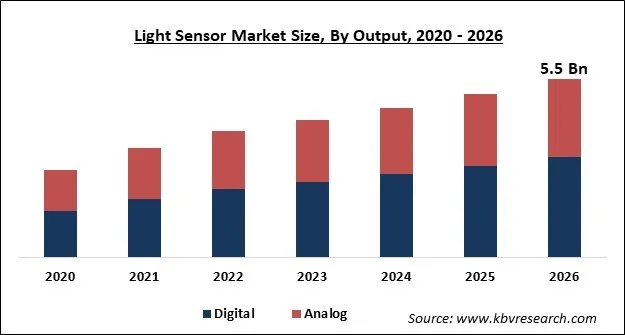
Based on Output, the market is segmented into Digital and Analog. On the basis of output, the market was dominated by the digital segment with a significant share in 2019. In applications like air conditioning and heating ventilation, lighting controls, or temperature control system, the control features are required to be adjusted on the basis of the intensity of ambient light. Digital light detectors have become integral in such circumstances. With the rising use of screen-based devices like smartphones, television sets, and laptops, the segment of the digital light sensor is probably going to observe major developments in the next few years.
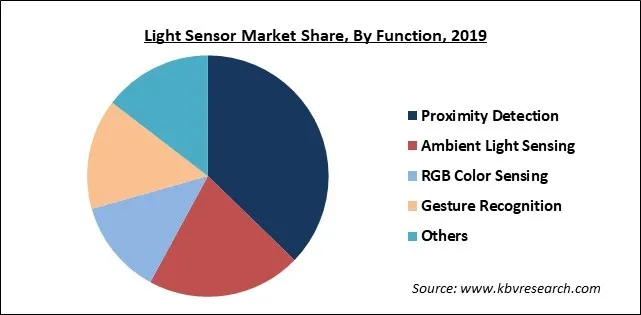
Based on Function, the market is segmented into Proximity Detection, Ambient Light Sensing, RGB Color Sensing, Gesture Recognition and Others. The segment of ambient light sensing is anticipated to develop at a considerable rate due to the rising demand for electronic products. Light sensors have become an integral component of consumer electronics to fulfill various design requirements. Furthermore, ambient light sensing technology is getting popular due to its rising adoption in smart electronics. This is significant because of the fact that light detectors assist in adjusting the intensity of LED and LCD screens according to the amount of ambient light. They also save energy and provide a suitable amount of screen brightness to users.
Based on End User, the market is segmented into Consumer Electronics, Automotive, Healthcare, Industrial and Others. The increasing implementation of ambient light sensors and proximity sensors in mobile devices has increased the development of the consumer electronics segment in the light sensors market. The technologies in the car with in-built proximity sensors and gesture recognition features have provided the driver with a user-friendly interface. Besides, the growing safety of drivers and assistance is encouraging the development of the market for the automotive sector.
| Report Attribute | Details |
|---|---|
| Market size value in 2019 | USD 2.8 Billion |
| Market size forecast in 2026 | USD 5.5 Billion |
| Base Year | 2019 |
| Historical Period | 2016 to 2018 |
| Forecast Period | 2020 to 2026 |
| Revenue Growth Rate | CAGR of 12.6% from 2020 to 2026 |
| Number of Pages | 244 |
| Number of Tables | 383 |
| Report coverage | Market Trends, Revenue Estimation and Forecast, Segmentation Analysis, Regional and Country Breakdown, Companies Strategic Developments, Company Profiling |
| Segments covered | Function, Output, End User, Region |
| Country scope | US, Canada, Mexico, Germany, UK, France, Russia, Spain, Italy, China, Japan, India, South Korea, Singapore, Malaysia, Brazil, Argentina, UAE, Saudi Arabia, South Africa, Nigeria |
| Growth Drivers |
|
| Restraints |
|
Free Valuable Insights: Global Light Sensor Market to reach a market size of $5.5 Billion by 2026
Based on Regions, the market is segmented into North America, Europe, Asia Pacific, and Latin America, Middle East & Africa. Asia-Pacific (APAC) would dominate the light sensor market in the near future, due to the increasing need for consumer electronics and automobiles and the emerging population in the region. In the regional automotive segment, the acceptance of electric vehicles (EV) is a leading trend, as authorities of many countries are increasing support for their deployment.
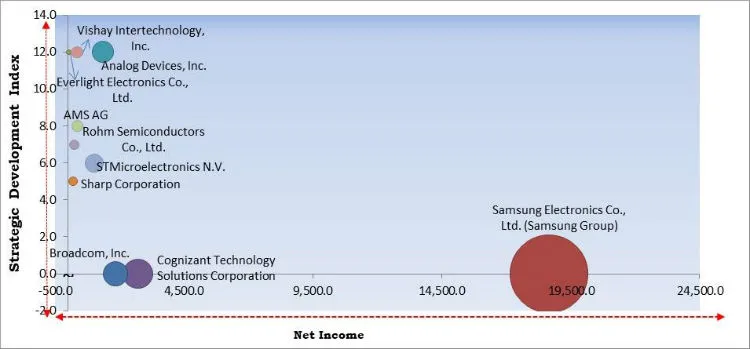
The major strategies followed by the market participants are Product Launches and Partnerships. Based on the Analysis presented in the Cardinal matrix; Samsung Electronics Co., Ltd. is the major forerunner in the Light Sensor Market. Companies such as Vishay Intertechnology, Inc., Analog Devices, Inc., and Everlight Electronics Co., Ltd., AMS AG, Rohm Semiconductors Co., Ltd., STMicroelectronics N.V., Sharp Corporation, Broadcom, Inc., and Cognizant Technology Solutions Corporation are some of the key innovators in the market.
The market research report covers the analysis of key stake holders of the market. Key companies profiled in the report include Broadcom, Inc., Analog Devices, Inc., Cognizant Technology Solutions Corporation, Samsung Electronics Co., Ltd. (Samsung Group), STMicroelectronics N.V., Sharp Corporation, Rohm Semiconductors Co., Ltd., Vishay Intertechnology, Inc., Everlight Electronics Co., Ltd. and AMS AG.
By Function
By Output
By End User
By Geography
Companies Profiled

he global light sensor market size is expected to reach $5.5 billion by 2026.
There are several reason that cause high demand of this market one of them is reduction in size of devices and advancement in light-sensing technologies.
Broadcom, Inc., Analog Devices, Inc., Cognizant Technology Solutions Corporation, Samsung Electronics Co., Ltd. (Samsung Group), STMicroelectronics N.V., Sharp Corporation, Rohm Semiconductors Co., Ltd., Vishay Intertechnology, Inc., Everlight Electronics Co., Ltd. and AMS AG.
The segment of proximity detection dominated the market in 2019 and represented a significant revenue share.
The expected CAGR of light sensor market is 12.6% from 2020 to 2026.
Our team of dedicated experts can provide you with attractive expansion opportunities for your business.



 Unique Offerings