The sample copy of this report is available for access.
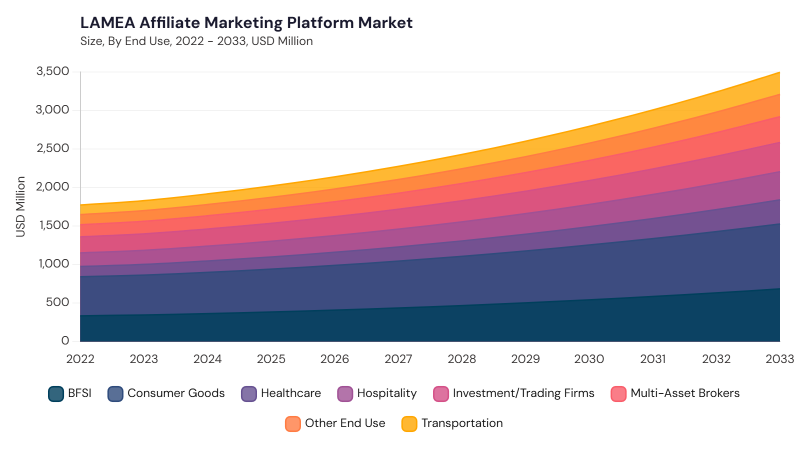
The LAMEA Affiliate Marketing Platform Market is expected to reach USD 2.6 billion by 2029, growing at a CAGR of 7.3% during (2026 – 2033).
The LAMEA Affiliate Marketing Platform Market developed as internet access, mobile adoption, and digital commerce expanded across Latin America, the Middle East, and Africa. Early affiliate activity relied on basic banner placements, referral links, and simple publisher-advertiser networks. Over time, improved tracking tools, real-time analytics, automated commission systems, and AI-driven insights transformed affiliate platforms into structured performance marketing solutions. The rise of fintech, e-commerce, social commerce, and localized influencer partnerships further expanded adoption across regional markets.
The LAMEA Affiliate Marketing Platform Market is being shaped by expanding digital commerce, mobile shopping, social media engagement, fintech adoption, and rising demand for measurable marketing ROI. Businesses are using affiliate platforms to manage partner onboarding, campaign tracking, conversion attribution, commission payouts, fraud monitoring, and performance reporting. Demand is supported by growing online retail, digital banking, social media creators, e-learning platforms, telehealth services, travel booking platforms, and mobile-first consumer behavior. Vendors are focusing on localized payment systems, multilingual support, AI analytics, mobile attribution, compliance tools, secure transactions, and scalable dashboards.
Based on Application, the market is segmented into Physical Products and Virtual Products. The Physical Products market dominated the LAMEA Affiliate Marketing Platform Market by Application in 2025, and would continue to be a dominant market till 2033; thereby, achieving a market value of USD 1.3 billion by 2029, growing at a CAGR of 6.9 % during the forecast period. Additionally, The Virtual Products market is expected to witness highest CAGR of 7.7% during (2026 - 2033).
Physical Products lead due to expanding online retail channels, social selling, mobile commerce, regional marketplaces, and influencer-led product promotion. Brands use affiliate platforms to promote fashion, electronics, beauty products, household merchandise, food items, personal care products, and other tangible goods through creators, coupon platforms, review sites, and local shopping communities. Virtual Products remain important as mobile applications, digital finance platforms, software subscriptions, streaming content, gaming products, e-learning services, and telecom offerings increasingly use affiliate-driven acquisition. This segment benefits from broad digital reach, flexible conversion tracking, app-based referrals, subscription monitoring, and promotion through finance educators, digital publishers, gaming communities, and social media influencers.
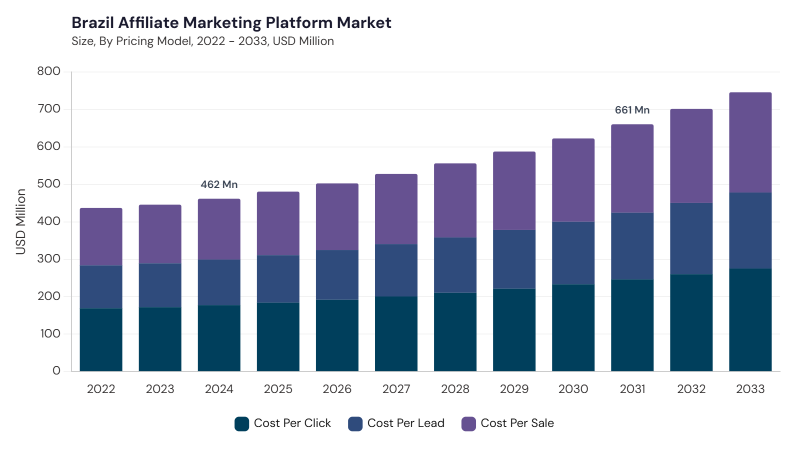
Based on Pricing Model, the market is segmented into Cost Per Click, Cost Per Sale, and Cost Per Lead. The Cost Per Click market dominated the LAMEA Affiliate Marketing Platform Market by Pricing Model in 2025, and would continue to be a dominant market till 2033; thereby, achieving a market value of USD 985.3 million by 2029, growing at a CAGR of 6.7 % during the forecast period. The Cost Per Sale market is expected to witness a CAGR of 7.6% during (2026 - 2033).
Cost Per Click leads due to its strong use in online visibility, traffic generation, mobile campaigns, social media promotion, and early-stage consumer engagement. It enables advertisers to test markets, build awareness, and evaluate audience response through measurable interactions. Cost Per Sale remains highly relevant for e-commerce, travel, retail, digital services, and performance-focused campaigns because payouts are linked to completed transactions. Cost Per Lead supports BFSI, education, insurance, real estate, healthcare, and service-based enterprises where qualified inquiries, sign-ups, applications, or registrations matter more than immediate purchases. Hybrid models are also gaining relevance as advertisers balance traffic, leads, and conversion outcomes.
Based on End Use, the market is segmented into Consumer Goods, BFSI, Investment/Trading Firms, Hospitality, Multi-Asset Brokers, Healthcare, Transportation, and Other End Use. Consumer Goods lead due to expanding e-commerce platforms, mobile shopping, social commerce, creator-led promotions, and growing use of affiliate campaigns for FMCG, apparel, electronics, beauty, and personal care products. BFSI uses affiliate platforms for credit cards, loans, insurance, digital banking, fintech products, and lead generation with strong compliance and fraud controls.
Investment/Trading Firms and Multi-Asset Brokers rely on affiliates for brokerage accounts, trading applications, demo registrations, and finance-focused customer acquisition. Hospitality, Healthcare, Transportation, and Other End Use areas add demand through hotel bookings, travel packages, telemedicine, wellness products, ride-hailing, logistics, education services, utilities, and niche digital services.
Free Valuable Insights: Affiliate Marketing Platform Market Size Worth USD 34.3 Billion billion by 2033
Based on Country, the market is segmented into Brazil, Argentina, UAE, Saudi Arabia, South Africa, Nigeria, and Rest of LAMEA. The Brazil market dominated the LAMEA Affiliate Marketing Platform Market by Country in 2025, and would continue to be a dominant market till 2033; thereby, achieving a market value of USD 587.6 million by 2029, growing at a CAGR of 5.8 % during the forecast period. The Argentina market is expected to witness a CAGR of 7.9% during (2026 - 2033). Additionally, The UAE market is expected to witness a CAGR of 6.4% during (2026 - 2033).
Brazil leads due to strong e-commerce growth, mobile internet usage, localized affiliate networks, digital payment adoption, AI-driven campaign tools, and creator-led product promotion. Argentina supports market growth through mobile traffic monetization, localized compliance tools, iGaming-related affiliate activity, e-commerce expansion, and AI-enabled fraud detection. The UAE contributes through advanced digital infrastructure, social commerce, influencer partnerships, cross-border payment systems, and compliance-focused platform adoption. Saudi Arabia, South Africa, and Nigeria add momentum through mobile-first campaigns, localized content, fintech partnerships, regional payment integration, and creator-based affiliate models, while Rest of LAMEA benefits from AI analytics, hyper-localization, digital commerce, and expanding affiliate partnerships.

By Application
By Pricing Model
By End Use
By Country
Set to reach $2.6 Billion by 2029, growing at 7.3% CAGR during 2026-2033.
Brazil leads with $587.6 million by 2029, growing at a CAGR of 5.8% during the forecast period.
The Virtual Products market is expected to witness the highest CAGR of 7.7% during 2026-2033.
Physical Products market hits $1.3 billion by 2029, growing at a CAGR of 6.9% during the forecast period.
The UAE market is expected to witness a CAGR of 6.4% during 2026-2033.
Cost Per Click market reaches $985.3 million by 2029, growing at a CAGR of 6.7% during the forecast period.
Our team of dedicated experts can provide you with attractive expansion opportunities for your business.




 Unique Offerings