The sample copy of this report is available for access.
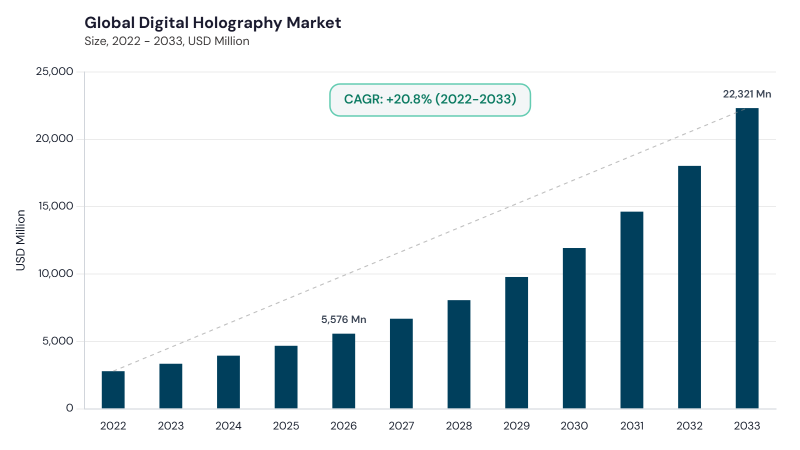
“Global Digital Holography Market to reach a market value of USD 22,321.49 Million by 2033 growing at a CAGR of 21.9%”
The Global Digital Holography Market is expected to reach USD 22.3 billion by 2033, growing at a CAGR of 21.9% during (2026 - 2033).
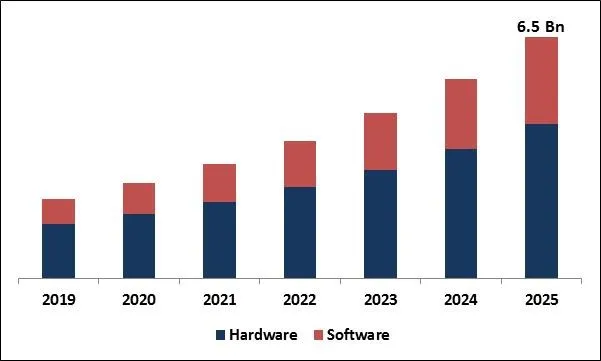
Digital holography is driven by rising demand for three-dimensional visualization, high-resolution imaging, non-contact measurement, precise surface analytics across industrial, semiconductor, healthcare, aerospace, aerospace, automotive, and research applications. Market demand is also surging as customers focus on enhanced accuracy, faster inspection, and real-tome monitoring. Digital holography market is evolved from early holographic imaging research, when systems focused on reconstructing and capturing light wavefronts to create three-dimensional representations.
Digital holography market is expanding as digital holography becomes largely important for industrial inspection, biomedical microscopy, optical testing, semiconductor metrology, non-contract surface analysis, and medical visualization. Compact optical components, AI-enabled reconstruction, real-time computational imaging, and high-resolution sensors are enhancing system usability and commercial adoption. The shift toward label-free imaging, automated quality control, and immersive visualization is strengthening demand across both industrial and scientific environments.
Competitive landscape of digital holography market are dynamic shaped by application-specific specialization, technological innovation, and regional customization. Market players compete through advanced holotomography, holographic microscopy, interactive visualization, quantitative phase imaging, AI-supported analytics, interactive visualization, and integrated hardware-software systems.
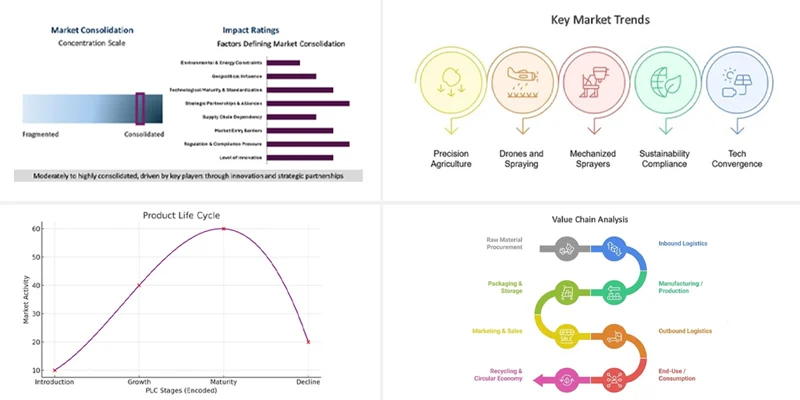

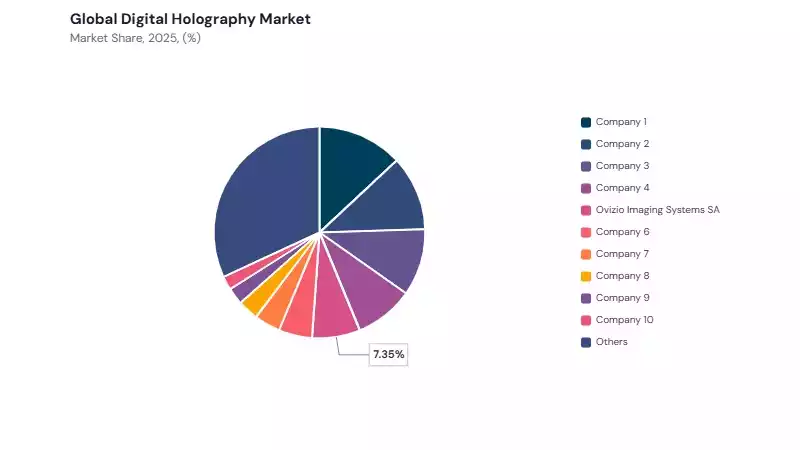
Digital holography market represents a innovation-driven and highly dynamic competitive landscape, driven by medical visualization providers, specialized digital holographic microscopy developers, quantitative phase imaging companies, holographic technology specialists, and optical metrology firms. Ovizio, Park Systems, RealView Imaging, Holoxica, Light Logics, Geola Digital, and MetroLaser further diversify the market through medical holography, precision metrology, aerospace diagnostics, holographic recording, and specialized optical engineering.
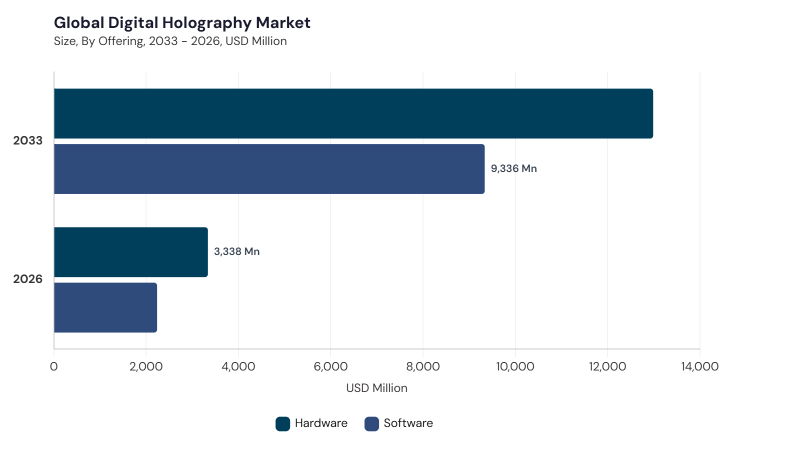
Based on Offering, the market is segmented into Hardware and Software. The Hardware market dominated the Global Digital Holography Market by Offering in 2025, and would continue to be a dominant market till 2033; thereby, achieving a market value of USD 13.0 billion by 2033, growing at a CAGR of 21.4 % during the forecast period. The Software market is expected to witness a CAGR of 22.6% during (2026 - 2033).
Hardware remains the leading segment as holographic sensors, lasers, cameras, optical components, spatial light modulators, and imaging systems form the physical foundation of digital holography solutions. Software is gaining importance through image reconstruction, simulation, visualization, data processing, AI-enabled analysis, and cloud-based holographic workflows. Together, both segments support accurate imaging, faster analysis, and broader deployment across research, healthcare, security, and industrial inspection.
Based on Dimension, the market is segmented into Two Dimensional (2D) and Three Dimensional (3D). The Two Dimensional (2D) market dominated the Global Digital Holography Market by Dimension in 2025, and would continue to be a dominant market till 2033; thereby, achieving a market value of USD 11.7 billion by 2033, growing at a CAGR of 21.5 % during the forecast period. The Three Dimensional (3D) market is expected to witness a CAGR of 22.4% during (2026 - 2033).
Two Dimensional (2D) remains widely adopted in microscopy, surface inspection, document security, quality control, and cost-effective imaging where flat-plane analysis is sufficient. Three Dimensional (3D) supports volumetric imaging, immersive displays, medical diagnostics, digital twins, telepresence, and interactive visualization. Both dimensions serve distinct use cases, with 2D supporting practical scalability and 3D enabling advanced spatial analysis.
Based on Application, the market is segmented into Holographic Microscopy, Holographic Imaging, Holographic Telepresence, and Other Application. The Holographic Microscopy market dominated the Global Digital Holography Market by Application in 2025, and would continue to be a dominant market till 2033; thereby, achieving a market value of USD 7.0 billion by 2033, growing at a CAGR of 21 % during the forecast period. The Holographic Imaging market is expected to witness a CAGR of 22.1% during (2026 - 2033). Additionally, The Holographic Telepresence market is expected to witness highest CAGR of 22.6% during (2026 - 2033).
Holographic Microscopy leads due to its use in cell analysis, biomedical research, non-invasive imaging, live-cell monitoring, and drug discovery. Holographic Imaging supports industrial inspection, metrology, authentication, and scientific visualization, while Holographic Telepresence enables immersive communication, virtual collaboration, education, and remote interaction. Other Application includes security, data storage, cultural preservation, education, and advanced display technologies.
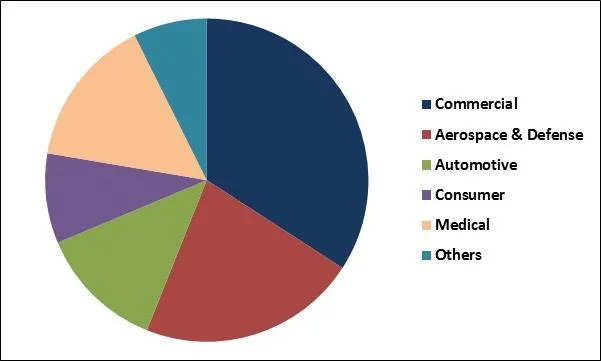
Based on End Use, the market is segmented into Healthcare, Consumer Electronics, Aerospace & Defense, Automotive, Entertainment, Education, and Other End Use. The Healthcare market dominated the Global Digital Holography Market by End Use in 2025, and would continue to be a dominant market till 2033; thereby, achieving a market value of USD 4.7 billion by 2033, growing at a CAGR of 20.6 % during the forecast period. The Consumer Electronics market is expected to witness a CAGR of 20.6% during (2026 - 2033). Additionally, The Aerospace & Defense market is expected to witness highest CAGR of 22.3% during (2026 - 2033).
Healthcare leads through medical diagnostics, biomedical imaging, digital pathology, life science research, and label-free microscopy. Consumer Electronics supports holographic displays and augmented visualization, while Aerospace & Defense uses holography for inspection, simulation, surveillance, and secure imaging. Automotive, Entertainment, Education, and Other End Use apply the technology in head-up displays, immersive content, interactive learning, industrial inspection, research, and commercial visualization.
Free Valuable Insights: Digital Holography Market Size to reach $22.3 Billion by 2033
Region-wise, the Digital Holography Market is analyzed across North America, Europe, Asia Pacific, and LAMEA. In 2025, the North America dominated the digital holographic market and is estimated to remain dominant in the forecast period, achieving a market value of USD 7.5 billion achieving a CAGR of 21.3% by 2033. The Europe market is predicted to grow at a CAGR of 21.5% during 2026-2033. Furthermore, the Asia Pacific is estimated to expand at a CAGR of 22.6% in the forecast period.
North America market is driven by medical imaging investments, advanced research infrastructure, early adoption of holographic visualization, and defense technologies. Europe region is shaped by industrial automation, photonics research, precision manufacturing, and healthcare imaging. Asia Pacific region is gaining traction through healthcare modernization, consumer electronics manufacturing, and optical imaging investments. Furthermore, LAMEA region is witnessing expansion through growing adoption across education, healthcare, and industrial applications, and gradual digital transformation.
| Report Attribute | Details |
|---|---|
| Market size value in 2026 | USD 5.6 billion |
| Market size forecast in 2033 | USD 22.3 billion |
| Base Year | 2025 |
| Historical Period | 2022 to 2024 |
| Forecast Period | 2026 to 2033 |
| Revenue Growth Rate | CAGR of 21.9% from 2026 to 2033 |
| Number of Pages | 633 |
| Tables | 810 |
| Report Coverage | Market Trends, Revenue Estimation and Forecast, Segmentation Analysis, Regional and Country Breakdown, Competitive Landscape, Market Share Analysis, Company Profiling, Companies Strategic Developments, SWOT Analysis, Product Life Cycle Analysis, Value Chain Analysis, Market Consolidation Analysis, Key Customer Criteria, Pandemic Impact Analysis, and Winning Imperatives |
| Segments Covered | Offering, Dimension, Application, End Use, and Geography |
| Country Scope |
|
| Companies Included | Tomocube, Inc.; Phase Holographic Imaging PHI AB; Nanolive SA; Park Systems Corp. (Lyncée Tec SA); Ovizio Imaging Systems SA (ChemoMetec A/S); Holoxica Limited; RealView Imaging Ltd.; Geola Digital UAB; Light Logics Holography and Optics Pvt. Ltd.; MetroLaser, Inc. |
By Offering
By Dimension
By Application
By End Use
By Geography
The market is valued at USD 5.6 billion in 2026.
The Hardware segment leads, projected to reach USD 13.0 billion by 2033.
Key players include Tomocube, Inc.; Phase Holographic Imaging PHI AB; Nanolive SA; Park Systems Corp.; Ovizio Imaging Systems SA.
North America leads with a market value of USD 7.5 billion by 2033.
Advanced visualization capabilities and rising healthcare applications are fueling market growth.
Holographic Microscopy is prominent, reaching USD 7.0 billion by 2033.
Our team of dedicated experts can provide you with attractive expansion opportunities for your business.








 Unique Offerings