The sample copy of this report is available for access.
“Global Continuous Emission Monitoring Systems Market to reach a market value of USD 8935.84 Million by 2033 growing at a CAGR of %”
The Global Continuous Emission Monitoring Systems Market is expected to reach USD 8.9 billion by 2033, growing at a CAGR of 10.9% during (2026 - 2033).
Tighter environmental regulations, rising industrial focus on emission control, real-time pollutant monitoring, and stronger compliance requirements are driving the Continuous Emission Monitoring Systems Market across power generation, oil and gas, chemicals, cement, metals, waste management, and manufacturing industries. Growth is further strengthened by high-accuracy sensors, remote monitoring, cloud-based analytics, predictive maintenance, automated reporting, multi-gas measurement, digital compliance platforms, and integrated emissions data management systems.
Growth in the Continuous Emission Monitoring Systems Market is driven by the transition from periodic emission checks toward continuous, automated, and auditable monitoring. Industrial facilities increasingly require systems that can deliver accurate pollutant data, support regulatory reporting, detect emission anomalies, and integrate with plant-control and environmental management platforms. CEMS adoption is also expanding as governments tighten air-quality rules and companies use emissions data to support decarbonization, ESG reporting, carbon accounting, and sustainability performance. The market is further benefiting from IoT-enabled sensors, AI-based analytics, remote diagnostics, predictive maintenance, automated calibration, and cloud-connected compliance systems.
The competitive environment is regulation-driven and moderately fragmented, with global automation companies, analytical instrumentation suppliers, gas-analysis specialists, environmental monitoring vendors, and CEMS system integrators competing across the market. ABB, Siemens, and Thermo Fisher Scientific form the leading tier through broad process analytics, gas analysis, sampling, data acquisition, and integrated compliance capabilities. HORIBA and Endress+Hauser strengthen the market through gas-analysis expertise, process instrumentation, flow measurement, and industrial automation capabilities. Emerson, AMETEK, ENVEA, DURAG GROUP, and Teledyne Technologies add depth through laser spectroscopy, process analyzers, environmental monitoring, dust and mercury measurement, DAHS platforms, and trace gas analysis.
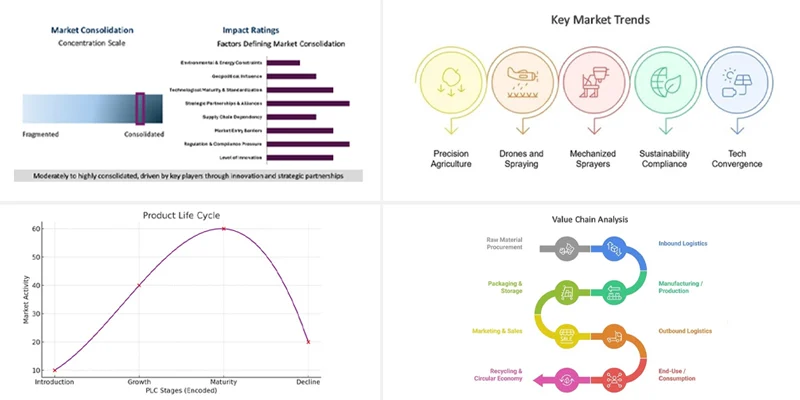

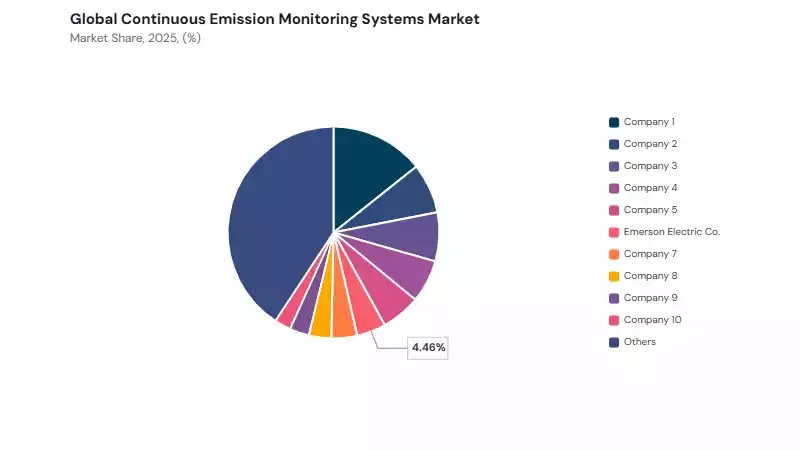
The global Continuous Emission Monitoring Systems Market reflects a moderately fragmented and regulation-driven competitive landscape, with diversified automation companies, gas-analysis specialists, environmental monitoring vendors, process instrumentation suppliers, and regional system integrators competing across industrial applications. ABB holds the leading position through integrated gas-analysis systems, FTIR platforms, data acquisition, sampling, and digital monitoring capabilities. Siemens and Thermo Fisher Scientific maintain strong positions through process analytics, modular CEMS, analyzers, probes, system integration, and compliance-oriented configurations. HORIBA and Endress+Hauser form another important tier through gas analysis, process measurement, flow measurement, and integrated industrial instrumentation.
Based on Product, the market is segmented into Gas Analyzers, Sample Probes, Data Acquisition Systems, Software Solutions, and Other Product. The Gas Analyzers market dominated the Global Continuous Emission Monitoring Systems Market by Product in 2025, and would continue to be a dominant market till 2033; thereby, achieving a market value of USD 3.2 billion by 2033, growing at a CAGR of 10.2 % during the forecast period. The Sample Probes market is expected to witness a CAGR of 10.6% during (2026 - 2033). The Other Product market is expected to witness a CAGR of 12.1% during (2026 - 2033).
Gas Analyzers remain the leading product category because they form the core measurement layer of CEMS installations. These systems detect and quantify pollutants such as SO2, NOx, CO, CO2, oxygen, VOCs, and other regulated gases across power plants, refineries, cement facilities, chemical units, and manufacturing plants. Sample Probes support reliable extraction of representative gas samples from stacks and exhaust streams, while Data Acquisition Systems collect, validate, store, and transfer emissions data for operational and compliance needs. Software Solutions are gaining importance as operators adopt automated reporting, analytics dashboards, data visualization, environmental compliance records, and predictive diagnostics. Other Product includes auxiliary components, calibration systems, sampling accessories, and specialized monitoring equipment required for complete CEMS installations.
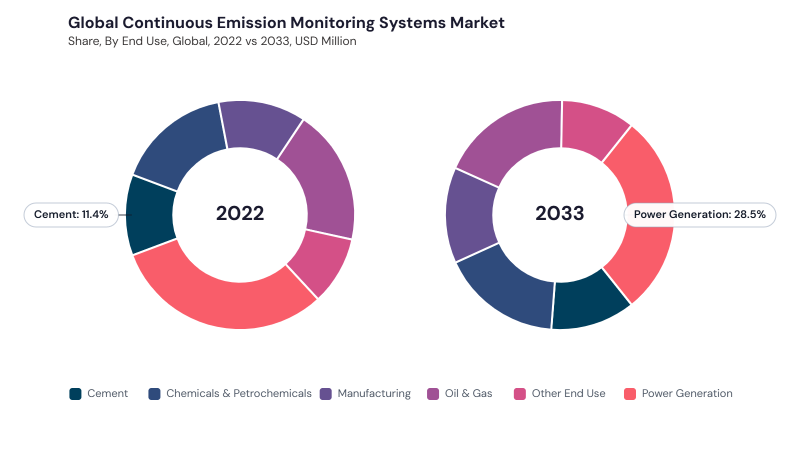
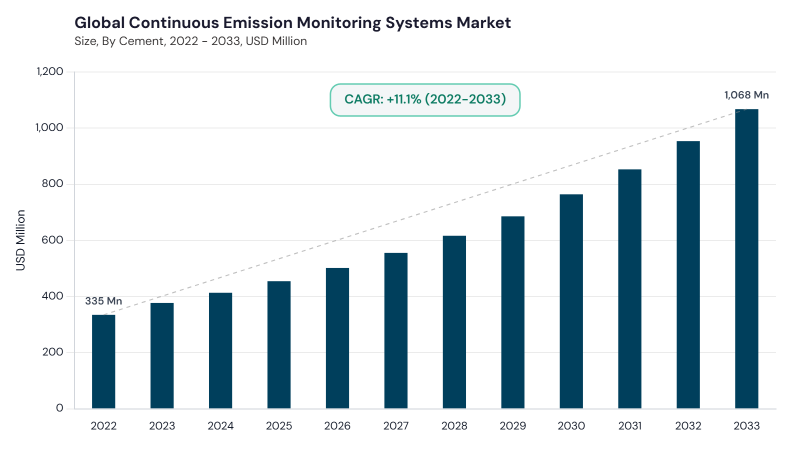
Based on End Use, the market is segmented into Power Generation, Oil & Gas, Chemicals & Petrochemicals, Manufacturing, Cement, and Other End Use. The Power Generation market dominated the Global Continuous Emission Monitoring Systems Market by End Use in 2025, and would continue to be a dominant market till 2033; thereby, achieving a market value of USD 2.5 billion by 2033, growing at a CAGR of 10 % during the forecast period. The Oil & Gas market is expected to witness a CAGR of 10.6% during (2026 - 2033). Additionally, The Chemicals & Petrochemicals market is expected to witness highest CAGR of 11.3% during (2026 - 2033).
Power Generation remains the leading end-use segment due to continuous monitoring needs across coal-fired, gas-fired, biomass, and thermal power plants. These facilities require accurate monitoring of combustion-related pollutants to comply with emission limits and maintain environmental permits. Oil & Gas adoption is supported by refineries, petrochemical processing, gas treatment, and leak-control requirements, while Chemicals & Petrochemicals require CEMS for complex emission streams and hazardous pollutant monitoring. Manufacturing uses CEMS to improve environmental transparency and meet local air-quality standards, while Cement facilities require rugged systems for kiln emissions, particulate matter, NOx, SO2, and CO2 monitoring. Other End Use includes waste incineration, pulp and paper, metals, mining, and other industries with specialized emissions profiles.
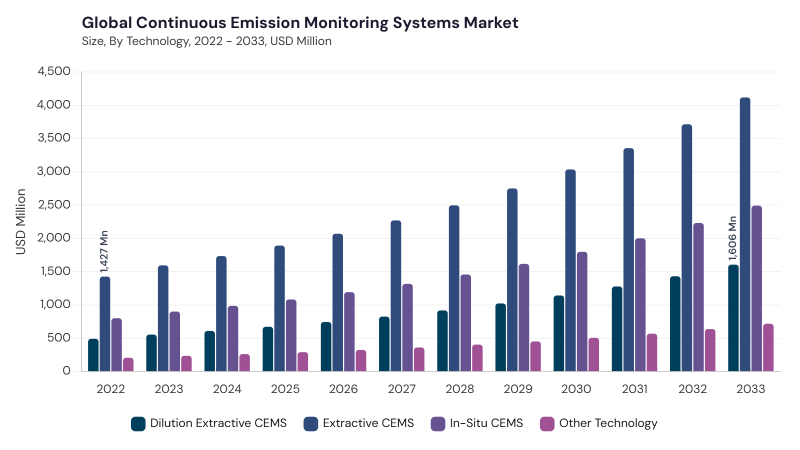
Based on Technology, the market is segmented into Extractive CEMS, In-Situ CEMS, Dilution Extractive CEMS, and Other Technology. The Extractive CEMS market dominated the Global Continuous Emission Monitoring Systems Market by Technology in 2025, and would continue to be a dominant market till 2033; thereby, achieving a market value of USD 4.1 billion by 2033, growing at a CAGR of 10.3 % during the forecast period. The In-Situ CEMS market is expected to witness a CAGR of 11.1% during (2026 - 2033). Additionally, The Dilution Extractive CEMS market is expected to witness highest CAGR of 11.6% during (2026 - 2033).
Extractive CEMS remains the dominant technology because it enables gas samples to be extracted, conditioned, and analyzed under controlled conditions, supporting accurate measurement across demanding industrial processes. In-Situ CEMS is gaining demand where direct stack or duct measurement can reduce sampling complexity and support faster response times. Dilution Extractive CEMS is used where sample dilution and conditioning are needed to achieve reliable measurement under challenging process conditions. Other Technology includes advanced spectroscopic systems, optical methods, sensor networks, remote sensing, and hybrid monitoring platforms. Technology adoption is increasingly influenced by analyzer accuracy, response time, calibration stability, multi-gas capability, maintenance needs, regulatory certification, and suitability for harsh operating environments.
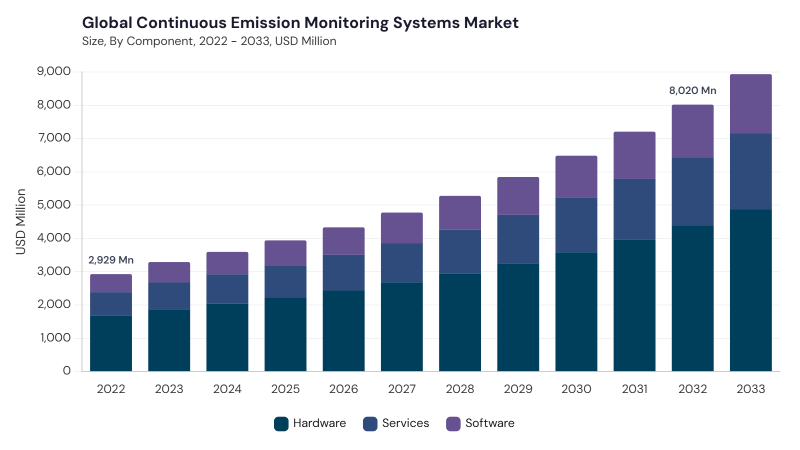
Based on Component, the market is segmented into Hardware, Services, and Software. The Hardware market dominated the Global Continuous Emission Monitoring Systems Market by Component in 2025, and would continue to be a dominant market till 2033; thereby, achieving a market value of USD 4.8 billion by 2033, growing at a CAGR of 10.4 % during the forecast period. The Services market is expected to witness a CAGR of 11.4% during (2026 - 2033). Additionally, The market is expected to witness highest CAGR of 11.6% during (2026 - 2033).
Hardware remains the leading component category because every CEMS installation depends on analyzers, sensors, probes, sampling equipment, calibration systems, flow meters, particulate monitors, and associated instrumentation at emission sources. Services are essential because CEMS require installation, commissioning, calibration, preventive maintenance, repairs, certification support, performance testing, and regulatory verification throughout their lifecycle. Software is expanding as industrial operators increasingly require automated reporting, emissions data management, visualization, audit trails, predictive diagnostics, centralized monitoring, and integration with ESG or environmental compliance platforms. The growing convergence of hardware, services, and software is shifting CEMS from standalone monitoring equipment toward integrated environmental data infrastructure.
Free Valuable Insights: Continuous Emission Monitoring Systems Market Size to reach $8.9 Billion by 2033
Region-wise, the Continuous Emission Monitoring Systems Market is analyzed across North America, Europe, Asia Pacific, and LAMEA. The North America market dominated the Global Continuous Emission Monitoring Systems Market by Region in 2025, and would continue to be a dominant market till 2033; thereby, achieving a market value of USD 3.0 billion by 2033, growing at a CAGR of 10.3 % during the forecast period. The Europe market is expected to witness a CAGR of 10.5% during (2026 - 2033). Additionally, The Asia Pacific market is expected to witness a CAGR of 11.4% during (2026 - 2033).
North America remains a major market due to strong environmental enforcement, mature industrial infrastructure, power generation monitoring requirements, oil and gas emission controls, and rising adoption of digital compliance platforms. Europe benefits from stringent industrial emission regulations, greenhouse gas monitoring priorities, sustainability targets, data reporting standards, and demand for certified monitoring systems across Germany, the UK, France, Russia, Spain, Italy, and Rest of Europe. Asia Pacific is expanding through rapid industrialization, energy-sector growth, stricter air-quality rules, manufacturing expansion, and investment in environmental monitoring across China, Japan, India, South Korea, Singapore, and Malaysia. LAMEA is developing through oil and gas activity, power generation projects, industrial modernization, environmental compliance upgrades, and gradual adoption of real-time emissions tracking across Brazil, Argentina, UAE, Saudi Arabia, South Africa, and Nigeria.
| Report Attribute | Details |
|---|---|
| Market size value in 2026 | USD 4.3 billion |
| Market size forecast in 2033 | USD 8.9 billion |
| Base Year | 2025 |
| Historical Period | 2022 to 2024 |
| Forecast Period | 2026 to 2033 |
| Revenue Growth Rate | CAGR of 10.9% from 2026 to 2033 |
| Number of Pages | 649 |
| Tables | 690 |
| Report Coverage | Market Trends, Revenue Estimation and Forecast, Segmentation Analysis, Regional and Country Breakdown, Competitive Landscape, Market Share Analysis, Company Profiling, Companies Strategic Developments, SWOT Analysis, Product Life Cycle Analysis, Value Chain Analysis, Market Consolidation Analysis, Key Customer Criteria, Pandemic Impact Analysis, and Winning Imperatives |
| Segments Covered | Product, End Use, Technology, Component, and Geography |
| Country Scope |
|
| Companies Included | ABB; Siemens; Thermo Fisher Scientific; HORIBA; Endress+Hauser; Emerson; AMETEK; ENVEA; DURAG GROUP; Teledyne Technologies |
By Product
By End Use
By Technology
By Component
By Geography
The market is valued at USD 4.3 billion in 2026.
The market is expected to reach USD 8.9 billion by 2033.
ABB, Siemens, Thermo Fisher Scientific, HORIBA, Endress+Hauser, Emerson, AMETEK, ENVEA, DURAG GROUP, Teledyne Technologies.
Gas Analyzers lead with a market value of USD 3.2 billion by 2033.
North America leads with a market value of USD 3.0 billion by 2033.
Enhanced regulatory frameworks and rising industrialization drive market growth.
Our team of dedicated experts can provide you with attractive expansion opportunities for your business.






 Unique Offerings
