“Global Automotive Over-The-Air Updates Market to reach a market value of USD 1,699.83 Million by 2033 growing at a CAGR of 20.3%”
The Global Automotive Over-The-Air Updates Market is expected to reach USD 18.3 billion by 2033, growing at a CAGR of 18.4% during (2026 – 2033).

The Automotive Over-The-Air Updates Market is growing due to rising adoption of connected vehicles, software-defined mobility, electric vehicles, advanced driver assistance systems, cybersecurity updates, and remote software management. Automakers are increasingly using OTA updates to reduce service visits, improve vehicle performance, manage recalls efficiently, and deliver continuous digital feature improvements. The market originated from the need to improve vehicle software management and reduce dependence on physical service visits. Initially, vehicle updates were handled through dealerships and manual servicing, creating cost and time challenges. With the development of telematics, embedded systems, cloud platforms, and secure wireless communication, OTA solutions became a practical method for remote software delivery.
The market is growing as vehicles become more connected, software-intensive, and digitally managed across their lifecycle. OTA updates allow automakers to deliver software fixes, security patches, feature upgrades, navigation improvements, and performance enhancements without physical intervention. This supports lower recall costs, faster maintenance response, stronger customer experience, and improved vehicle uptime. The expansion of electric vehicles, autonomous driving functions, telematics platforms, and digital cockpit systems is increasing the need for secure and scalable OTA infrastructure.
The competitive landscape is moderately consolidated and driven by technology differentiation, platform reliability, cybersecurity strength, and OEM integration capability. Tier-one automotive suppliers, software firms, semiconductor companies, cloud providers, and specialist OTA vendors compete by offering secure update management, remote diagnostics, lifecycle software tools, and cloud-based deployment platforms. Competition is expected to intensify as automakers move toward software-defined vehicles and centralized computing platforms. Future differentiation will depend on secure delivery, update speed, scalability, compliance readiness, and the ability to support complex vehicle software ecosystems.

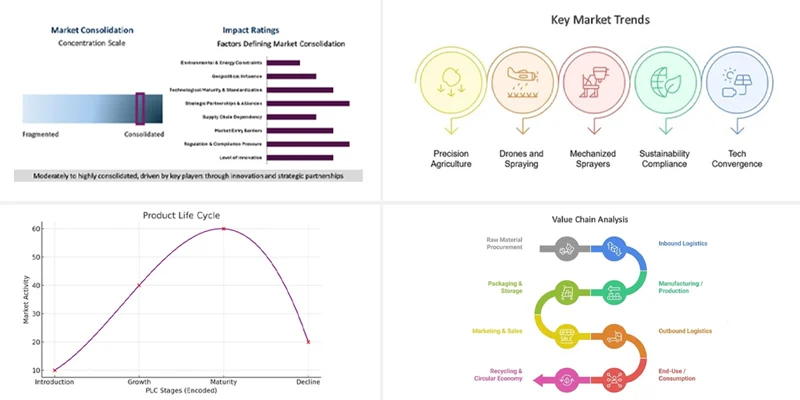

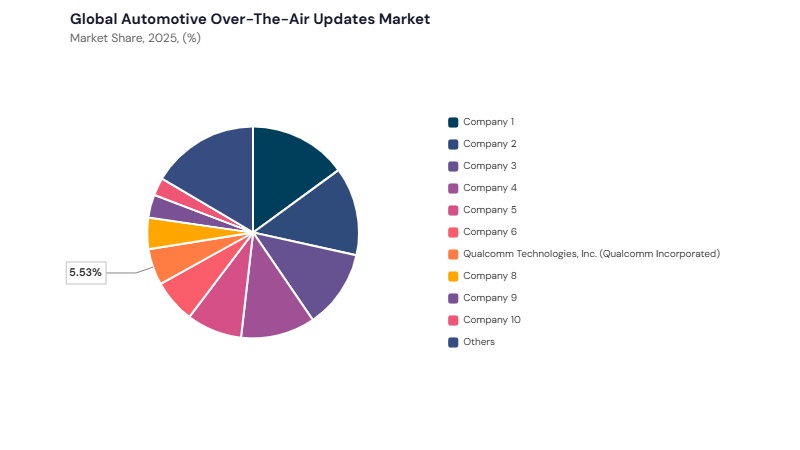
The Automotive Over-The-Air Updates Market is moderately consolidated, with strong participation from global automotive suppliers, connected vehicle software vendors, semiconductor companies, and specialist OTA platform providers. Robert Bosch GmbH, HARMAN International Industries, Continental AG, Aptiv PLC, Airbiquity, HERE Technologies, Qualcomm Technologies, NXP Semiconductors, Sibros Technologies, and Aurora Labs are key participants. Leading companies compete through secure software deployment, cloud-native update platforms, connected vehicle ecosystems, embedded software expertise, and strong OEM relationships.

Based on Technology, the market is segmented into Software OTA, Firmware OTA, and Full-System OTA. The Software OTA (SOTA) market dominated the Global Automotive Over-The-Air Updates Market by Technology in 2025, and would continue to be a dominant market till 2033; thereby, achieving a market value of USD 8.1 billion by 2033, growing at a CAGR of 17.9 % during the forecast period. The Firmware OTA (FOTA) market is expected to witness a CAGR of 18.8% during (2026 - 2033). The Full-System OTA (FSOTA) market is expected to witness a CAGR of 18.9% during (2026 - 2033).
Software OTA remains a major technology area because it supports infotainment, navigation, telematics, cybersecurity patches, and digital feature updates. Firmware OTA is growing due to the increasing need to remotely manage embedded control units and hardware-linked software functions. Full-System OTA is gaining relevance as vehicles move toward centralized architectures and software-defined platforms. These technologies collectively support continuous improvement, lower service dependency, and stronger vehicle lifecycle management.
Based on Vehicle Type, the market is segmented into Hatchback & Sedan, SUV, LCV, and HCV. The Hatchback & Sedan market dominated the Global Automotive Over-The-Air Updates Market by Vehicle Type in 2025, and would continue to be a dominant market till 2033; thereby, achieving a market value of USD 6.4 billion by 2033, growing at a CAGR of 17.6 % during the forecast period. The SUV market is expected to witness a CAGR of 18.6% during (2026 - 2033). The HCV market is expected to witness a CAGR of 19.2% during (2026 - 2033).
Hatchback and Sedan models support broad OTA deployment due to large production bases and increasing integration of connected infotainment and telematics systems. SUVs are growing as consumers demand premium digital features, driver assistance tools, and remote performance updates. LCVs and HCVs are adopting OTA solutions for fleet management, remote diagnostics, predictive maintenance, safety compliance, and reduced vehicle downtime. Commercial adoption is expected to strengthen as logistics and fleet operations become more digitally managed.
Based on Vehicle Architecture Layer, the market is segmented into ECU-Level OTA, Domain Controller OTA, and Centralized or Zonal Architecture OTA. The ECU-Level OTA market dominated the Global Automotive Over-The-Air Updates Market by Vehicle Architecture Layer in 2025, and would continue to be a dominant market till 2033; thereby, achieving a market value of USD 7.1 billion by 2033, growing at a CAGR of 17.7 % during the forecast period. The Domain Controller OTA market is expected to witness a CAGR of 18.8% during (2026 - 2033). The Centralized/Zonal Architecture OTA market is expected to witness a CAGR of 19% during (2026 - 2033).
ECU-Level OTA remains important due to the large installed base of distributed electronic control units across existing vehicles. Domain Controller OTA is expanding as automakers consolidate vehicle functions into more integrated computing domains. Centralized and zonal architecture OTA is gaining momentum with software-defined vehicles, electric platforms, and advanced computing systems. This shift allows automakers to deploy broader, faster, and more coordinated software updates across multiple vehicle systems.
Based on Connectivity Technology, the market is segmented into Cellular Connectivity, Wi-Fi OTA, Vehicle-to-Everything or Edge-assisted OTA, and Satellite OTA. The Cellular (3G/4G/5G) market dominated the Global Automotive Over-The-Air Updates Market by Connectivity Technology in 2025, and would continue to be a dominant market till 2033; thereby, achieving a market value of USD 12.5 billion by 2033, growing at a CAGR of 18 % during the forecast period. The Wi-Fi OTA market is expected to witness a CAGR of 18.8% during (2026 - 2033). Additionally, The V2X/Edge-assisted OTA market is expected to witness highest CAGR of 20.4% during (2026 - 2033).
Cellular connectivity remains a key OTA delivery mode because it enables remote software deployment across connected vehicle fleets. Wi-Fi OTA supports high-speed updates in homes, dealerships, and service locations where stable internet access is available. Vehicle-to-everything and edge-assisted OTA are emerging with smart mobility infrastructure and low-latency software delivery needs. Satellite OTA supports vehicles operating in remote areas where terrestrial network availability remains limited.
Based on Vehicle System, the market is segmented into Infotainment & Connectivity, Telematics & Connectivity Modules, ADAS & Autonomous Driving, Powertrain & Energy Systems, and Safety & Security Systems. The Infotainment & Connectivity market dominated the Global Automotive Over-The-Air Updates Market by Vehicle System in 2025, and would continue to be a dominant market till 2033; thereby, achieving a market value of USD 4.4 billion by 2033, growing at a CAGR of 16.4 % during the forecast period. The Telematics & Connectivity Modules market is expected to witness a CAGR of 18.7% during (2026 - 2033). Additionally, The ADAS & Autonomous Driving market is expected to witness highest CAGR of 19.2% during (2026 - 2033).
Infotainment and connectivity systems remain key OTA application areas because they require frequent updates for navigation, multimedia, connected services, and user interfaces. Telematics modules are growing with remote diagnostics, fleet monitoring, and vehicle health management. ADAS and autonomous driving systems require continuous software refinement, sensor calibration, and safety improvements. Powertrain, energy, safety, and security systems are also gaining importance as vehicles become more electric, connected, and cybersecurity-sensitive.
Free Valuable Insights: Automotive Over-The-Air Updates Market Size to reach $18.3 Billion by 2033

Region-wise, the Automotive Over-The-Air Updates Market is analyzed across North America, Europe, Asia Pacific, and LAMEA. The North America market dominated the Global Automotive Over-The-Air Updates Market by Region in 2025, and would continue to be a dominant market till 2033; thereby, achieving a market value of USD 6.3 billion by 2033, growing at a CAGR of 17.8 % during the forecast period. The Asia Pacific market is expected to witness a CAGR of 19% during (2026 - 2033). Additionally, The Europe market is expected to witness a CAGR of 18% during (2026 - 2033).
North America is supported by early connected vehicle adoption, strong software-defined vehicle investments, and advanced telematics deployment. Europe is driven by cybersecurity regulation, premium connected vehicles, electric mobility, and automotive software modernization. Asia Pacific benefits from large vehicle production, electric vehicle expansion, and growing connected mobility platforms. LAMEA is gradually advancing with improving telecom infrastructure, connected fleet adoption, and rising digital vehicle management demand.
| Report Attribute | Details |
|---|---|
| Market size value in 2026 | USD 5.6 billion |
| Market size forecast in 2033 | USD 18.3 billion |
| Base Year | 2025 |
| Historical Period | 2022 to 2024 |
| Forecast Period | 2026 to 2033 |
| Revenue Growth Rate | CAGR of 18.4% from 2026 to 2033 |
| Number of Pages | 792 |
| Tables | 960 |
| Report Coverage | Market Trends, Revenue Estimation and Forecast, Segmentation Analysis, Regional and Country Breakdown, Competitive Landscape, Market Share Analysis, Company Profiling, Companies Strategic Developments, SWOT Analysis, Product Life Cycle Analysis, Value Chain Analysis, Market Consolidation Analysis, Key Customer Criteria, Pandemic Impact Analysis, and Winning Imperatives |
| Segments Covered | Technology, Vehicle Type, Vehicle Architecture Layer, Connectivity Technology, Vehicle System, and Geography |
| Country Scope |
|
| Companies Included | Robert Bosch GmbH; HARMAN International Industries, Inc.; Continental AG; Aptiv PLC; Airbiquity Inc.; HERE Technologies; Qualcomm Technologies, Inc.; NXP Semiconductors N.V.; Sibros Technologies Inc.; Aurora Labs Ltd. |
By Technology
By Vehicle Type
By Vehicle Architecture Layer
By Connectivity Technology
By Vehicle System
By Geography
The market is expected to reach USD 18.3 billion by 2033, growing at 18.4% CAGR during 2026-2033.
Software OTA leads, projected to reach USD 8.1 billion by 2033, supporting infotainment and cybersecurity updates.
Robert Bosch GmbH, HARMAN International, Continental AG, Aptiv PLC, and Airbiquity Inc. are leading companies.
Hatchback & Sedan segment dominates, expected to achieve USD 6.4 billion by 2033 due to broad OTA deployment.
North America leads with a projected market value of USD 6.3 billion by 2033, driven by strong telematics deployment.
Cellular Connectivity segment is expected to reach USD 12.5 billion by 2033, enabling remote software deployment.
Our team of dedicated experts can provide you with attractive expansion opportunities for your business.








 Unique Offerings