The sample copy of this report is available for access.
“Global Automotive Emission Test Equipment Market to reach a market value of USD 1,367.41 Million by 2033 growing at a CAGR of 5.6%”
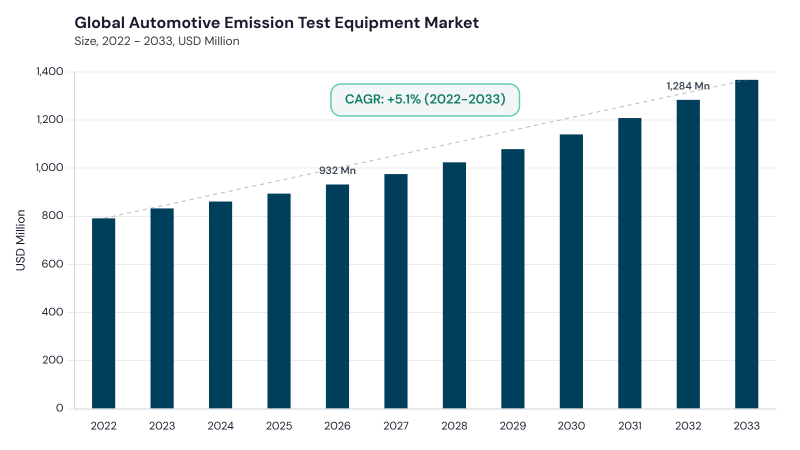
The Global Automotive Emission Test Equipment Market is expected to reach USD 1367.4 million by 2033, growing at a CAGR of 5.6% during (2026 - 2033).
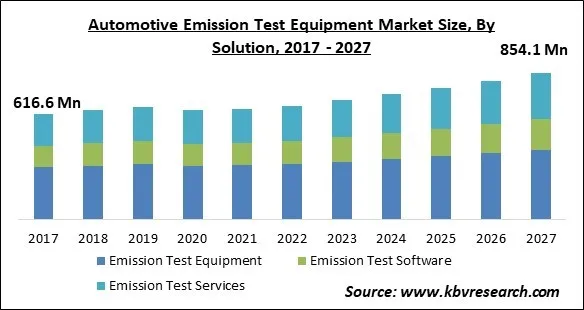
Stringent vehicle emission standards, regulatory scrutiny, and the need for accurate exhaust pollutant measurement are driving the Automotive Emission Test Equipment Market across passenger vehicles, commercial vehicles, inspection centers, testing laboratories, and automotive manufacturing facilities. Growth is further strengthened by portable analyzers, real-time diagnostics, automated testing systems, data connectivity, integrated software, and focus on carbon monoxide, hydrocarbons, nitrogen oxides, particulate matter, and non-exhaust emissions.
Growth in the Automotive Emission Test Equipment Market is driven by the global shift toward stricter emission compliance, cleaner vehicle technologies, and more reliable pollutant measurement. Automotive OEMs, regulatory agencies, inspection centers, and testing laboratories increasingly require equipment that can measure gases, particulates, opacity, real-driving emissions, and non-exhaust pollutants with high accuracy. Portable emission measurement systems, AI-supported analytics, connected testing workflows, automated calibration, and cloud-based reporting are improving testing speed, repeatability, and regulatory transparency. At the same time, hybrid, electric, hydrogen, and alternative-fuel vehicles are expanding the scope of emission testing beyond traditional tailpipe measurement.
The competitive environment is regulation-driven and innovation-focused, with established emissions measurement companies, vehicle testing equipment manufacturers, inspection-system providers, and specialized particle analysis firms competing through precision, regulatory compliance, automation, software integration, and service support. HORIBA and AVL maintain strong positions through comprehensive laboratory, portable, and real-driving emissions platforms. MAHA, Bosch, TEXA, CAPELEC, and Opus Inspection strengthen the inspection and workshop-testing ecosystem, while Sensors, TSI, and Cambustion add depth in portable, particle, aerosol, fast-response, and research-grade measurement technologies.
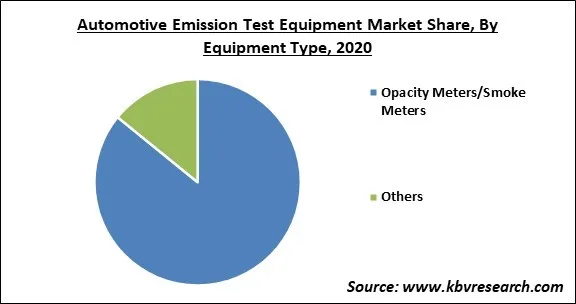
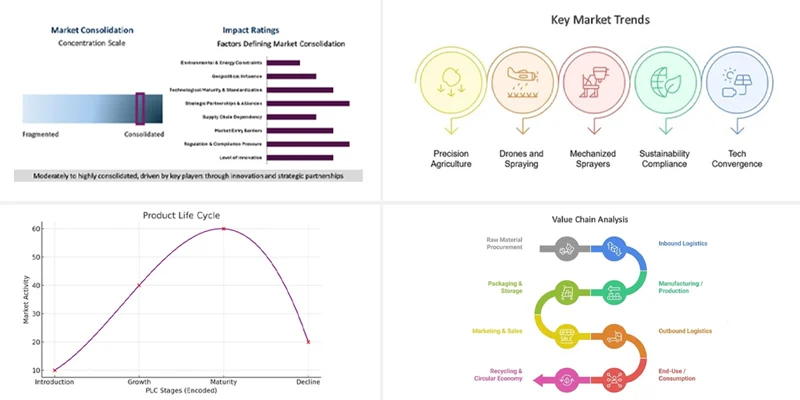

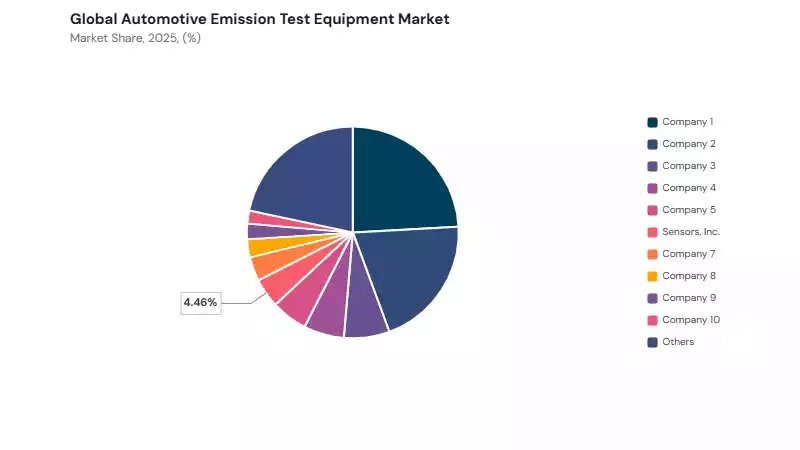
The global Automotive Emission Test Equipment Market reflects a moderately consolidated and regulation-led competitive structure, with competition shaped by measurement accuracy, certification capability, real-driving emissions testing, particle analysis, inspection-system integration, and long-term service support. HORIBA and AVL lead the market through broad laboratory and portable emissions measurement portfolios, while MAHA, Bosch, and TEXA strengthen the workshop and vehicle inspection equipment segment. Sensors, CAPELEC, Opus Inspection/ESP, TSI Incorporated, and Cambustion compete through specialized portable measurement, inspection programs, particle measurement, aerosol analysis, and fast-response emissions research systems.
Based on Testing Mode, the market is segmented into Laboratory/Bench-based Testing, Vehicle Inspection and Maintenance Testing, and Portable/On-road Testing. The Laboratory/Bench-based Testing market dominated the Global Automotive Emission Test Equipment Market by Testing Mode in 2025, and would continue to be a dominant market till 2033; thereby, achieving a market value of USD 550.2 million by 2033, growing at a CAGR of 5 % during the forecast period. The Vehicle Inspection and Maintenance Testing market is expected to witness a CAGR of 6% during (2026 - 2033). Additionally, The Portable/On-road Testing market is expected to witness highest CAGR of 6.2% during (2026 - 2033).
Laboratory/Bench-based Testing remains the leading testing mode as automakers, component suppliers, and certification laboratories require controlled and repeatable emission measurement during engine calibration, vehicle development, and regulatory validation. Vehicle Inspection and Maintenance Testing supports periodic compliance checks across in-use vehicles, helping identify degraded emission systems, tampering, or non-compliant exhaust performance. Portable/On-road Testing is gaining strategic importance as real-driving emission regulations push testing beyond laboratory conditions. These testing modes collectively support development, certification, inspection, and real-world compliance across evolving vehicle platforms.
Based on Equipment Type, the market is segmented into Exhaust Gas Analyzers, Opacity Meters/Smoke Meters, and Other Equipment Type. The Exhaust Gas Analyzers market dominated the Global Automotive Emission Test Equipment Market by Equipment Type in 2025, and would continue to be a dominant market till 2033; thereby, achieving a market value of USD 555.6 million by 2033, growing at a CAGR of 5 % during the forecast period. The Opacity Meters/Smoke Meters market is expected to witness a CAGR of 6.5% during (2026 - 2033). Additionally, The Other Equipment Type market is expected to witness highest CAGR of 5.7% during (2026 - 2033).
Exhaust Gas Analyzers form the core equipment category because they measure regulated pollutants such as carbon monoxide, carbon dioxide, hydrocarbons, nitrogen oxides, and oxygen across development, certification, inspection, and maintenance applications. Opacity Meters/Smoke Meters remain important for diesel vehicles, commercial fleets, and particulate-related inspection requirements where visible smoke and opacity assessment support emission control. Other Equipment Type includes particulate samplers, PEMS, gas sampling systems, brake-emission measurement equipment, dilution systems, and specialized research instruments. Demand across all categories is shaped by sensor accuracy, multi-gas capability, automation, calibration stability, and regulatory reporting needs.
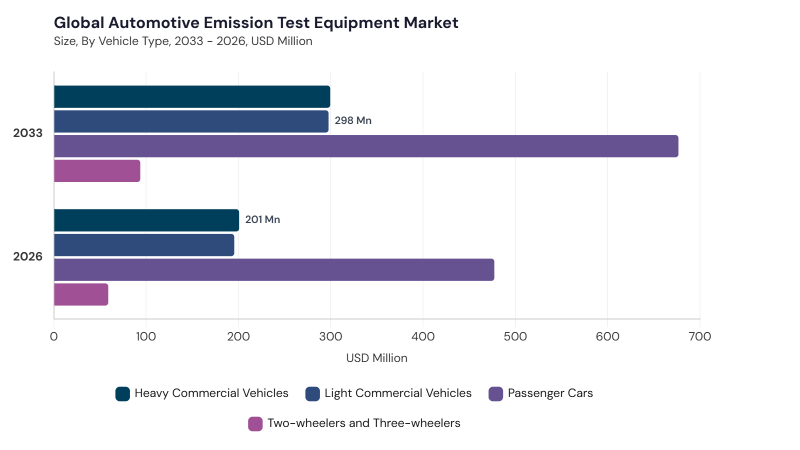
Based on Vehicle Type, the market is segmented into Passenger Cars, Heavy Commercial Vehicles, Light Commercial Vehicles, and Two-wheelers and Three-wheelers. The Passenger Cars market dominated the Global Automotive Emission Test Equipment Market by Vehicle Type in 2025, and would continue to be a dominant market till 2033; thereby, achieving a market value of USD 676.7 million by 2033, growing at a CAGR of 5.1 % during the forecast period. The Heavy Commercial Vehicles market is expected to witness a CAGR of 5.9% during (2026 - 2033). Additionally, The Light Commercial Vehicles market is expected to witness highest CAGR of 6.2% during (2026 - 2033).
Passenger Cars remain the largest vehicle category due to high global production volume, strict emission certification requirements, and continuous testing across gasoline, diesel, hybrid, and mild-hybrid platforms. Heavy Commercial Vehicles require robust testing because diesel engines, high operating loads, long service cycles, and freight activity contribute significantly to regulated pollutants. Light Commercial Vehicles are gaining attention with urban logistics, last-mile delivery, fleet modernization, and fuel-efficiency regulations. Two-wheelers and Three-wheelers serve smaller-engine mobility markets, especially in emerging economies, where stricter motorcycle and three-wheeler emission norms are increasing the need for affordable, accurate, and compact testing equipment.
Free Valuable Insights: Automotive Emission Test Equipment Market Size to reach $1367.4 Million by 2033
Region-wise, the Automotive Emission Test Equipment Market is analyzed across North America, Europe, Asia Pacific, and LAMEA. The Asia Pacific market dominated the Global Automotive Emission Test Equipment Market by Region in 2025, and would continue to be a dominant market till 2033; thereby, achieving a market value of USD 512.4 million by 2033, growing at a CAGR of 6 % during the forecast period. The Europe market is expected to witness a CAGR of 5.4% during (2026 - 2033). Additionally, The North America market is expected to witness a CAGR of 4.9% during (2026 - 2033).
Asia Pacific leads the global market due to large-scale vehicle production, tightening emission standards, expanding inspection programs, and increasing investment in advanced testing laboratories across China, India, Japan, South Korea, Singapore, and Malaysia. Europe remains a strong market due to Euro emission standards, RDE testing, brake-emission measurement, and advanced laboratory infrastructure. North America benefits from EPA and CARB-driven compliance, hybrid and electric powertrain validation, portable testing, and sophisticated emissions laboratories. LAMEA is developing steadily as environmental regulations, fleet inspections, urban air-quality initiatives, and localized emission testing infrastructure gradually strengthen across Brazil, Argentina, UAE, Saudi Arabia, South Africa, and Nigeria.
| Report Attribute | Details |
|---|---|
| Market size value in 2026 | USD 932.4 million |
| Market size forecast in 2033 | USD 1367.4 million |
| Base Year | 2025 |
| Historical Period | 2022 to 2024 |
| Forecast Period | 2026 to 2033 |
| Revenue Growth Rate | CAGR of 5.6% from 2026 to 2033 |
| Number of Pages | 509 |
| Tables | 630 |
| Report Coverage | Market Trends, Revenue Estimation and Forecast, Segmentation Analysis, Regional and Country Breakdown, Competitive Landscape, Market Share Analysis, Company Profiling, Companies Strategic Developments, SWOT Analysis, Product Life Cycle Analysis, Value Chain Analysis, Market Consolidation Analysis, Key Customer Criteria, Pandemic Impact Analysis, and Winning Imperatives |
| Segments Covered | Testing Mode, Equipment Type, Vehicle Type, and Geography |
| Country Scope |
|
| Companies Included | HORIBA, Ltd.; AVL List GmbH; MAHA Maschinenbau Haldenwang GmbH & Co. KG; Robert Bosch GmbH; TEXA S.p.A.; Sensors, Inc.; CAPELEC; Opus Inspection / ESP; TSI Incorporated; Cambustion Ltd. |
By Testing Mode
By Equipment Type
By Vehicle Type
By Geography
Expected to reach USD 1367.4 million by 2033, growing at 5.6% CAGR during the forecast period (2026-2033).
Not specified in the provided data.
HORIBA, AVL List, MAHA Maschinenbau, Robert Bosch, TEXA, Sensors, CAPELEC, Opus Inspection, TSI, Cambustion.
Not specified in the provided data.
Stringent regulatory policies and rising adoption of electrification and hybrid powertrains are key growth drivers.
The market is projected to grow at 5.6% CAGR during the forecast period (2026-2033).
Our team of dedicated experts can provide you with attractive expansion opportunities for your business.








 Unique Offerings