The sample copy of this report is available for access.
“Global Two-Wheeler GPS Tracker Market to reach a market value of USD 967.66 Million by 2033 growing at a CAGR of %”
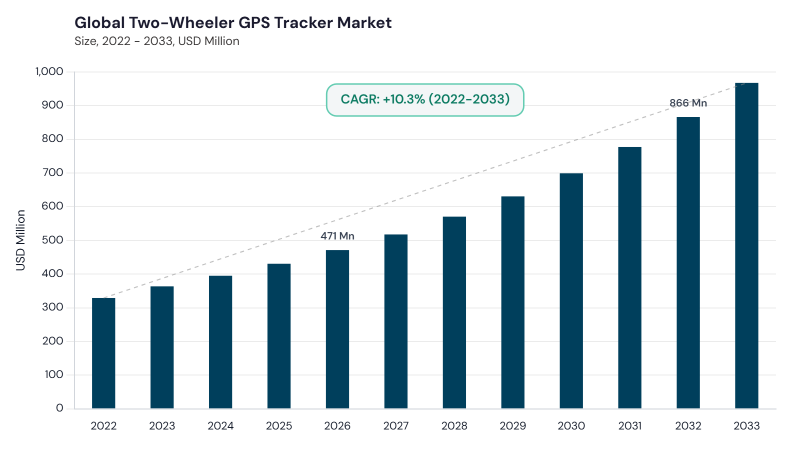
The Global Two-Wheeler GPS Tracker Market is expected to reach USD 967.7 million by 2033, growing at a CAGR of 10.8% during (2026 – 2033).
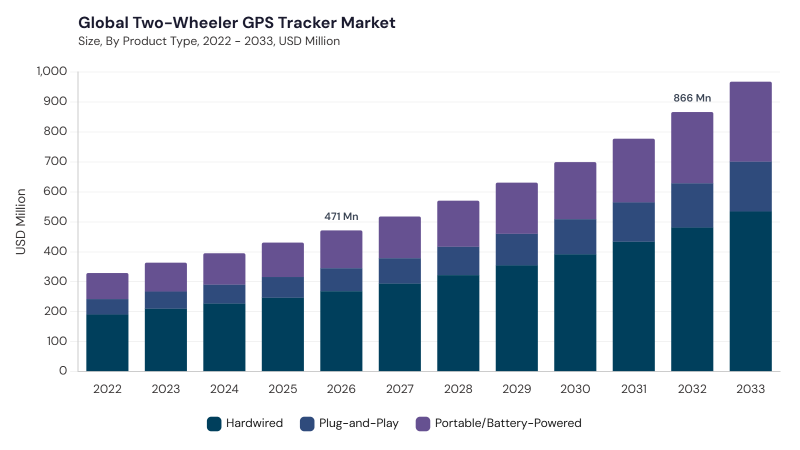
Growing concerns over two-wheeler theft, real-time location monitoring, and connected mobility are driving the Global Two-Wheeler GPS Tracker Market across individual riders, delivery fleets, shared mobility operators, corporate fleets, and public-service users. Adoption is increasing as motorcycles, scooters, mopeds, and electric two-wheelers become more important in urban transportation, last-mile delivery, rentals, and smart mobility programs. GPS trackers are widely used for theft deterrence, route visibility, geofencing, usage monitoring, fleet accountability, and vehicle recovery.
Increasing two-wheeler ownership, higher theft risk, urban traffic congestion, and the rapid expansion of last-mile delivery services are creating sustained demand for GPS tracking solutions. Consumers use trackers for vehicle security, location recovery, geofencing, and personal safety, while fleet operators rely on them for route optimization, dispatch visibility, driver monitoring, and asset utilization. The rise of electric scooters and motorcycles is widening the role of GPS tracking by linking location data with telematics, battery visibility, and smart mobility platforms. Cloud dashboards, mobile app integration, and subscription models are improving user access while giving providers recurring revenue opportunities. Growth is further supported by smart city programs, insurer participation, connected mobility platforms, and the need for reliable tracking across both personal and commercial two-wheeler applications.
Competition is shaped by a mix of IoT hardware manufacturers, professional telematics providers, motorcycle-security specialists, consumer GPS brands, and regional aftermarket suppliers. Vendors differentiate through tracking accuracy, compact device design, battery endurance, ruggedness, anti-theft alerts, mobile applications, cloud platforms, and integration with fleet-management systems. Pricing remains important because many two-wheeler buyers and emerging-market customers are cost-sensitive, while premium buyers value intelligent security and international connectivity. Partnerships with OEMs, dealers, insurers, telecom providers, and shared-mobility operators are becoming important routes to scale. As basic location tracking becomes more commoditized, companies are moving toward advanced analytics, smart alerts, electric two-wheeler integration, and subscription-based connected services.
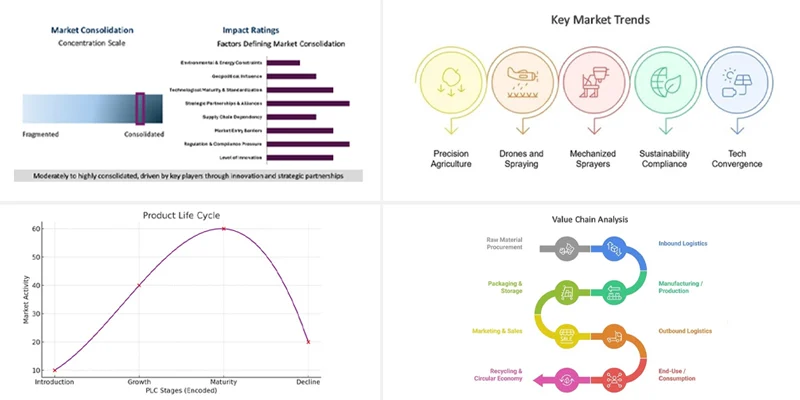

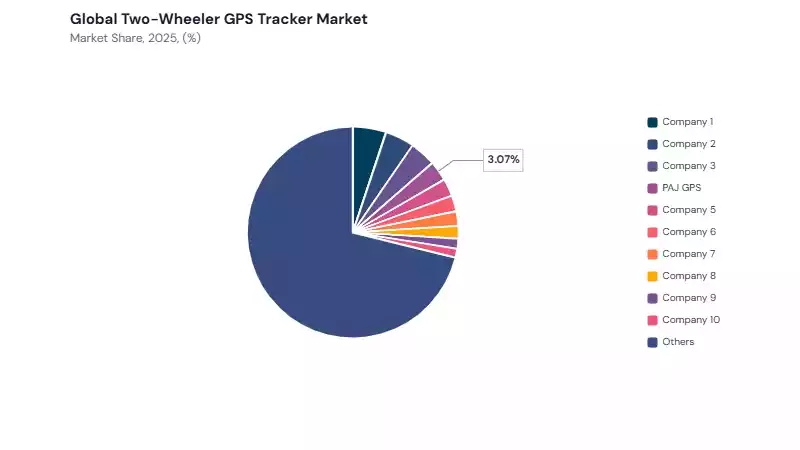
The global market remains highly fragmented, with established telematics hardware suppliers, motorcycle-security specialists, connected-device companies, regional tracking providers, and aftermarket installers competing across different customer groups. Teltonika Telematics, Queclink Wireless Solutions, and Shenzhen Jimi IoT hold strong positions through broad device portfolios, GNSS and cellular capabilities, and international distribution. PAJ GPS, Monimoto, Ruptela, Onelap Telematics, Scorpion Automotive/Datatool, Trackimo, and Invoxia compete through consumer-focused tracking, motorcycle-specific security, fleet telematics, or subscription-based connected services. Competitive positioning is influenced by affordability, battery life, installation flexibility, real-time tracking accuracy, app experience, cloud reliability, and anti-theft functionality.
Based on Sales Channel, the market is segmented into Aftermarket and OEM. The Aftermarket market dominated the Global Two-Wheeler GPS Tracker Market by Sales Channel in 2025, and would continue to be a dominant market till 2033; thereby, achieving a market value of USD 645.2 million by 2033, growing at a CAGR of 10.6 % during the forecast period. The OEM market is expected to witness a CAGR of 11.3% during (2026 - 2033).
Aftermarket channels address the large installed base of motorcycles, scooters, mopeds, and electric two-wheelers that require retrofitted security and tracking solutions. This channel benefits from flexible pricing, wide model compatibility, accessory dealer networks, specialized installers, and online availability. Individual riders, delivery fleets, rental operators, and small businesses often prefer aftermarket devices because they can be added without replacing vehicles. OEM channels focus on integrating tracking systems during vehicle manufacturing, enabling better design compatibility, warranty alignment, and embedded connected features. OEM adoption is supported by rising consumer expectations for smart mobility, safety functions, app-based monitoring, and factory-installed telematics in newer two-wheelers.
Based on Product Type, the market is segmented into Hardwired, Portable/Battery-Powered, and Plug-and-Play. The Hardwired market dominated the Global Two-Wheeler GPS Tracker Market by Product Type in 2025, and would continue to be a dominant market till 2033; thereby, achieving a market value of USD 534.5 million by 2033, growing at a CAGR of 10.3 % during the forecast period. The Portable/Battery-Powered market is expected to witness a CAGR of 11.3% during (2026 - 2033). Additionally, The Plug-and-Play market is expected to witness highest CAGR of 11.7% during (2026 - 2033).
Hardwired trackers are preferred where continuous power, concealed placement, and permanent anti-theft monitoring are important, especially among commercial fleets and high-value motorcycles. Portable and battery-powered trackers serve users who need flexible, transferable, and non-permanent tracking without modifying the vehicle. These devices appeal to private owners, shared vehicle users, and riders seeking simple secondary protection. Plug-and-play trackers balance convenience and performance by offering easier installation with functional tracking and alert features. Adoption across all product types is shaped by installation complexity, battery needs, cost sensitivity, connectivity reliability, and the level of security or fleet visibility required.
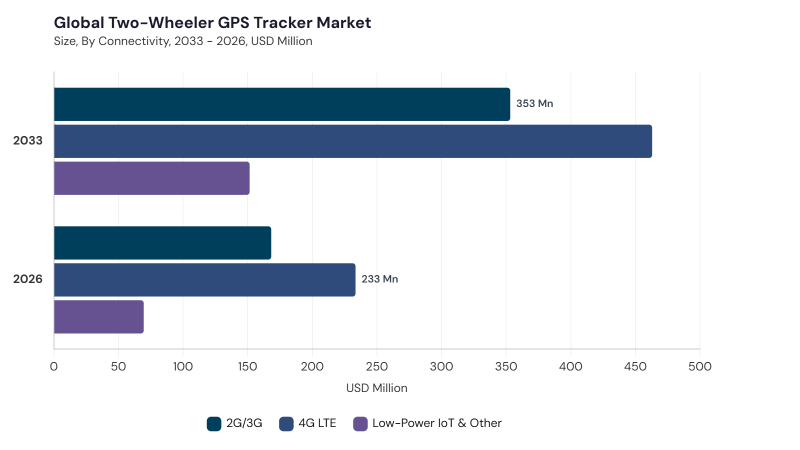
Based on Connectivity, the market is segmented into 4G LTE, 2G/3G, and Low-Power IoT & Other. The 4G LTE market dominated the Global Two-Wheeler GPS Tracker Market by Connectivity in 2025, and would continue to be a dominant market till 2033; thereby, achieving a market value of USD 462.9 million by 2033, growing at a CAGR of 10.3 % during the forecast period. The 2G/3G market is expected to witness a CAGR of 11.2% during (2026 - 2033). Additionally, The Low-Power IoT & Other market is expected to witness highest CAGR of 11.8% during (2026 - 2033).
4G LTE supports faster data transmission, reliable real-time tracking, cloud connectivity, geofencing, theft alerts, and fleet-management applications. It is becoming increasingly relevant as users expect low-latency location visibility and richer mobile-app experiences. 2G/3G remains important in cost-sensitive and infrastructure-limited markets where basic tracking requirements and legacy device ecosystems continue to support adoption. However, network modernization is gradually encouraging migration toward newer connectivity modules. Low-Power IoT and other technologies support extended battery life, efficient data transmission, and scalable smart mobility deployments, particularly for shared fleets, electric two-wheelers, and long-duration monitoring applications.
Based on Vehicle Type, the market is segmented into Motorcycles, Scooters, Electric Two-Wheelers, and Mopeds. The Motorcycles market dominated the Global Two-Wheeler GPS Tracker Market by Vehicle Type in 2025, and would continue to be a dominant market till 2033; thereby, achieving a market value of USD 434.8 million by 2033, growing at a CAGR of 10.2 % during the forecast period. The Scooters market is expected to witness a CAGR of 11% during (2026 - 2033). Additionally, The Electric Two-Wheelers market is expected to witness highest CAGR of 11.6% during (2026 - 2033).
Motorcycles require robust tracking for theft prevention, personal mobility, long-distance riding, and commercial usage, making them a major focus for advanced GPS tracker suppliers. Scooters are strongly linked with urban commuting, delivery services, and shared mobility, creating demand for compact, affordable, and easy-to-install devices. Electric two-wheelers are creating new opportunities as tracking becomes connected with telematics, battery visibility, route management, and fleet control. Mopeds represent a more basic security-oriented use case where affordability and simple recovery features matter most. Each vehicle type has different power, installation, value, and usage requirements, influencing product design and go-to-market strategy.
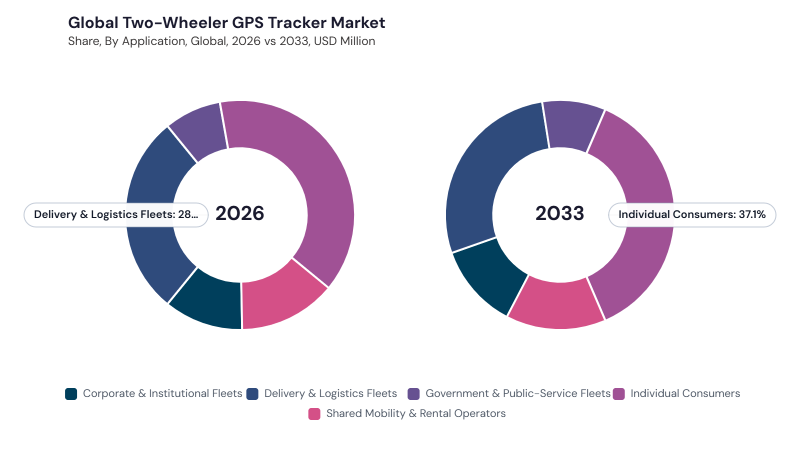
Based on Application, the market is segmented into Individual Consumers, Delivery & Logistics Fleets, Shared Mobility & Rental Operators, Corporate & Institutional Fleets, and Government & Public-Service Fleets. The Individual Consumers market dominated the Global Two-Wheeler GPS Tracker Market by Application in 2025, and would continue to be a dominant market till 2033; thereby, achieving a market value of USD 358.9 million by 2033, growing at a CAGR of 10.1 % during the forecast period. The Delivery & Logistics Fleets market is expected to witness a CAGR of 10.6% during (2026 - 2033). Additionally, The Shared Mobility & Rental Operators market is expected to witness highest CAGR of 11.2% during (2026 - 2033).
Individual consumers prioritize theft deterrence, recovery, geofencing, trip history, and smartphone-connected vehicle security. Delivery and logistics fleets use trackers for route optimization, dispatch control, driver monitoring, delivery visibility, and asset utilization. Shared mobility and rental operators depend on GPS tracking for vehicle availability, remote monitoring, utilization control, misuse prevention, and fleet redistribution. Corporate and institutional fleets focus on accountability, authorized usage, policy compliance, and maintenance visibility. Government and public-service fleets require secure tracking for coordination, transparency, emergency response, and public asset management.
Free Valuable Insights: Two-Wheeler GPS Tracker Market Size to reach $967.6 Million by 2033
Region-wise, the Two-Wheeler GPS Tracker Market is analyzed across North America, Europe, Asia Pacific, and LAMEA. The Asia Pacific market dominated the Global Two-Wheeler GPS Tracker Market by Region in 2025, and would continue to be a dominant market till 2033; thereby, achieving a market value of USD 460.2 million by 2033, growing at a CAGR of 11.3 % during the forecast period. The Europe market is expected to witness a CAGR of 10.3% during (2026 - 2033). Additionally, The North America market is expected to witness a CAGR of 9.5% during (2026 - 2033).
Asia Pacific leads market adoption due to its large two-wheeler population, expanding delivery fleets, rapid electric two-wheeler adoption, and strong demand for affordable vehicle-security solutions. Europe benefits from connected mobility adoption, motorcycle and scooter usage, fleet digitalization, insurance-linked security adoption, and increasing penetration of electric mobility technologies. North America shows demand through motorcycle security, recreational riding, advanced telematics infrastructure, and connected fleet-management usage. LAMEA is supported by rising two-wheeler utilization, vehicle-theft concerns, delivery service expansion, and improving cellular connectivity, although penetration of advanced tracking technologies remains comparatively lower.
| Report Attribute | Details |
|---|---|
| Market size value in 2026 | USD 471.2 million |
| Market size forecast in 2033 | USD 967.6 million |
| Base Year | 2025 |
| Historical Period | 2022 to 2024 |
| Forecast Period | 2026 to 2033 |
| Revenue Growth Rate | CAGR of 10.8% from 2026 to 2033 |
| Number of Pages | 723 |
| Tables | 720 |
| Report Coverage | Market Trends, Revenue Estimation and Forecast, Segmentation Analysis, Regional and Country Breakdown, Competitive Landscape, Market Share Analysis, Company Profiling, Companies Strategic Developments, SWOT Analysis, Product Life Cycle Analysis, Value Chain Analysis, Market Consolidation Analysis, Key Customer Criteria, Pandemic Impact Analysis, and Winning Imperatives |
| Segments Covered | Sales Channel, Product Type, Connectivity, Vehicle Type, Application, and Geography |
| Country Scope |
|
| Companies Included | Teltonika Telematics; Queclink Wireless Solutions; Shenzhen Jimi IoT Co., Ltd.; PAJ UG / PAJ GPS; UAB Monimoto; Ruptela; Onelap Telematics Pvt. Ltd.; Scorpion Automotive Ltd.; Trackimo; Invoxia |
By Sales Channel
By Product Type
By Connectivity
By Vehicle Type
By Application
By Geography
Expected to reach USD 967.7 million by 2033, growing at 10.8% CAGR during 2026-2033.
Asia Pacific is anticipated to experience rapid growth at 10.8% CAGR during the forecast period (2026-2033).
Teltonika Telematics, Queclink Wireless Solutions, and Shenzhen Jimi IoT Co., Ltd. are major players.
Enhanced security and theft prevention are increasing demand for two-wheeler GPS trackers.
Technological advancements are enabling smart features in two-wheeler trackers.
The market size is projected to reach USD 967.7 million by 2033.
Our team of dedicated experts can provide you with attractive expansion opportunities for your business.






 Unique Offerings
