According to a new report, published by KBV research, The Global Smart Tourism Market size is expected to reach $1.90 billion by 2032, rising at a market growth of 15.1% CAGR during the forecast period.
Blockchain technology is being explored for secure payments, digital identities, and transparent reviews. Smart contracts also streamline bookings and insurance claims, reduce fraud, and enhance trust. Environmental concerns are pushing the tourism industry toward sustainability. Green certifications, carbon footprint tracking, and eco-tourism analytics platforms are gaining traction among service providers and eco-conscious travellers.
The Business/Corporate segment led the maximum revenue in the Global Smart Tourism Market by End-user in 2024, thereby, achieving a market value of $1.0 billion by 2032. This is supported by the growing integration of digital solutions in corporate travel management. Business travellers are utilizing smart tourism platforms for streamlined travel booking, digital check-ins, and access to smart accommodation solutions that offer work-friendly environments.
The Smart Ticketing segment is growing at a CAGR of 13.9 % during the forecast period. Driven by its ability to streamline the travel experience for tourists. With the integration of digital and contactless ticketing systems, travellers can easily purchase, store, and use tickets through mobile devices or smart cards. This reduces waiting times and eliminates the need for physical interactions, which has become increasingly important in a post-pandemic world.
Full Report: https://www.kbvresearch.com/smart-tourism-market/
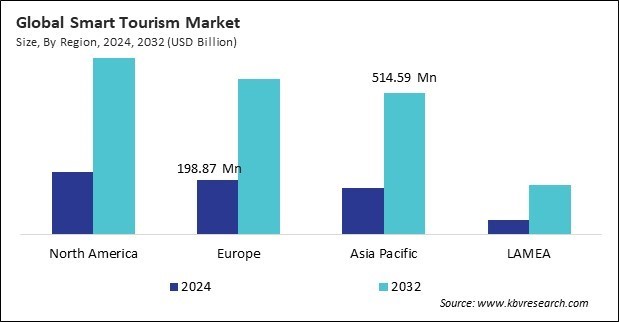
The North America region dominated the Global Smart Tourism Market by Region in 2024, and would continue to be a dominant market till 2032; thereby, achieving a market value of $643.2 million by 2032. The Europe region is anticipated to grow at a CAGR of 14.7% during (2025 - 2032). Additionally, The Asia Pacific region would witness a CAGR of 15.7% during (2025 - 2032).
By End-user
By Solution
By Geography
 Unique Offerings

