The sample copy of this report is available for access.
The North America Vegan Cheese Market is expected to reach USD 2719.1 million by 2032, growing at a CAGR of 11.4% during (2026 – 2033).
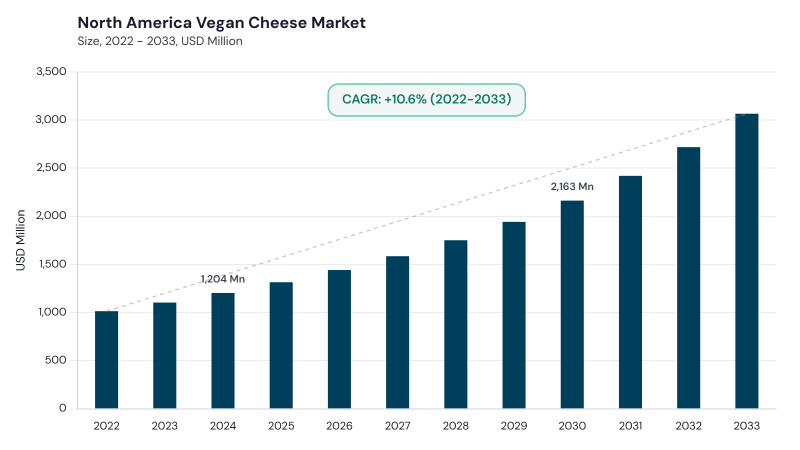
Vegan cheese development across North America emerged alongside growing interest in plant-based diets driven by health, ethical, and environmental considerations. Early products were largely based on nuts, soy, and coconut ingredients, but frequently faced limitations in taste, texture, meltability, and overall similarity to dairy cheese. Advances in fermentation, microbial cultures, ingredient blending, and food biotechnology progressively improved sensory performance and nutritional characteristics. These developments helped vegan cheese move from niche specialty products into broader retail and foodservice channels, supported by expanding consumer demand for lactose-free, allergen-conscious, plant-based, and climate-conscious food alternatives.
Technological innovation, clean-label preferences, sustainability, and broader culinary adoption are increasingly shaping the regional market. Manufacturers are improving fermentation methods, plant protein combinations, enzymes, and specialty fats to enhance flavor, texture, meltability, and functional performance. Consumers are also placing greater emphasis on recognizable ingredients, nutritional value, allergen management, and transparent sourcing, encouraging reformulation across product portfolios. At the same time, expanding supermarket, online retail, restaurant, bakery, quick-service, and packaged-food applications are improving product accessibility and helping vegan cheese transition further into mainstream North American food consumption.
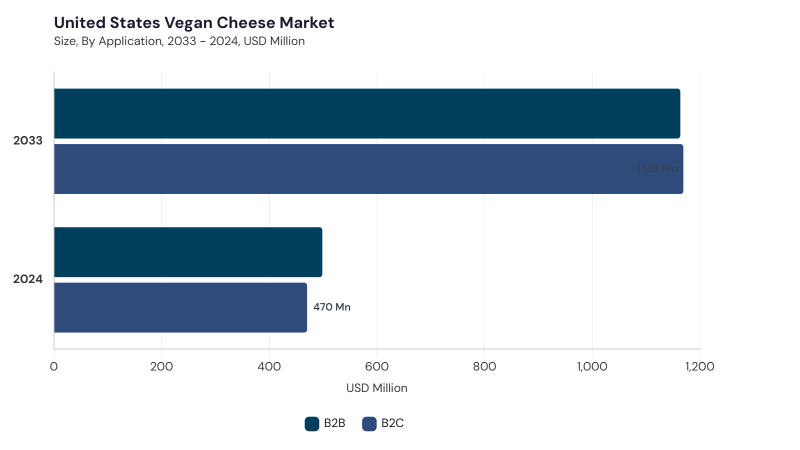
Based on Application, the market is segmented into B2B and B2C. The B2B market dominated the North America Vegan Cheese Market by Application in 2025, and would continue to be a dominant market till 2033; thereby, achieving a market value of USD 1364.3 million by 2032, growing at a CAGR of 11 % during the forecast period. The B2C market is expected to witness a CAGR of 11.8% during (2026 - 2033).
B2B demand is supported by foodservice operators and packaged-food manufacturers expanding dairy-free menu options and formulations to address rising plant-based consumption. Vegan cheese is increasingly incorporated into pizzas, burgers, sandwiches, bakery products, ready-to-eat meals, and other prepared foods where texture, meltability, flavor consistency, and scalability are important. B2C represents household and direct consumer demand through supermarkets, specialty stores, online platforms, and other retail channels. Wider retail availability, product variety, improved sensory performance, and increasing awareness of plant-based nutrition continue to encourage household adoption.
Based on Source, the market is segmented into Cashew, Soy, Coconut, Almond, and Other Source. The Cashew market dominated the North America Vegan Cheese Market by Source in 2025, and would continue to be a dominant market till 2033; thereby, achieving a market value of USD 871.2 million by 2032, growing at a CAGR of 10.6 % during the forecast period. The Soy market is expected to witness a CAGR of 11.1% during (2026 - 2033). Additionally, The Coconut market is expected to witness highest CAGR of 12% during (2026 - 2033).
Cashew-based cheese is widely used in spreads, soft cheeses, and gourmet formats because of its rich mouthfeel and compatibility with fermentation techniques. Soy followed as a protein-rich and comparatively scalable base that supports diverse textures and remains established across mainstream dairy alternatives. Coconut continues to attract demand because of its rich mouthfeel, melting characteristics, and suitability across creamy and soft cheese formats, while Almond serves consumers seeking mild flavor, nutritional appeal, and specialty plant-based options. Other Source includes oat, pea protein, potato starch, sunflower seeds, macadamia, and other emerging plant ingredients that expand allergen-conscious, sustainable, and formulation-driven product diversity.
Based on Product, the market is segmented into Mozzarella, Cheddar, Cream Cheese, Parmesan, Ricotta, and Other Product. Mozzarella is particularly important in pizzas, sandwiches, salads, and other applications where stretch, meltability, and cooking performance influence product acceptance. Cheddar followed because of its broad use in burgers, sandwiches, snacks, slices, shreds, and ready-to-eat foods, while Cream Cheese continues to expand across spreads, bakery products, breakfast applications, dips, and desserts.
Parmesan is increasingly used in pasta dishes, salads, and gourmet recipes requiring grated plant-based alternatives, whereas Ricotta supports lasagna, stuffed pasta, bakery, dessert, and specialty culinary applications. Other Product includes vegan feta, gouda, provolone, blue cheese, smoked varieties, and other specialty formats designed to broaden flavor and culinary choice.
Free Valuable Insights: The Global Vegan Cheese Market will hit USD 9.4 Billion billion by 2033, at a CAGR of 11.7%
Based on Country, the market is segmented into US, Canada, Mexico, and Rest of North America. The US market dominated the North America Vegan Cheese Market by Country in 2025, and would continue to be a dominant market till 2033; thereby, achieving a market value of USD 2081.9 million by 2032, growing at a CAGR of 10.7 % during the forecast period. The Canada market is expected to witness a CAGR of 14% during (2026 - 2033). Additionally, The Mexico market is expected to witness a CAGR of 13.3% during (2026 - 2033).
Across North America, vegan cheese adoption is increasingly influenced by plant-based dietary preferences, food technology, sustainability, clean-label expectations, and broader retail and foodservice availability. The US is advancing fermentation technologies, AI-supported product development, sustainable formulations, and mainstream distribution as brands improve taste and functionality. Canada is emphasizing cultured products, local sourcing, cleaner formulations, and partnerships that strengthen product authenticity and sustainability. Mexico is expanding locally adapted products using diverse plant ingredients, fermentation technologies, regional flavors, and domestic manufacturing to address evolving consumer preferences. Rest of North America is also progressing through precision fermentation, sustainable sourcing, flavor diversification, and greater retail and foodservice integration.

By Application
By Source
By Product
By Country
Set to reach $2719.1 Million by 2032, growing at 11.4% CAGR during 2026-2033.
The US market leads, achieving $2081.9 million by 2032 with a 10.7% CAGR during the forecast period.
The B2B segment will reach $1364.3 million by 2032, growing at 11% CAGR during the forecast period.
The Cashew segment will achieve $871.2 million by 2032, growing at a 10.6% CAGR during the forecast period.
The Canada market is expected to witness a CAGR of 14% during 2026-2033.
The Coconut market is expected to witness the highest CAGR of 12% during 2026-2033.
Our team of dedicated experts can provide you with attractive expansion opportunities for your business.




 Unique Offerings