The sample copy of this report is available for access.
The LAMEA Vegan Cheese Market is expected to reach USD 437.7 million by 2029, growing at a CAGR of 13.8% during (2026 – 2033).
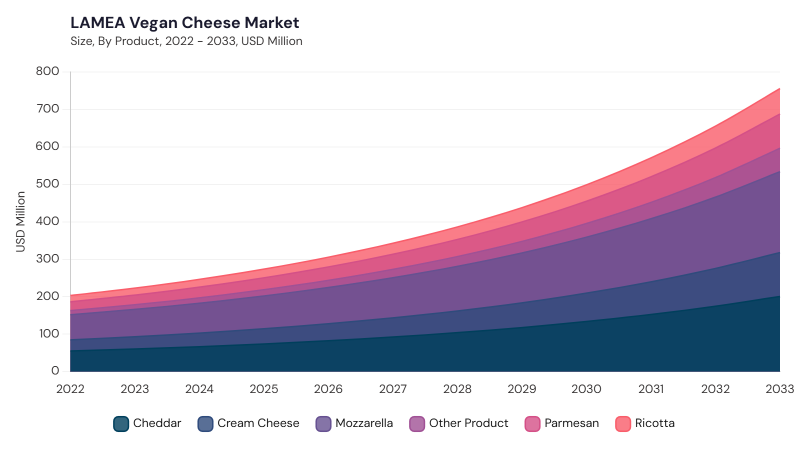
Vegan cheese development across LAMEA emerged alongside the broader shift toward plant-based diets, sustainable food alternatives, and dairy-free nutrition across Latin America, the Middle East, and Africa. Early products were largely niche and relied on basic nut- or soy-based formulations designed to imitate familiar cheese textures and flavors. Advances in fermentation, ingredient formulation, plant protein processing, and food biotechnology progressively improved sensory quality, product variety, and functionality. Increasing awareness of lactose intolerance, dairy allergies, animal welfare, and environmental concerns further supported the transition toward aged, spreadable, smoked, meltable, and other more sophisticated vegan cheese formats.
Health consciousness, sustainability, localized product development, and expanding digital retail are increasingly shaping the regional market. Manufacturers are focusing on clean-label formulations, allergen-conscious products, nutritional enrichment, fermentation-based functionality, and improved texture and flavor performance. Sustainability initiatives are encouraging responsible ingredient sourcing, eco-friendly packaging, and more localized supply chains, while producers are adapting flavors and formats to regional culinary preferences. At the same time, e-commerce, supermarkets, specialty retailers, restaurants, hotels, and foodservice channels are improving accessibility and helping vegan cheese reach consumers beyond traditional niche markets.
Based on Application, the market is segmented into B2B and B2C. The B2B market dominated the LAMEA Vegan Cheese Market by Application in 2025, and would continue to be a dominant market till 2033; thereby, achieving a market value of USD 225.4 million by 2029, growing at a CAGR of 13.4 % during the forecast period. The B2C market is expected to witness a CAGR of 14.3% during (2026 - 2033).
B2B demand is supported by foodservice operators and packaged-food companies incorporating vegan cheese into pizzas, sandwiches, baked foods, prepared meals, and other dairy-free offerings as plant-based menu adoption expands. Commercial users increasingly require products offering consistent taste, texture, meltability, nutritional quality, and reliable supply across multiple applications. B2C represents household and direct consumer demand through supermarkets, specialty retailers, online grocery platforms, and other retail channels. Growing awareness of plant-based nutrition, lactose intolerance, dairy allergies, and ethical consumption continues to strengthen household adoption across diverse LAMEA markets.
Based on Source, the market is segmented into Cashew, Soy, Coconut, Almond, and Other Source. The Cashew market dominated the LAMEA Vegan Cheese Market by Source in 2025, and would continue to be a dominant market till 2033; thereby, achieving a market value of USD 145.5 million by 2029, growing at a CAGR of 13 % during the forecast period. The Soy market is expected to witness a CAGR of 13.5% during (2026 - 2033). Additionally, The Coconut market is expected to witness highest CAGR of 14.5% during (2026 - 2033).
Cashew-based cheese benefits from its creamy texture and compatibility with fermentation, spreads, gourmet products, and meltable formulations. Soy followed because of its protein content, established use in plant-based foods, cost efficiency, and ability to support a broad range of processed cheese alternatives. Coconut continues to expand due to its rich mouthfeel and favorable melting properties, while Almond serves health-conscious consumers seeking nutrient-rich, clean-label products with a distinctive flavor profile. Other Source includes oat, pea protein, sunflower seed, chickpea, nutritional yeast, root vegetables, and other plant-derived ingredients that broaden allergen-conscious, sustainable, and formulation-driven product development.
Based on Product, the market is segmented into Mozzarella, Cheddar, Cream Cheese, Parmesan, Ricotta, and Other Product. Mozzarella remains important where meltability, stretch, and compatibility with pizzas and prepared foods influence purchasing decisions. Cheddar followed through its use in burgers, wraps, snacks, baked dishes, and processed food applications, while Cream Cheese continues to gain popularity in breakfast spreads, dips, bakery products, and desserts.
Parmesan is increasingly adopted in pasta, salads, and Mediterranean-inspired dishes, whereas Ricotta supports baked products, lasagna, fresh dishes, and specialty plant-based recipes. Other Product includes vegan feta, gouda, provolone, blue cheese, halloumi, processed slices, and other specialty alternatives developed to address diverse regional culinary preferences.
Free Valuable Insights: Vegan Cheese Market Size Worth USD 9.4 Billion billion by 2033
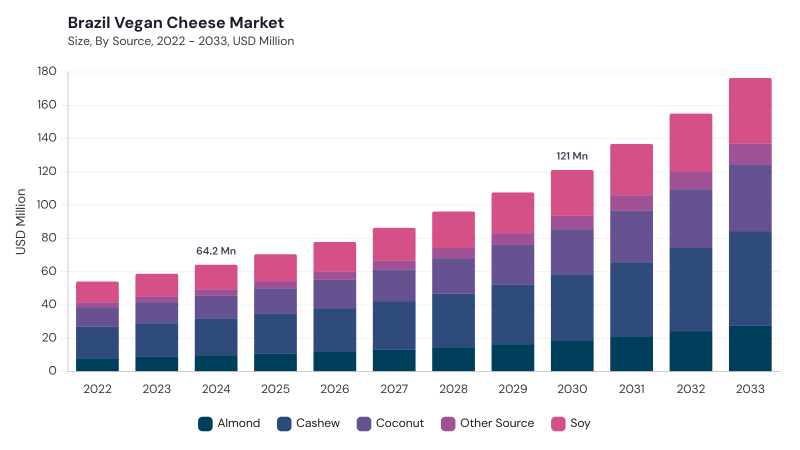
Based on Country, the market is segmented into Brazil, Argentina, UAE, Saudi Arabia, South Africa, Nigeria, and Rest of LAMEA. The Brazil market dominated the LAMEA Vegan Cheese Market by Country in 2025, and would continue to be a dominant market till 2033; thereby, achieving a market value of USD 107.6 million by 2029, growing at a CAGR of 12.4 % during the forecast period. The Argentina market is expected to witness a CAGR of 14.5% during (2026 - 2033). Additionally, The UAE market is expected to witness a CAGR of 12.6% during (2026 - 2033).
Across LAMEA, vegan cheese adoption is increasingly influenced by health awareness, plant-based dietary trends, food technology, sustainability, cultural adaptation, and improving retail accessibility. Brazil is advancing fermentation, regional flavor development, sustainable sourcing, and digital distribution, while Argentina is emphasizing clean-label formulations, sensory improvement, local ingredients, and environmentally responsible production. The UAE is strengthening premium, sustainable, allergen-conscious, and technologically advanced products, whereas Saudi Arabia is aligning vegan cheese innovation with halal requirements, local preferences, and health-oriented consumption. South Africa is progressing through precision fermentation, local sourcing, and culturally adapted formulations, while Nigeria is expanding clean-label products, biotechnology-enabled sensory improvements, and locally relevant plant ingredients. Rest of LAMEA is also developing through localized flavors, advanced fermentation, transparent sourcing, and broader distribution. Overall, the region is moving toward vegan cheese products that combine affordability, stronger sensory performance, nutritional value, cultural relevance, sustainability, and wider culinary versatility.

By Application
By Source
By Product
By Country
Set to reach $437.7 Million by 2029, growing at 13.8% CAGR during 2026-2033.
Brazil leads with $107.6 million by 2029, growing at 12.4% CAGR during the forecast period.
Rising B2B demand, reaching $225.4 million by 2029, is a main catalyst.
The B2C segment is expected to witness a CAGR of 14.3% during 2026-2033.
The coconut source is expected to witness the highest CAGR of 14.5% during 2026-2033.
Our team of dedicated experts can provide you with attractive expansion opportunities for your business.




 Unique Offerings