The North America Automotive Finance Market is expected to reach USD 174.3 billion by 2032, growing at a CAGR of 6.8% during (2026 – 2033).
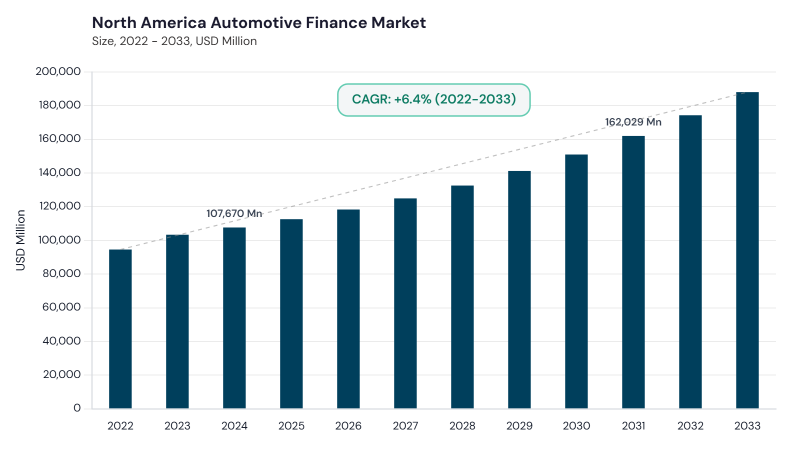
The North America Automotive Finance Market originated in the mid-20th century alongside the expansion of the automotive industry, initially driven by dealer-based financing and captive finance arms of automobile manufacturers. Early financing activity focused on installment loans that helped consumers purchase vehicles through structured repayment plans. Over time, computerization, digital credit assessment, auto loan securitization, and online platforms transformed underwriting, loan processing, and customer access. The 2008 financial crisis strengthened risk management and compliance, while the post-COVID period accelerated digital adoption and exposed credit portfolio vulnerabilities.
The North America Automotive Finance Market is being shaped by electric vehicle adoption, fintech innovation, digital financing platforms, stricter regulatory oversight, and changing consumer preferences for flexible mobility access. Lenders are adapting credit models to address EV pricing, residual values, servicing costs, and incentive-linked affordability. Demand is supported by passenger vehicle purchases, commercial fleet expansion, dealership financing, direct lending, leasing, refinancing, and specialized financial products. Providers are focusing on AI-driven underwriting, automated loan origination, fraud detection, digital approvals, ESG-linked financing, and personalized repayment structures.
Based on Vehicle, the market is segmented into Passenger and Commercial. The Passenger market dominated the North America Automotive Finance Market by Vehicle in 2025, and would continue to be a dominant market till 2033; thereby, achieving a market value of USD 114.9 billion by 2032, growing at a CAGR of 6.5 % during the forecast period. The Commercial market is expected to witness a CAGR of 7.4% during (2026 - 2033).
Passenger leads due to strong demand for personal mobility, new vehicle purchases, certified pre-owned vehicles, digital financing platforms, and flexible loan and lease options across the US and Canada. This segment benefits from consumer preference for vehicle ownership, online credit approvals, transparent financing terms, and growing interest in electric and hybrid vehicles. Commercial remains significant as fleet operators, logistics firms, construction companies, and industrial users rely on structured financing to support vehicle acquisition and fleet modernization. Demand is strengthened by last-mile delivery, infrastructure activity, commercial vehicle replacement cycles, and financing solutions that help businesses optimize capital expenditure.
Based on Provider, the market is segmented into Banks, OEMs, and Other Provider. The Banks market dominated the North America Automotive Finance Market by Provider in 2025, and would continue to be a dominant market till 2033; thereby, achieving a market value of USD 92.9 billion by 2032, growing at a CAGR of 6.5 % during the forecast period. The OEMs market is expected to witness a CAGR of 7.1% during (2026 - 2033).
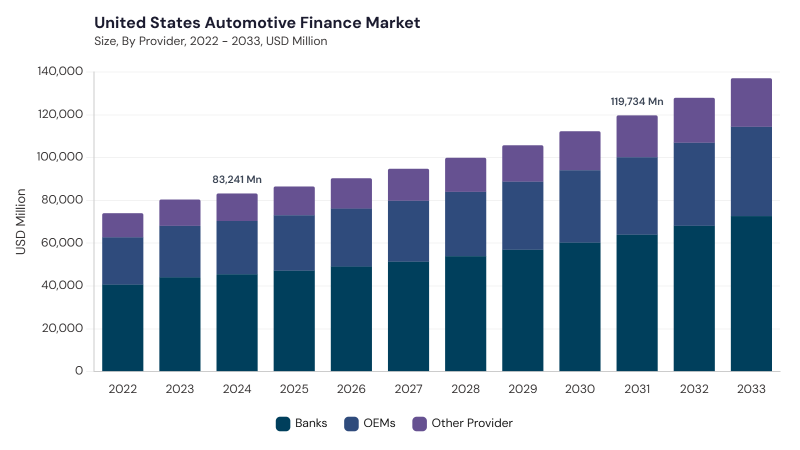
Banks lead due to extensive branch networks, competitive interest rates, diversified lending portfolios, strong customer relationships, digital loan platforms, and automated credit assessment capabilities. These providers support both direct and dealership-linked financing while maintaining structured risk management and compliance systems. OEMs remain significant as captive finance arms support vehicle sales through manufacturer-backed loans, promotional rates, lease options, and integrated dealership financing. Other Provider includes credit unions, fintech lenders, independent finance companies, and specialized non-bank lenders that serve niche borrower groups through flexible eligibility, personalized service, online approvals, and alternative financing models.
Based on Finance, the market is segmented into Direct and Indirect. The Direct market dominated the North America Automotive Finance Market by Finance in 2025, and would continue to be a dominant market till 2033; thereby, achieving a market value of USD 90.1 billion by 2032, growing at a CAGR of 6.3 % during the forecast period. Additionally, The Indirect market is expected to witness highest CAGR of 7.4% during (2026 - 2033).
Direct leads as consumers increasingly secure automotive financing through banks, credit unions, captive finance platforms, and digital lenders that provide transparency, competitive loan terms, faster applications, and flexible repayment options. This channel benefits from online pre-approvals, digital documentation, instant credit decisions, and customer preference for comparing finance terms before purchase. Indirect remains significant as dealership-arranged financing continues to offer convenience during vehicle purchases by connecting buyers with multiple lending options at the point of sale. Strong dealership-lender partnerships, promotional programs, and integrated approval workflows support this channel across new, used, and certified pre-owned vehicle transactions.
Based on Purpose, the market is segmented into Loan, Leasing, and Other Purpose. Loan leads due to strong consumer preference for vehicle ownership, extended repayment tenures, attractive financing packages, and broad use across new and used vehicle purchases. Digital loan origination, AI-based credit assessment, and personalized repayment structures continue to improve customer experience and lending efficiency.
Leasing remains significant for consumers and businesses seeking lower monthly payments, regular vehicle upgrades, and access to newer automotive technologies without long-term ownership commitments. Other Purpose includes refinancing, balloon financing, subprime financing, fleet finance, subscription-linked products, and specialized mobility financing solutions tailored to changing consumer and commercial needs.
Free Valuable Insights: The Global Automotive Finance Market will hit USD 558.1 Billion billion by 2033, at a CAGR of 7.4%
Based on Country, the market is segmented into US, Canada, Mexico, and Rest of North America. The US market dominated the North America Automotive Finance Market by Country in 2025, and would continue to be a dominant market till 2033; thereby, achieving a market value of USD 127.9 billion by 2032, growing at a CAGR of 6.1 % during the forecast period. The Canada market is expected to witness a CAGR of 8.8% during (2026 - 2033). Additionally, The Mexico market is expected to witness a CAGR of 8.3% during (2026 - 2033).
The US leads due to mature auto lending channels, strong digital finance adoption, AI-driven underwriting, captive finance activity, fintech participation, and growing financing demand for electric and hybrid vehicles. Canada supports market growth through EV-focused financing, clean mobility incentives, digital lending platforms, regional lender participation, and sustainability-linked credit models. Mexico is advancing through formalized vehicle financing, OEM captive finance expansion, digital loan processing, flexible lending products, and increasing consumer credit sophistication. Rest of North America benefits from digital financing platforms, localized credit products, regulatory adjustments, nearshoring-linked automotive activity, and rising demand for transparent and convenient vehicle finance solutions.

By Vehicle
By Provider
By Finance
By Purpose
By Country
Set to reach $174.3 Billion by 2032, growing at 6.8% CAGR during 2026-2033.
The US leads with $127.9 billion by 2032, growing at a CAGR of 6.1% during the forecast period.
Passenger vehicle segment will reach $114.9 billion by 2032, growing at a CAGR of 6.5% during 2026-2033.
Banks segment to achieve $92.9 billion by 2032, growing at a CAGR of 6.5% during 2026-2033.
The Canada market is expected to witness a CAGR of 8.8% during 2026-2033.
Indirect finance segment to witness highest CAGR of 7.4% during 2026-2033.
Our team of dedicated experts can provide you with attractive expansion opportunities for your business.




 Unique Offerings