The sample copy of this report is available for access.
“Global Mobile Device Management Market to reach a market value of USD 78405.45 Million by 2033 growing at a CAGR of 20.5%”
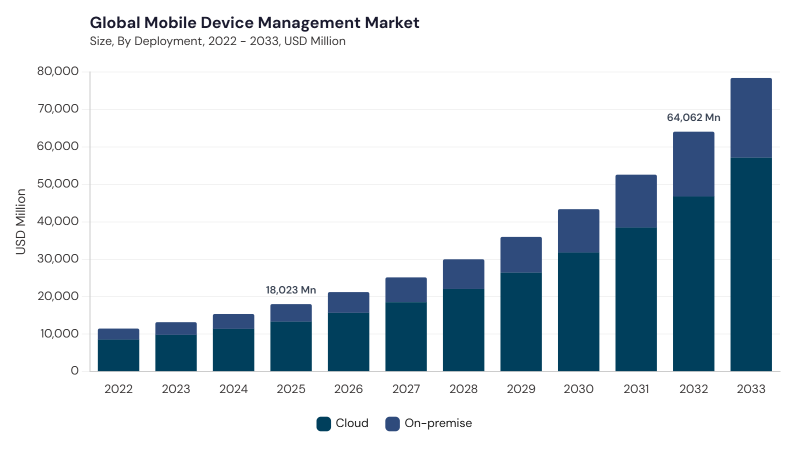
The Global Mobile Device Management Market is expected to reach USD 78,405.5 Million by 2033, growing at a CAGR of 20.5% during 2026 - 2033.
The Global Mobile Device Management Market is witnessing strong growth, driven by increasing enterprise mobility, widespread adoption of bring your own device policies, expansion of remote and hybrid work models, and rising cybersecurity concerns across mobile endpoints. The market originated with early mobile computing devices and initially focused on basic device inventory, remote access, and simple policy enforcement. As smartphones, tablets, and mobile applications became deeply embedded in corporate environments, organizations began adopting more advanced platforms to secure enterprise data, manage personally owned devices, and enforce compliance policies. Over time, the market evolved from standalone mobile management tools into broader unified endpoint management solutions that support mobile devices, desktops, connected devices, and wearable endpoints through centralized platforms. Presently, mobile device management solutions include advanced capabilities such as encryption enforcement, remote wipe, application control, real-time threat detection, compliance monitoring, analytics, and integration with cloud and identity management ecosystems.
The Mobile Device Management Market is witnessing sustained expansion due to the growing need to secure diverse mobile endpoints, protect corporate information, and support distributed workforce models. Organizations are increasingly adopting mobile device management platforms to enforce security policies, manage applications, monitor device compliance, enable secure access, and reduce risks associated with unmanaged or personally owned devices. The growing convergence of mobile device management with unified endpoint management is expanding the market scope by allowing enterprises to manage smartphones, tablets, laptops, desktops, connected devices, and other endpoints through integrated platforms. In addition, the integration of artificial intelligence, machine learning, automation, and zero trust security frameworks is strengthening threat detection, predictive analytics, and incident response capabilities.
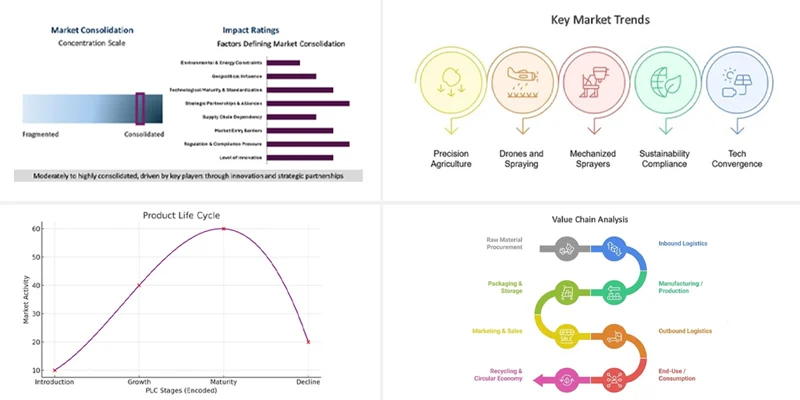
The Mobile Device Management Market is characterized by a moderately consolidated and innovation-driven competitive environment consisting of cloud platform providers, unified endpoint management vendors, Apple device management specialists, mobile security companies, and enterprise mobility solution providers. Competition is centered on security integration, cross-platform device coverage, cloud-native deployment, compliance management, identity-driven access control, automation, and remote workforce enablement. Large technology vendors benefit from ecosystem integration, enterprise cloud adoption, and broad endpoint management capabilities, while specialized vendors compete through industry-specific features, Apple management expertise, rugged device management, small business solutions, and mobile threat defence. Strategic partnerships, product enhancements, cloud integrations, and security-focused innovation continue to shape the competitive landscape.

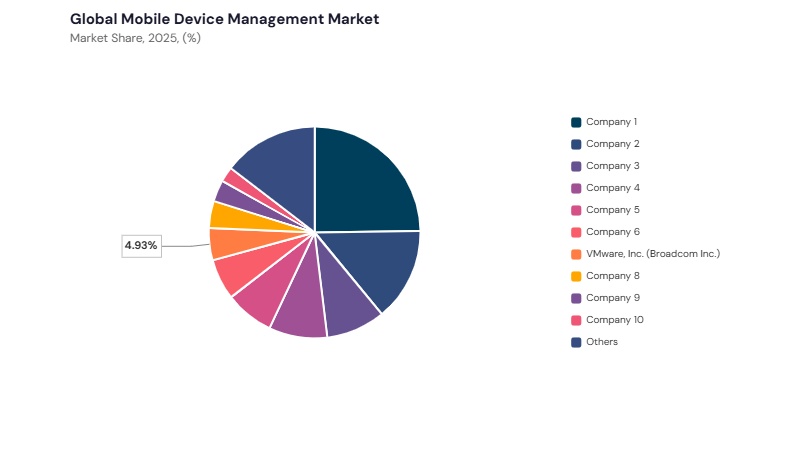
The Mobile Device Management Market exhibits a moderately consolidated and enterprise-security-driven competitive structure, with leading global vendors holding strong positions alongside specialized and regional providers. Microsoft Corporation leads the market, supported by strong adoption of its endpoint management platform, deep integration with enterprise cloud productivity services, identity management tools, and security solutions. Omnissa also holds a strong position through its digital workspace and unified endpoint management capabilities. Jamf Software remains a key participant due to its leadership in Apple device management across enterprise, education, healthcare, and creative industries, while IBM maintains relevance through enterprise endpoint management and security capabilities. Other key participants include SOTI, Ivanti, VMware Broadcom, BlackBerry, Zoho, and Check Point Software Technologies. Competition increasingly revolves around cloud scalability, cross-platform support, automation, compliance readiness, mobile threat defence, identity-driven access, and unified endpoint management integration.
Based on Enterprise Type, the market is segmented into Large Enterprise and Small and Medium Size Enterprises. The Large Enterprise market dominated the Global Mobile Device Management Market by Enterprise Type in 2025, and would continue to be a dominant market till 2033; thereby, achieving a market value of USD 48541.6 Million by 2033, growing at a CAGR of 20.2 % during the forecast period. The Small & Medium Size Enterprises market is expected to witness a CAGR of 21.1% during (2026 - 2033).
Large enterprises represent the dominant segment due to extensive deployment of enterprise mobility solutions, increasing cybersecurity requirements, and the need to manage large fleets of corporate-owned and employee-owned devices. These organizations continue to invest in unified endpoint management platforms, zero trust security architectures, compliance management, and advanced policy enforcement to strengthen operational efficiency and data protection. Small and medium size enterprises are witnessing rising adoption due to growing awareness of mobile security risks, increasing digital transformation, and wider availability of affordable cloud-based management solutions.
Based on Deployment, the market is segmented into Cloud and On-premise. The Cloud market dominated the Global Mobile Device Management Market by Deployment in 2025, and would continue to be a dominant market till 2033; thereby, achieving a market value of USD 57100.3 Million by 2033, growing at a CAGR of 20.3 % during the forecast period. Additionally, The On-premise market is expected to witness highest CAGR of 21.2% during (2026 - 2033).
Cloud deployment represents the leading segment due to its scalability, lower infrastructure burden, simplified rollout, centralized monitoring, automated updates, and strong suitability for remote and hybrid work environments. Organizations increasingly prefer cloud-native management platforms that enable device provisioning, policy enforcement, application management, and compliance monitoring across distributed workforces. On-premise deployment continues to remain important among organizations requiring greater control over sensitive data, internal security policies, and regulatory obligations.
Cloud-based mobile device management solutions are gaining strong adoption because they allow enterprises to manage mobile endpoints from anywhere, reduce dependence on internal infrastructure, and integrate easily with cloud identity, security, and analytics platforms. These solutions are particularly attractive for organizations with distributed teams, remote workers, and bring your own device environments.
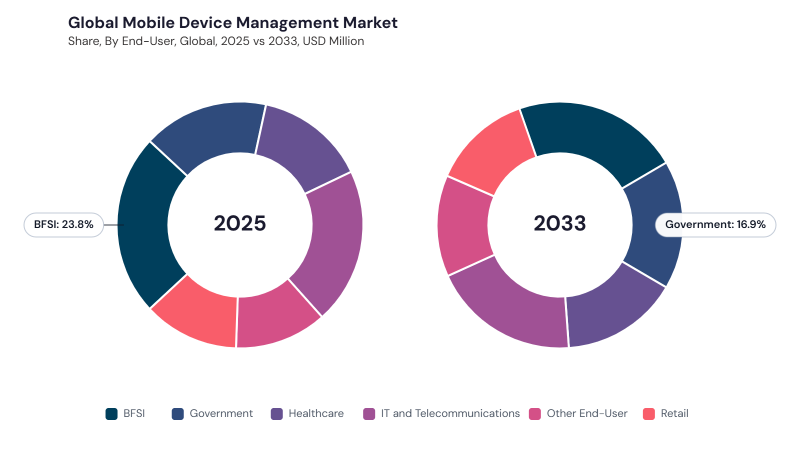
Based on End User, the market is segmented into BFSI, IT and Telecommunications, Government, Healthcare, Retail, and Other End User. The BFSI market dominated the Global Mobile Device Management Market by End-User in 2025, and would continue to be a dominant market till 2033; thereby, achieving a market value of USD 17174.2 Million by 2033, growing at a CAGR of 19.2 % during the forecast period. The IT and Telecommunications market is expected to witness a CAGR of 19.6% during (2026 - 2033).
The BFSI sector relies on mobile device management platforms to protect mobile transactions, enforce encryption, support secure access, and comply with financial data protection requirements. IT and Telecommunications organizations require flexible solutions that support geographically dispersed teams, diverse devices, and integration with wider IT management systems. Government agencies prioritize secure communication, device control, and data protection across sensitive operations. Healthcare providers depend on mobile device management for protecting patient information, enabling mobile clinical workflows, and supporting telemedicine. Retailers use these platforms to manage mobile payment devices, handheld inventory tools, and customer-facing digital systems.
Free Valuable Insights: Mobile Device Management Market Size to reach $78,405.5 Million by 2033
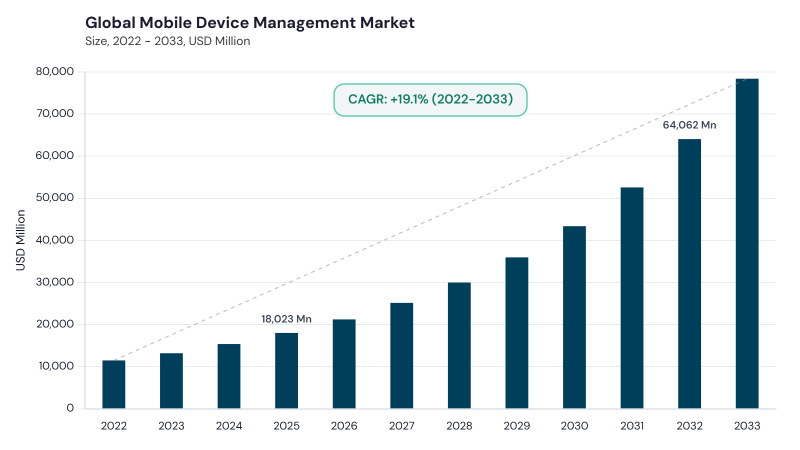
Region-wise, the Mobile Device Management Market is analyzed across North America, Europe, Asia Pacific, and LAMEA. The North America market dominated the Global Mobile Device Management Market by Region in 2025, and would continue to be a dominant market till 2033; thereby, achieving a market value of USD 27390.6 Million by 2033, growing at a CAGR of 19.7 % during the forecast period.The Europe market is expected to witness a CAGR of 20.3% during (2026 - 2033). Additionally, The Asia Pacific market is expected to witness a CAGR of 21.4% during (2026 - 2033).
North America represents the leading regional market due to widespread adoption of enterprise mobility solutions, strong cybersecurity spending, and the presence of major technology providers. Europe remains a major market supported by stringent data protection regulations, enterprise digitalization initiatives, and increasing adoption of secure mobile workforce management solutions. Asia Pacific is witnessing strong growth due to rapid smartphone penetration, expanding enterprise mobility adoption, accelerating digital transformation, and rising investment in cloud infrastructure. LAMEA continues to emerge gradually as organizations across developing markets adopt mobile-first business processes, cloud platforms, and secure endpoint management tools.
North America benefits from mature enterprise technology adoption, hybrid work practices, strong cloud ecosystem integration, and growing demand for unified endpoint management. Europe is shaped by regulatory compliance, privacy-focused enterprise strategies, and strong adoption across finance, healthcare, government, and industrial sectors. Asia Pacific is supported by rising mobile workforce expansion, growth of small and medium businesses, increasing cloud adoption, and widespread digital transformation.
| Report Attribute | Details |
|---|---|
| Market size value in 2026 | USD 21,232.6 Million |
| Market size forecast in 2033 | USD 78,405.5 Million |
| Base Year | 2025 |
| Historical Period | 2022 to 2024 |
| Forecast Period | 2026 to 2033 |
| Revenue Growth Rate | CAGR of 20.5% from 2026 to 2033 |
| Number of Pages | 560 |
| Tables | 630 |
| Report Coverage | Market Trends, Revenue Estimation and Forecast, Segmentation Analysis, Regional and Country Breakdown, Competitive Landscape, Market Share Analysis, Company Profiling, Companies Strategic Developments, SWOT Analysis, Product Life Cycle Analysis, Value Chain Analysis, Market Consolidation Analysis, Key Customer Criteria, Pandemic Impact Analysis, and Winning Imperatives |
| Segments Covered | Enterprise Type, Deployment, End User, Region |
| Country Scope |
|
| Companies Included | Microsoft Corporation, Omnissa, Jamf Software, IBM, SOTI, Ivanti, VMware Broadcom, BlackBerry, Zoho, and Check Point Software Technologies |
By Enterprise Type
By Deployment
By End User
By Geography
Expected to reach USD 78,405.5 million by 2033, growing at 20.5% CAGR during 2026-2033.
Cloud segment leads, growing at a CAGR of 20.3% during 2026-2033.
Microsoft Corporation, Omnissa, Jamf Software, IBM, and SOTI are key players.
North America dominates, reaching USD 27,390.6 million by 2033, growing at 19.7% CAGR during 2026-2033.
BYOD policies and remote workforce expansion are driving demand for mobile device management.
Cloud deployment gains adoption due to scalability and seamless integration with security platforms.
Our team of dedicated experts can provide you with attractive expansion opportunities for your business.







 Unique Offerings