The LAMEA Headless Content Management System Software Market would witness market growth of 19.1% CAGR during the forecast period (2026-2033) and would reach a market value for USD 294.3 million by 2030.
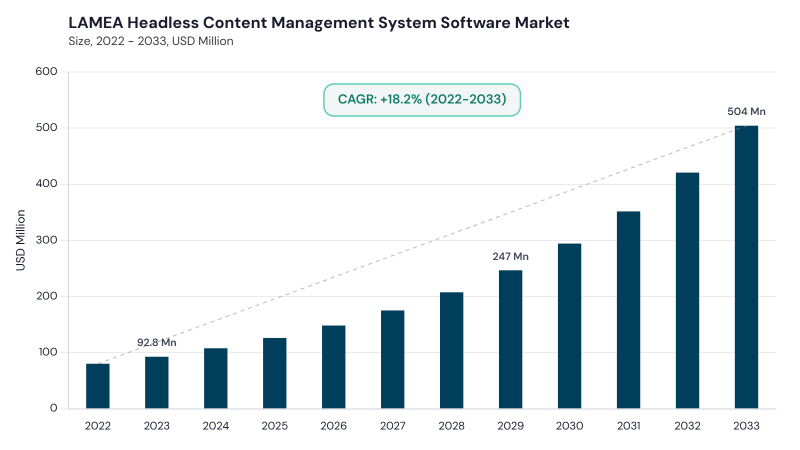
The Brazil market dominated the LAMEA Headless Content Management System Software Market by Country in 2025, and would continue to be a dominant market till 2033; thereby, achieving a market value of $122 million by 2033, growing at a CAGR of 17.7% during the forecast period. The Argentina market is expected to witness a CAGR of 19.9% during (2026 - 2033). Additionally, the UAE market is expected to witness a CAGR of 17.8% during (2026 - 2033). The Brazil and UAE markets led the LAMEA Headless Content Management System Software Market by Country with a market share of 26.6% and 13.2% in 2025. The South Africa market is expected to witness a CAGR of 20.2% throughout the forecast period.
The market for headless content management system software in LAMEA has expanded steadily as enterprises across Latin America, the Middle East, and Africa continue to accelerate digital transformation initiatives and omnichannel engagement strategies. Initially, organizations in the region relied heavily on traditional content management systems focused primarily on website management. However, increasing internet penetration, rising smartphone adoption, and the expansion of e-commerce ecosystems encouraged businesses to adopt more flexible, API-driven architectures capable of supporting web, mobile, and emerging digital channels simultaneously. As organizations sought scalable solutions that could deliver seamless customer experiences across multiple touchpoints, headless CMS platforms gained traction among retail, BFSI, media, telecom, and government sectors.
Cloud adoption and the increasing use of microservices architecture have further accelerated the regional market’s growth. Businesses are increasingly deploying headless CMS solutions to improve content agility, enhance digital customer experiences, and support multilingual content delivery across geographically diverse markets. Governments and enterprises across the Gulf region, particularly in the UAE and Saudi Arabia, are investing significantly in smart city programs and digital infrastructure, creating strong demand for scalable content management solutions. In Latin America, Brazil continues to lead adoption due to rapid e-commerce growth, expanding digital banking ecosystems, and increasing enterprise investments in customer engagement technologies.
The competitive landscape in LAMEA is characterized by growing participation from global CMS vendors, regional system integrators, and cloud service providers. Market participants are focusing on API-centric innovation, cloud-native deployment models, AI-driven personalization, and enhanced security frameworks to strengthen their competitive positioning. Partnerships with telecom operators, cloud infrastructure vendors, and digital transformation service providers are becoming increasingly important to improve deployment efficiency and expand market penetration. Regulatory considerations surrounding data privacy and localization are also influencing deployment strategies across several countries in the region.
Based on Component, the market is segmented into Software and Services. The Software market segment dominated the LAMEA Headless Content Management System Software Market by Component in 2025, and would continue to be a dominant market till 2033; thereby, achieving a market value of $333.5 million by 2033. The Services market is expected to witness a CAGR of 19.8% during (2026 - 2033).
Based on Deployment, the market is segmented into Cloud and On-Premise. The Cloud market dominated the LAMEA Headless Content Management System Software Market by Deployment in 2025, and would continue to be a dominant market till 2033; thereby, achieving a market value of $402.5 million by 2033. The On-Premise market is expected to witness a CAGR of 18.6% during (2026 - 2033).
Based on Application, the market is segmented into Web Content Management, E-commerce Content Management, Mobile Content Management, Digital Experience Management, Omnichannel Content Delivery, and Other Application. The Web Content Management market dominated the LAMEA Headless Content Management System Software Market by Application in 2025, and would continue to be a dominant market till 2033; thereby, achieving a market value of $138.8 million by 2033. The Mobile Content Management market is expected to witness one of the highest growth rates during (2026 - 2033). Additionally, the Omnichannel Content Delivery market is expected to witness strong growth throughout the forecast period.
Free Valuable Insights: Headless Content Management System Software Market Size Worth USD 5.77 Billion billion by 2033
Brazil represents the largest market for headless content management system software in LAMEA, supported by rapid digital commerce expansion, increasing cloud adoption, and rising investments in customer experience management platforms. Large enterprises and retailers in Brazil are increasingly implementing API-driven CMS platforms to support omnichannel engagement and multilingual content delivery. The country’s mature e-commerce ecosystem and growing fintech sector continue to create substantial demand for scalable and flexible digital content management solutions. Businesses are focusing heavily on personalization, mobile-first engagement, and integrated commerce experiences, encouraging the adoption of headless architectures. The competitive landscape in Brazil includes global software vendors, regional technology providers, and cloud-focused service integrators. Future market growth will be driven by cloud-native infrastructure investments, AI-enabled content automation, and increasing enterprise modernization initiatives.
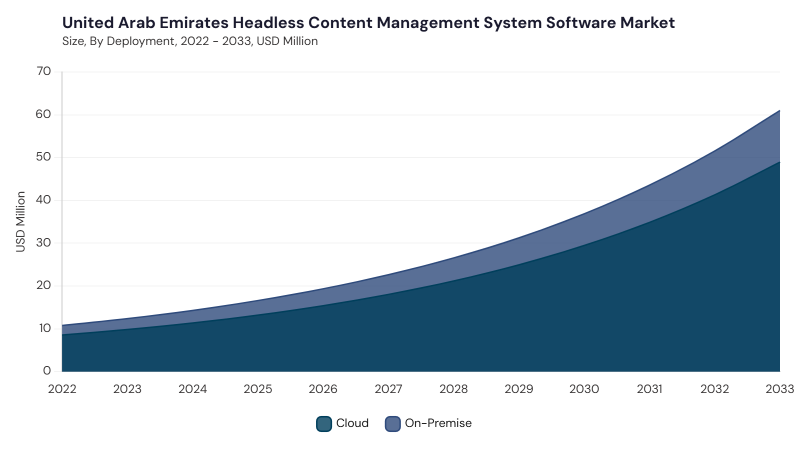
The UAE market is witnessing strong growth due to government-led digital transformation programs, smart city initiatives, and increasing investments in cloud technologies. Enterprises across sectors such as BFSI, retail, tourism, telecom, and government are adopting headless CMS platforms to improve customer engagement and deliver real-time personalized experiences across multiple digital channels. The country’s advanced digital infrastructure and strong enterprise cloud adoption continue to support market expansion. Organizations are increasingly integrating AI-driven analytics, customer data platforms, and digital experience tools with headless CMS environments to enhance operational agility and customer interaction capabilities. The growing focus on multilingual content management and regional content localization further supports demand across the UAE market.
Saudi Arabia continues to emerge as a high-growth market due to Vision 2030 initiatives, expanding digital infrastructure investments, and increasing enterprise modernization efforts. Businesses are adopting headless CMS platforms to support scalable digital engagement strategies, particularly in retail, banking, media, and government sectors. Cloud adoption, increasing internet penetration, and rising demand for mobile-first services are encouraging enterprises to move away from traditional monolithic content management systems. Organizations are also prioritizing secure and compliant digital environments, driving investments in API security, cloud governance, and advanced content orchestration technologies.
South Africa is witnessing increasing adoption of headless CMS platforms due to growing digital transformation efforts among enterprises and media organizations. Businesses are focusing on improving digital customer experiences through scalable web and mobile content delivery systems. The increasing use of cloud infrastructure and API-first architectures is enabling organizations to modernize legacy digital environments and improve operational flexibility. Enterprises are also investing in omnichannel communication platforms to strengthen customer engagement and support expanding digital service ecosystems.
Nigeria is expected to witness one of the fastest growth rates in the regional market due to rapid smartphone adoption, rising internet accessibility, and the expansion of digital commerce and fintech ecosystems. Businesses are increasingly leveraging headless CMS solutions to deliver mobile-centric digital experiences and support real-time content management across applications and platforms. The growth of digital media consumption and online services continues to create demand for scalable cloud-based content management solutions. Increasing startup activity and growing investments in cloud technologies are also contributing to market expansion.

By Component
By Deployment
By Application
By End Use
By Country
Market will grow at 19.1% CAGR during the forecast period (2026-2033).
Brazil leads with $122 million by 2033 and 26.6% market share in 2025.
Organizations need flexible content delivery across multiple digital channels and platforms.
Cloud deployment dominates the LAMEA headless CMS software market.
UAE market grows at 17.8% CAGR during 2026-2033 with 13.2% share in 2025.
Software segment dominates the LAMEA headless CMS market over services.
Our team of dedicated experts can provide you with attractive expansion opportunities for your business.




 Unique Offerings