“Global Dark Fiber Market to reach a market value of USD 21,383.0 Million by 2033 growing at a CAGR of 13.3%”
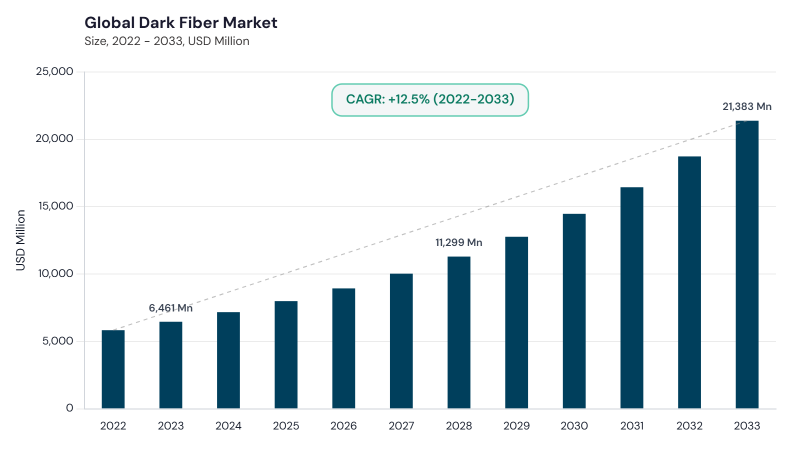
The Global Dark Fiber Market size is expected to reach USD 21,383.0 million by 2033, rising at a market growth of 13.3% CAGR during the forecast period.
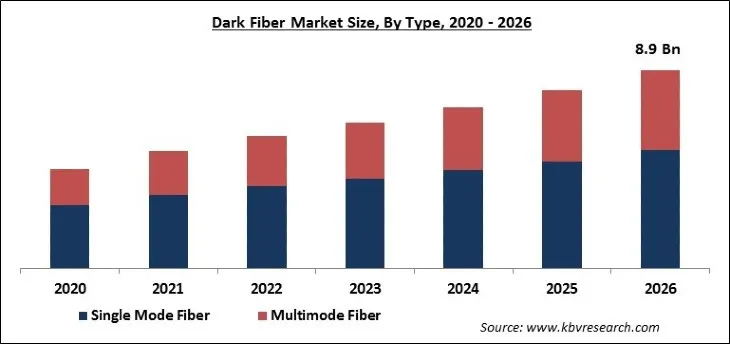
Growth in the market is driven by increasing demand for high-capacity and low-latency communication infrastructure across telecom, cloud computing, AI, and hyperscale data center environments. The expansion of 5G networks, edge computing, and digital transformation initiatives is accelerating investment in fiber infrastructure globally. Enterprises, telecom operators, and cloud service providers are increasingly deploying dark fiber networks to ensure secure, scalable, and high-bandwidth connectivity solutions, supporting long-term market expansion from 2025-2033.
Advances in fiber optic transmission technologies such as Dense Wavelength Division Multiplexing (DWDM), coherent optics, and software-defined networking have significantly enhanced the scalability and utilization of dark fiber networks, enabling organizations to achieve high-capacity, ultra-low latency, and secure connectivity. Governments, telecom operators, cloud service providers, and enterprises are investing heavily in dedicated fiber infrastructure to support growing bandwidth demand, digital transformation, and next-generation communication ecosystems.
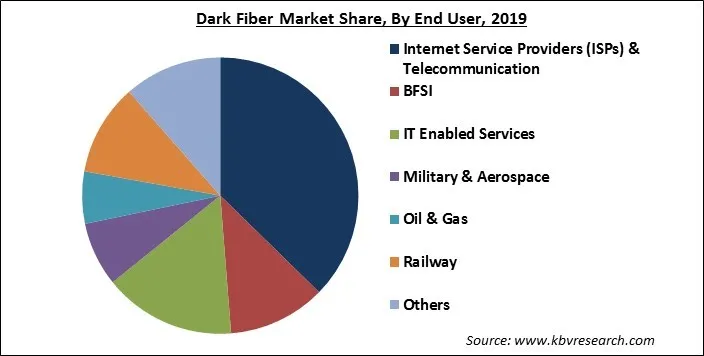
The major strategies followed by market participants are Product Launches and Partnerships & Collaborations as key developmental strategies to keep pace with the changing demands of digital infrastructure and connectivity requirements. For instance, in March 2026, NTT Communications Corporation developed a 192-core multicore submarine cable system enabling fourfold transmission capacity without infrastructure changes. This innovation strengthens the dark fiber market by enhancing bandwidth efficiency, reducing deployment costs, and supporting scalable, high-capacity global connectivity for AI, cloud, and data-intensive applications. Additionally, in November 2025, Verizon Communications, Inc. collaborated with Amazon Web Services to build high-capacity fiber routes connecting AWS data centers, enabling low-latency and resilient infrastructure to support scalable AI applications and hyperscale cloud services.
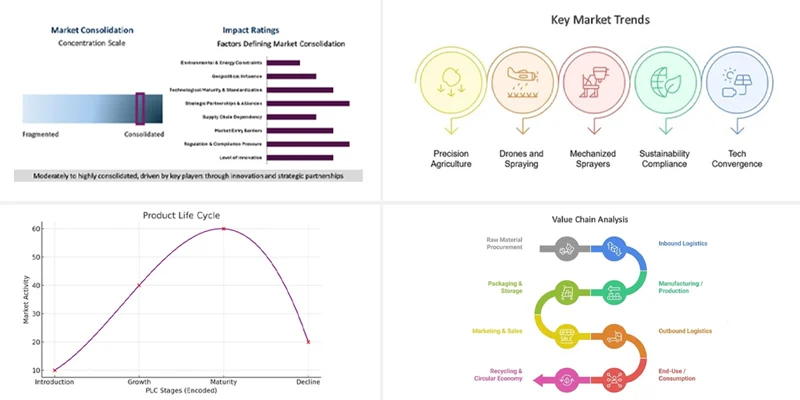

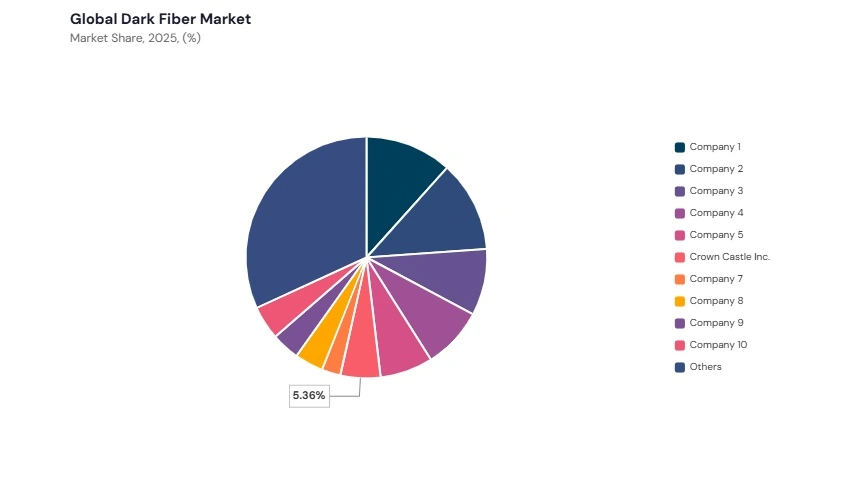
The leading players in the Dark Fiber Market are competing through large-scale fiber infrastructure expansion, AI-ready network modernization, cloud connectivity partnerships, and advanced optical transmission technologies to strengthen competitive positioning globally. Verizon Communications, Inc., AT&T Inc., Comcast Corporation, Lumen Technologies, Inc., and Zayo Group Holdings, Inc. remain among the prominent participants operating extensive metro and long-haul fiber networks across major global markets. Companies are increasingly focusing on hyperscale data center connectivity, low-latency enterprise networking, and 5G backhaul infrastructure expansion to address growing bandwidth demand. Other notable participants operating in the market include Colt Technology Services Group Limited, Crown Castle Inc., NTT Communications Corporation, Windstream Holdings, Inc., and GTT Communications, Inc., all of which continue investing in high-capacity optical infrastructure and strategic network expansion initiatives.
On the basis of Fiber, the dark fiber market is classified into Single-mode and Multimode. The Single-mode segment recorded the largest revenue share in the dark fiber market in 2025, accounting for 69.51% share. Single-mode fiber is extensively used in backbone networks, hyperscale data centers, telecom infrastructure, and long-distance communication due to its ability to support high bandwidth with minimal signal loss over extended distances. Meanwhile, the Multimode segment continues witnessing steady demand across short-distance enterprise connectivity and local area network environments where cost-efficient high-speed communication remains essential.
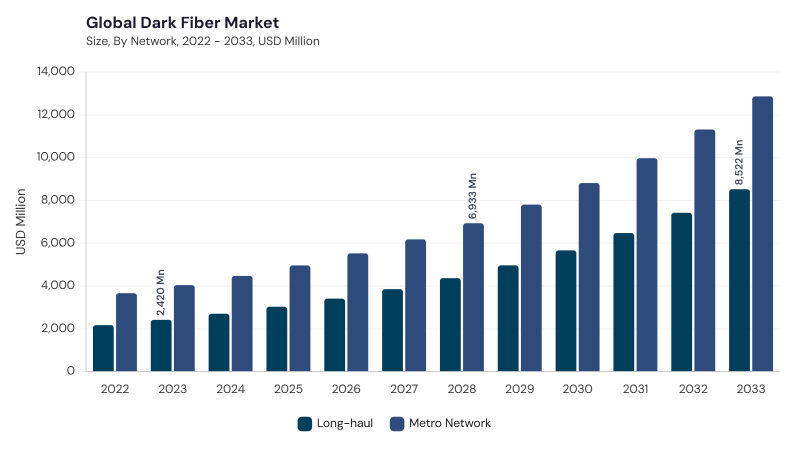
Based on Network, the dark fiber market is segmented into Metro Network and Long-haul. The Metro Network segment dominated the market in 2025 owing to increasing deployment of metro fiber infrastructure supporting enterprise connectivity, smart city applications, 5G small-cell networks, and cloud computing environments. Telecom operators and cloud service providers are increasingly investing in metro fiber networks to ensure low-latency communication and scalable urban connectivity solutions. Meanwhile, the Long-haul segment continues gaining traction driven by increasing cross-border connectivity demand, hyperscale data center interconnection, and expansion of international optical backbone infrastructure.
Based on Technology, the dark fiber market is segmented into DWDM and CWDM. The DWDM segment acquired the highest revenue share in 2025, accounting for 63.72% share due to its ability to support multiple wavelength channels over a single optical fiber, making it suitable for high-capacity and long-distance communication applications. DWDM technology is increasingly adopted across telecom networks, cloud infrastructure, and AI-driven data center ecosystems requiring scalable bandwidth and ultra-low latency performance. Meanwhile, the CWDM segment continues witnessing adoption across regional communication networks and cost-sensitive enterprise applications due to its operational simplicity and lower deployment costs.
By Application, the dark fiber market is divided into Telecom, Data Centers, Enterprise, and Government & Defense. The Telecom segment recorded the highest revenue share in 2025, contributing 45.03% share globally. Telecom operators are increasingly leveraging dark fiber to strengthen backbone infrastructure, support 5G deployment, and manage rising mobile and broadband traffic efficiently. The Data Centers segment is also witnessing substantial growth driven by increasing hyperscale cloud expansion, AI training workloads, and demand for low-latency interconnection infrastructure. Meanwhile, enterprises and government organizations continue adopting private dark fiber networks to ensure secure, scalable, and high-performance communication systems across mission-critical operations.
Free Valuable Insights: Dark Fiber Market Size to reach $21,383.0 Million by 2033
Region-wise, the Dark Fiber Market is analyzed across North America, Europe, Asia Pacific, and LAMEA. The North America segment recorded the highest revenue share in 2025, accounting for 37.44% share globally. In North America and Europe, dark fiber has become a critical component of digital infrastructure, supported by strong investments in hyperscale data centers, cloud connectivity, AI infrastructure, and 5G rollout. Telecom operators and cloud providers are actively expanding metro and long-haul fiber routes to support increasing bandwidth demand and low-latency applications.
Asia Pacific is emerging as the fastest-growing regional market driven by rapid digitalization, increasing internet penetration, cloud infrastructure expansion, and rising investments in telecom modernization across China, India, Japan, and Southeast Asia. Governments and enterprises are increasingly deploying dark fiber to support smart city initiatives, industrial automation, and AI-driven digital ecosystems. Meanwhile, LAMEA continues witnessing gradual adoption supported by improving telecom infrastructure, growing enterprise connectivity requirements, and increasing digital transformation investments.
The Dark Fiber Market is highly competitive and characterized by rapid infrastructure expansion, technological innovation, and strategic collaborations. Competition centers on the ability to provide scalable, low-latency, and high-capacity fiber infrastructure. Vendors differentiate themselves through network reach, route density, fiber quality, service flexibility, and advanced optical transmission capabilities. Integration with AI-driven network management, software-defined networking, and hyperscale cloud infrastructure is a major competitive factor. Both telecom incumbents and specialized fiber providers actively compete, increasing innovation and consolidation pressure across the industry. Flexible pricing models, customized leasing agreements, and strategic partnerships with cloud providers, municipalities, and data center operators further influence competitive positioning.
Dark Fiber Market Coverage:
| Report Attribute | Details |
|---|---|
| Market size value in 2026 | USD 8,937.1 Million |
| Market size forecast in 2033 | USD 21,383.0 Million |
| Base Year | 2024 |
| Historical period | 2022 to 2024 |
| Forecast Period | 2025 to 2033 |
| Revenue Growth Rate | CAGR of 13.3% from 2025 to 2033 |
| Number of Pages | 559 |
| Tables | 660 |
| Report Coverage | Market Trends, Revenue Estimation and Forecast, Segmentation Analysis, Regional and Country Breakdown, Competitive Landscape, Market Share Analysis, Company Profiling, Companies Strategic Developments, SWOT Analysis, Winning Imperatives |
| Segments Covered | Fiber, Network, Technology, Application, Region |
| Country Scope |
|
| Companies Included | Zayo Group Holdings, Inc., Lumen Technologies, Inc., Verizon Communications, Inc., AT&T Inc., Colt Technology Services Group Limited, Crown Castle Inc., NTT Communications Corporation, Windstream Holdings, Inc., Comcast Corporation, GTT Communications, Inc. |
By Fiber
By Network
By Technology
By Application
By Geography
Valued at USD 7.99 billion in 2025, reaching USD 21.38 billion by 2033 at 13.3% CAGR during the forecast period.
Single-mode segment dominates with 69.51% revenue share in 2025.
Zayo Group Holdings, Inc., Lumen Technologies, Inc., and Verizon Communications hold dominant positions.
North America leads with 37.44% revenue share in 2025.
AI and digital transformation demand for high-capacity infrastructure plus latency-sensitive application requirements fuel expansion.
DWDM technology dominates with 63.72% revenue share in 2025.
Our team of dedicated experts can provide you with attractive expansion opportunities for your business.








 Unique Offerings