“Global Contactless Payment Market to reach a market value of 207.47 Billion by 2032 growing at a CAGR of 18.7%”
The Global Contactless Payment Market size is estimated at $62.52 billion in 2025 and is expected to reach $207.47 billion by 2032, rising at a market growth of 18.7% CAGR during the forecast period (2025-2032). Rapid digitalization, more people using smartphones, and the widespread use of NFC-enabled devices are all driving the strong growth. The market is growing even faster because more and more people want fast, safe transactions, and the government is working to make cashless economies and fintech ecosystems bigger.
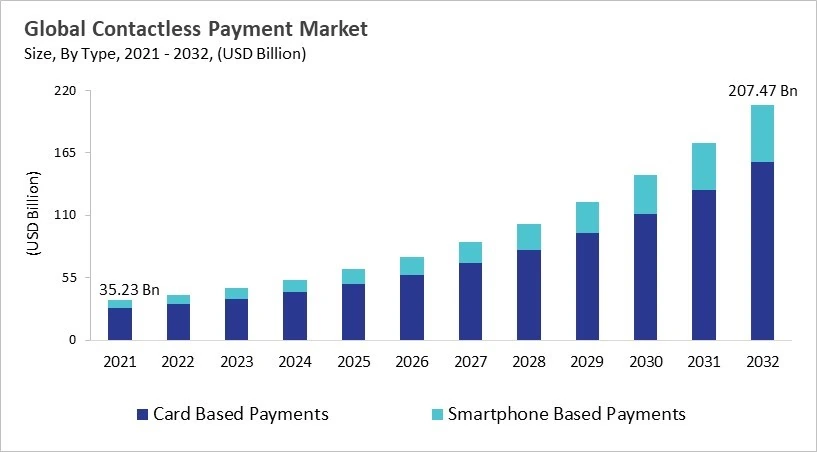
The contactless payment market has developed from traditional payment systems into a convenient, fast, and secure digital ecosystem. Initially driven by card-based technologies like NFC and RFID, early adoption was limited to niche use, such as small retail and transit transactions. Improvements in device compatibility, encryption, and payment infrastructure allowed broader integration with existing financial systems. The growth of NFC-enabled smartphones and mobile wallets marked a turning point, shifting contactless payments into a widely available digital solution. Further, the COVID-19 pandemic surged the adoption because of increased demand for touch-free, hygienic transactions, resulting in rapid merchant onboarding across sectors like hospitality, retail, and transportation.
The contactless payment market is driven by key factors, including the development of industry-specific payment solutions, the rising popularity of mobile payments, and the emergence of SoftPOS technology. Consumer demand for seamless experiences and rising smartphone penetration have shaped innovation in secure tokenization methods and interoperable digital wallets. Further, tailored solutions for industry verticals such as parking and food services are improving operational efficiency and customer convenience. SoftPOS has further evolved the market by allowing small businesses to accept payments through mobile devices, rising accessibility in developing nations.
The major strategies followed by the market participants are Partnerships as the key developmental strategy to keep pace with the changing demands of end users. For instance, In January, 2025, Visa Inc. formed a partnership with Apple, a US-based technology company, to launch Apple Pay for Visa cardholders in Egypt. This partnership enables users to make secure contactless payments using Face ID, Touch ID, or passcodes, aligning with Egypt’s growing digital-first lifestyle. The partnership aims to expand digital payment adoption by providing a seamless and secure transaction experience across various retail and online platforms, reinforcing Visa’s commitment to financial innovation in emerging markets. Moreover, In October, 2024, Mastercard Inc. partnered with Vodafone, a UK-based telecommunications company, to introduce embedded payments for the freight and logistics sectors across the UK and Europe. The partnership integrates Mastercard Gateway with IoT-powered smart vehicles, enabling automated, secure transactions for fuel, charging, and port fees. This initiative aims to streamline fleet operations, enhance digital payment efficiency, and expand the adoption of contactless, machine-enabled transactions in logistics.
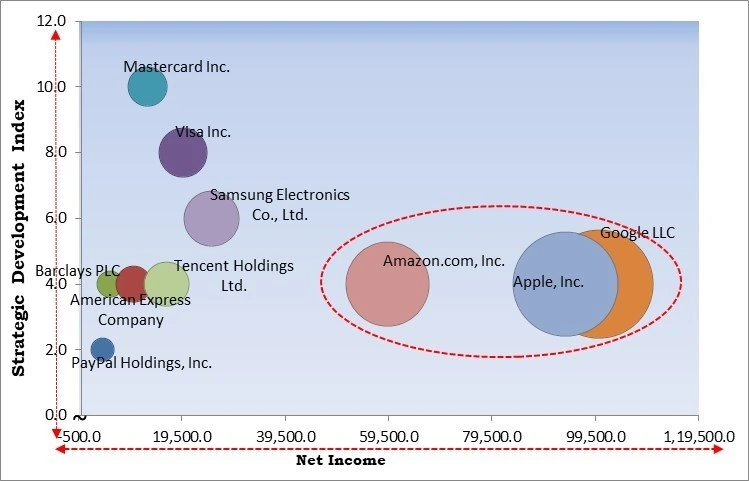
Based on the Analysis presented in the KBV Cardinal matrix; Google LLC, Apple, Inc., Amazon.com, Inc. are the forerunners in the Contactless Payment Market. In November, 2024, Google LLC teamed up with Pix, a Brazilian instant payments platform, to integrate NFC contactless payments for Google Wallet users on Android devices. This collaboration enables seamless transactions through biometric authentication, enhancing security and user experience. Additionally, Google and Pix are working on a "Pay with GPay" button for e-commerce platforms, aiming to streamline digital payments. This initiative strengthens Google's presence in Brazil’s evolving contactless payment market. Companies such as Samsung Electronics Co., Ltd., Visa Inc., Mastercard Inc. are some of the key innovators in Contactless Payment Market.
Before the COVID-19 pandemic, the contactless payment market grew steadily because it was easy to use and people were slowly getting used to the technology. But the pandemic brought short-term problems like supply chain disruptions, delayed infrastructure deployment, and fewer in-person transactions because of lockdowns. Even though these problems happened, the crisis sped up digital transformation by a lot. This was because people and businesses were more concerned about hygiene, which led to a lot of people and businesses using touchless payment methods. This change led to more people using mobile wallets, QR code payments, and AI-powered solutions, as well as new uses like delivery and curbside payments. After the pandemic, the market bounced back quickly, with consumers still preferring it and more merchants accepting it. As a result, contactless payments are now a key part of modern payment systems, which will help the market grow in the long run. Thus, the COVID-19 pandemic had a positive impact on the contactless payment market.

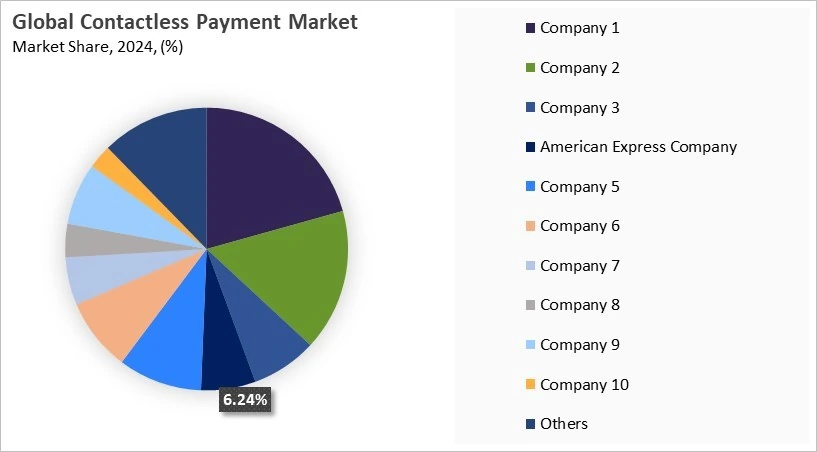
The leading players in the market are competing with diverse innovative offerings to remain competitive in the market. The above illustration shows the percentage of revenue shared by some of the leading companies in the market. The leading players of the market are adopting various strategies in order to cater demand coming from the different industries. The key developmental strategies in the market are Acquisitions, and Partnerships & Collaborations.
Based on Type, the market is segmented into Card Based Payments, and Smartphone Based Payments. The smartphone based payments segment attained 21% revenue share in the Contactless Payment Market in 2024. The smartphone-based payments segment is steadily expanding within the global contactless payment landscape, driven by the increasing integration of mobile technologies into daily financial activities. The growing adoption of mobile wallets and payment applications allows users to store multiple payment methods and perform transactions conveniently through a single device.
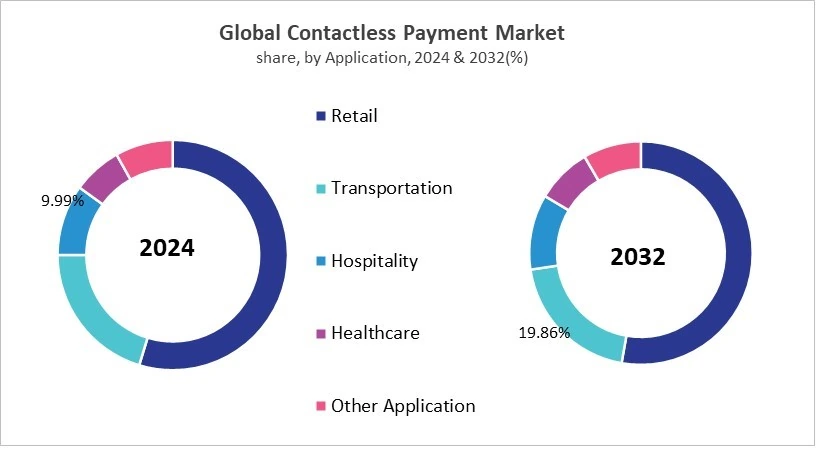
Based on Application, the market is segmented into Retail, Transportation, Hospitality, Healthcare, and Other Application. The transportation segment recorded 20% revenue share in the Contactless Payment Market in 2024. The transportation segment plays a significant role in the global contactless payment landscape, supported by the need for efficient and rapid fare collection systems. Contactless payment solutions enable commuters to make quick and hassle-free transactions without relying on cash or physical tickets, enhancing the overall travel experience. The adoption of contactless-enabled cards and mobile payments across transit networks helps reduce congestion and improve passenger flow.
Free Valuable Insights: Contactless Payment Market Size to reach $207.47 by 2032
Region-wise, the Contactless Payment Market is analyzed across North America, Europe, Asia Pacific, and LAMEA. The North America segment recorded 37% revenue share in the Contactless Payment Market in 2024. The North America and Europe region is expected to capture a significant share in the contactless payment market. The market is driven by high smartphone penetration, advanced financial infrastructure, and strong consumer trust in digital payment systems. In North America, widespread adoption of contactless-enabled cards and mobile wallets is supported by continuous innovation from fintech companies and robust banking networks. In addition to this, the European contactless payment market is projected to experience rapid expansion. This is because of standardized payment systems, supportive regulatory frameworks, and early deployment of NFC-enabled terminals across public and retail transportation. Nations like Germany, France, and the UK have showcased noticeable usage of tap-to-pay solutions. Also, strong emphasis on security standards like authentication protocols and PSD2 regulations has improved consumer confidence, thereby resulting in market expansion.
The contactless payment market is estimated to experience substantial growth in the Asia Pacific and LAMEA regions. The market is propelled by expanding smartphone usage, rising digitalization, and governments' support for cashless economies. In the Asia Pacific, the adoption of super apps and mobile-first payment ecosystems is driving widespread usage of NFC and QR-based contactless payments. Moreover, the LAMEA contactless payment market is also offering lucrative growth opportunities. The market is driven by increasing fintech investments, rising awareness of digital payments, and enhancing payment infrastructure. The adoption of cost-effective solutions such as mobile wallets and SoftPOS is surging the market demand.
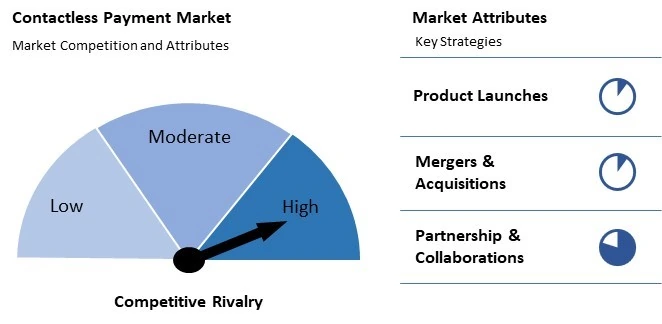
There is a lot of competition in the contactless payment market because more and more people are using digital payments, and their needs are changing. Providers set themselves apart by offering security features, a smooth user experience, and the ability to work with many devices and platforms. Innovation in authentication, interoperability, and value-added services affects how companies compete with each other. People who work in the market also compete on how well they can grow and adapt to changing rules. The landscape is still changing, with new technologies making it easier to stand out and encouraging new companies to compete with existing ones.
| Report Attribute | Details |
|---|---|
| Market size value in 2025 | USD 62.52 Billion |
| Market size forecast in 2032 | USD 207.47 Billion |
| Base Year | 2024 |
| Historical period | 2021 to 2023 |
| Forecast Period | 2025 to 2032 |
| Revenue Growth Rate | CAGR of 18.7% from 2025 to 2032 |
| Number of Pages | 572 |
| Tables | 458 |
| Report Coverage | Market Trends, Revenue Estimation and Forecast, Segmentation Analysis, Regional and Country Breakdown, Competitive Landscape, Market Share Analysis, Porter’s 5 Forces Analysis, Company Profiling, Companies Strategic Developments, SWOT Analysis, Winning Imperatives |
| Segments Covered | Type, Card Based Payments Type, Retail Type, Application, Region |
| Country Scope |
|
| Companies Included | Visa Inc., Mastercard Inc., PayPal Holdings, Inc., American Express Company, Apple, Inc., Google LLC (Alphabet Inc.), Samsung Electronics Co., Ltd. (Samsung Group), Amazon.com, Inc., Barclays PLC, and Tencent Holdings Ltd. |
By Type
By Application
By Geography
Our team of dedicated experts can provide you with attractive expansion opportunities for your business.








 Unique Offerings