The sample copy of this report is available for access.
“Global Cattle Management Software Market to reach a market value of USD 4881.64 Million by 2033 growing at a CAGR of %”
The Global Cattle Management Software Market is expected to reach USD 4881.6 million by 2033, growing at a CAGR of 11.4% during (2026 – 2033).
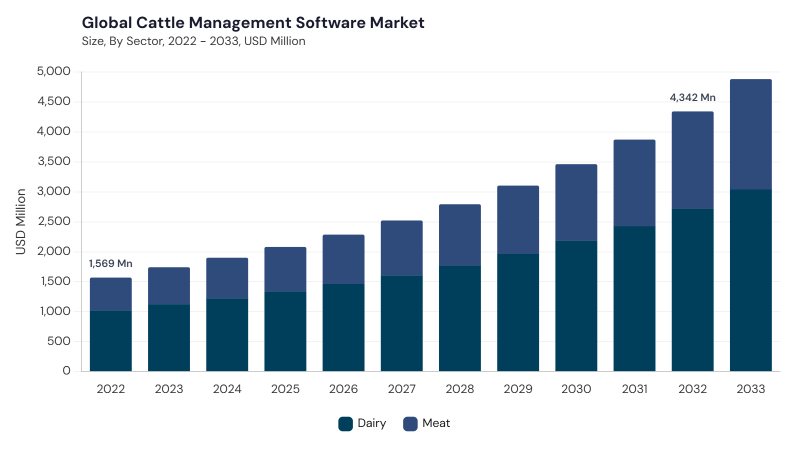
Cattle producers are increasingly adopting cattle management software to improve recordkeeping, breeding management, milk and weight tracking, disease detection, feeding optimization, and reproductive performance across dairy farms, beef operations, breeding facilities, and large commercial livestock enterprises. Adoption is being supported by IoT sensors, RFID systems, wearable livestock devices, cloud-based farm platforms, and precision livestock farming technologies. The market has evolved from basic digital herd-record systems into integrated farm-management platforms covering animal identification, health, feeding, genetics, inventory, movement, financial, and operational data.
Increasing adoption of precision livestock farming is strengthening demand for cattle-management software as commercial farms manage animal health, fertility, milk production, weight, feed consumption, genetics, movement, treatments, labor, and environmental conditions simultaneously. Sensors and automated equipment generate continuous information that requires centralized interpretation, making software the decision layer that connects milking, feeding, sorting, weighing, and monitoring technologies. The market is also benefiting from the economic need for early disease detection, reproductive efficiency, labor productivity, and feed optimization. Cloud platforms, mobile applications, and subscription models are lowering adoption barriers, while AI-supported analytics are improving disease-risk prediction, reproductive recommendations, feeding decisions, productivity forecasting, culling decisions, and task prioritization.
The Cattle Management Software Market is characterized by competition among dairy-equipment companies, precision-livestock technology providers, animal-health companies, livestock-software specialists, sensor manufacturers, and farm-management platforms. DeLaval, GEA, and Lely compete through integrated farm automation ecosystems, while Afimilk, Nedap, CowManager, and Merck Animal Health emphasize animal-level monitoring, health intelligence, fertility analytics, and connected sensor technologies. URUS Group benefits from VAS and AgriWebb capabilities across dairy herd management and broader livestock workflows. Competition increasingly centers on breadth of functionality, integration with existing farm systems, accuracy of alerts, cloud and mobile usability, AI-driven decision support, third-party interoperability, pricing flexibility, dealer networks, training, and technical support.
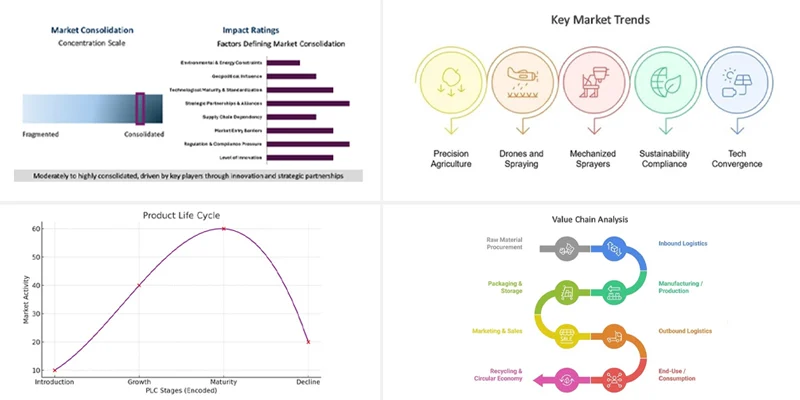

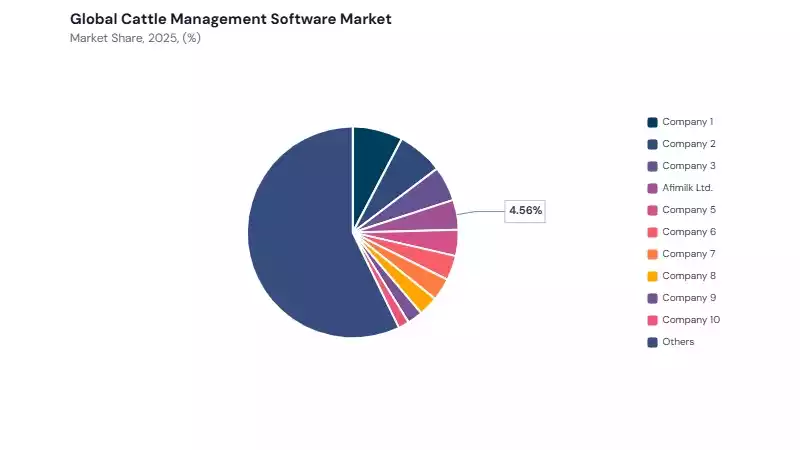
The global Cattle Management Software Market is highly fragmented and increasingly data-centric, with competition spread across dairy automation companies, livestock monitoring specialists, herd-management software providers, animal-health companies, and connected-farm technology vendors. URUS Group holds a leading position through VAS and AgriWebb capabilities, while DeLaval benefits from its dairy-farm automation ecosystem and Merck Animal Health strengthens competition through SenseHub monitoring technologies. Afimilk and GEA maintain strong positions in dairy analytics, milking technology, and integrated herd intelligence, while Lely, Nedap, Datamars, BouMatic, and CowManager compete through robotic dairy systems, identification, activity monitoring, electronic data capture, automation, and specialized sensor-based cow monitoring.
Based on sector, the market is segmented into Dairy and Meat. The Dairy market dominated the Global Cattle Management Software Market by Sector in 2025, and would continue to be a dominant market till 2033; thereby, achieving a market value of USD 3039 million by 2033, growing at a CAGR of 11 % during the forecast period. The Meat market is expected to witness a CAGR of 12.2% during (2026 - 2033).
Dairy represents the more developed software environment because dairy farms generate continuous information across lactation, reproduction, health, feeding, and milking cycles. Platforms used in dairy operations consolidate milk yield, activity, rumination, reproductive events, treatments, body condition, feeding behavior, and equipment data into a common operating view. These systems increasingly support exception-based management by identifying cows that require health, reproductive, feeding, or productivity attention. Meat operations require a different software model focused on animal identification, weight gain, grazing records, breeding information, treatment histories, movements, feed efficiency, cost of production, inventory, and sale performance. Mobile access and offline functionality are especially important for beef systems operating across extensive grazing environments. Together, both sectors show rising demand for digital records, traceability, health visibility, and performance-based decision support.
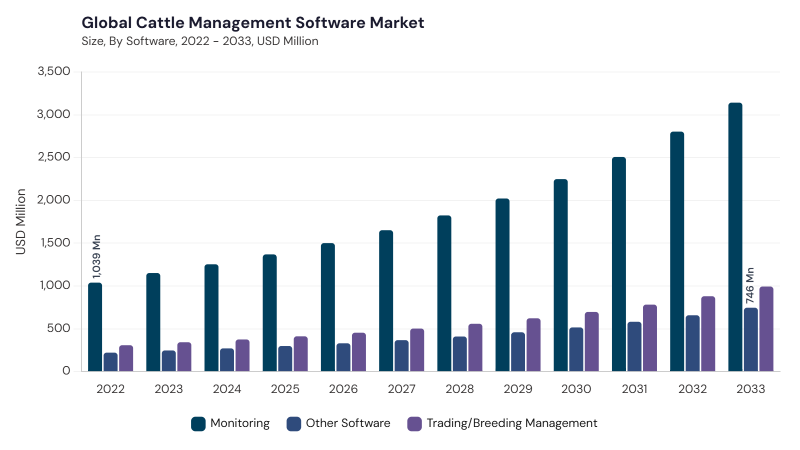
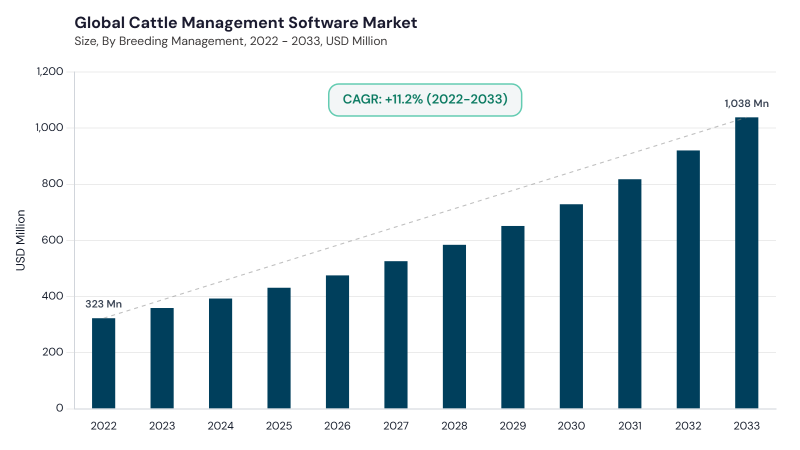
Based on software, the market is segmented into Monitoring, Trading/Breeding Management, and Other Software. The Monitoring market dominated the Global Cattle Management Software Market by Software in 2025, and would continue to be a dominant market till 2033; thereby, achieving a market value of USD 3141.9 million by 2033, growing at a CAGR of 11.1 % during the forecast period. The Trading/Breeding Management market is expected to witness a CAGR of 11.8% during (2026 - 2033).
Monitoring software is becoming central as cattle producers move from periodic physical observation toward continuous animal-level surveillance using activity, rumination, eating, temperature, standing, lying, movement, and location data. These platforms analyze sensor and equipment signals to identify potential health, reproductive, nutritional, or welfare events and convert them into practical alerts. Trading/Breeding Management software supports reproductive planning, breeding histories, genetics, animal selection, calving expectations, inventory classification, and decisions on animals retained, purchased, or sold. Beef and dairy producers use these tools to improve reproductive efficiency, expected calving visibility, and commercial herd planning. Other Software covers livestock records, inventory, grazing, movement, compliance, treatments, task management, employee coordination, financial analysis, reporting, and broader farm-management functions. The software mix is increasingly moving toward unified platforms that reduce duplicate records and connect biological performance with operating decisions.
Based on modality, the market is segmented into Cloud and On-premise. The Cloud market dominated the Global Cattle Management Software Market by Modality in 2025, and would continue to be a dominant market till 2033; thereby, achieving a market value of USD 2604.5 million by 2033, growing at a CAGR of 11.6 % during the forecast period. Additionally, The On-premise market is expected to witness highest CAGR of 11.2% during (2026 - 2033).
Cloud platforms are gaining importance because farmers, veterinarians, nutritionists, breeding advisors, and managers need access to herd information from multiple devices and locations. Cloud-based systems support centralized storage, historical analysis, multi-site management, third-party access, mobile applications, work lists, and faster deployment of updated analytical functions. Subscription models also help farms adopt capabilities gradually without depending heavily on local servers or extensive in-house IT infrastructure. On-premise systems remain relevant where farms require direct control over data, infrastructure configuration, offline availability, customization, or specific governance requirements. These deployments can suit large livestock operations with existing IT resources or locations with inconsistent connectivity. As connected sensors and automation increase data volumes, many customers are weighing local control against cloud flexibility, scalability, and remote accessibility.
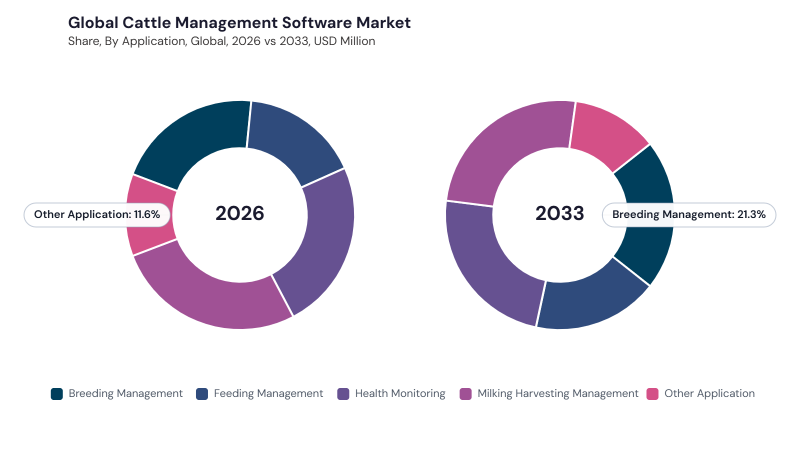
Based on application, the market is segmented into Milking Harvesting Management, Health Monitoring, Breeding Management, Feeding Management, and Other Application. The Milking Harvesting Management market dominated the Global Cattle Management Software Market by Application in 2025, and would continue to be a dominant market till 2033; thereby, achieving a market value of USD 1230.4 million by 2033, growing at a CAGR of 10.4 % during the forecast period. The Health Monitoring market is expected to witness a CAGR of 11.2% during (2026 - 2033). Additionally, The Breeding Management market is expected to witness highest CAGR of 11.8% during (2026 - 2033).
Milking Harvesting Management supports milk-production monitoring, milking schedules, robotic milking, milk-quality information, cow traffic, equipment utilization, and identification of animals requiring attention. Health Monitoring analyzes animal behavior, temperature, milk data, recovery progress, and herd-health trends to detect disease risk or abnormal activity earlier. Breeding Management organizes heat detection, insemination, pregnancy information, reproductive cycles, calving expectations, genetics, and breeding performance. Feeding Management supports ration planning, feed allocation, intake monitoring, feed costs, feeding strategies, and integration with automated feeding equipment. Other Application covers livestock identification, movement, grazing, inventory, treatment records, sorting, compliance, employee tasks, benchmarking, cost management, and business analytics. These applications are becoming more connected as farms combine health, reproduction, feeding, milking, and operational data into integrated decision-support systems.
Free Valuable Insights: Cattle Management Software Market Size to reach $4881.6 Million by 2033
Region-wise, the Cattle Management Software Market is analyzed across North America, Europe, Asia Pacific, and LAMEA. The North America market dominated the Global Cattle Management Software Market by Region in 2025, and would continue to be a dominant market till 2033; thereby, achieving a market value of USD 1558.9 million by 2033, growing at a CAGR of 10.6 % during the forecast period. The Asia Pacific market is expected to witness a CAGR of 12.3% during (2026 - 2033). Additionally, The Europe market is expected to witness a CAGR of 11% during (2026 - 2033).
North America benefits from early adoption of computerized herd management, automated milking, electronic identification, precision dairy technologies, and a large cattle base across dairy and beef operations. Europe is shaped by digital livestock modernization, strict welfare and traceability expectations, advanced dairy systems, reproductive technologies, and demand for interoperable platforms compatible with farm equipment and regulatory needs. Asia Pacific is supported by expanding livestock digitization, government-backed animal identification initiatives, commercial dairy modernization, mobile platforms, and smart agriculture programs, although adoption varies between smallholders and large commercial farms. LAMEA is developing through electronic identification, traceability, biosecurity needs, mobile livestock-management applications, and modernization of beef and dairy operations in markets such as Brazil, Argentina, South Africa, Nigeria, and the Middle East. Across all regions, local connectivity, farm size, affordability, support networks, and regulatory context influence deployment choices and software adoption.
| Report Attribute | Details |
|---|---|
| Market size value in 2026 | USD 2286.1 million |
| Market size forecast in 2033 | USD 4881.6 million |
| Base Year | 2025 |
| Historical Period | 2022 to 2024 |
| Forecast Period | 2026 to 2033 |
| Revenue Growth Rate | CAGR of 11.4% from 2026 to 2033 |
| Number of Pages | 542 |
| Tables | 510 |
| Report Coverage | Market Trends, Revenue Estimation and Forecast, Segmentation Analysis, Regional and Country Breakdown, Competitive Landscape, Market Share Analysis, Company Profiling, Companies Strategic Developments, SWOT Analysis, Product Life Cycle Analysis, Value Chain Analysis, Market Consolidation Analysis, Key Customer Criteria, Pandemic Impact Analysis, and Winning Imperatives |
| Segments Covered | Sector, Software, Modality, Application, and Geography |
| Country Scope |
|
| Companies Included | URUS Group; DeLaval; Merck Animal Health; Afimilk; GEA Group; Lely; Nedap Livestock Management; Datamars Livestock; BouMatic; CowManager |
By Sector
By Software
By Modality
By Application
By Geography
Expected to reach USD 4881.6 million by 2033, growing at 11.4% CAGR during the forecast period (2026-2033).
North America is projected to lead the market by 2033.
URUS Group, DeLaval, Merck Animal Health, Afimilk, GEA Group, Lely, Nedap Livestock Management, Datamars Livestock, BouMatic, CowManager.
Growing adoption of precision livestock farming and increasing need for early disease detection drive market growth.
The market is expected to grow at 11.4% CAGR during the forecast period (2026-2033).
The Global Cattle Management Software Market size is expected to reach USD 4881.6 million by 2033.
Our team of dedicated experts can provide you with attractive expansion opportunities for your business.






 Unique Offerings
