The sample copy of this report is available for access.
“Global Autonomous Telecom Networks Market to reach a market value of USD 37,171.8 Million by 2033 growing at a CAGR of 19.7%”
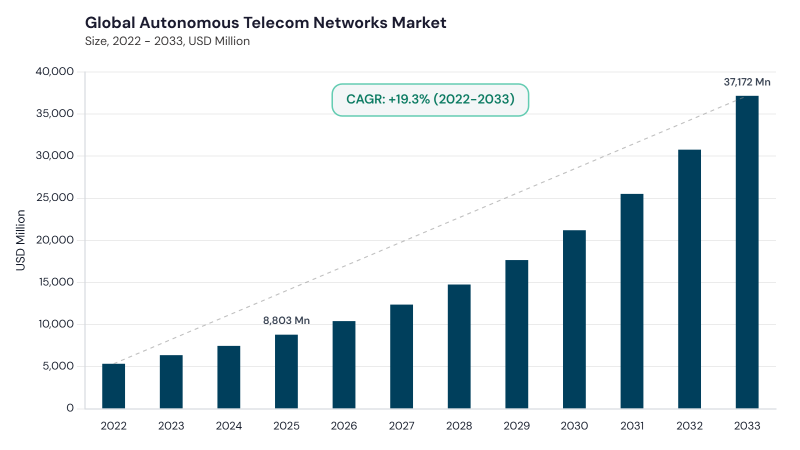
The Global Autonomous Telecom Networks Market size is expected to reach USD 37,171.8 Million by 2033, rising at a market growth of 19.7% CAGR during the forecast period.
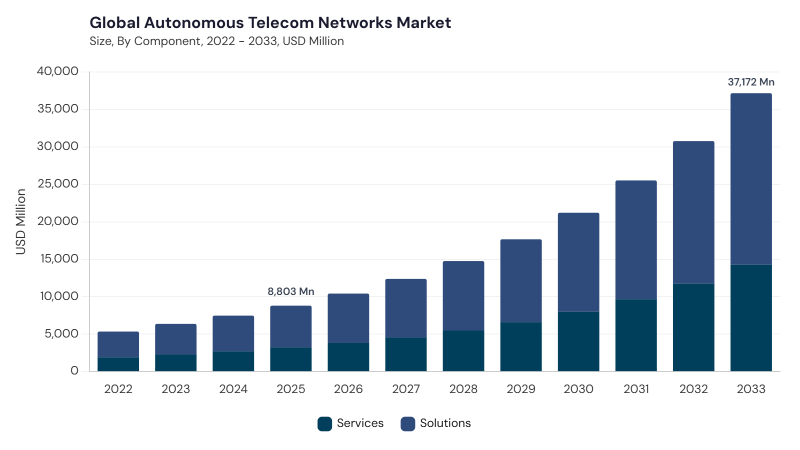
The market growth is driven by increasing adoption of AI-enabled network automation, rapid deployment of 5G infrastructure, rising complexity of telecom operations, and growing demand for self-optimizing and self-healing network ecosystems. Telecom operators are increasingly deploying autonomous network technologies to improve operational efficiency, reduce manual intervention, optimize network resources, and enhance service reliability across increasingly data-intensive environments.
The market has evolved from traditional rule-based telecom automation toward intelligent AI-driven autonomous network ecosystems integrating machine learning, digital twins, cloud-native architectures, edge computing, and intent-based networking frameworks. Autonomous telecom networks are transforming conventional telecom infrastructure into adaptive and predictive environments capable of real-time decision-making, fault resolution, and dynamic resource orchestration with minimal human involvement.
The Autonomous Telecom Networks Market is undergoing rapid transformation as telecom operators increasingly shift from reactive network management models toward proactive and predictive autonomous operations. The integration of AI-powered analytics, self-healing capabilities, and zero-touch automation is significantly improving network reliability, operational agility, and customer experience while reducing operational expenditure.
Furthermore, the growing convergence of telecom infrastructure with cloud computing, edge intelligence, and software-defined networking is accelerating the deployment of autonomous network architectures globally. Rising demand for ultra-low latency connectivity, intelligent traffic management, and scalable telecom operations is further reinforcing long-term market expansion.
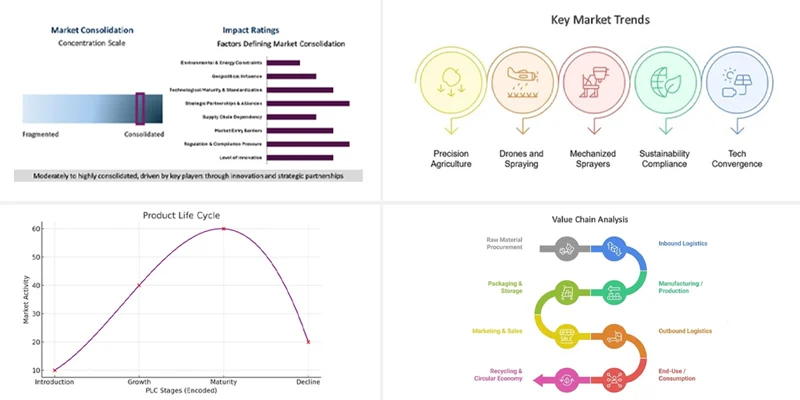

The Autonomous Telecom Networks Market demonstrates a moderately consolidated competitive landscape where leading telecom infrastructure providers and AI-driven networking companies dominate global deployments. The top ten companies collectively account for approximately 89.52% of the market.
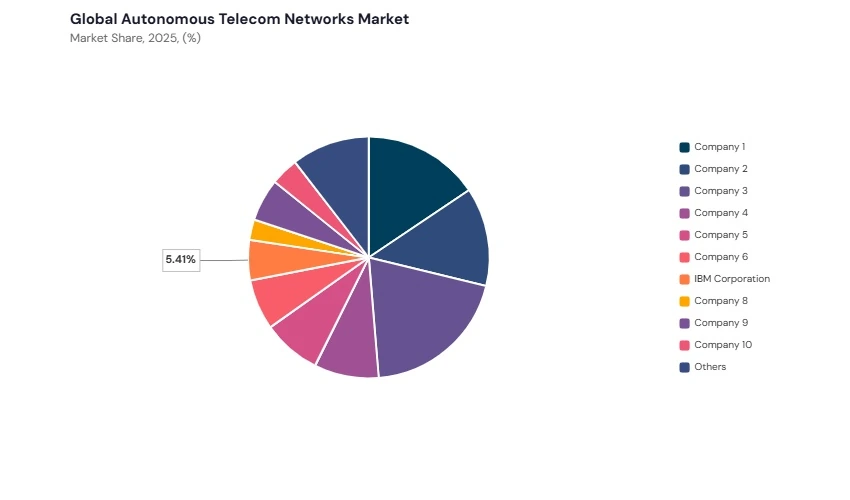
Huawei Technologies Co., Ltd. led the market with approximately 19.91% share supported by its strong 5G infrastructure capabilities, AI-driven network management solutions, and large-scale telecom deployments across Asia and emerging economies followed by Ericsson and Nokia due to their strong presence in AI-enabled orchestration, self-organizing networks, and cloud-native telecom infrastructure.
Other major market participants include ZTE Corporation, Samsung Electronics Co., Ltd., Cisco Systems Inc., IBM Corporation, Hewlett Packard Enterprise (HPE), NEC Corporation, and Ciena Corporation. These companies are actively competing through AI-native networking platforms, Open RAN innovation, digital twin technologies, and cloud-based network automation ecosystems.
Based on Component, the market is segmented into Solutions and Services. The Solutions segment dominated the market in 2025 accounting for 63.57% share due to increasing deployment of AI-enabled orchestration platforms, predictive analytics tools, and self-healing network automation systems. Telecom operators are increasingly investing in intelligent automation frameworks to improve scalability, reduce downtime, and enhance network efficiency.
The Services segment is witnessing strong growth driven by rising demand for consulting, system integration, managed services, and operational support for autonomous telecom deployments. Telecom providers increasingly rely on specialized service partners to accelerate autonomous transformation initiatives and optimize AI-driven network operations.
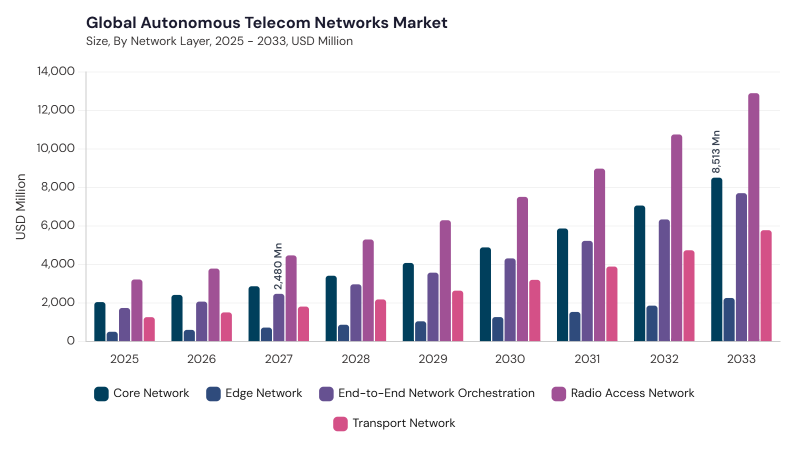
By Network Layer, the market is segmented into Radio Access Network (RAN), Core Network, End-to-End Network Orchestration, Transport Network, and Edge Network. The Radio Access Network segment dominated the market in 2025 accounting for 36.64% share owing to rapid 5G deployment and increasing adoption of AI-powered radio optimization and self-organizing network technologies.
The Core Network segment is witnessing strong adoption due to increasing migration toward cloud-native architectures and network slicing capabilities. Meanwhile, End-to-End Network Orchestration continues to gain momentum as telecom operators seek unified automation frameworks capable of coordinating multiple network domains and services seamlessly.
On the basis of Deployment Mode, the market is segmented into Cloud-Based, On-Premises, and Hybrid. The Cloud-Based segment dominated the market in 2025 accounting for 49.95% share supported by growing adoption of scalable cloud-native telecom infrastructure and AI-driven network analytics platforms.
The Hybrid segment is also witnessing rapid growth as telecom operators increasingly combine cloud flexibility with on-premises control to balance scalability, compliance, and operational security requirements.
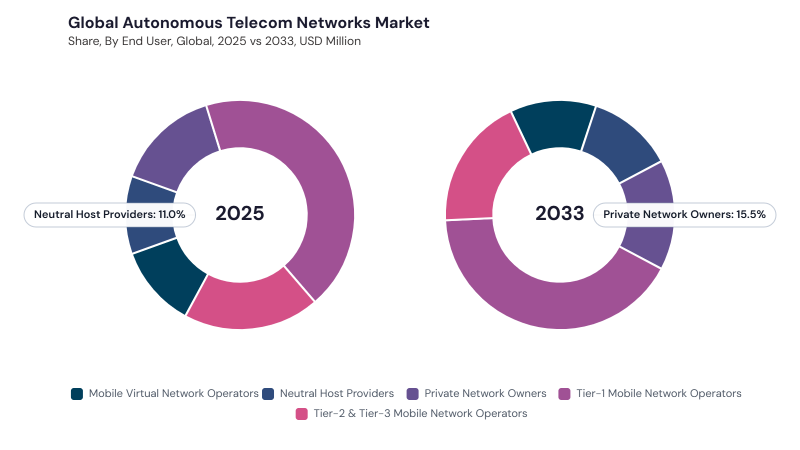
Based on End User, the market is segmented into Tier-1 Mobile Network Operators, Tier-2 & Tier-3 Mobile Network Operators, Private Network Owners, Mobile Virtual Network Operators (MVNOs), and Neutral Host Providers. The Tier-1 Mobile Network Operators segment dominated the market in 2025 accounting for 43.44% share due to large-scale investments in AI-driven telecom automation, network optimization, and 5G modernization initiatives.
The Private Network Owners segment is expected to witness substantial growth supported by increasing adoption of industrial IoT, smart manufacturing, and enterprise private 5G network deployments requiring autonomous management capabilities.
Free Valuable Insights: Autonomous Telecom Networks Market Size to reach $37,171.8 Million by 2033
Region-wise, the market is analyzed across North America, Europe, Asia Pacific, and LAMEA. North America dominated the market in 2025 accounting for 36.90% share owing to strong telecom infrastructure, early AI adoption, and aggressive investment in cloud-native and autonomous network technologies.
Asia Pacific accounted for 29.73% share and is expected to witness the fastest growth due to rapid telecom expansion, extensive 5G rollout programs, government-backed digital transformation initiatives, and increasing demand for AI-enabled network automation across China, India, South Korea, and Japan.
Europe continues to witness strong adoption driven by network modernization initiatives, sustainability goals, and increasing emphasis on telecom automation and standardization frameworks. Meanwhile, LAMEA is gradually expanding supported by improving telecom infrastructure and increasing investment in digital connectivity ecosystems.
The Autonomous Telecom Networks Market is highly innovation-driven and technologically intensive. Competition is centered around AI-enabled automation capabilities, network orchestration intelligence, interoperability, cloud-native infrastructure, and zero-touch operational frameworks.
Major players are increasingly differentiating themselves through AI-native orchestration platforms, predictive analytics engines, digital twin integration, edge intelligence, and Open RAN compatibility. Strategic collaborations with cloud providers, AI companies, and telecom operators are reshaping the long-term competitive dynamics of the market.
| Report Attribute | Details |
|---|---|
| Market size value in 2026 | USD 10,416.6 Million |
| Market size forecast in 2033 | USD 37,171.8 Million |
| Base Year | 2025 |
| Historical period | 2022 to 2024 |
| Forecast Period | 2026 to 2033 |
| Revenue Growth Rate | CAGR of 19.7% from 2026 to 2033 |
| Number of Pages | 692 |
| Tables | 780 |
| Report Coverage | Market Trends, Revenue Estimation and Forecast, Segmentation Analysis, Regional and Country Breakdown, Competitive Landscape, Market Share Analysis, Porter’s Five Forces Analysis, Company Profiling, Value Chain Analysis, Product Life Cycle Analysis, Strategic Developments |
| Segments Covered | Component, Network Layer, Deployment Mode, End User, Region |
| Country Scope | North America (US, Canada, Mexico, Rest of North America); Europe (Germany, UK, France, Russia, Spain, Italy, Rest of Europe); Asia Pacific (China, Japan, India, South Korea, Singapore, Malaysia, Rest of Asia Pacific); LAMEA (Brazil, Argentina, UAE, Saudi Arabia, South Africa, Nigeria, Rest of LAMEA) |
| Companies Included | Huawei Technologies Co., Ltd.; Ericsson; Nokia Corporation; ZTE Corporation; Samsung Electronics Co., Ltd.; Cisco Systems Inc.; IBM Corporation; Hewlett Packard Enterprise (HPE); NEC Corporation; Ciena Corporation |
By Component
By Network Layer
By Deployment Mode
By End User
By Geography
Market size will reach USD 37,171.8 million by 2033, growing at 19.9% CAGR during the forecast period.
Solutions segment dominates with 63.57% share in 2025, projected to hit USD 22,910.6 million by 2033.
Huawei, Ericsson, Nokia, ZTE, Samsung Electronics, Cisco Systems, IBM, HPE, NEC, and Ciena lead the space.
Cloud-Based segment leads with 49.95% share in 2025, reaching USD 18,025.0 million by 2033.
North America dominates with 36.90% revenue share in 2025, reaching USD 13,181.1 million by 2033.
RAN segment holds 36.64% share in 2025, projected to reach USD 12,900.3 million by 2033.
Our team of dedicated experts can provide you with attractive expansion opportunities for your business.








 Unique Offerings