“Global Automotive Intelligent Lighting System Market to reach a market value of 14.84 Billion by 2032 growing at a CAGR of 8.6%”
The Global Automotive Intelligent Lighting System Market size is estimated at $8.33 billion in 2025 and is expected to reach $14.84 billion by 2032, rising at a market growth of 8.6% CAGR during the forecast period (2025-2032). The projected growth is driven by rising adoption of advanced driver assistance systems, increasing demand for energy-efficient LED and adaptive lighting technologies, and stricter vehicle safety regulations. Additionally, growing automotive production and consumer preference for enhanced visibility, aesthetics, and smart features are accelerating the expansion of intelligent lighting systems globally.
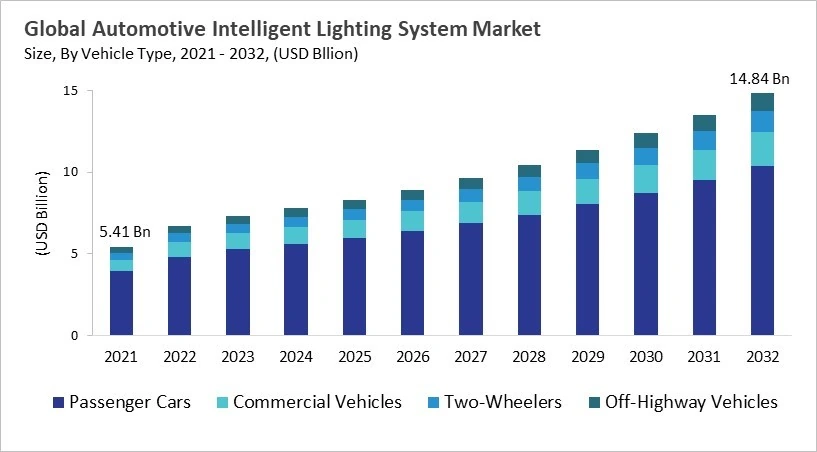
The automotive intelligent lighting system market has developed substantially with the integration of smart vehicle functionalities and the advancement of digital lighting technologies. Automotive lighting has evolved into a dynamic and intelligent system. The adoption of LED technology, intelligent control mechanisms, and advanced optical engineering has allowed features like adaptive headlights that automatically adjust beam patterns according to weather, traffic conditions, and driving environments. Furthermore, the integration of sensors and actuators connected to advanced driver-assistance systems (ADAS) enables enhanced responsiveness and more precise light distribution. These advancements have enabled lighting systems to coordinate and communicate with other vehicle systems, enhancing overall efficiency, safety, and vehicle design aesthetics.
The market trends include the development of adaptive and matrix lighting technologies, the widespread use of LED lighting, and the integration of connectivity features like vehicle-to-everything communication. LEDs are largely preferred because of their durability, energy efficiency, and flexibility in vehicle design, enabling manufacturers to create distinctive lighting signatures. Companies are focusing on research & development, innovation, and strategic collaborations with automotive OEMs to create scalable and customized lighting solutions. The competitive landscape in the market seems to be intensive with manufacturers differentiating themselves through modular lighting platforms, advanced software integration, and compliance with developing environmental and safety regulations, seeking to improve energy efficiency, vehicle safety, and user experience.
The major strategies followed by the market participants are Partnerships as the key developmental strategy to keep pace with the changing demands of end users. For instance, In September, 2025, HELLA GmbH & Co. KGaA teamed up with Tau Motors to develop advanced solutions for next-generation electric vehicles. The collaboration focuses on power electronics and charging technologies while strengthening HELLA’s broader capabilities in integrated vehicle platforms, supporting smarter, energy-efficient systems such as intelligent lighting aligned with evolving EV architectures. Additionally, In April, 2025, Valeo SA announced the partnership with Appotronics, a manufacturer of automotive product to develop next-generation front lighting systems using ALPD laser projection technology. This innovation enhances adaptive lighting, safety, and entertainment, offering advanced features like road projection, outdoor video playback, and smart brightness control, combining Valeo’s system integration with Appotronics’ expertise in laser display solutions.

Based on the Analysis presented in the KBV Cardinal matrix; Hyundai Mobis Co., Ltd. is the forerunner in the Automotive Intelligent Lighting System Market. Companies such as General Electric Company, Texas Instruments, Inc., and Aptiv PLC are some of the key innovators in Automotive Intelligent Lighting System Market. In October, 2024, Hyundai Mobis Co., Ltd. teamed up with ZEISS to develop holographic windshield display technology that integrates advanced visualization into vehicle interfaces. The collaboration highlights a shift toward multifunctional lighting systems, combining illumination, projection, and human–machine interface features to enhance driver awareness and support augmented reality in future vehicles.
The COVID-19 pandemic negatively impacted the Automotive Intelligent Lighting System Market due to manufacturing shutdowns, supply chain disruptions, and semiconductor shortages, delaying production and integration. Reduced vehicle sales further lowered demand, as OEMs prioritized essential models over advanced lighting systems. However, the pandemic accelerated digital transformation and innovation in automotive technologies, enhancing focus on safety, automation, and smart lighting solutions. Despite temporary setbacks, it highlighted the importance of intelligent lighting, supporting long-term growth potential driven by safety and connectivity trends. The overall impact was a blend of short-term negative effects overshadowed by emerging long-term opportunities driven by digitalization and safety imperatives.

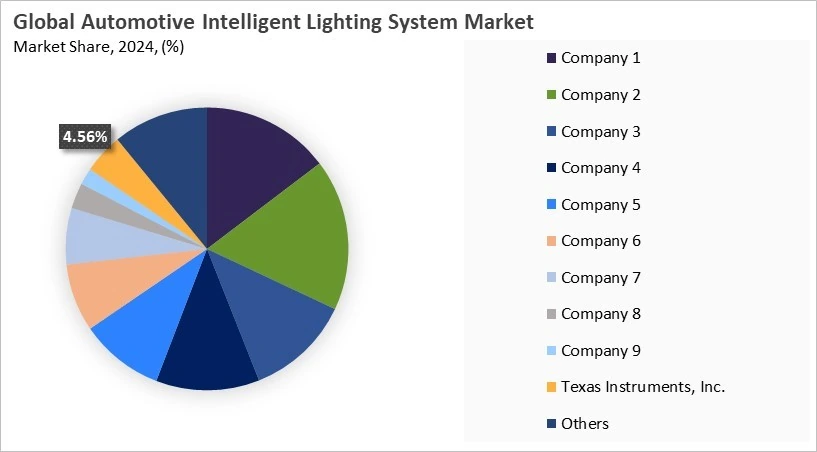
The leading players in the market are competing with diverse innovative offerings to remain competitive in the market. The above illustration shows the percentage of revenue shared by some of the leading companies in the market. The leading players of the market are adopting various strategies to cater demand coming from the different industries. The key developmental strategies in the market are Acquisitions, and Partnerships & Collaborations.
Based on vehicle type, the automotive intelligent lighting system market is characterized into passenger cars, commercial vehicles, two-wheelers, and off-highway vehicles. The commercial vehicles segment attained 14% revenue share in the automotive intelligent lighting system market in 2024. The commercial vehicles segment is witnessing steady adoption of intelligent lighting systems as fleet operators and vehicle manufacturers focus on safety, reliability, and operational efficiency. Intelligent lighting technologies help improve road visibility during long-distance transportation, nighttime driving, and adverse weather conditions, which are common in logistics and freight operations.
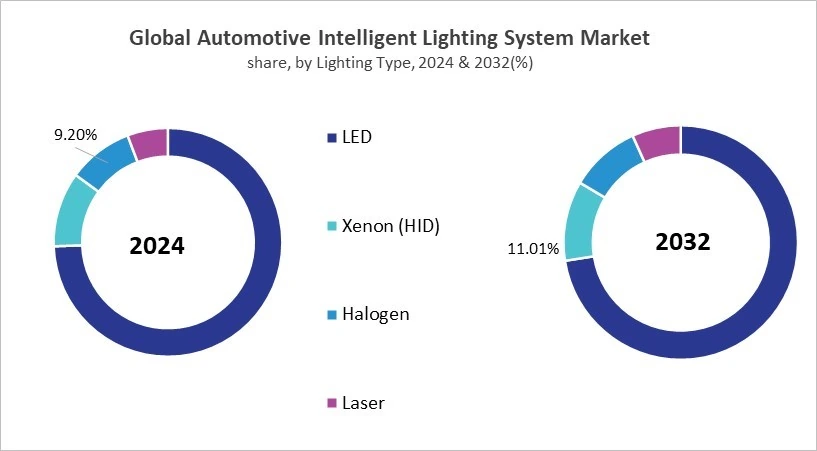
On the basis of lighting type, the automotive intelligent lighting system market is classified into LED, xenon (HID), halogen, and laser. The xenon (HID) segment recorded 11% revenue share in the automotive intelligent lighting system market in 2024. The xenon or high-intensity discharge (HID) lighting segment plays an important role in the automotive intelligent lighting system market by providing high brightness and improved road illumination. Xenon lighting systems generate a powerful, white light that enhances nighttime visibility and supports safer driving conditions.
On the basis of sales channel, the automotive intelligent lighting system market is classified into OEM and aftermarket. The aftermarket segment held 15% revenue share in the the automotive intelligent lighting system market in 2024. The aftermarket segment plays an important role in the automotive intelligent lighting system market by providing replacement components and upgrade solutions for existing vehicles. Vehicle owners often seek aftermarket intelligent lighting products to improve visibility, enhance vehicle aesthetics, or replace worn-out lighting systems.
Free Valuable Insights: Automotive Intelligent Lighting System Market Size to reach $14.84 by 2032
Region-wise, the automotive intelligent lighting system market is analyzed across North America, Europe, Asia Pacific, and LAMEA. The North America segment recorded 30% revenue share in the automotive intelligent lighting system market in 2024. The automotive intelligent lighting system market is estimated to experience significant growth in the North America and Europe region. The market is driven by stringent vehicle safety regulations and strong automotive manufacturing bases. The increasing consumer preference for premium vehicles, rising adoption of advanced driver-assistance systems (ADAS), and growing demand for improved road safety features are encouraging automakers to integrate LED-based smart lighting solutions. The presence of leading technology developers and automotive manufacturers, alongside ongoing innovation in autonomous vehicle technologies, thereby supporting growth. Moreover, Europe automotive intelligent lighting system market is growing at a steady pace. The region’s strong focus on automotive design and innovation, stringent regulatory standards related to energy efficiency, and vehicle safety are some of the elements supporting market growth. Also, European automakers are implementing pixel lighting, adaptive matrix lighting, and advanced LED technologies to improve driving safety, brand differentiation, and vehicle aesthetics.
In the Asia Pacific and LAMEA region, the automotive intelligent lighting system market is predicted to witness prominent growth. This is because of rising vehicle production, rapid expansion of the automotive industry, and increasing consumer demand for technologically advanced vehicles. Regional nations like Japan, China, India, and South Korea are key contributors, driven by increasing disposable incomes, rising urbanization, and strong investments in automotive innovation. Automotive manufacturers in the region are largely integrating LED and adaptive lighting technologies to enhance safety and meet developing consumer expectations. Furthermore, the LAMEA automotive intelligent lighting system market is offering lucrative growth opportunities. This is due to infrastructure development, expanding automotive sales, and rising awareness of vehicles safety technologies. Further, the gradual introduction of advanced vehicle features and the rising presence of international automakers are predicted to result in market growth.

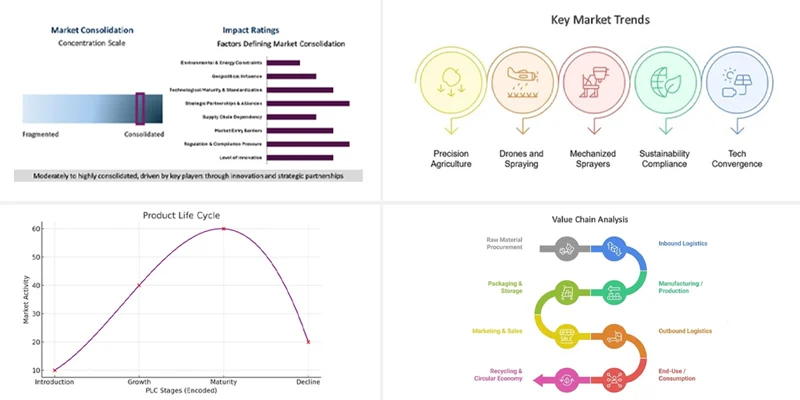
The Automotive Intelligent Lighting System market is moderately consolidated, with a few global suppliers holding significant shares while smaller niche players add fragmentation. Competition is driven by innovation in LED, laser, and adaptive lighting technologies, along with strong OEM partnerships. High entry barriers, including R&D intensity and regulatory compliance, limit new entrants. However, price competition and technological advancements continue to intensify rivalry, pushing companies to differentiate through performance, integration capabilities, and cost efficiency.
| Report Attribute | Details |
|---|---|
| Market size value in 2025 | USD 8.33 Billion |
| Market size forecast in 2032 | USD 14.84 Billion |
| Base Year | 2024 |
| Historical period | 2021 to 2023 |
| Forecast Period | 2025 to 2032 |
| Revenue Growth Rate | CAGR of 8.6% from 2025 to 2032 |
| Number of Pages | 717 |
| Tables | 579 |
| Report Coverage | Market Trends, Revenue Estimation and Forecast, Segmentation Analysis, Regional and Country Breakdown, Competitive Landscape, Market Share Analysis, Porter’s 5 Forces Analysis, Company Profiling, Companies Strategic Developments, SWOT Analysis, Winning Imperatives |
| Segments Covered | Vehicle Type, Lighting Type, Lighting Position, Functionality, Sales Channel, Region |
| Country Scope |
|
| Companies Included | Valeo SA, KOITO MANUFACTURING CO., LTD, HELLA GmbH & Co. KGaA (Forvia SE), Marelli Holdings Co., Ltd., Stanley Electric Co. Ltd., ams-OSRAM AG, Hyundai Mobis Co., Ltd. (Hyundai Motor), Aptiv PLC, General Electric Company and Texas Instruments, Inc. |
By Vehicle Type
By Lighting Type
By Lighting Position
By Functionality
By Sales Channel
By Geography
Valued at USD 8.33 billion in 2025, reaching USD 14.84 billion by 2032 at 8.6% CAGR during 2025-2032.
LED segment dominates, projected to achieve USD 10.76 billion by 2032.
Valeo SA, KOITO MANUFACTURING CO., LTD, HELLA GmbH & Co. KGaA, and Marelli Holdings Co. hold leading positions.
Europe leads with USD 4.94 billion by 2032; North America grows at 8.2% CAGR during 2025-2032.
Advanced technological integration, vehicle safety regulations, and consumer demand for enhanced driving aesthetics fuel expansion.
Passenger cars dominate the market, growing at 8.2% CAGR during the forecast period.
Our team of dedicated experts can provide you with attractive expansion opportunities for your business.








 Unique Offerings