The sample copy of this report is available for access.
“Global Automotive Data Analytics Platform Market to reach a market value of USD 15,330.7 Million by 2033 growing at a CAGR of 22.68%”
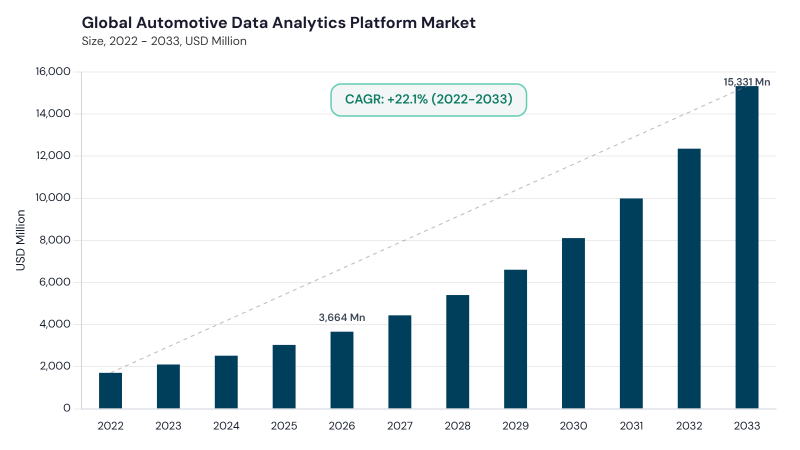
The Global Automotive Data Analytics Platform Market is expected to reach USD 15.3 billion by 2033, growing at a CAGR of 22.7% during (2026 - 2033).
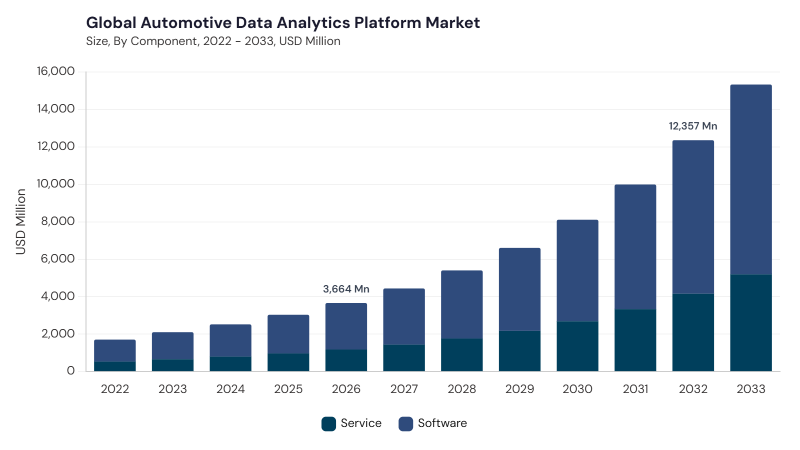
Automotive data analytics platform market is experiencing growth due to growing use of customer, vehicle, operational data and telematics, resulting in surging demand among fleet operators, automakers, service organizations, and mobility providers. Growing adoption of software-defined vehicles, connected vehicles, ADAS, electric vehicles, cloud analytics, predictive maintenance, and AI-powered intelligence is further supporting the market expansion. Automotive data analytics platform market originated as suppliers, manufacturers, and dealers recognized the value of converting automotive data into actionable business insights. Analytics use was limited to basic telematics, simple diagnostics, and maintenance alerts. Cloud computing, sensor technology, AI, connectivity, and machine learning allowed large-scale processing of enterprise and vehicle-generated data.
Automotive data analytics platform market is experiencing growth as vehicles largely operate as software-defined, connected, and data-generating platforms. Mobility players and automakers use analytics to enhance vehicle performance, warranty management, predictive maintenance, fleet efficiency, driver behavior analysis, and customer engagement. Market growth is further driven by expansion of AI-based decision systems, cloud-native platforms, EV analytics, real-time telematics, and the need to integrate service, vehicle, dealer, customer, and manufacturing data into unified platforms.
Automotive data analytics platform market is ecosystem-driven and moderately fragmented, with competition led by automotive technology suppliers, hyperscale cloud providers, specialized AI platform companies, and enterprise analytics vendors. Market players are positioning themselves ahead on automotive data integration, cloud scalability, real-time processing, predictive analytics, data governance, AI model accuracy, and interoperability. Market competition relies on edge-cloud integration, software-defined vehicle analytics, vehicle-data monetization, digital twins, and secure cross-platform data exchange.
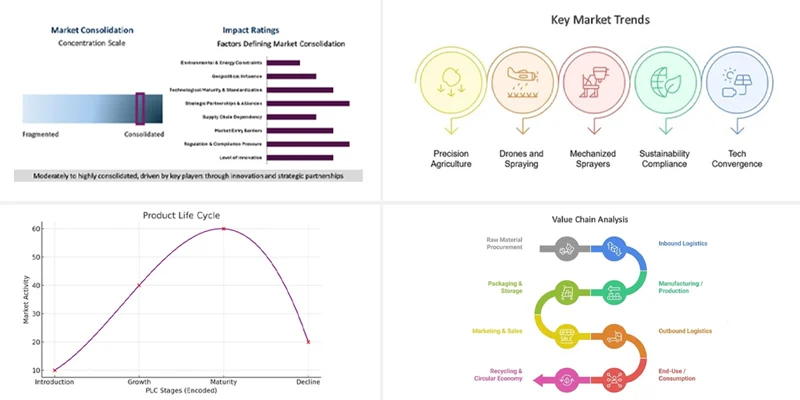

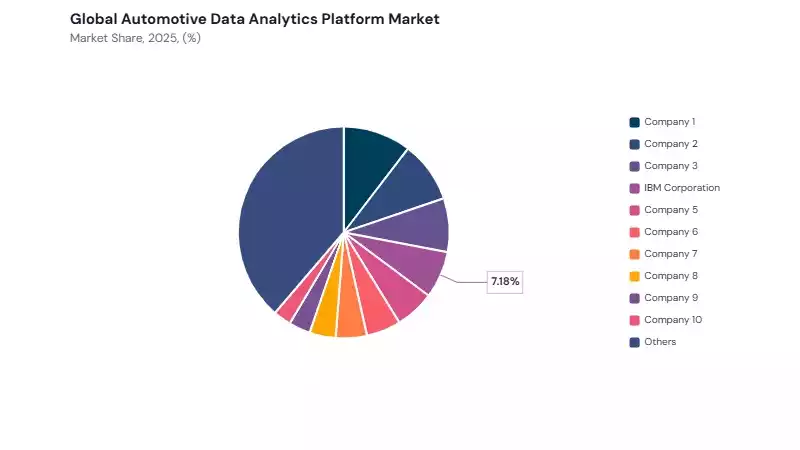
Automotive data analytics platform market is moderately segmented, by Amazon Web Services, Microsoft Corporation, IBM Corporation, Robert Bosch GmbH, Google LLC, and SAP SE. Microsoft dominates through its Fabric, Power BI, IoT, AI, Azure and connected vehicle ecosystem, while IBM, AWS, Bosch, Google, and SAP strengthen competition through vehicle lifecycle intelligence, cloud analytics, enterprise data platforms, connected mobility, AI-driven automotive solutions, and connected mobility. Oracle, Continental, Palantir, and SAS Institute further support the market through enterprise cloud, vehicle electronics, operational intelligence platforms, and advanced analytics.
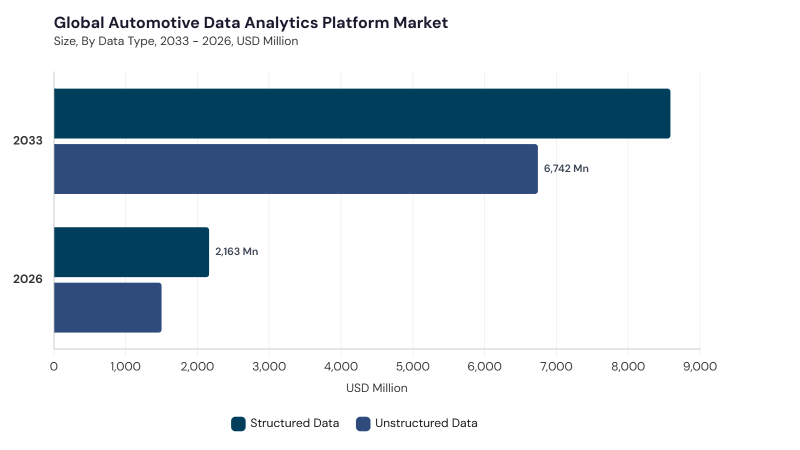
Based on Data Type, the market is segmented into Structured Data and Unstructured Data. The Structured Data market dominated the Global Automotive Data Analytics Platform Market by Data Type in 2025, and would continue to be a dominant market till 2033; thereby, achieving a market value of USD 8.5 billion by 2033, growing at a CAGR of 21.8 % during the forecast period. The Unstructured Data market is expected to witness a CAGR of 23.9% during (2026 - 2033).
Structured Data leads the market due to its broad use in vehicle telemetry, diagnostics, maintenance records, fleet databases, enterprise systems, and operational reporting. This data format allows faster processing, easier integration, and strong use in predictive maintenance and performance analytics. Unstructured Data is gaining demand as connected vehicles generate camera feeds, audio inputs, sensor streams, driver interaction data, service notes, and textual information. Advances in AI, machine learning, natural language processing, and computer vision are improving the ability to convert complex unstructured datasets into actionable automotive insights.
Based on Vehicle Type, the market is segmented into Non-autonomous Vehicles and Autonomous Vehicles. The Non-autonomous Vehicles market dominated the Global Automotive Data Analytics Platform Market by Vehicle Type in 2025, and would continue to be a dominant market till 2033; thereby, achieving a market value of USD 9.5 billion by 2033, growing at a CAGR of 22.3 % during the forecast period. The Autonomous Vehicles market is expected to witness a CAGR of 23.3% during (2026 - 2033).
Non-autonomous Vehicles dominate the market due to the large installed base of connected passenger and commercial vehicles using telematics, diagnostics, driver behavior monitoring, and fleet analytics. These vehicles generate strong demand for predictive maintenance, usage-based insurance, service planning, and performance optimization. Autonomous Vehicles are gaining strong relevance as ADAS and automated driving systems require continuous analysis of sensor, mapping, perception, environmental, and operational data. Analytics platforms support safety validation, AI model improvement, real-time decision monitoring, and regulatory compliance in autonomous mobility systems.
Based on Component, the market is segmented into Software and Service. The Software market dominated the Global Automotive Data Analytics Platform Market by Component in 2025, and would continue to be a dominant market till 2033; thereby, achieving a market value of USD 10.1 billion by 2033, growing at a CAGR of 22.2 % during the forecast period. The Service market is expected to witness a CAGR of 23.6% during (2026 - 2033).
Software forms the core of the Automotive Data Analytics Platform Market by enabling data ingestion, processing, visualization, AI modeling, predictive analytics, fleet intelligence, and real-time decision support. These platforms help automakers, suppliers, fleet operators, and mobility providers convert connected vehicle data into operational and commercial insights. Service is also important as organizations require consulting, implementation, integration, maintenance, customization, data migration, training, and managed analytics support. As automotive data environments become more complex, service providers help improve deployment efficiency, governance, and long-term platform performance.
Based on Deployment, the market is segmented into Cloud and On-premise. The Cloud market dominated the Global Automotive Data Analytics Platform Market by Deployment in 2025, and would continue to be a dominant market till 2033; thereby, achieving a market value of USD 8.7 billion by 2033, growing at a CAGR of 22.8 % during the forecast period.The On-premise market is expected to witness a CAGR of 22.5% during (2026 - 2033).
Cloud deployment leads the market as automotive companies require scalable storage, flexible computing, centralized access, rapid analytics processing, and near real-time handling of connected vehicle information. Cloud platforms support AI, machine learning, large-scale data lakes, remote diagnostics, fleet intelligence, and cross-regional data synchronization. On-premise deployment remains important for organizations requiring stronger control over sensitive vehicle, customer, engineering, or proprietary operational data. This model supports internal infrastructure governance, customized system integration, compliance requirements, and low-latency processing for specialized automotive workloads.
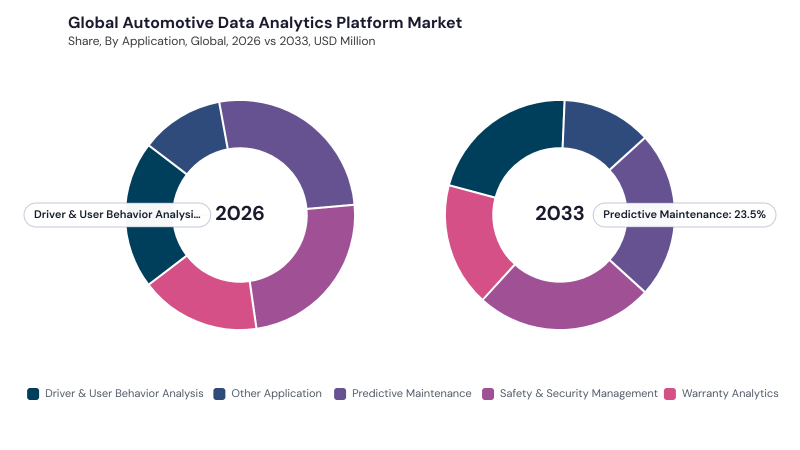
Based on Application, the market is segmented into Predictive Maintenance, Safety & Security Management, Driver & User Behavior Analysis, Warranty Analytics, and Other Application. The Predictive Maintenance market dominated the Global Automotive Data Analytics Platform Market by Application in 2025, and would continue to be a dominant market till 2033; thereby, achieving a market value of USD 3.5 billion by 2033, growing at a CAGR of 20.6 % during the forecast period. The Safety & Security Management market is expected to witness a CAGR of 23.3% during (2026 - 2033). Additionally, The Driver & User Behavior Analysis market is expected to witness highest CAGR of 23.3% during (2026 - 2033).
Predictive Maintenance leads the market as sensor and diagnostic data are increasingly used to identify potential component failures, reduce downtime, optimize service schedules, and lower maintenance costs. Safety & Security Management is gaining demand as connected vehicles require cybersecurity monitoring, risk detection, safety analytics, and threat management. Driver & User Behavior Analysis supports telematics-based driving assessment, personalization, insurance use cases, and fleet efficiency. Warranty Analytics helps manufacturers detect failure patterns, improve claims management, and control warranty expenses, while Other Application includes traffic intelligence, mobility optimization, vehicle performance analytics, and customer experience management.
Free Valuable Insights: Automotive Data Analytics Platform Market Size to reach $15.3 Billion by 2033
Region-wise, the Automotive Data Analytics Platform Market is analyzed across North America, Europe, Asia Pacific, and LAMEA. The North America region led the automotive data analytics platform market in 2025, and is estimated to continue at the same position till 2033, thereby capturing a market growth of USD 5.1 billion by 2033, rising at a CAGR of 22%. The Asia Pacific region is predicted to grow at a CAGR of 23.3% during the forecast period. Moreover, the Europe market is predicted to expand at a CAGR of 22.2% during 2026-2033.
North America led the market because of strong connected-vehicle adoption, advanced automotive software ecosystems, investments in software-defined and autonomous vehicles, and telematics deployment. Asia Pacific region is driven by rising vehicle digitalization, expanding connected mobility ecosystems, and investments in smart transportation and automotive data infrastructure. Europe market is supported by safety regulations, connected-car adoption, deployment of analytics in mobility services, and automotive manufacturing. LAMEA region is expanding through digital mobility platforms, fleet telematics, cloud-based automotive analytics adoption, and connected transportation services.
| Report Attribute | Details |
|---|---|
| Market size value in 2026 | USD 3.6 billion |
| Market size forecast in 2033 | USD 15.3 billion |
| Base Year | 2025 |
| Historical Period | 2022 to 2024 |
| Forecast Period | 2026 to 2033 |
| Revenue Growth Rate | CAGR of 22.7% from 2026 to 2033 |
| Number of Pages | 689 |
| Tables | 780 |
| Report Coverage | Market Trends, Revenue Estimation and Forecast, Segmentation Analysis, Regional and Country Breakdown, Competitive Landscape, Market Share Analysis, Company Profiling, Companies Strategic Developments, SWOT Analysis, Product Life Cycle Analysis, Value Chain Analysis, Market Consolidation Analysis, Key Customer Criteria, Pandemic Impact Analysis, and Winning Imperatives |
| Segments Covered | Data Type, Component, Vehicle Type, Deployment, Application, Region |
| Country Scope |
|
| Companies Included | Microsoft Corporation, Amazon Web Services, Inc., Robert Bosch GmbH, IBM Corporation, SAP SE, Google LLC / Alphabet Inc., Continental AG, Oracle Corporation, SAS Institute Inc., and Palantir Technologies Inc. |
By Data Type
By Component
By Vehicle Type
By Deployment
By Application
By Geography
The market is expected to reach USD 15.3 billion by 2033, growing at 22.7% CAGR during 2026-2033.
Structured Data leads, projected to hit USD 8.5 billion by 2033.
Microsoft Corporation, Amazon Web Services, Inc., Robert Bosch GmbH, and IBM Corporation are key players.
Non-autonomous Vehicles lead, projected to reach USD 9.5 billion by 2033.
North America leads, expected to reach USD 5.1 billion by 2033.
Demand for Vehicle Data Monetization and Technological Evolution in Connected Vehicles are key growth drivers.
Our team of dedicated experts can provide you with attractive expansion opportunities for your business.








 Unique Offerings