The Asia Pacific Beauty Tech Market is expected to reach $36.20 billion by 2029 and would witness market growth of 18.4% CAGR during the forecast period (2025-2032).
The China market dominated the Asia Pacific Beauty Tech Market by Country in 2024, and would continue to be a dominant market till 2032; thereby, achieving a market value of $19,963 million by 2032. The Japan market is showcasing a CAGR of 17.6% during (2025 - 2032). Additionally, The India market would register a CAGR of 19.7% during (2025 - 2032). The China and Japan led the Asia Pacific Beauty Tech Market by Country with a market share of 36.5% and 17.7% in 2024.The Malaysia market is expected to witness a CAGR of 22.2% during throughout the forecast period.
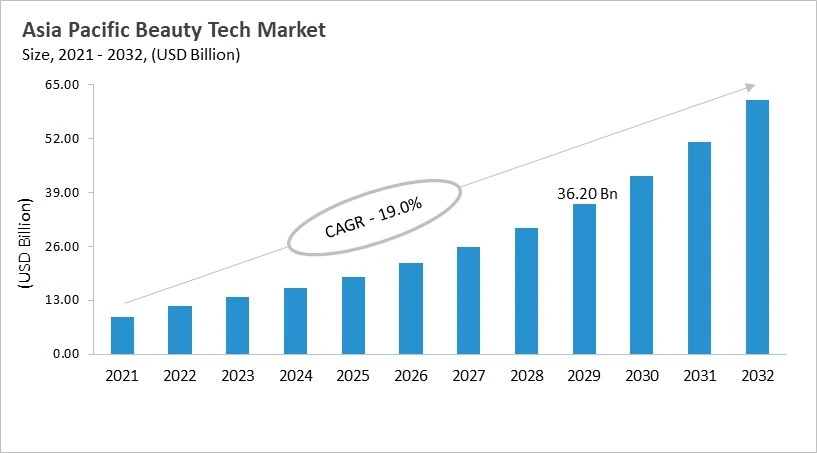
The Asia Pacific Beauty Tech Market evolved from strong cultural foundations in skincare and grooming into a technologically advanced landscape driven by AI, AR, and wearable devices. Early adoption of basic beauty tools and digital platforms transitioned into sophisticated solutions such as AI-powered skincare diagnostics and virtual try-on technologies, significantly enhancing personalization and consumer engagement. The market’s growth has been fueled by high digital literacy, increasing acceptance of tech-enabled beauty solutions, and the rising popularity of medical aesthetics and smart devices that integrate health and cosmetic care. Today, the region stands as a leading hub for innovation, combining rapid technological advancements with culturally diverse beauty preferences.
Key trends include AI-driven personalization, the strong influence of social media and digital platforms on consumer behavior, and a growing emphasis on sustainability and ethical sourcing. Leading companies focus on innovation through strategic partnerships, localized product development, and investment in advanced technologies and data analytics platforms. The competitive landscape is shaped by both global and regional players, where differentiation depends on technological capabilities, cultural relevance, and pricing strategies. This dynamic competition drives continuous innovation and market expansion, positioning Asia Pacific as a key growth engine in the global beauty tech industry.
Based on Mode of Operation, the market is segmented into Electric, Battery Operated and Manual. With a compound annual growth rate (CAGR) of 16.2% over the projection period, the Electric Market, dominate the China Beauty Tech Market by Mode of Operation in 2024 and would be a prominent market until 2032. The Manual market is expected to witness a CAGR of 17.6% during (2025 - 2032).
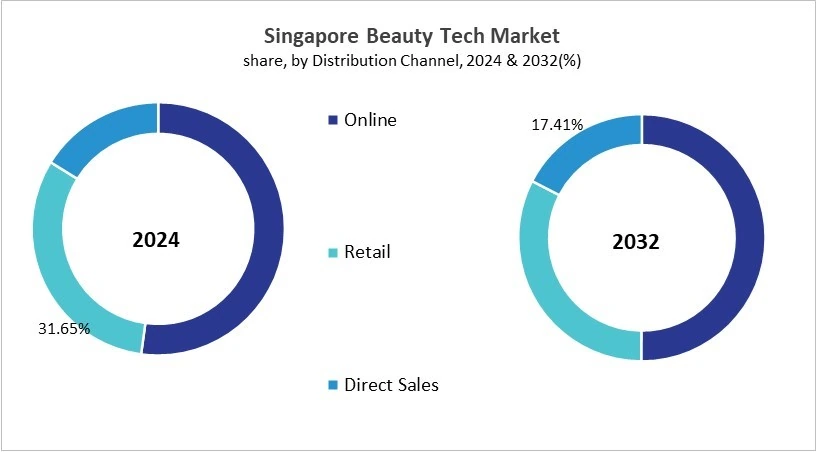
Based on Distribution Channel, the market is segmented into Online, Retail and Direct Sales. The Online market segment dominated the Singapore Beauty Tech Market by Distribution Channel is expected to grow at a CAGR of 20.4 % during the forecast period thereby continuing its dominance until 2032. Also, The Direct Sales market is anticipated to grow as a CAGR of 22.2 % during the forecast period during (2025 - 2032).
Free Valuable Insights: Beauty Tech Market is Predicted to reach USD 234.97 billion by 2032, at a CAGR of 17.5%
The China Beauty Tech market has evolved from traditional cosmetic manufacturing and basic electronic devices into a highly advanced, technology-driven ecosystem integrating AI, smart devices, and data-driven customization. Early growth was driven by mass production and OEM skincare, but increasing demand for personalized and efficacy-focused solutions led to the adoption of skin diagnostics, advanced formulations, and innovations like UV LED curing technology. Regulatory improvements further enhanced product quality and consumer trust, enabling global expansion. Today, the market is defined by digital skin analysis, AI-powered personalization, sustainable manufacturing, and the rapid rise of at-home smart beauty devices. Key trends include the shift toward customized solutions, strong emphasis on eco-friendly practices, and growing demand for tech-enabled beauty tools. Leading companies focus on innovation, strategic collaborations, and expansion into emerging urban markets while investing in advanced manufacturing and digital platforms. The competitive landscape is marked by intense rivalry between agile domestic players and global brands, balancing innovation, cost efficiency, and technological leadership to drive continuous market growth.

By Portability
By Mode of Operation
By Distribution Channel
By Application
By Type
By Country
Set to reach $36.20 billion by 2029 at 18.4% CAGR during 2025-2032.
China dominates with 36.5% market share in 2024 and will reach $19,963 million by 2032.
Malaysia leads growth at 22.2% CAGR during 2025-2032, followed by India at 19.7% CAGR.
Japan holds 17.7% market share in 2024 and grows at 17.6% CAGR during 2025-2032.
Electric segment leads China's market and will grow at 16.2% CAGR during the forecast period.
Our team of dedicated experts can provide you with attractive expansion opportunities for your business.




 Unique Offerings