The sample copy of this report is available for access.
“Global Utility Management System Market to reach a market value of USD 27,079.8 Million by 2033 growing at a CAGR of 10.2%”
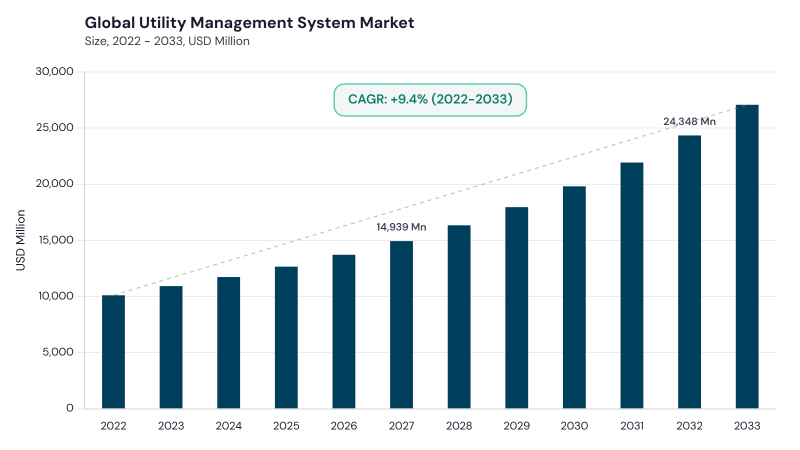
The Global Utility Management System Market size is expected to reach USD 27,079.8 million by 2033, rising at a market growth of 10.2% CAGR during the forecast period.
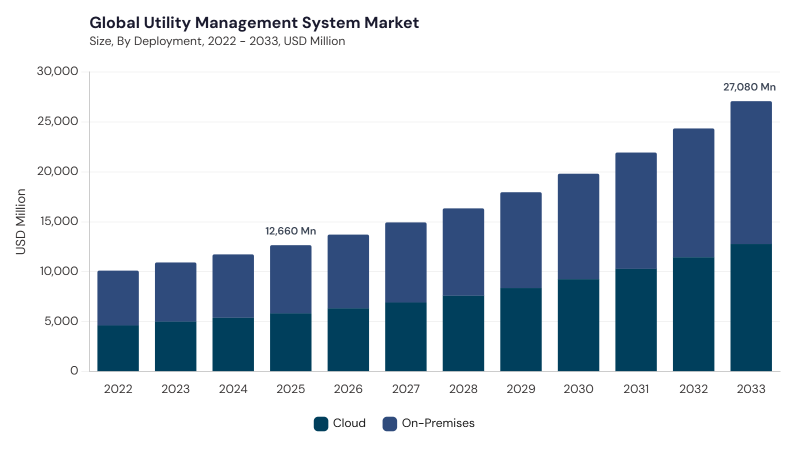
Growth in the market is driven by increasing demand for digital utility optimization, energy efficiency, smart infrastructure deployment, and real-time monitoring solutions across industrial, commercial, and residential environments. Rising investments in smart grids, IoT-enabled monitoring systems, cloud-based utility platforms, and sustainability initiatives are accelerating market adoption globally. Enterprises, utility operators, municipalities, and facility managers are increasingly deploying utility management systems to enhance operational efficiency, reduce resource wastage, improve predictive maintenance, and ensure regulatory compliance, supporting long-term market expansion from 2025-2033.
Advances in cloud computing, artificial intelligence, IoT sensors, predictive analytics, and smart grid technologies have significantly enhanced the scalability and efficiency of utility management systems, enabling organizations to achieve real-time monitoring, optimized resource allocation, and improved operational resilience. Governments, industrial operators, utilities, and commercial infrastructure providers are increasingly investing in intelligent utility management solutions to support sustainability goals, energy transition strategies, and digital transformation initiatives.
The major strategies followed by market participants are Product Innovation and Partnerships & Collaborations as key developmental strategies to keep pace with the changing demands of smart infrastructure and digital utility optimization. Companies are increasingly focusing on AI-powered analytics, cloud-native utility platforms, digital twins, and integrated monitoring ecosystems to improve operational performance and strengthen competitive positioning.

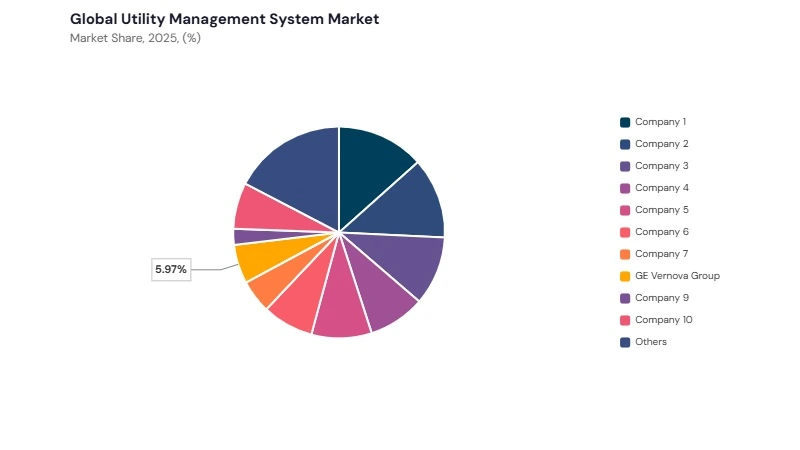
The leading players in the Utility Management System Market are competing through digital transformation initiatives, AI-enabled analytics integration, cloud-based utility platforms, smart grid modernization, and strategic collaborations to strengthen market positioning globally. Siemens AG, Schneider Electric SE, IBM Corporation, Oracle Corporation, SAP SE, Microsoft Corporation, ABB Ltd., and GE Vernova remain among the prominent participants operating across utility optimization, industrial automation, and enterprise management ecosystems. Companies are increasingly focusing on predictive maintenance, energy efficiency optimization, distributed energy resource management, and cloud-native utility management platforms to support sustainability initiatives and intelligent infrastructure modernization.
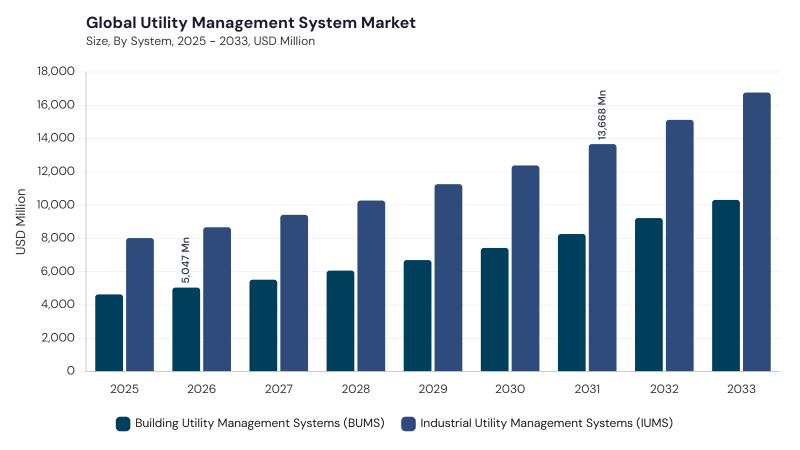
Based on System, the utility management system market is segmented into Industrial Utility Management Systems (IUMS) and Building Utility Management Systems (BUMS). The Industrial Utility Management Systems (IUMS) segment dominated the market in 2025 and would continue to be a dominant segment till 2033; thereby, achieving a market value of USD 16,765.3 million by 2033. The increasing deployment of utility optimization platforms across manufacturing facilities, refineries, and large-scale industrial operations is supporting segment growth globally. Additionally, the Building Utility Management Systems (BUMS) segment is expected to witness a CAGR of 10.8% during (2026-2033) owing to rising adoption of smart building technologies and energy-efficient infrastructure solutions.
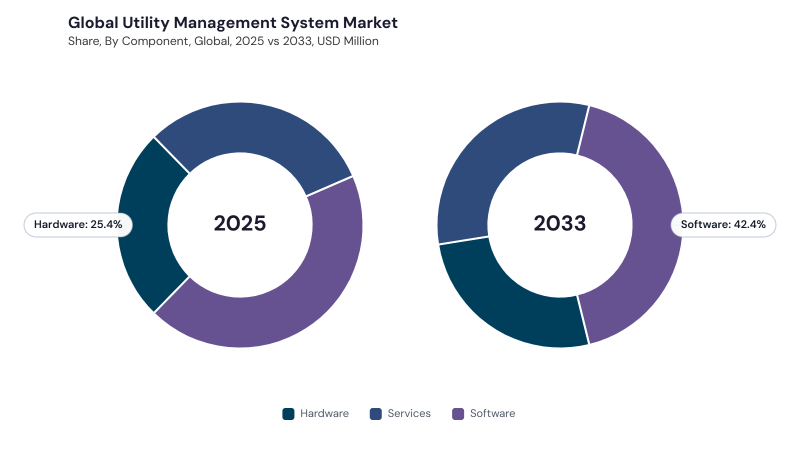
Based on Component, the utility management system market is segmented into Software, Services, and Hardware. The Software segment acquired 43.82% revenue share in the market in 2025 due to increasing implementation of analytics platforms, AI-driven monitoring solutions, and predictive maintenance technologies. Meanwhile, the Services segment is projected to reach USD 8,490.3 million by 2033 driven by growing demand for consulting, deployment, system integration, and managed utility optimization services across industrial and commercial environments. Furthermore, the Hardware segment is anticipated to register a CAGR of 10.7% during the forecast period.
Based on Deployment, the utility management system market is segmented into On-Premises and Cloud. The On-Premises segment recorded the largest revenue share of 53.97% in 2025 as industrial enterprises and critical infrastructure operators continue prioritizing enhanced data security, system customization, and operational control. On the other hand, the Cloud segment is anticipated to witness the highest CAGR of 10.5% during (2026-2033) supported by increasing adoption of scalable, remote-accessible, and cost-efficient utility management platforms. The cloud segment is also expected to attain a market value of USD 12,774.3 million by 2033.
By End Use, the utility management system market is divided into Manufacturing & Industrial, Energy & Utilities, Commercial Buildings, Residential Complexes, and Other End Use. The Manufacturing & Industrial segment held the highest market share of 33.34% in 2025 due to rising emphasis on energy optimization, operational efficiency, and utility cost reduction across industrial facilities. The Commercial Buildings segment is expected to grow at a CAGR of 10.5% during the forecast period, driven by increasing deployment of smart building energy management systems. Additionally, the Residential Complexes segment is projected to reach USD 4,257.7 million by 2033 supported by growing smart home adoption and energy efficiency initiatives.
Free Valuable Insights: Utility Management System Market Size to reach $27,079.8 Million by 2033
Region-wise, the Utility Management System Market is analyzed across North America, Europe, Asia Pacific, and LAMEA. The North America segment dominated the market in 2025 accounting for 34.87% revenue share owing to strong investments in smart infrastructure modernization, industrial automation, and utility digitization initiatives. Meanwhile, the Asia Pacific market is expected to register the fastest CAGR of 10.9% during (2026-2033) fueled by rapid urbanization, industrial expansion, and increasing smart city projects across China, India, Japan, and Southeast Asia. Furthermore, the Europe market is projected to achieve a market value of USD 7,387.9 million by 2033 driven by growing focus on sustainability, grid modernization, and energy efficiency regulations.
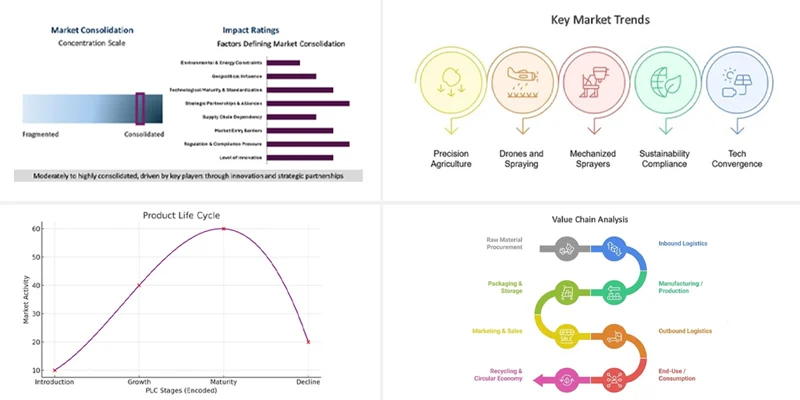
The Utility Management System Market is moderately consolidated and characterized by rapid technological innovation, increasing digitalization, and strategic ecosystem partnerships. Competition centers on the ability to provide scalable, interoperable, AI-enabled, and cloud-native utility management solutions. Vendors differentiate themselves through advanced analytics, predictive maintenance capabilities, real-time monitoring, cybersecurity integration, and energy optimization features. Both industrial automation providers and enterprise software companies actively compete, increasing innovation and digital transformation across the utility ecosystem.
| Report Attribute | Details |
|---|---|
| Market size value in 2026 | USD 13,718.1 Million |
| Market size forecast in 2033 | USD 27,079.8 Million |
| Base Year | 2024 |
| Historical period | 2022 to 2024 |
| Forecast Period | 2025 to 2033 |
| Revenue Growth Rate | CAGR of 10.2% from 2025 to 2033 |
| Number of Pages | 556 |
| Tables | 690 |
| Report Coverage | Market Trends, Revenue Estimation and Forecast, Segmentation Analysis, Regional and Country Breakdown, Competitive Landscape, Market Share Analysis, Company Profiling, Companies Strategic Developments, SWOT Analysis, Winning Imperatives |
| Segments Covered | System, Component, Deployment, End Use, Region |
| Country Scope |
|
| Companies Included | Siemens AG, Schneider Electric SE, IBM Corporation, Oracle Corporation, SAP SE, Microsoft Corporation, ABB Ltd., GE Vernova, Honeywell International Inc., Emerson Electric Co. |
By System
By Component
By Deployment
By End Use
By Geography
Our team of dedicated experts can provide you with attractive expansion opportunities for your business.






 Unique Offerings