“Global Unified Endpoint Management Market to reach a market value of USD 30.73 Billion by 2032 growing at a CAGR of 22.0%”
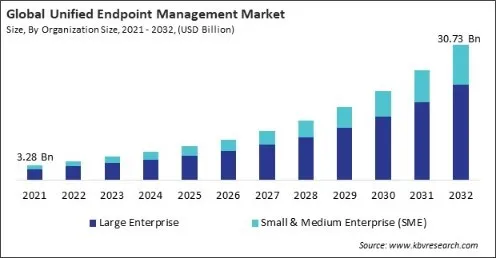
The Global Unified Endpoint Management Market size is expected to reach $30.73 billion by 2032, rising at a market growth of 22.0% CAGR during the forecast period.
Large organizations are more likely to face stringent regulatory requirements and higher risks related to data breaches, making comprehensive endpoint management a strategic priority. Investments in UEM among large enterprises are driven by the need for consistent policy enforcement, enhanced threat detection, and streamlined IT operations.
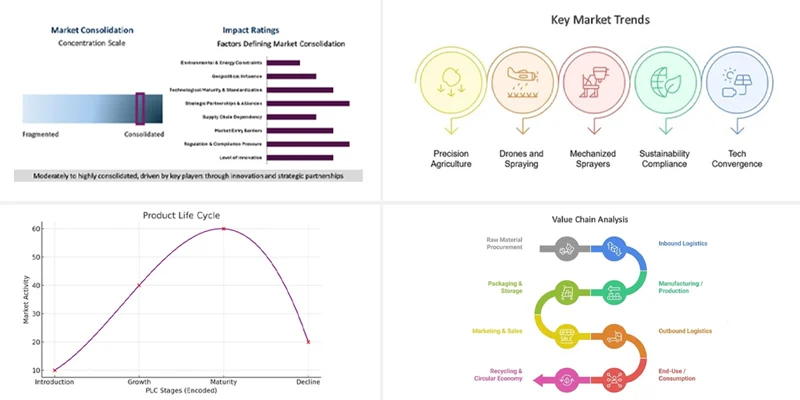

The explosion of connected devices within enterprises has been nothing short of transformative. Modern organizations now oversee a heterogeneous mix of endpoints, from traditional desktops and laptops to tablets, smartphones, rugged devices, wearables, and even Internet of Things (IoT) sensors. This diverse ecosystem has created a new layer of operational complexity for IT departments, which must ensure seamless access, configuration, and compliance across this wide array of hardware and platforms. In conclusion, the ever-growing diversity of endpoints in the enterprise landscape is a foundational driver for the UEM market, as organizations seek centralized, scalable solutions to manage their evolving digital ecosystems.
Additionally, As the number and types of endpoints grow, so too does the attack surface that enterprises must protect. Cyber threats have become increasingly sophisticated, leveraging endpoints as potential vectors for malware, ransomware, data exfiltration, and unauthorized access. At the same time, regulatory frameworks such as the General Data Protection Regulation (GDPR), Health Insurance Portability and Accountability Act (HIPAA), and various data sovereignty laws are imposing stricter mandates on how organizations secure, monitor, and audit their data across all devices. In summary, the escalating complexity of security threats and the tightening of regulatory compliance standards are powerful drivers for UEM adoption.
One of the most significant restraints facing the Unified Endpoint Management market is the complexity involved in integrating UEM platforms with existing, often legacy, IT infrastructure. Many enterprises, especially those with a long operational history, have deeply entrenched systems—ranging from legacy operating systems and custom-built business applications to outdated hardware—that may not be fully compatible with modern UEM solutions. The challenge becomes even more pronounced in highly regulated industries such as healthcare, banking, and government, where critical legacy applications must be preserved for regulatory or operational reasons. As a result, many organizations are hesitant to adopt UEM platforms wholesale, opting instead for incremental or partial implementations.
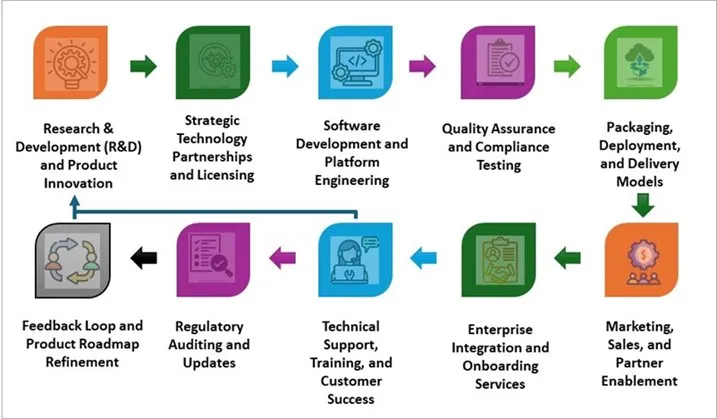
The value chain of the Unified Endpoint Management (UEM) market starts with Research & Development (R&D) and Product Innovation, forming the base for new solutions. It progresses through Strategic Technology Partnerships and Licensing to Software Development and Platform Engineering, ensuring robust and scalable platforms. Quality Assurance and Compliance Testing ensures standards are met before Packaging, Deployment, and Delivery Models take solutions to market. This is followed by Marketing, Sales, and Partner Enablement and Enterprise Integration and Onboarding Services to drive adoption. Technical Support, Training, and Customer Success, along with Regulatory Auditing and Updates, ensure ongoing satisfaction and compliance. Finally, the Feedback Loop and Product Roadmap Refinement informs continuous improvement and innovation.
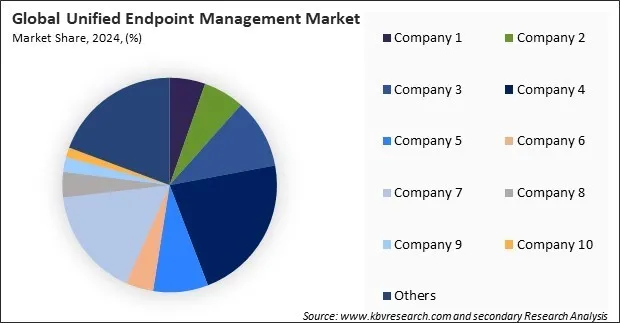
The leading players in the market are competing with diverse innovative offerings to remain competitive in the market. The above illustration shows the percentage of revenue shared by some of the leading companies in the market. The leading players of the market are adopting various strategies in order to cater demand coming from the different industries. The key developmental strategies in the market are Acquisitions, and Partnerships & Collaborations.
During the COVID-19 pandemic, many organizations faced significant disruptions in their planned Unified Endpoint Management (UEM) implementation projects. Lockdowns and restrictions delayed hardware deliveries slowed down software rollouts, and hampered the ability of IT teams to physically access devices. This led to postponements or cancellations of UEM deployments, impacting market growth. As the pandemic put financial strain on businesses worldwide, many organizations were forced to reevaluate their IT budgets. Spending on new technologies, including UEM solutions, was deprioritized in favor of critical operational expenditures. This shift resulted in a decline in new UEM contracts and a slowdown in the overall market expansion during the pandemic period. Thus, the COVID-19 pandemic had a negative impact on the market.
Based on organization size, the unified endpoint management market is characterized into large enterprise and small & medium enterprise (SME). The small & medium enterprise (SME) segment procured 27% revenue share in the unified endpoint management market in 2024. SMEs, while generally operating with limited IT budgets and resources compared to large enterprises, are becoming increasingly aware of the critical importance of securing and efficiently managing their expanding digital ecosystems. As remote work, BYOD (bring your own device) policies, and digital transformation accelerate in the SME space, these businesses are seeking cost-effective, scalable, and easy-to-deploy UEM platforms.
| Category | Details |
|---|---|
| Use Case Title | Confidential |
| Date | 2025 |
| Entities Involved | Confidential |
| Objective | To deploy a cost-effective, cloud-based UEM solution to manage and secure endpoints for a small healthcare provider, enabling secure patient data access and compliance with limited IT resources. |
| Context and Background | In 2025, SMEs like MediCare Clinic face growing cybersecurity risks and compliance requirements but often lack dedicated IT teams. Cloud-based UEM solutions are increasingly adopted by SMEs due to their scalability, low upfront costs, and ease of use. The SME segment is projected to grow at a CAGR of 23.5% from 2023 to 2030, driven by the need to secure mobile devices and support BYOD policies. Zoho’s ManageEngine Endpoint Central offers an affordable, user-friendly UEM platform tailored for SMEs. |
| Description | Zoho Corporation implemented ManageEngine Endpoint Central to manage MediCare Clinic’s endpoints, including staff smartphones, tablets, and point-of-sale systems. The solution included:
|
| Key Capabilities Deployed |
|
| Benefits |
|
| Source | Confidential |
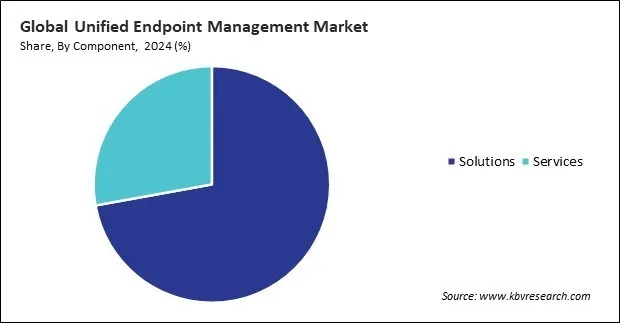
On the basis of component, the unified endpoint management market is classified into solutions and services. The services segment recorded 28% significant revenue share in the unified endpoint management market in 2024. As organizations implement unified endpoint management solutions, they often require specialized assistance for system integration, customization, and ongoing support to maximize value and ensure seamless operation. Services may include planning, installation, training, and technical troubleshooting, as well as outsourced management for organizations seeking to reduce internal IT burdens.
By vertical, the unified endpoint management market is divided into telecom & IT, BFSI, government/defense, healthcare, manufacturing, retail, media & entertainment, and others. The BFSI segment garnered 20% revenue share in the unified endpoint management market in 2024. Institutions in this sector operate in a highly regulated environment and deal with large volumes of sensitive financial data. The proliferation of mobile banking, digital payment systems, and online financial services has significantly increased the number of endpoints that need to be managed and secured. UEM solutions are critical in helping BFSI organizations enforce stringent security protocols, ensure compliance with regulatory mandates such as GDPR and PCI DSS, and prevent data breaches or financial fraud.
Free Valuable Insights: Global Unified Endpoint Management Market size to reach USD 30.73 Billion by 2032
Region-wise, the unified endpoint management market is analyzed across North America, Europe, Asia Pacific, and LAMEA. The North America segment recorded 39% revenue share in the unified endpoint management market in 2024. This dominance is attributed to the early adoption of advanced digital technologies, robust IT infrastructure, and heightened focus on cybersecurity across both private and public sectors. Organizations in the United States and Canada are at the forefront of implementing unified endpoint management solutions to support remote work, safeguard sensitive data, and comply with stringent regulatory requirements.
| Report Attribute | Details |
|---|---|
| Market size value in 2024 | USD 6.37 Billion |
| Market size forecast in 2032 | USD 30.73 Billion |
| Base Year | 2024 |
| Historical Period | 2021 to 2023 |
| Forecast Period | 2025 to 2032 |
| Revenue Growth Rate | CAGR of 22.0% from 2025 to 2032 |
| Number of Pages | 388 |
| Number of Tables | 467 |
| Report coverage | Market Trends, Revenue Estimation and Forecast, Segmentation Analysis, Regional and Country Breakdown, Market Share Analysis, Porter’s 5 Forces Analysis, Company Profiling, Companies Strategic Developments, SWOT Analysis, Winning Imperatives |
| Segments covered | Organization Size, Component, Vertical, Region |
| Country scope |
|
| Companies Included | BlackBerry Limited, Citrix Systems, Inc. (Cloud Software Group, Inc.), IBM Corporation, Microsoft Corporation, Ivanti, Inc. (Clearlake Capital Group, L.P.), Zoho Corporation Pvt. Ltd., VMware, Inc. (Broadcom Inc.), CrowdStrike Holdings, Inc., JumpCloud Inc., and Kandji, Inc. |
By Organization Size
By Component
By Vertical
By Geography
This Market size is expected to reach $30.73 billion by 2032.
Proliferation Of Diverse Endpoints In The Enterprise Landscape are driving the Market in coming years, however, Concerns Over Data Privacy, Control, And User Acceptance restraints the growth of the Market.
BlackBerry Limited, Citrix Systems, Inc. (Cloud Software Group, Inc.), IBM Corporation, Microsoft Corporation, Ivanti, Inc. (Clearlake Capital Group, L.P.), Zoho Corporation Pvt. Ltd., VMware, Inc. (Broadcom Inc.), CrowdStrike Holdings, Inc., JumpCloud Inc., and Kandji, Inc.
The expected CAGR of this Market is 22.0% from 2023 to 2032.
The Solutions segment led the maximum revenue in the Market by Component in 2024, thereby, achieving a market value of $21.6 billion by 2032.
The North America region dominated the Market by Region in 2024, and would continue to be a dominant market till 2032; thereby, achieving a market value of $11.5 billion by 2032.
Our team of dedicated experts can provide you with attractive expansion opportunities for your business.











 Unique Offerings