The sample copy of this report is available for access.
“Global Reusable E-commerce Packaging Market to reach a market value of USD 18.28 Billion by 2033 growing at a CAGR of 9.9%”
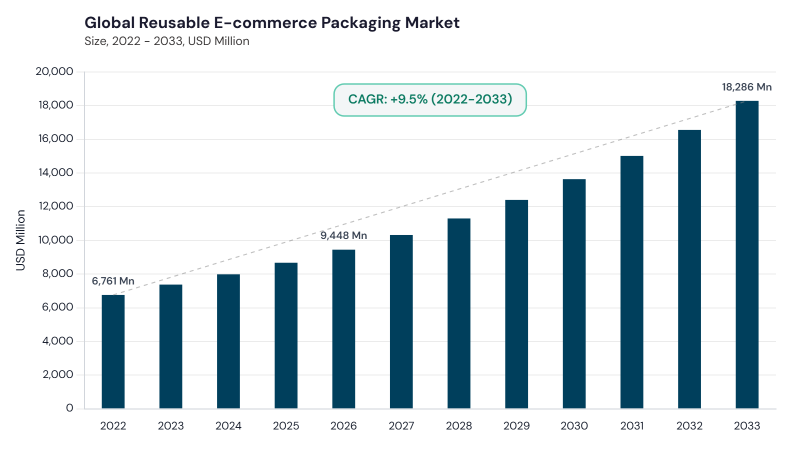
The Global Reusable E-commerce Packaging Market size is expected to reach USD 18.28 Billion by 2033, rising at a market growth of 9.9% CAGR during the forecast period.
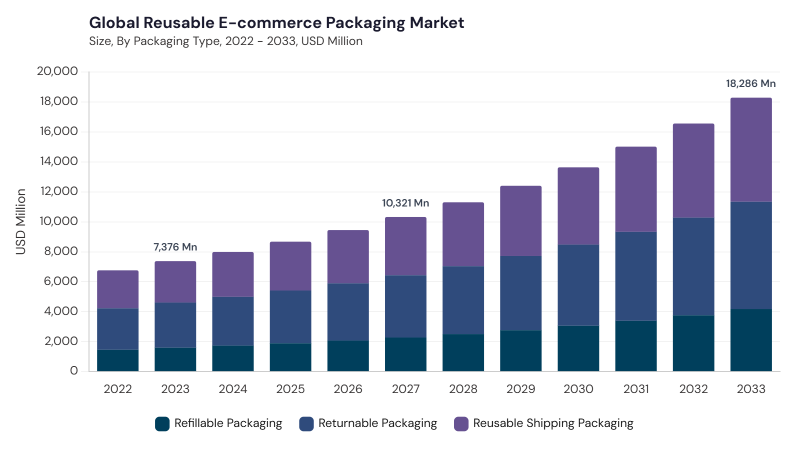
The market is witnessing strong growth driven by increasing sustainability initiatives, rising e-commerce activities, and growing regulatory pressure to reduce packaging waste. Companies are increasingly adopting reusable packaging systems to support circular economy goals and enhance operational efficiency.
The reusable e-commerce packaging market has evolved significantly with the rapid expansion of online retail and increasing environmental concerns regarding single-use packaging waste. Businesses are increasingly integrating reusable packaging formats such as boxes, mailers, containers, and crates to reduce long-term packaging costs and improve sustainability performance.
Market participants are focusing on sustainable material innovation, reverse logistics optimization, and digital tracking technologies to strengthen reusable packaging ecosystems. Companies are increasingly investing in RFID-enabled packaging, durable lightweight materials, and modular packaging formats to improve operational efficiency. Strategic collaborations with e-commerce platforms, logistics providers, and recycling firms are further supporting market expansion and scalability across global regions.
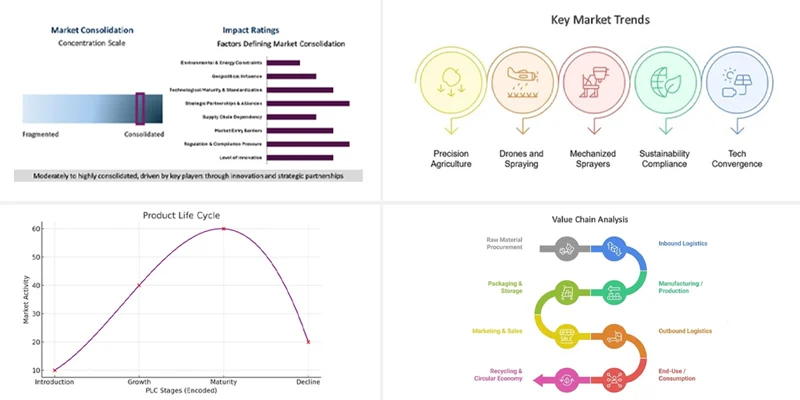
The reusable e-commerce packaging market is moderately fragmented with the presence of global packaging companies, circular economy startups, and regional packaging solution providers. Competition is centered on innovation in reusable materials, smart tracking technologies, and durable packaging designs that improve lifecycle performance and reduce environmental impact.
Growing consumer preference for eco-friendly packaging solutions, advancements in durable materials, and the development of reverse logistics infrastructure are accelerating market adoption. Industries including food & beverages, apparel, electronics, pharmaceuticals, and consumer goods are increasingly deploying reusable packaging systems to strengthen sustainability commitments and improve customer engagement.
Companies are increasingly integrating AI-enabled logistics systems, RFID tracking, and cloud-based packaging management platforms to optimize packaging circulation and reverse logistics operations. Interoperability across logistics networks and fulfillment systems has become an important competitive factor for market participants.
Strategic partnerships between e-commerce companies, logistics providers, and packaging manufacturers are accelerating the development of scalable closed-loop packaging ecosystems. Regional expansion strategies and flexible pricing models such as subscription-based reusable packaging services are further strengthening competitive positioning.

The market is led by major companies including DS Smith Plc, Stora Enso Oyj, and Smurfit Kappa Group plc, which collectively hold a significant share supported by extensive packaging infrastructure and strong sustainability initiatives. These companies benefit from large-scale manufacturing capabilities, advanced reusable packaging portfolios, and strong partnerships with e-commerce retailers.
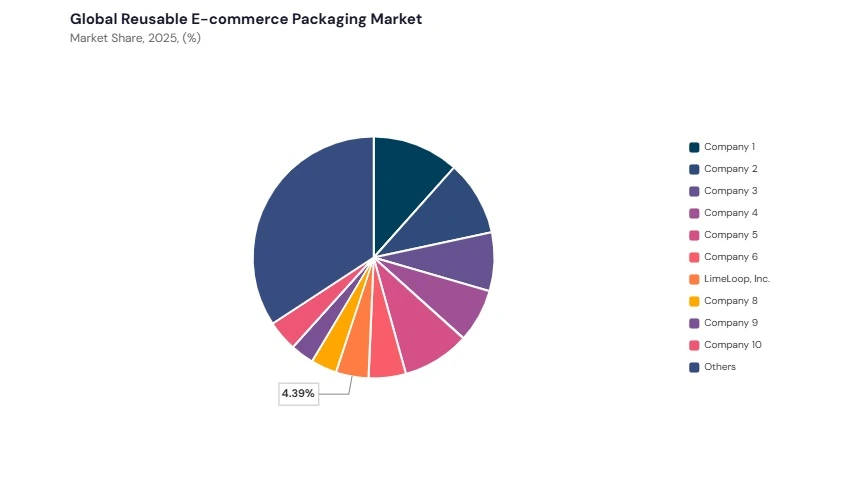
Mid-tier and niche players such as RePack Ltd, LimeLoop, EcoEnclose Inc., and Returnity Innovations are strengthening their market presence through packaging-as-a-service models, reverse logistics innovation, and customized reusable packaging solutions. The market is expected to witness increasing competition driven by advancements in smart packaging technologies, circular logistics systems, and sustainable material development.
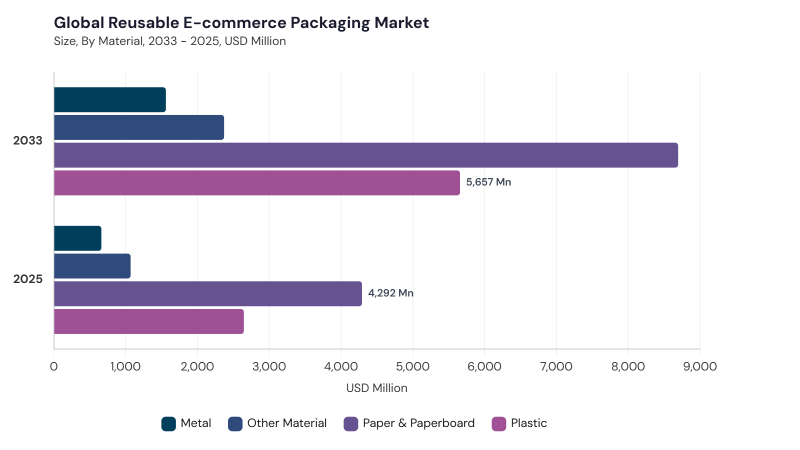
Based on material, the market is segmented into Paper & Paperboard, Plastic, Metal, and Other Material. The Paper & Paperboard segment dominated the market in 2025 owing to increasing demand for biodegradable and recyclable packaging solutions across e-commerce platforms. Advancements in reinforced paper technologies and coated paperboard materials are improving durability and enabling multiple reuse cycles. The Plastic segment also holds a significant share due to its high durability, moisture resistance, and suitability for repeated logistics operations across food, electronics, and consumer goods industries.
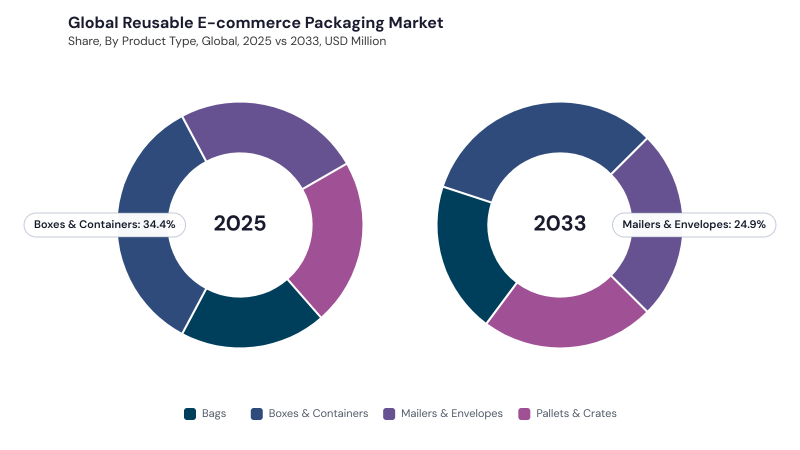
Based on product type, the market is segmented into Boxes & Containers, Mailers & Envelopes, Pallets & Crates, and Bags. Boxes & Containers accounted for the largest share in 2025 driven by their widespread application in shipping, storage, and reverse logistics operations. Durable designs, stackability, and product protection capabilities are supporting adoption across multiple industries. Mailers & Envelopes are also witnessing strong demand due to rising parcel shipments and increasing adoption of reusable lightweight packaging formats.
Based on packaging type, the market is segmented into Returnable Packaging, Reusable Shipping Packaging, and Refillable Packaging. Returnable Packaging dominated the market in 2025 supported by the growing deployment of closed-loop logistics systems and increasing focus on reducing packaging waste. Businesses are increasingly adopting returnable packaging models to lower operational costs and strengthen sustainability performance. Reusable Shipping Packaging is also gaining traction with the expansion of e-commerce deliveries and demand for durable reusable logistics solutions.
Based on end user, the market is segmented into Food & Beverages, Pharmaceuticals, Apparel & Fashion, Electronics & Electricals, Personal Care & Cosmetics, and Retail & Consumer Goods. Food & Beverages dominated the market in 2025 driven by rapid growth in online grocery and food delivery services. Increasing focus on hygienic and durable packaging solutions is supporting segment growth. Pharmaceuticals and Apparel & Fashion are also witnessing considerable adoption due to rising online retail activities and increasing emphasis on sustainable packaging practices.
Free Valuable Insights: Reusable E-commerce Packaging Market Size to reach $18.28 Billion by 2033
Based on region, the market is segmented into North America, Europe, Asia Pacific, and LAMEA. North America accounted for the largest revenue share in 2025 supported by high e-commerce penetration, strong sustainability initiatives, and increasing investment in reusable packaging infrastructure. Europe also holds a significant share driven by stringent environmental regulations and strong circular economy adoption. Asia Pacific is expected to witness substantial growth owing to rapid e-commerce expansion and increasing investments in sustainable packaging systems.
| Report Attribute | Details |
|---|---|
| Market size value in 2026 | USD 9.45 Billion |
| Market size forecast in 2033 | USD 18.28 Billion |
| Base Year | 2025 |
| Historical period | 2022 to 2024 |
| Forecast Period | 2026 to 2033 |
| Revenue Growth Rate | CAGR of 9.9% from 2026 to 2033 |
| Number of Pages | 715 |
| Tables | 840 |
| Segments Covered | Material, Product Type, Packaging Type, End User, Region |
| Regional Scope | North America, Europe, Asia Pacific, LAMEA |
| Country Scope |
|
| Companies Profiled | DS Smith Plc, Stora Enso Oyj, THIMM Group GmbH + Co. KG, Corplex, Smurfit Kappa Group plc, RePack Ltd, LimeLoop, EcoEnclose Inc., Movopack SB Srl, Returnity Innovations Inc. |
By Material
By Product Type
By Packaging Type
By End User
By Geography
Valued at USD 9.45 billion in 2026, it will reach USD 18.28 billion by 2033, growing at 9.9% CAGR during 2026-2033.
Paper & Paperboard dominates, projected to hit USD 8.70 billion by 2033 at 9.3% CAGR during the forecast period.
Major companies include leading packaging manufacturers and e-commerce solution providers across the reusable packaging space.
North America leads the market, reaching USD 5.94 billion by 2033 at 9.3% CAGR during the forecast period.
Sustainable packaging adoption, e-commerce expansion, and regulatory pressure to reduce single-use packaging waste fuel market growth.
Food & Beverages captures maximum share, achieving USD 4.66 billion by 2033 at 8.9% CAGR during the forecast period.
Our team of dedicated experts can provide you with attractive expansion opportunities for your business.








 Unique Offerings