The sample copy of this report is available for access.
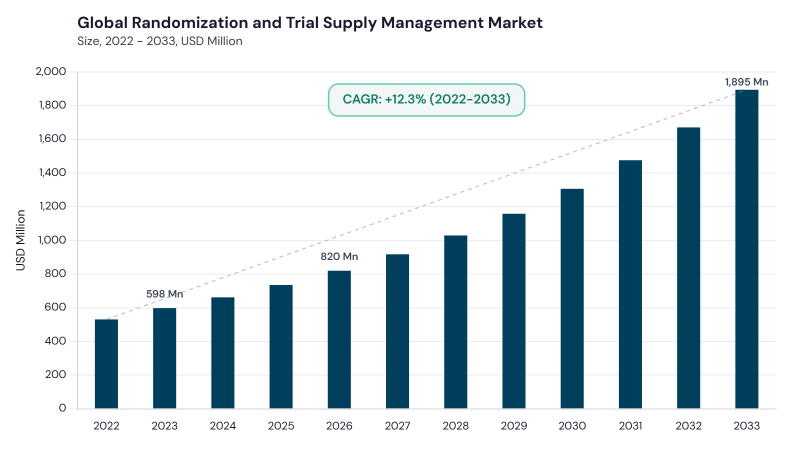
“Global Randomization And Trial Supply Management Market to reach a market value of USD 1.89 Billion by 2033 growing at a CAGR of 12.7%”
The Global Randomization and Trial Supply Management Market size is expected to reach USD 1.89 billion by 2033, rising at a market growth of 12.7% CAGR during the forecast period.
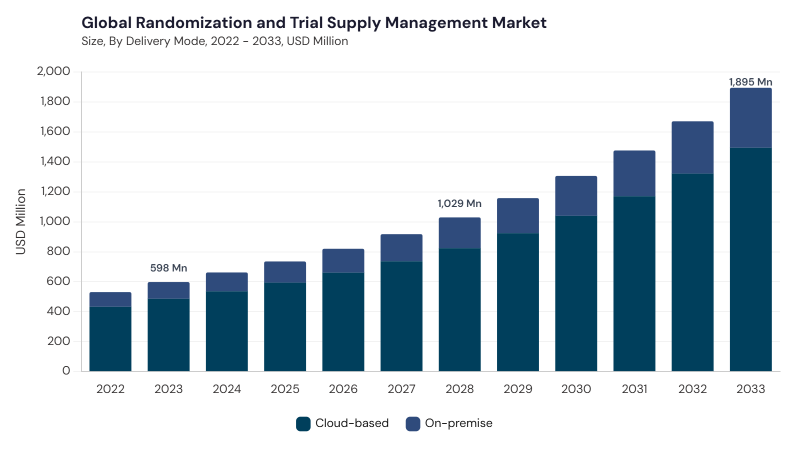
Growth in the market is driven by the increasing complexity of global clinical trials, rising adoption of decentralized and adaptive clinical trial models, and growing demand for real-time supply chain optimization. Pharmaceutical companies, biotechnology firms, and contract research organizations are increasingly deploying Randomization and Trial Supply Management (RTSM) solutions to improve patient randomization accuracy, optimize investigational product allocation, and ensure regulatory compliance across multi-site clinical trials. In addition, the integration of artificial intelligence, predictive analytics, cloud-based infrastructures, and automated inventory management systems is strengthening operational efficiency while reducing drug wastage and trial delays.
The Global Randomization and Trial Supply Management (RTSM) Market has evolved significantly from traditional manual trial randomization and inventory tracking systems into a highly digitized and integrated clinical trial management ecosystem. Initially, clinical trial supply management processes were managed through fragmented spreadsheets, telephone-based systems, and paper-driven workflows, resulting in operational inefficiencies, supply mismatches, and delays in patient enrollment. The introduction of Interactive Voice Response Systems (IVRS) and Interactive Web Response Systems (IWRS) transformed clinical trial execution by enabling automated patient randomization, centralized supply tracking, and real-time monitoring of investigational product distribution.
Today, technologies such as cloud computing, artificial intelligence, predictive analytics, and automation are transforming the RTSM landscape. Pharmaceutical sponsors and CROs increasingly rely on intelligent RTSM platforms to optimize drug forecasting, minimize inventory wastage, support adaptive trial designs, and maintain uninterrupted investigational product availability across geographically dispersed trial sites. Furthermore, the rapid adoption of decentralized clinical trial models and remote patient engagement strategies is accelerating demand for scalable and remotely accessible RTSM systems capable of supporting direct-to-patient drug distribution and virtual trial execution.
The major strategies followed by market participants are Partnerships & Collaborations, Product Launches, and Technological Integrations as the key developmental strategies to keep pace with the evolving demands of clinical research organizations and pharmaceutical companies. Companies are increasingly introducing AI-powered cloud-native RTSM platforms integrated with predictive supply forecasting, automated inventory optimization, and interoperability capabilities with electronic data capture (EDC) and clinical trial management systems (CTMS). In addition, strategic collaborations between RTSM vendors, CROs, and healthcare organizations are accelerating development of integrated eClinical ecosystems.
The COVID-19 pandemic negatively impacted the Randomization and Trial Supply Management Market during the initial phase due to disruptions in clinical trial operations, temporary suspension of patient recruitment activities, and interruptions in global investigational product supply chains. Lockdowns, travel restrictions, and reduced access to clinical sites delayed trial execution timelines and affected inventory management across ongoing studies.
However, the pandemic also accelerated long-term digital transformation within the clinical trial ecosystem. Pharmaceutical sponsors and CROs increasingly adopted cloud-based RTSM systems, decentralized trial models, remote patient monitoring technologies, and direct-to-patient drug distribution strategies to maintain operational continuity. The rapid shift toward virtual and hybrid clinical trials significantly strengthened long-term demand for scalable, remotely accessible, and AI-enabled RTSM infrastructures globally.
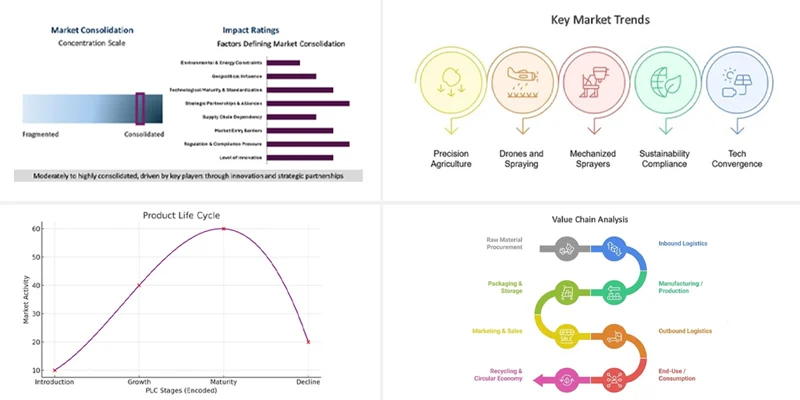

The leading players in the market are competing with advanced cloud-native and AI-enabled RTSM solutions to remain competitive in the market. The market is moderately consolidated, with leading vendors focusing on strategic collaborations, interoperability enhancements, and integrated eClinical ecosystem development to strengthen their market positioning. The key developmental strategies in the market are Partnerships & Collaborations, Product Innovation, Acquisitions, and Cloud Platform Expansion.
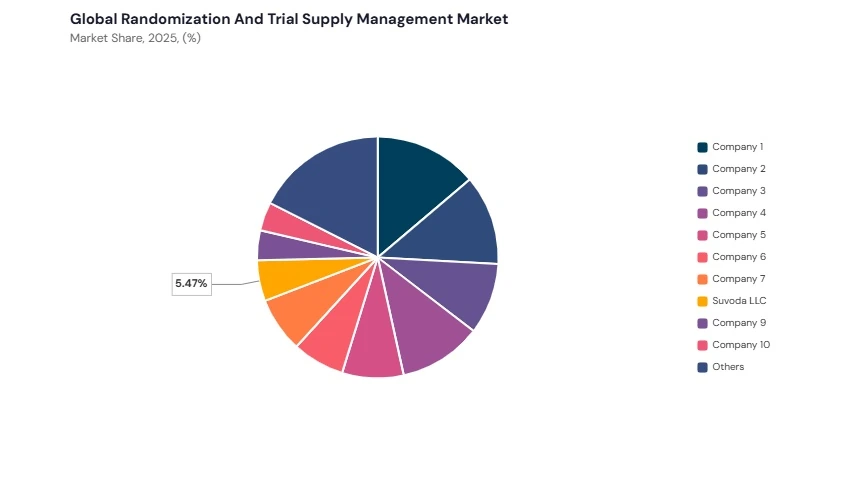
Integrated eClinical platform providers such as IQVIA Holdings, Oracle Corporation, Medidata Solutions, and Veeva Systems are leveraging broader clinical trial ecosystems to improve customer retention, operational scalability, and end-to-end trial visibility. At the same time, specialized RTSM providers are increasingly focusing on adaptive trial capabilities, decentralized trial support, and AI-driven inventory forecasting to support emerging clinical research requirements.
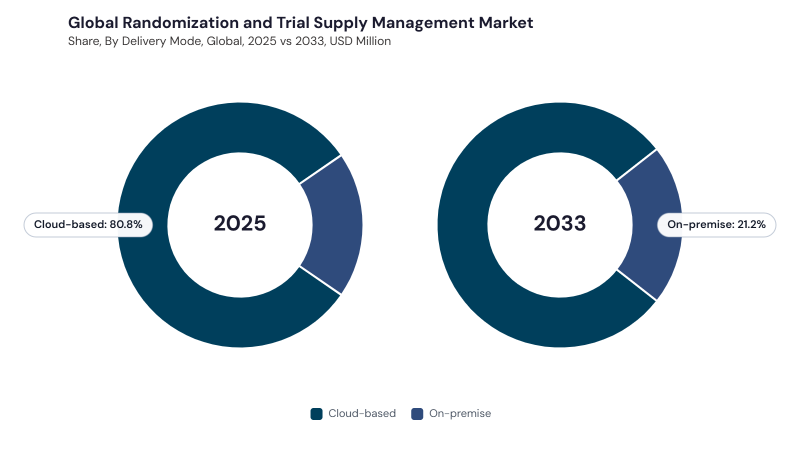
On the basis of delivery mode, the Randomization and Trial Supply Management market is classified into cloud-based and on-premise. The cloud-based segment recorded 80.78% revenue share in the RTSM market in 2025 and is projected to reach USD 1,493.7 million by 2033, growing at a CAGR of 12.8% during the forecast period. Cloud-based RTSM platforms are increasingly preferred owing to their scalability, real-time accessibility, seamless interoperability, and ability to support decentralized clinical trial operations across geographically dispersed sites.
The on-premise segment recorded 19.22% revenue share in 2025 and is projected to reach USD 400.8 million by 2033, growing at a CAGR of 14.1% during the forecast period. Large pharmaceutical companies and research organizations continue to adopt on-premise systems for enhanced data security, internal infrastructure control, and regulatory compliance management.
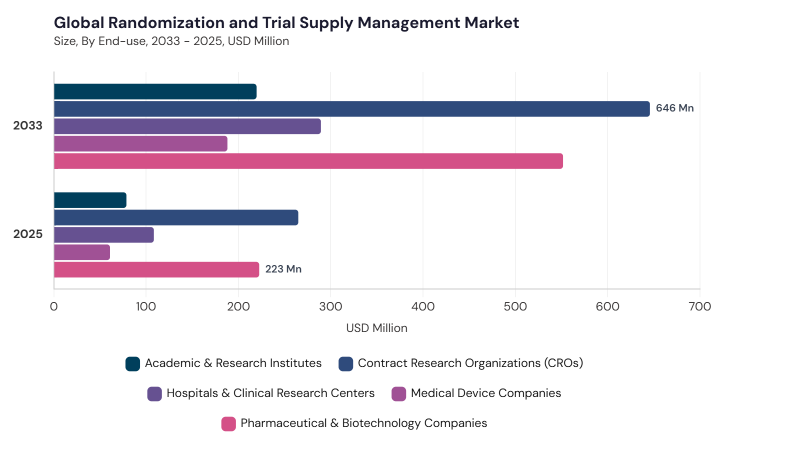
By end-use, the Randomization and Trial Supply Management market is divided into Pharmaceutical & Biotechnology Companies, Contract Research Organizations (CROs), Hospitals & Clinical Research Centers, Academic & Research Institutes, and Medical Device Companies.
The Contract Research Organizations (CROs) segment recorded 36.02% revenue share in the RTSM market in 2025 and is projected to reach USD 645.7 million by 2033, growing at a CAGR of 11.8% during the forecast period. Growing outsourcing of clinical trial operations and increasing complexity of global studies are accelerating RTSM adoption among CROs.
The Pharmaceutical & Biotechnology Companies segment recorded 30.26% revenue share in 2025 and is expected to reach USD 551.6 million by 2033, growing at a CAGR of 11.9% during the forecast period. Rising investments in drug discovery, biologics development, and precision medicine are supporting strong adoption of RTSM solutions within the segment.
The Hospitals & Clinical Research Centers segment recorded 14.7% revenue share in 2025 and is projected to reach USD 289.3 million by 2033, growing at a CAGR of 13% during the forecast period.
The Academic & Research Institutes segment accounted for 10.7% revenue share in 2025 and is expected to reach USD 219.7 million by 2033, growing at a CAGR of 13.9% during the forecast period.
The Medical Device Companies segment recorded 8.3% revenue share in 2025 and is projected to reach USD 188 million by 2033, growing at a CAGR of 15.3% during the forecast period.
Free Valuable Insights: Randomization and Trial Supply Management Market Size to reach $1.89 Billion by 2033
Region-wise, the Randomization and Trial Supply Management Market is analyzed across North America, Europe, Asia Pacific, and LAMEA.
The North America segment recorded 47.4% revenue share in the RTSM market in 2025 and is projected to reach USD 898.4 million by 2033, growing at a CAGR of 12.3% during the forecast period. Strong pharmaceutical R&D investments, advanced healthcare infrastructure, and high adoption of digital clinical trial technologies are supporting regional market growth.
Europe accounted for 28% revenue share in 2025 and is projected to reach USD 515.4 million by 2033, growing at a CAGR of 11.5% during the forecast period. Rising clinical trial activities, regulatory harmonization initiatives, and increasing adoption of cloud-based trial management platforms are strengthening market expansion across the region.
Asia Pacific captured 18.9% revenue share in 2025 and is expected to reach USD 379 million by 2033, growing at a CAGR of 15.4% during the forecast period. Expanding healthcare infrastructure, rising clinical trial outsourcing activities, and growing patient pool availability are driving strong regional demand.
LAMEA accounted for 5.8% revenue share in 2025 and is projected to reach USD 102.3 million by 2033, growing at a CAGR of 13.2% during the forecast period. Increasing healthcare investments and rising participation in multinational clinical trials are supporting market development in the region.
The Randomization and Trial Supply Management Market is highly competitive and innovation-driven, characterized by rapid technological advancements, increasing AI integration, and growing demand for decentralized clinical trial support capabilities. Vendors compete based on platform scalability, interoperability, adaptive randomization functionality, compliance management, and real-time supply visibility.
Cloud-native deployment architectures, predictive analytics engines, and patient-centric trial support functionalities are emerging as key competitive differentiators in the market. Partnerships between RTSM vendors, CROs, pharmaceutical companies, and logistics providers continue to shape competitive positioning while improving operational efficiency and integrated trial management capabilities.
| Report Attribute | Details |
|---|---|
| Market size value in 2026 | USD 0.81 Billion |
| Market size forecast in 2033 | USD 1.89 Billion |
| Base Year | 2025 |
| Historical period | 2022 to 2024 |
| Forecast Period | 2026 to 2033 |
| Revenue Growth Rate | CAGR of 12.7% from 2026 to 2033 |
| Number of Pages | 461 |
| Tables | 510 |
| Report Coverage | Market Trends, Revenue Estimation and Forecast, Segmentation Analysis, Regional and Country Breakdown, Competitive Landscape, Market Share Analysis, Company Profiling, Companies Strategic Developments, SWOT Analysis, Winning Imperatives |
| Segments Covered | Delivery Mode, End-use, Region |
| Country Scope |
|
| Companies Included | IQVIA Holdings, Inc., Oracle Corporation, Veeva Systems, Inc., Medidata Solutions, Inc. (Dassault Systèmes SE), Parexel International Corporation, Almac Group, ICON plc, Suvoda LLC, Signant Health, Endpoint Clinical L.P. |
By Delivery Mode
By End-use
By Geography
Valued at USD 0.81 billion in 2026, reaching USD 1.89 billion by 2033 at 12.7% CAGR during 2026-2033.
Cloud-based platforms dominate, projected to achieve $1.49 billion by 2033.
IQVIA Holdings, Inc., Oracle Corporation, and Veeva Systems, Inc. hold the dominant positions.
North America leads with $870.2 million by 2033; Europe grows at 12.3% CAGR during 2026-2033.
Rising adoption of decentralized trials, complex global supply chains, and AI integration in platforms.
CROs generate maximum revenue share, growing at 11.9% CAGR during the forecast period (2026-2033).
Our team of dedicated experts can provide you with attractive expansion opportunities for your business.








 Unique Offerings