“Global Process Automation And Instrumentation Market to reach a market value of 110.88 Billion by 2032 growing at a CAGR of 5.6%”
The Global Process Automation & Instrumentation Market size is estimated at $75.66 billion in 2025 and is expected to reach $110.88 billion by 2032, rising at a market growth of 5.6% CAGR during the forecast period (2025-2032). The projected growth of the Process Automation & Instrumentation Market is driven by increasing industrial automation, rising demand for operational efficiency, and adoption of smart manufacturing technologies. Expanding energy, oil & gas, and pharmaceutical sectors, along with Industry 4.0 integration and IoT-enabled monitoring, are accelerating investments in process control systems.
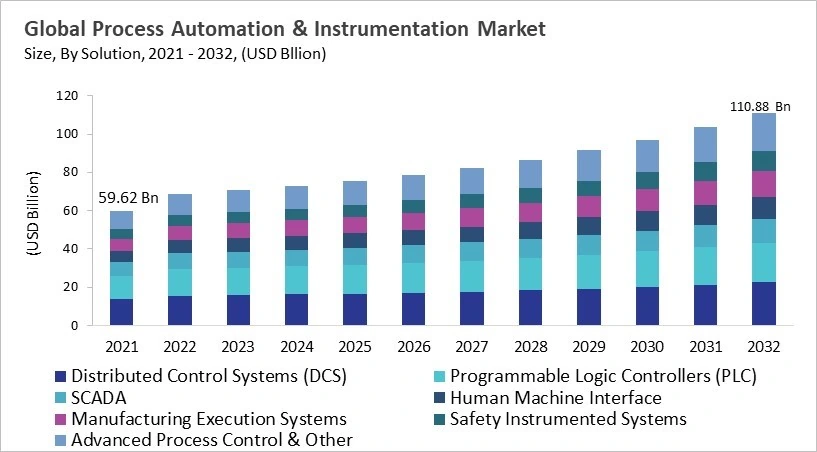
The process automation and instrumentation market originated from industrial mechanization efforts aimed at replacing manual control with automated systems. Early developments focused on electromechanical relays and basic feedback loops, which were further developed with the advent of distributed control systems (DCS), and programmable logic controllers (PLCs), allowing more complex and precise process control. The digitalization of control hardware, alongside advancements in measurement instruments and sensors, has substantially improved analytics capabilities and real-time monitoring. The adoption of fieldbus communication protocols further enhanced system integration. The market is shaped by the convergence of automation, resulting in smart manufacturing ecosystems driven by precision, data-centric control, and operational flexibility.
The process automation and instrument market is shaped by trends including integration of machine learning and AI for proactive process optimization, enhancing efficiency, and reducing downtime. Sustainability has also become a central focus, with sectors adopting energy-efficient instrumentation and control systems to meet corporate responsibility goals and environmental regulations. The growth of Industrial IoT frameworks has allowed decentralized operations, remote monitoring, and improved collaboration through cloud-connected systems. Leading market players are responding through innovation in analytics, sensors, and edge computing, along with strategic collaboration and regional expansion.
The major strategies followed by the market participants are Partnerships as the key developmental strategy to keep pace with the changing demands of end users. For instance, In April, 2025, Rockwell Automation, Inc. teamed up with Amazon Web Services, a cloud computing company to drive digital transformation in manufacturing by integrating industrial automation with cloud capabilities. This collaboration enhances operational visibility, asset performance, and data-driven decision-making. Key solutions like FactoryTalk Hub and Fiix CMMS are now available on AWS Marketplace for improved industrial efficiency. Additionally In April, 2025, Omron Corporation teamed up with Cognizant, an IT company to integrate IT and OT in manufacturing. The collaboration combines OMRON's automation products, like sensors and controllers, with Cognizant's IT expertise in cloud, AI, IoT, and digital twins. This collaboration aims to improve productivity, reduce operational losses, and promote sustainable manufacturing across industries.
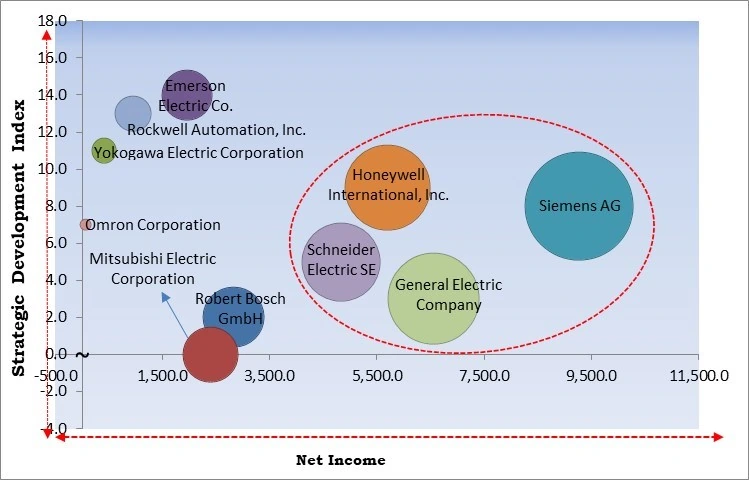
Based on the Analysis presented in the KBV Cardinal matrix; Siemens AG, General Electric Company, Honeywell International, Inc., and Schneider Electric SE are the forerunners in the Process Automation And Instrumentation Market. Companies such as Robert Bosch GmbH, Mitsubishi Electric Corporation, and Emerson Electric Co. are some of the key innovators in Process Automation And Instrumentation Market. In May, 2025, Siemens AG teamed up with Aduro Clean Technologies, develops water-based chemical recycling technologies to integrate advanced control systems and engineering services into Aduro’s Next Generation Process Pilot Plant. This collaboration will help scale Aduro's Hydrochemolytic technology, ensuring safe, reliable operation and generating data to optimize performance for future demonstrations and commercial plants.
Prior to COVID-19, the Process Automation & Instrumentation Market experienced steady growth due to industrial modernization and the increasing need for operational efficiency across manufacturing and utility sectors. The pandemic disrupted global supply chains, delaying critical components like sensors and controllers and slowing many automation projects. Workforce limitations and safety measures further reduced on-site operations, leading companies to postpone capital investments. However, the crisis accelerated digital transformation, increasing demand for remote monitoring, cloud-based instrumentation, and predictive maintenance solutions. As supply chains gradually recovered, organizations renewed investments in automation to improve resilience. The market also saw stronger integration of AI, data analytics, and IIoT technologies. Additionally, hybrid work models encouraged vendors to enhance remote support and digital service capabilities. In conclusion, the COVID-19 pandemic HAD a mild negative impact on the market.

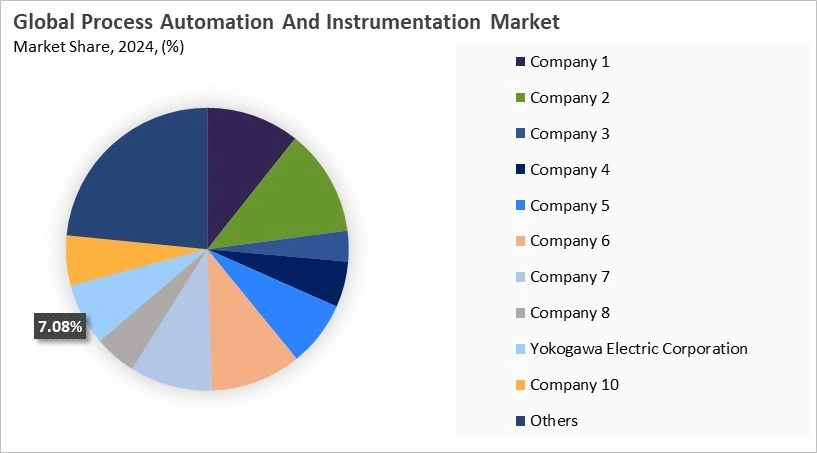
The leading players in the market are competing with diverse innovative offerings to remain competitive in the market. The above illustration shows the percentage of revenue shared by some of the leading companies in the market. The leading players of the market are adopting various strategies to cater demand coming from the different industries. The key developmental strategies in the market are Acquisitions, and Partnerships & Collaborations.
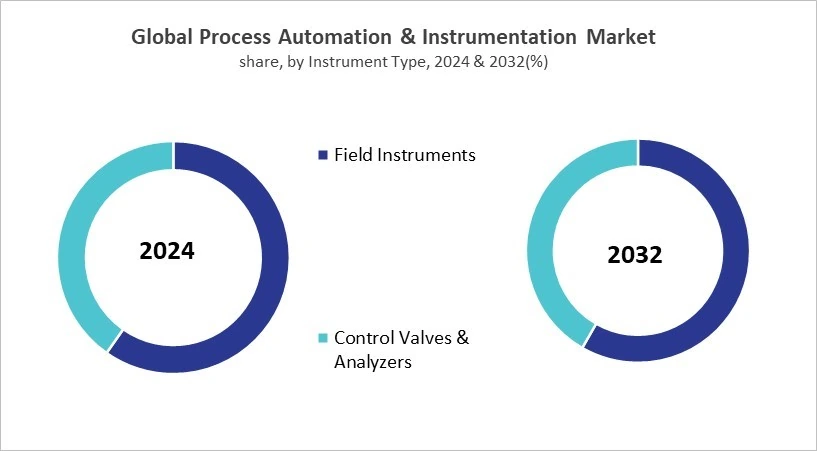
Based on instrument type, the Process Automation & Instrumentation Market is characterized into Field Instruments and Control Valves & Analyzers. The Control Valves & Analyzers segment accounts for 40.27% share in the Process Automation & Instrumentation Market. This segment is supported by the growing need for precise control and optimization of industrial processes. Control valves regulate fluid flow, while analyzers ensure quality and composition accuracy in production.
Based on solution, the Process Automation & Instrumentation Market is characterized into Distributed Control Systems (DCS), Programmable Logic Controllers (PLC), SCADA, Human Machine Interface, Manufacturing Execution Systems, Safety Instrumented Systems, and Advanced Process Control & Other. The Programmable Logic Controllers (PLC) segment accounts for 20.18% share in the Process Automation & Instrumentation Market. PLCs are widely adopted due to their flexibility, robustness, and ability to automate discrete processes efficiently. Their scalability and ease of integration with other automation systems make them suitable for a wide range of industrial applications, supporting improved productivity and operational control.
Free Valuable Insights: Process Automation & Instrumentation Market Size to reach $110.88 by 2032
Region-wise, the Process Automation & Instrumentation Market is analyzed across North America, Europe, Asia Pacific, and LAMEA. The North America segment holds 35.20% share in the Process Automation & Instrumentation Market. The process automation and instrumentation market is estimated to experience significant growth in North America and Europe regions. The market is driven by early adoption of advanced automation technologies, high investment in digital transformation across sectors like food & beverages, oil & gas, and pharmaceuticals, and strong presence of key market players. The region prioritizes integration of AT, advanced analytics, and Industrial IoT to improve predictive maintenance, and operational efficiency. Furthermore, Europe market is witnessing expansion due to strict environmental and safety regulations, which support demand for sustainable and energy-efficient automation solutions. Nations like France, Germany, and the UK lead in adopting smart manufacturing practices aligned with Industry 4.0 initiatives, resulting in continuous upgrades in interoperability, system integration, and instrumentation accuracy.
The process automation and instrumentation market is expected to expand at a noticeable rate in Asia Pacific and LAMEA regions. This is because of rising investments in manufacturing and infrastructure and rapid industrialization. Asia Pacific is experiencing strong demand for automation solutions supported by government-led industrial automation programs, expanding manufacturing bases, and the need to enhance quality and productivity. The region is also witnessing rising adoption of scalable and cost-effective instrumentation systems. Additionally, LAMEA process automation and instrumentation market is growing rapidly. The market is driven by developments in mining, energy, and oil & gas sectors. Latin America and Africa are largely investing in the modernization of industrial infrastructure. Increasing awareness of efficiency and sustainability are predicted to offer lucrative growth opportunities.
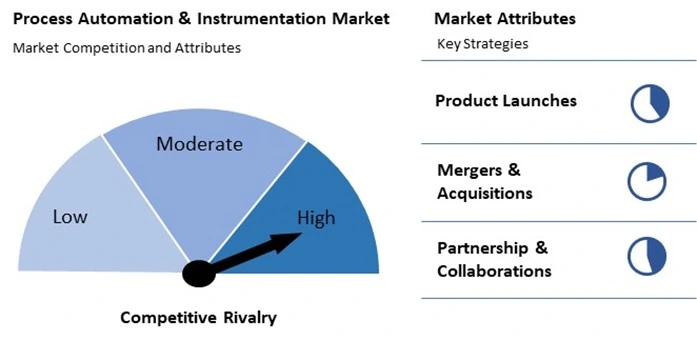
The Process Automation & Instrumentation Market is highly competitive, with global players such as Siemens, ABB, Emerson Electric, Honeywell, and Schneider Electric leading the industry. These companies compete through technological innovation, advanced control systems, and integrated automation solutions. Increasing adoption of Industry 4.0, AI-based monitoring, and IoT-enabled instruments has intensified competition. Additionally, regional players and niche solution providers are entering the market with cost-effective and specialized offerings, further strengthening competitive rivalry. Strategic partnerships, product upgrades, and acquisitions are common strategies used by companies to expand their global presence and customer base.
| Report Attribute | Details |
|---|---|
| Market size value in 2025 | USD 75.66 Billion |
| Market size forecast in 2032 | USD 110.88 Billion |
| Base Year | 2024 |
| Historical period | 2021 to 2023 |
| Forecast Period | 2025 to 2032 |
| Revenue Growth Rate | CAGR of 5.6% from 2025 to 2032 |
| Number of Pages | 662 |
| Tables | 448 |
| Report Coverage | Market Trends, Revenue Estimation and Forecast, Segmentation Analysis, Regional and Country Breakdown, Competitive Landscape, Market Share Analysis, Porter’s 5 Forces Analysis, Company Profiling, Companies Strategic Developments, SWOT Analysis, Winning Imperatives |
| Segments Covered | Instrument Type, Solution, End-Use Industry, Region |
| Country Scope |
|
| Companies Included | Emerson Electric Co., Siemens AG, Robert Bosch GmbH, Mitsubishi Electric Corporation, Rockwell Automation, Inc., Honeywell International, Inc., Schneider Electric SE, Omron Corporation, Yokogawa Electric Corporation and General Electric Company |
By Solution
By Instrument Type
By End-Use Industry
By Geography
Valued at USD 75.66 billion in 2025, it will reach USD 110.88 billion by 2032. Growth rate stands at 5.6% CAGR during 2025-2032.
Distributed Control Systems (DCS) leads the solution category, growing at 4.4% CAGR during the forecast period.
Emerson Electric Co., Siemens AG, Robert Bosch GmbH, Mitsubishi Electric Corporation, and Rockwell Automation dominate the space.
North America dominates with $37.43 billion by 2032. Asia Pacific grows fastest at 6% CAGR during 2025-2032.
Industry 4.0 integration, operational efficiency demands, and digital transformation initiatives across energy sectors fuel expansion.
Field Instruments segment generates maximum revenue, reaching $64.63 billion by 2032.
Our team of dedicated experts can provide you with attractive expansion opportunities for your business.








 Unique Offerings