“Global Polyquaternium-7 Market to reach a market value of 43.98 Million by 2032 growing at a CAGR of 7.7%”
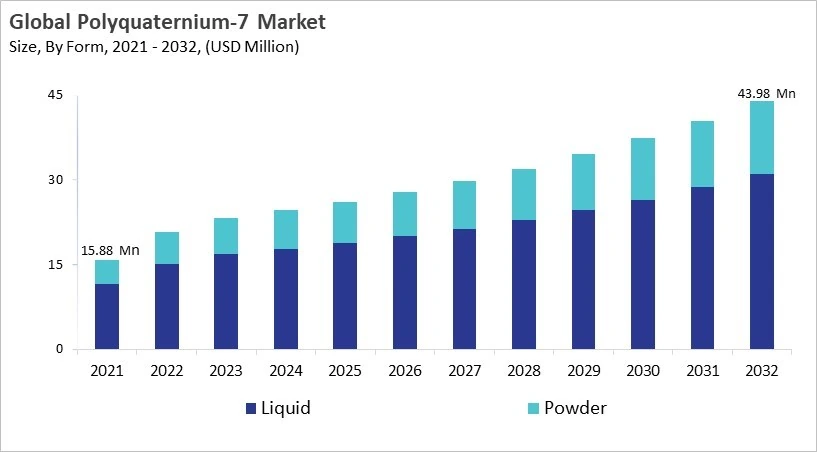
The Global Polyquaternium-7 Market size is estimated at $26.10 million in 2025 and is expected to reach $43.98 million by 2032, rising at a market growth of 7.7% CAGR during the forecast period (2025-2032). This growth is due to more people wanting conditioning agents in personal care products, more people being aware of hair and skin care, and the cosmetics industry growing around the world. Also, steady adoption is supported by technological progress and growing use in emerging markets.
The polyquaternium-7 market originated from the development of water-soluble conditioning polymers used in personal care, especially in hair care products. Majorly valued for its ability to enhance hair smoothness and reduce static, it became a key ingredient in conditioners and shampoos. Advances in polymer chemistry improved its film-forming and conditioning properties, allowing its use in a broader range of applications including skincare. Rising consumer demand for multifunctional, mild, and eco-friendly formulations drives improvements in its performance across different conditions. Polyquaternium-7 has developed from a niche ingredient into a largely used, essential component in modern personal care formulations.
The market is developed by trends including increasing customization for diverse hair types, rising demand for biodegradable variants, and the integration of multifunctional benefits like conditioning combined with stress-relief and anti-aging properties. Enterprises are responding through partnerships, innovations, and geographic expansion, focusing on enhancing product performance, regional adaptability, and sustainability. Competitive landscape in the market is intense, driven by functionality, product quality, and environmental credentials, while cost-efficiency remains critical in price-sensitive markets. The market represents a balance between sustainability, innovation, and affordability, propelling continued evolution and broader consumer adoption.
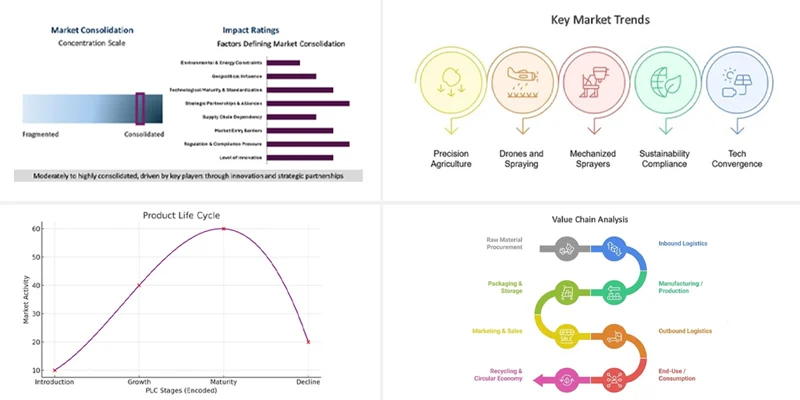

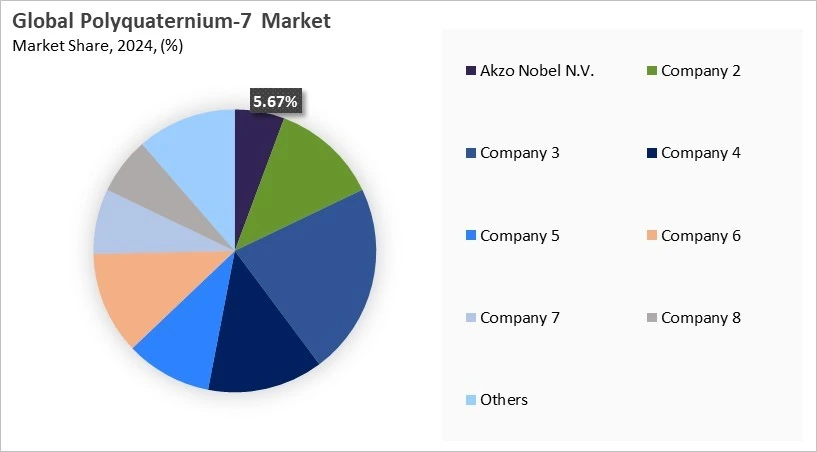
The leading players in the market are competing with diverse innovative offerings to remain competitive in the market. The above illustration shows the percentage of revenue shared by some of the leading companies in the market. The leading players of the market are adopting various strategies in order to cater demand coming from the different industries. The key developmental strategies in the market are Acquisitions, and Partnerships & Collaborations.
Before the COVID-19 pandemic, the Polyquaternium-7 market grew steadily because there was a lot of demand from the personal care industry. The pandemic changed this path by causing problems with the supply chain, shortages of raw materials, and less manufacturing capacity because of a lack of workers. Demand was also affected by short-term drops in consumer spending on personal care items that weren't necessary. But the crisis sped up digital transformation and encouraged new ideas, especially in formulations that are better at cleaning and moisturizing. As the economy got better, the market bounced back with more demand and a greater focus on research and development, sustainability, and supply chain resilience. In general, the pandemic had an adverse impact, but it also led to long-term innovation and improvements in structure. Thus, the COVID-19 pandemic had a negative impact on the Polyquaternium-7 Market.
Based on Form, the market is segmented into Liquid, and Powder. The powder segment recorded the lowest revenue share of 27.49% in the Polyquaternium-7 market. This segment is used in specific formulations requiring dry or concentrated ingredients. It offers advantages in storage stability and transportation efficiency. However, its limited solubility compared to liquid form restricts broader adoption. Industries use powder form in niche applications where formulation control is required. The segment continues to grow steadily with specialized demand.
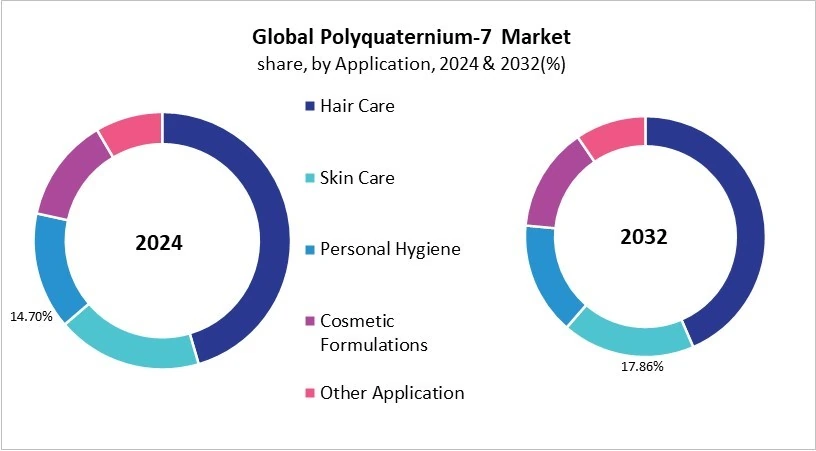
Based on Application, the market is segmented into Hair Care, Skin Care, Personal Hygiene, Cosmetic Formulations, and Other Application. The skin care segment recorded a significant revenue share of 18.275% in the Polyquaternium-7 market. This segment benefits from its moisturizing and film-forming properties. It is widely used in creams, lotions, and serums. Growing awareness of skincare routines drives demand. Manufacturers focus on enhancing product performance using conditioning agents. The segment continues to expand steadily.
Free Valuable Insights: Polyquaternium-7 Market Size to reach $43.98 by 2032
Region-wise, the Polyquaternium-7 market is analyzed across North America, Europe, Asia Pacific, and LAMEA. The Asia Pacific segment recorded the largest revenue share of 35.46% in the Polyquaternium-7 market. In the North America and Europe regions, the polyquaternium-7 market is predicted to grow at a substantial rate. The market is driven by strong consumer demand for advanced formulation technologies and premium personal care products. Regional market further benefits from widespread awareness of product performance, high spending on skincare & haircare, and rising preference for sustainable and clean-label ingredients. The presence of well-developed cosmetic manufacturers and continued R&D investments further support growth. Furthermore, the European polyquaternium-7 market is estimated to expand rapidly due to strict regulatory frameworks that prioritize transparency, ingredient safety, and environmental compliance. Consumers in the region show a strong presence for dermatologically tested and eco-friendly products, thereby creating market opportunities.
The polyquaternium-7 market is estimated to experience noticeable expansion across the Asia Pacific and LAMEA region. The market growth is propelled by rapid urbanization, increasing disposable incomes, and rising beauty consciousness in nations such as Japan, India, and China. The rising middle-class population and expanding e-commerce are surging demand for advanced personal care ingredients. Furthermore, the LAMEA polyquaternium-7 market is anticipated to expand at a prominent rate. This is because of enhancing economic conditions, increasing awareness of personal grooming & hygiene, and growing urbanization. Regional nations are experiencing rising adoption of quality hair & skincare products, offering lucrative opportunities for the market.
| Report Attribute | Details |
|---|---|
| Market size value in 2025 | USD 26.10 Million |
| Market size forecast in 2032 | USD 43.98 Million |
| Base Year | 2024 |
| Historical period | 2021 to 2023 |
| Forecast Period | 2025 to 2032 |
| Revenue Growth Rate | CAGR of 7.7% from 2025 to 2032 |
| Number of Pages | 544 |
| Tables | 454 |
| Report Coverage | Market Trends, Revenue Estimation and Forecast, Segmentation Analysis, Regional and Country Breakdown, Market Share Analysis, Porter’s 5 Forces Analysis, Company Profiling, Companies Strategic Developments, SWOT Analysis, Winning Imperatives |
| Segments Covered | Form, Application, Distribution Channel, End-Use Industry, Region |
| Country Scope |
|
| Companies Included | AkzoNobel N.V., Ashland Inc., The Lubrizol Corporation (Berkshire Hathaway Inc.), BASF SE, Clariant AG, The Dow Chemical Company, Evonik Industries AG (RAG-Stiftung), and Solvay SA |
By Form
By Application
By Distribution Channel
By End-Use Industry
By Geography
The market will reach $43.98 million by 2032, growing at 7.7% CAGR during the forecast period (2025-2032).
Liquid segment leads with a projected market value of $31 million by 2032.
AkzoNobel N.V., Ashland Inc., The Lubrizol Corporation, BASF SE, and Clariant AG hold dominant positions.
Asia Pacific dominates at $16.1 million by 2032. North America grows at 7% CAGR during 2025-2032.
Personal Care & Cosmetics segment grows at 7.4% CAGR during the forecast period.
Indirect Sales leads, achieving a market value of $27.3 million by 2032.
Our team of dedicated experts can provide you with attractive expansion opportunities for your business.








 Unique Offerings