The sample copy of this report is available for access.
“Global Nut-free Cookies Market to reach a market value of USD 2.04 Billion by 2033 growing at a CAGR of 6.3%”
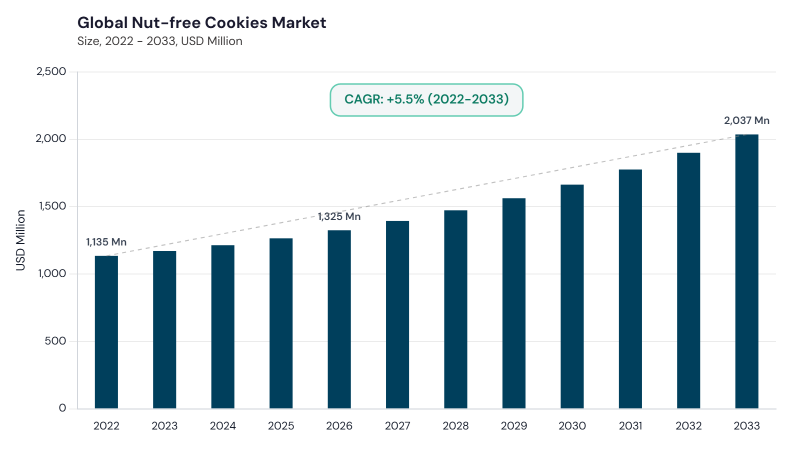
The Global Nut-free Cookies Market size is expected to reach USD 2.04 billion by 2033, rising at a market growth of 6.3% CAGR during the forecast period.
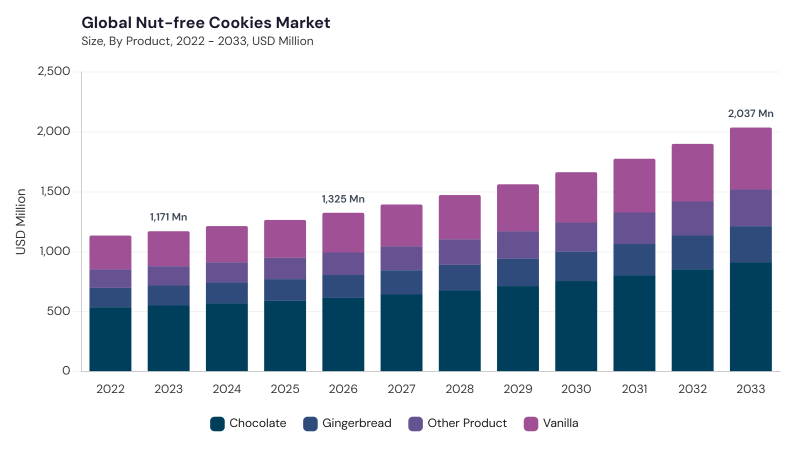
The growth of the market is driven by the increasing prevalence of peanut and tree nut allergies, rising consumer preference for allergen-free snacks, and growing demand for clean-label bakery products. Nut-free cookies are gaining strong traction among consumers seeking safe snacking alternatives, especially for children, school environments, healthcare institutions, and allergy-sensitive households. Additionally, growing awareness regarding food allergen labeling regulations and expanding availability of gluten-free, vegan, and organic nut-free cookie variants are supporting market expansion globally.
The Global Nut-free Cookies Market has witnessed significant transformation as consumers increasingly shift toward allergen-safe and health-oriented bakery products. Traditionally, cookies containing peanuts, almonds, walnuts, and other tree nuts dominated the bakery category. However, the rising incidence of nut allergies, particularly among children and adolescents, has accelerated the demand for dedicated nut-free bakery offerings. Manufacturers are increasingly reformulating products using seed-based ingredients, oat flour, chickpea flour, rice flour, and other alternative ingredients to maintain taste, texture, and nutritional value while ensuring allergen safety.
The increasing emphasis on clean-label formulations and transparent ingredient sourcing is further driving the evolution of the nut-free cookies market. Consumers are actively seeking products that are free from artificial preservatives, genetically modified ingredients, and common allergens. As a result, brands are launching certified nut-free, gluten-free, vegan, and organic cookie variants to cater to a broader consumer base. In addition, schools, airlines, hospitals, and foodservice providers are increasingly preferring nut-free snacks to minimize allergen exposure risks, further strengthening institutional demand.
Digital retail expansion and direct-to-consumer allergen-free food platforms are also reshaping the competitive landscape. Online platforms enable consumers with specific dietary restrictions to access specialized products more conveniently, while manufacturers are increasingly leveraging social media and influencer marketing to promote allergen-safe snacking solutions. Furthermore, rising investments in dedicated allergen-free production facilities and advanced contamination prevention technologies are improving product quality and consumer trust globally.
The COVID-19 pandemic had a mixed impact on the Nut-free Cookies Market. During the initial phase, disruptions in raw material supply chains, labor shortages, and temporary shutdown of manufacturing facilities negatively affected bakery product production and distribution. However, consumer demand for packaged snacks and shelf-stable food products increased significantly during lockdown periods.
Post-pandemic, rising consumer awareness regarding health, immunity, and food safety accelerated demand for clean-label and allergen-free bakery products. Online grocery shopping and e-commerce sales channels experienced substantial growth, further boosting sales of specialty food products such as nut-free cookies. The pandemic also strengthened consumer focus on ingredient transparency and safe food manufacturing practices, supporting long-term growth opportunities for allergen-free snack manufacturers globally.
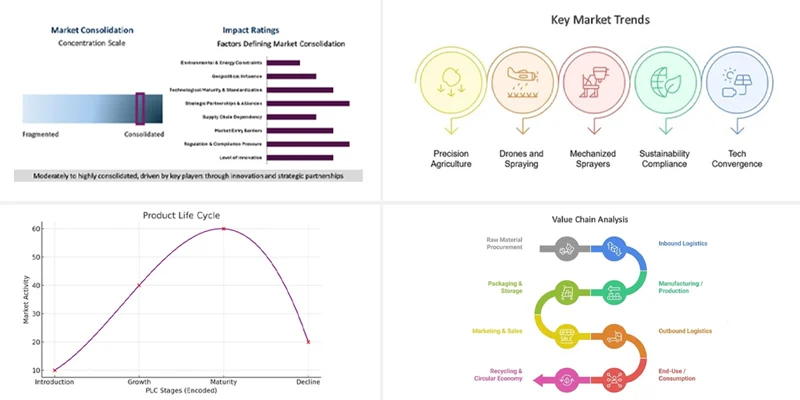

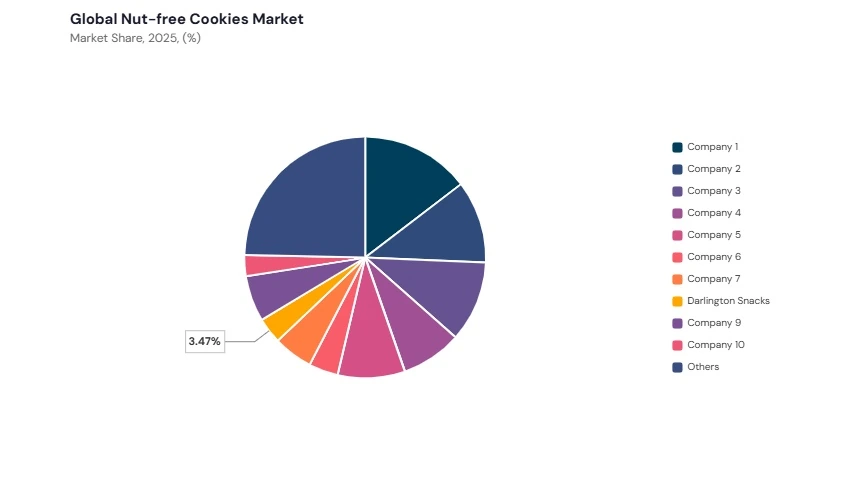
The market is moderately fragmented with the presence of both multinational bakery brands and specialized allergen-free food companies. Large food manufacturers are increasingly expanding their allergen-free product portfolios through product innovation, acquisitions, and dedicated production facilities. At the same time, niche brands specializing in allergy-safe snacks are gaining traction among health-conscious and allergy-sensitive consumers.
Product differentiation through organic ingredients, non-GMO certifications, reduced sugar formulations, and vegan labeling is becoming a major competitive strategy. In addition, manufacturers are investing in dedicated allergen-free production plants and advanced contamination prevention systems to strengthen consumer confidence and comply with stringent food safety standards.
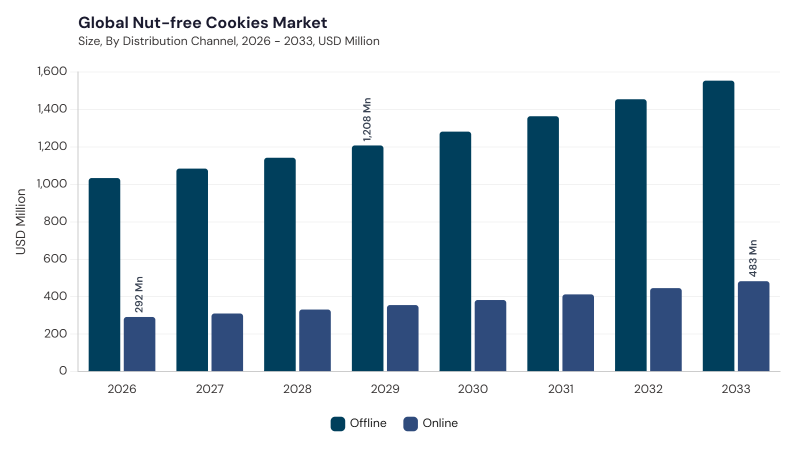
On the basis of distribution channel, the Nut-free Cookies market is classified into Offline and Online. The Offline segment recorded 79.0% revenue share in the Nut-free Cookies market in 2025 and is projected to reach USD 1,553.3 million by 2033, growing at a CAGR of 6.0% during the forecast period. Supermarkets, hypermarkets, specialty food stores, and convenience stores continue to dominate sales owing to strong consumer preference for in-store grocery purchases and increasing shelf availability of allergen-free bakery products.
The Online segment recorded 21.0% revenue share in 2025 and is projected to reach USD 488.6 million by 2033, growing at a CAGR of 8.0% during the forecast period. Increasing penetration of e-commerce platforms, rising direct-to-consumer sales strategies, and growing popularity of specialty allergy-friendly food websites are accelerating online segment growth.
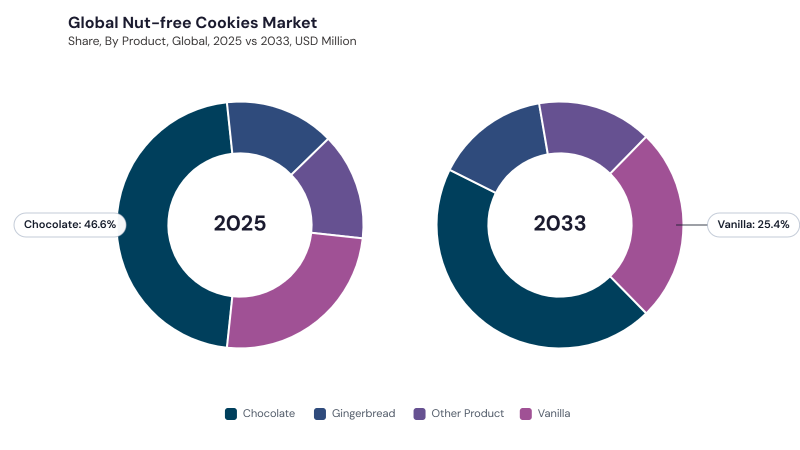
By product, the Nut-free Cookies market is divided into Chocolate, Vanilla, Gingerbread, and Other Products. The Chocolate segment recorded 50.0% revenue share in the Nut-free Cookies market in 2025 and is projected to reach USD 1,076.1 million by 2033, growing at a CAGR of 6.0% during the forecast period. Strong global consumer preference for chocolate-flavored bakery products and increasing launch of dark chocolate and low-sugar nut-free cookie variants are supporting segment growth.
The Vanilla segment recorded 24.2% revenue share in 2025 and is expected to reach USD 516.0 million by 2033, growing at a CAGR of 5.6% during the forecast period. The Gingerbread segment recorded 18.1% revenue share in 2025 and is projected to reach USD 390.7 million by 2033, growing at a CAGR of 6.6% during the forecast period. The Other Products segment accounted for 7.7% revenue share in 2025 and is expected to reach USD 166.0 million by 2033, growing at a CAGR of 7.2% during the forecast period.
Free Valuable Insights: Nut-free Cookies Market Size to reach $2.04 Billion by 2033
Region-wise, the Nut-free Cookies Market is analyzed across North America, Europe, Asia Pacific, and LAMEA. The North America segment recorded 38.7% revenue share in the Nut-free Cookies market in 2025 and is projected to reach USD 793.0 million by 2033, growing at a CAGR of 5.5% during the forecast period. High prevalence of peanut allergies, strong awareness regarding allergen-safe foods, and increasing demand for clean-label snacks are supporting regional market growth.
Europe accounted for 30.0% revenue share in 2025 and is projected to reach USD 614.0 million by 2033, growing at a CAGR of 6.1% during the forecast period. Strong food allergen labeling regulations and increasing adoption of free-from bakery products are accelerating regional demand.
Asia Pacific captured 24.3% revenue share in 2025 and is expected to reach USD 499.7 million by 2033, growing at a CAGR of 7.4% during the forecast period. Rising awareness regarding food allergies, urbanization, and increasing demand for healthier snack alternatives are driving rapid regional growth. LAMEA accounted for 7.0% revenue share in 2025 and is projected to reach USD 135.7 million by 2033, growing at a CAGR of 6.3% during the forecast period.
The Nut-free Cookies Market is highly innovation-driven with increasing focus on allergen safety, ingredient transparency, and clean-label product positioning. Manufacturers compete on the basis of taste profile, nutritional value, allergen certifications, packaging innovation, and retail distribution reach. The emergence of dedicated allergen-free manufacturing facilities, gluten-free and vegan formulations, and functional ingredient incorporation such as oats, flaxseeds, and chickpea flour are becoming major competitive differentiators. Furthermore, online retail expansion and increasing consumer engagement through digital marketing strategies are reshaping brand positioning across the market.
| Report Attribute | Details |
|---|---|
| Market size value in 2026 | USD 1.33 Billion |
| Market size forecast in 2033 | USD 2.04 Billion |
| Base Year | 2025 |
| Historical period | 2022 to 2024 |
| Forecast Period | 2026 to 2033 |
| Revenue Growth Rate | CAGR of 6.3% from 2026 to 2033 |
| Number of Pages | 395 |
| Tables | 450 |
| Report Coverage | Market Trends, Revenue Estimation and Forecast, Segmentation Analysis, Regional and Country Breakdown, Competitive Landscape, Market Share Analysis, Porter’s 5 Forces Analysis, Company Profiling, Companies Strategic Developments, SWOT Analysis |
| Segments Covered | Product, Distribution Channel, Region |
| Country Scope | North America (US, Canada, Mexico, and Rest of North America), Europe (Germany, UK, France, Spain, Italy, and Rest of Europe), Asia Pacific (China, Japan, India, South Korea, Australia, and Rest of Asia Pacific), LAMEA (Brazil, Argentina, UAE, Saudi Arabia, South Africa, and Rest of LAMEA) |
| Companies Included | Mondelez International, Inc., Nestlé S.A., Conagra Brands, Inc., Homefree LLC, Rich Products Corporation, Divvies LLC, Skeeter Snacks LLC, Terra Cotta Cookies Co., Treasure Mills Inc., Just Desserts |
By Product
By Distribution Channel
By Geography
Our team of dedicated experts can provide you with attractive expansion opportunities for your business.








 Unique Offerings