“Global Natural Language Processing Market to reach a market value of USD 321.30 Billion by 2032 growing at a CAGR of 32.2%”
The Global Natural Language Processing Market size is estimated at $45.61 billion in 2025 and is expected to reach $321.30 billion by 2032, rising at a market growth of 32.2% CAGR during the forecast period (2025-2032). The growth of this market is quickly because more businesses are using AI-powered automation, conversational AI is becoming more popular, there is a growing need for real-time data analytics, and healthcare, finance, retail, and government sectors are all working together to make this happen.
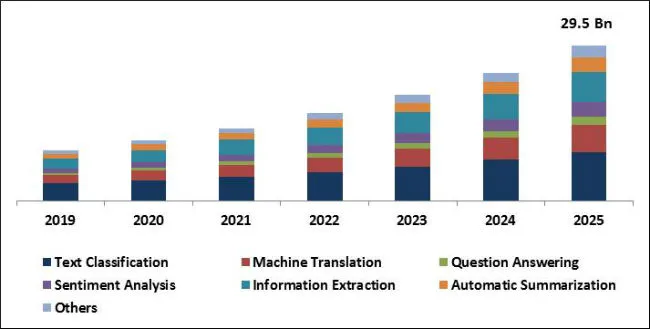
The natural language processing market has evolved from rule-based and academic systems to advanced AI-based technologies that can generate, understand, and interpret human language with high accuracy. Breakthroughs in deep learning and machine learning, combined with access to cloud computing and large datasets, have surged NLP’s adoption across various sectors. NLP, which was once experimental research in now embedded in business operations, powering applications like machine translation, virtual assistant, automated customer service, and sentiment analysis. Corporate investment and government support have further strengthened natural language generation (NLG) and understanding (NLU), positioning NLP as a crucial pillar of digital transformation strategies and modern artificial intelligence.
The market is propelled by deeper integration with business intelligence and real-time analytics, rapid growth of cloud-based NLP services, and the emergence of multimodal systems that combine speech, text, and visual data. Along with these elements, ethical AI considerations like privacy, fairness, and bias reduction are becoming central to product development. The market is intensely competitive with technology giants focusing on scalability, domain-specific solutions, and multilingual support. Strategic collaborations, strong developer ecosystems, acquisitions, and open-source partnerships make the NLP market even more competitive.
The major strategies followed by the market participants are Partnerships as the key developmental strategy to keep pace with the changing demands of end users. For instance, In March, 2025, IBM Corporation announced the partnership with Riyadh Air, an airlines company to integrate WatsonX and AI solutions into its guest and employee experiences. The airline aims to become a digital-native carrier, using AI to enhance customer interactions and optimize flight operations while ensuring data security and compliance. Moreover, In March, 2025, Google LLC teamed up with EasyPark Group, a software company boost its multicloud strategy and AI initiatives. Using Vertex AI and Gemini, the collaboration aims to streamline onboarding, integrate acquisitions, and enhance operational efficiency. This marks a major step in EasyPark’s global expansion and commitment to smart, sustainable urban mobility.
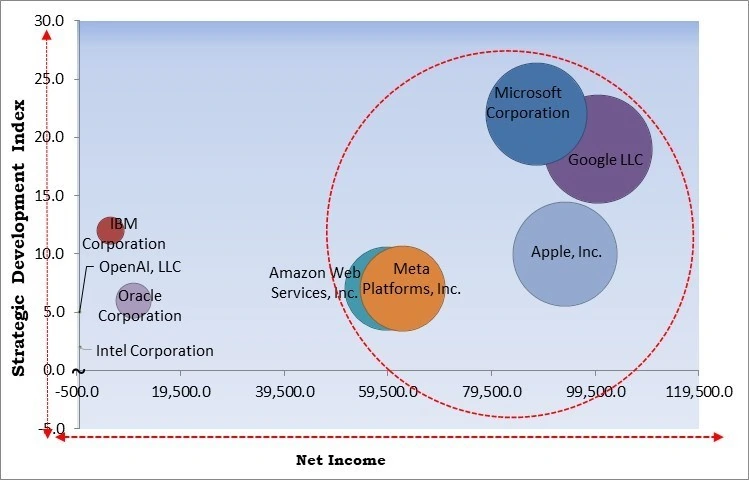
Based on the Analysis presented in the KBV Cardinal matrix; Google LLC, Apple, Inc., Microsoft Corporation, Meta Platforms, Inc., Amazon Web Services, Inc. are the forerunners in the Natural Language Processing Market. In April, 2025, Google LLC teamed up with Verizon, a telecommunications company to integrate generative AI technologies, including Gemini and Vertex AI, to enhance Verizon's customer service. This collaboration has improved customer interactions, achieving 95% answerability for inquiries. Verizon's AI-powered tools like the "Personal Research Assistant" and "Problem Solver" optimize agent workflows and provide personalized customer experiences. Companies such as Oracle Corporation, IBM Corporation, OpenAI, LLC are some of the key innovators in Natural Language Processing Market.
The COVID-19 pandemic had mostly good effects on the Natural Language Processing (NLP) market because it sped up the use and development of NLP in many fields. NLP's important role in getting useful information from large amounts of unstructured data, such as medical literature and public communications, was made clear by the urgent need to do so. During lockdowns, healthcare services, customer engagement, and remote education were all made easier by AI-powered chatbots, virtual assistants, and platforms like ChatGPT. NLP was also useful for public health surveillance by keeping an eye on social media, analyzing people's feelings, and keeping track of false information. Even though issues with data privacy, bias, and language that are specific to a certain field came up, more money and government support made NLP better, and made it even more important for crisis response plans. Thus, the COVID-19 pandemic had a positive impact on the market.
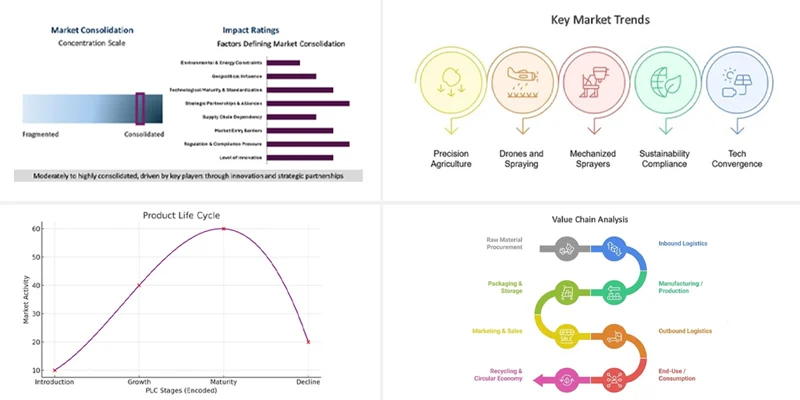

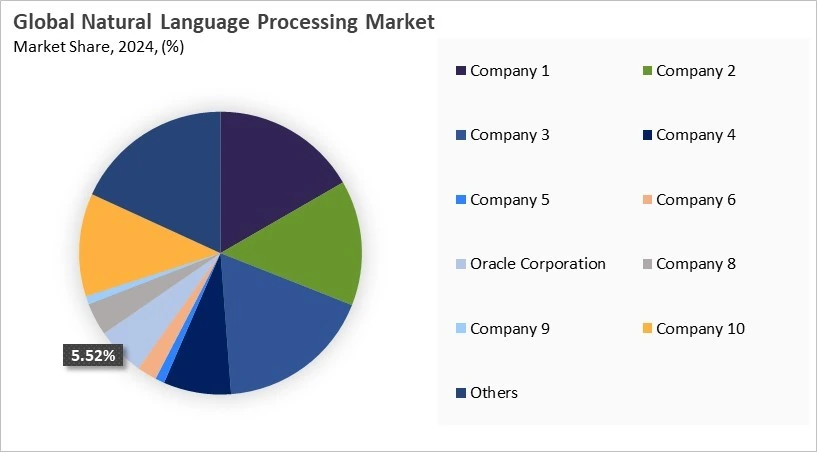
The leading players in the market are competing with diverse innovative offerings to remain competitive in the market. The above illustration shows the percentage of revenue shared by some of the leading companies in the market. The leading players of the market are adopting various strategies in order to cater demand coming from the different industries. The key developmental strategies in the market are Acquisitions, and Partnerships & Collaborations.
Based on Component, the market is segmented into Solution, and Services. The services segment attained 31% revenue share in the natural language processing market in 2024. The services segment plays a vital role in supporting the adoption and optimization of natural language processing technologies worldwide. This segment includes consulting, system integration, deployment, training, maintenance, and support services that help organizations implement NLP solutions effectively. Service providers assist enterprises in customizing language models, ensuring seamless integration with existing IT infrastructure, and maintaining system performance.
Based on Deployment, the market is segmented into Cloud, and On-premises. The on-premises segment attained 24% revenue share in the natural language processing market in 2024. On-premises deployment remains an important segment of the global natural language processing market, particularly for organizations requiring enhanced data security, regulatory compliance, and greater control over IT infrastructure. Enterprises operating in highly regulated industries such as banking, healthcare, and government often choose on-premises solutions to manage sensitive information within their internal networks. This deployment model allows for customized configurations, dedicated resources, and integration with legacy systems.
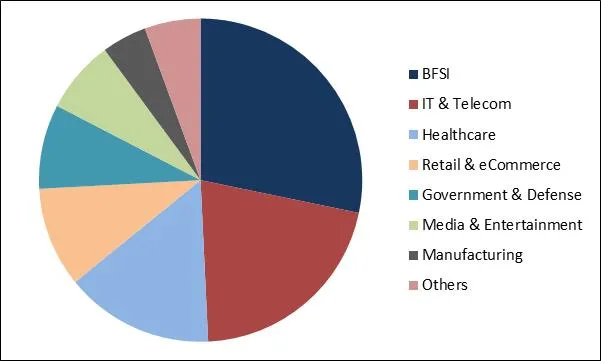
Free Valuable Insights: Natural Language Processing Market Size to reach $321.30 by 2032
Region-wise, the natural language processing market is analyzed across North America, Europe, Asia Pacific, and LAMEA. The North America segment recorded 37% revenue share in the natural language processing market in 2024. The natural language processing market is estimated to expand at a prominent rate in the North America and Europe region. This is because of early enterprise adoption across finance, healthcare, and customer service, the presence of leading technology companies, and extensive R&D investment. Region further captures growth with NLP largely integrated into conversational AI, cloud platforms, and analytics tools, driven by favourable innovation policies and strong digital infrastructure. Furthermore, the European natural language processing market is growing. The market is driven by regulatory focus on data privacy, digital transformation initiatives, and multilingual capabilities. Regional nations such as France, Germany, and the UK are hubs for regional innovations, especially in sentiment analysis, compliance automation, and document intelligence.
In the Asia Pacific and LAMEA regions, the natural language processing market is anticipated to grow at a significant rate. The market is propelled by widespread smartphone and internet adoption, rapid digitalization, and strong investment in AI infrastructure. Regional nations are experiencing growth with organizations and government promoting regional NLP models for e-commerce, diverse languages, and customer engagement. Moreover, the LAMEA natural language processing market is predicted to expand at a prominent rate. The market is growing because of increasing adoption of AI technologies for operational automation and customer support, rising interest in multilingual NLP solutions, and smart city initiatives. Also, the region is offering lucrative opportunities owing to increasing awareness of AI benefits and investments in digital infrastructure.
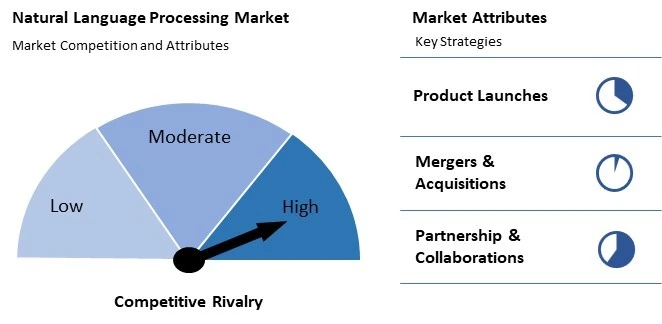
The Natural Language Processing market is very competitive and driven by new ideas. Technology is always getting better, and models are always being improved. The main goal of the competition is to make language understanding more accurate, add support for multiple languages, improve contextual reasoning, and speed up real-time processing. Open-source ecosystems make competition stronger by making it easier for new people to join, while cloud integration and API-based deployment make it easier for everyone to use. Vendors set themselves apart by offering domain-specific customization, data security features, and architectures that can grow with the business. Strategic partnerships, research investments, and product integration across industries make competition even more intense and the market even more dynamic.
| Report Attribute | Details |
|---|---|
| Market size value in 2025 | USD 45.61 Billion |
| Market size forecast in 2032 | USD 321.30 Billion |
| Base Year | 2024 |
| Historical period | 2021 to 2023 |
| Forecast Period | 2025 to 2032 |
| Revenue Growth Rate | CAGR of 32.2% from 2025 to 2032 |
| Number of Pages | 744 |
| Tables | 668 |
| Report Coverage | Market Trends, Revenue Estimation and Forecast, Segmentation Analysis, Regional and Country Breakdown, Competitive Landscape, Market Share Analysis, Porter’s 5 Forces Analysis, Company Profiling, Companies Strategic Developments, SWOT Analysis, Winning Imperatives |
| Segments Covered | Component, Deployment, Type, Enterprise Size, End-use, Application, Region |
| Country Scope |
|
| Companies Included | Google LLC (Alphabet Inc.), Amazon Web Services, Inc. (Amazon.com, Inc.), Microsoft Corporation, IBM Corporation, Apple, Inc., Meta Platforms, Inc., Oracle Corporation, SAS Institute Inc., Intel Corporation, and OpenAI, LLC |
By Component
By Deployment
By Type
By Enterprise Size
By End-use
By Application
By Geography
Our team of dedicated experts can provide you with attractive expansion opportunities for your business.







 Unique Offerings