“Global Mining Automation Market to reach a market value of 9.17 Billion by 2032 growing at a CAGR of 6.8%”
The Global Mining Automation Market size is estimated at $5.78 billion in 2025 and is expected to reach $9.17 billion by 2032, rising at a market growth of 6.8% CAGR during the forecast period (2025-2032). The growth of this market is due to a rise in the need for cost-cutting, worker safety, and operational efficiency. Mining operations are quickly adopting autonomous equipment, AI-driven analytics, and IoT-enabled systems. Rising mineral demand and digital transformation projects are also helping the market growth as well.
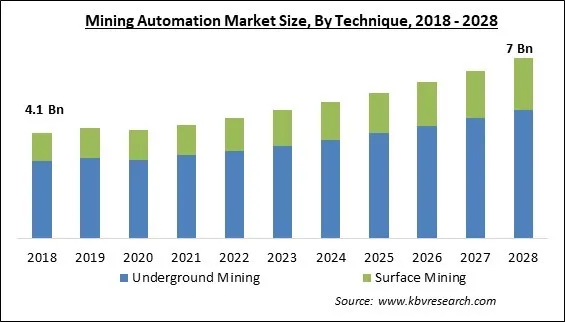
The mining automation market has developed significantly with the integration of digital control systems, remote operational technologies, and sensors. A major shift occurred in the 2010s with the adoption of artificial intelligence and robotics, allowing automation haulage systems, predictive maintenance, and real-time analytics. This shift transformed mining operations from semi-automated setups into fully integrated digital ecosystems. The mining automation market represents a well-established landscape driven by machine learning, AI, IoT-enabled systems, and robotics that improve safety, optimize resources, and support environmental sustainability.
The mining automation market is driven by the elements, including rising use of autonomous vehicles and robotics to enhance operational efficiency and safety, alongside the adoption of predictive analytics and AI to optimize equipment performance and reduce costs. Also, surging regulatory and environmental pressures are encouraging companies to adopt energy-efficient and eco-friendly automation solutions. Key market players are responding through strategic partnerships, continued innovation, and geographical expansion, along with legacy systems, to remain competitive. The market seems to be intensely competitive with global operators offering scalable and advanced technologies, along with regional players taking advantage of local expertise and cost advantage, creating a dynamic environment focused on innovation, long-term value delivery, and customization.
The major strategies followed by the market participants are Partnerships as the key developmental strategy to keep pace with the changing demands of end users. For instance, In December, 2024, Trimble, Inc. teamed up with GroundProbe to deliver a comprehensive monitoring solution for geotechnical and geospatial mining professionals. This collaboration combines advanced technologies from both companies, offering integrated capabilities for improved safety, efficiency, and data-driven decision-making across mining operations through a unified monitoring portfolio tailored to industry-specific challenges and needs. Moreover, IN April, 2025, Sandvik AB teamed up with Sleipner to offer integrated mobility solutions for surface mining. This collaboration combines Sandvik's drill rigs with Sleipner's low-bed trailers, aiming to enhance productivity, reduce emissions, and provide flexible financing options for customers worldwide, excluding Canada.
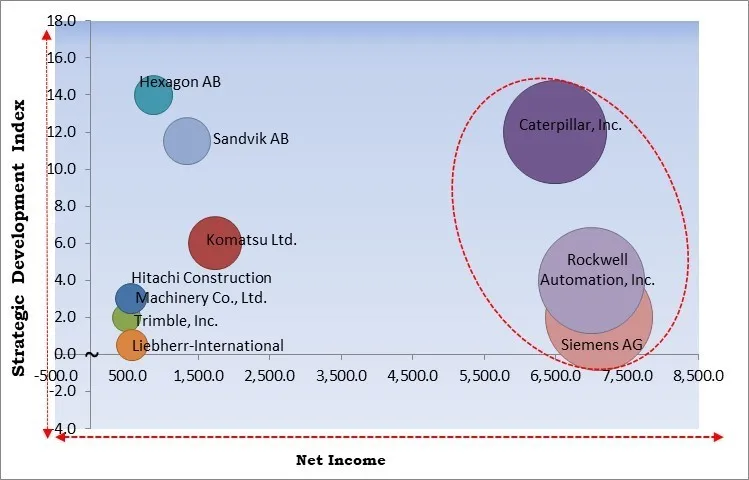
Based on the Analysis presented in the KBV Cardinal matrix; Caterpillar, Inc. is the forerunner in the Mining Automation Market. In March, 2025, Caterpillar, Inc. announced a partnership with Luminar to integrate lidar technology into its Cat Command autonomy platform. This collaboration aims to enhance the safety and efficiency of autonomous construction and mining equipment by improving object detection capabilities in challenging environments. Companies such as Atlas Copco AB, Komatsu Ltd., and Trimble, Inc. are some of the key innovators in Mining Automation Market.
Before the COVID-19 pandemic, this market grew steadily as more and more companies started using advanced machinery and digital solutions to make their operations safer and more efficient. However, the pandemic caused a lot of problems, such as supply chain issues that affected important parts, fewer workers available because of restrictions, and investments that were put off because of uncertain commodity markets. These problems made it take longer to deploy and integrate automation technologies. At the same time, the crisis sped up the use of remote operations, AI-driven predictive maintenance, and cloud-based monitoring solutions as businesses tried to keep their operations running smoothly. After the pandemic, the market bounced back with more investments and a stronger focus on automation as a way to stay strong and lower risk. In general, COVID-19 slowed down market growth at first, but it ended up sparking new ideas and speeding up the shift to digitally integrated mining operations. Thus, the COVID-19 pandemic had a negative impact on the Mining Automation Market.

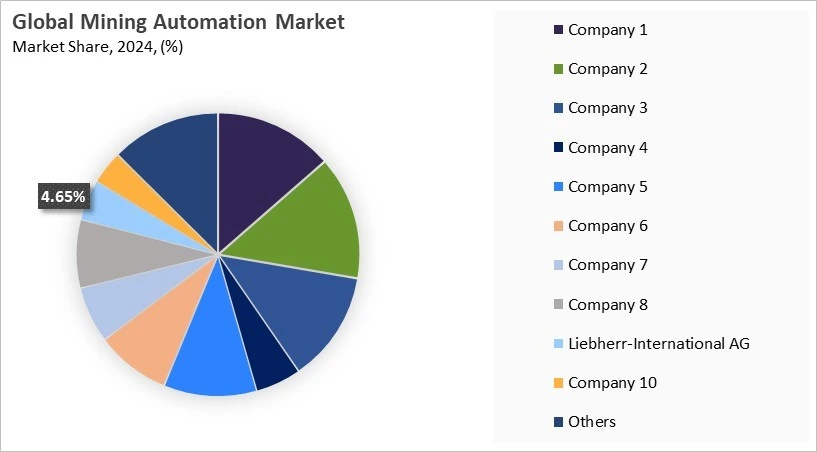
The leading players in the market are competing with diverse innovative offerings to remain competitive in the market. The above illustration shows the percentage of revenue shared by some of the leading companies in the market. The leading players of the market are adopting various strategies in order to cater demand coming from the different industries. The key developmental strategies in the market are Acquisitions, and Partnerships & Collaborations.
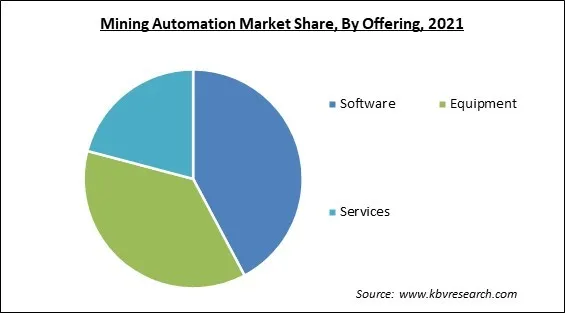
Based on Solution Type, the market is segmented into Equipment Automation, Software Automation, and Services. The software automation segment attained 36% revenue share in the Mining Automation Market in 2024. This growth is supported by the rising need for data-driven decision-making, real-time monitoring, and operational optimization. Software solutions such as fleet management systems, predictive maintenance platforms, and advanced analytics tools are widely adopted to improve efficiency and reduce downtime.
Based on Application, the market is segmented into Metal Mining, Mineral Mining, and Coal Mining. The mineral mining segment recorded 33% revenue share in the Mining Automation Market in 2024. Growth in this segment is supported by the rising demand for industrial minerals used in agriculture, chemicals, and manufacturing sectors. Automation helps improve extraction efficiency, optimize resource utilization, and maintain consistent product quality. The integration of digital technologies such as advanced analytics, IoT, and remote operation systems is further driving the adoption of automation in mineral mining activities globally.
Free Valuable Insights: Mining Automation Market Size to reach $9.17 by 2032
Region-wise, the Mining Automation Market is analyzed across North America, Europe, Asia Pacific, and LAMEA. The Asia Pacific segment gained 40% revenue share in the Mining Automation Market in 2024. The mining automation market is predicted to capture a prominent rate in North America and Europe. The market is supported by technological advancements and regulation-driven markets for mining automation. North America holds a substantial share, driven by strong R&D investment, early adoption of autonomous equipment, and the presence of key mining companies implementing IoT, AI, and robotics at scale. The market is further driven by the requirement for safety improvements, operational efficiency, and sustainable mining practices, along with government support. Further, the European mining automation market is estimated to grow at a rapid rate, propelled by strict environmental regulations and a strong focus on sustainable and safety resource extraction. Nations like Sweden, the UK, and Germany are widely adopting mining automation by leveraging advanced engineering capabilities and regulatory compliance needs.
In Asia Pacific and LAMEA region, the mining automation market is predicted to grow at a prominent rate. This is because of large-scale mining activities, rapid industrialization, and strong government support for digital transformation in India, China, and Australia. Also, the APAC region benefits from rising demand for minerals, expanding exploration activities, and rising investments in autonomous systems. Furthermore, the LAMEA mining automation market is estimated to experience substantial growth driven by rich mineral reserves and the requirement to enhance safety and operational efficiency. Regional nations are investing in automation to improve productivity in resource extraction.
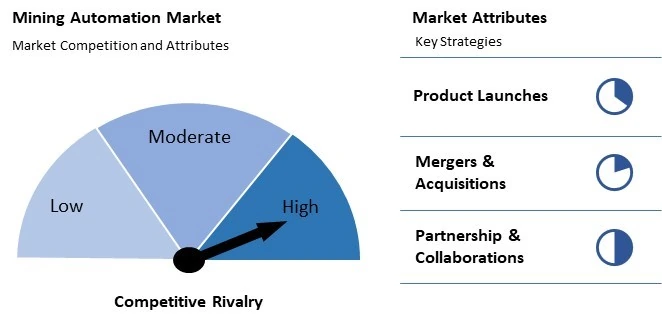
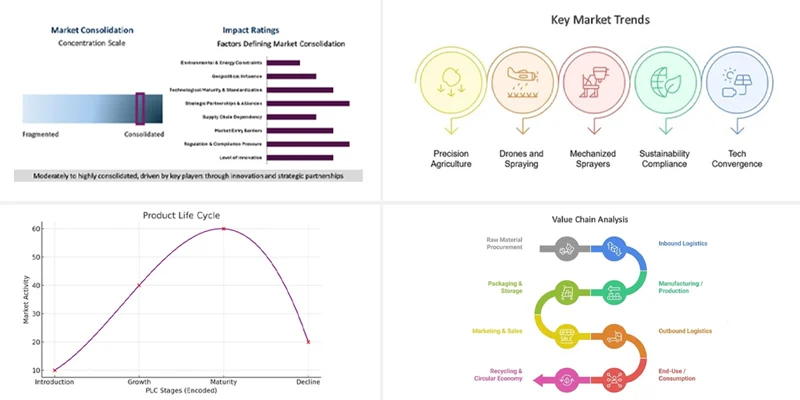
The mining automation market is very competitive because technology is changing quickly, and operational needs are changing as well. Players are working to improve efficiency, safety, and cost-effectiveness by using advanced automation solutions. Digital integration, equipment intelligence, and remote operations are always getting better, which changes the competitive landscape. People in the market set themselves apart by offering customization, reliability, and service support. Strategic partnerships and new technologies make competition even stronger, and the push for more environmentally friendly and effective mining methods continues to affect how companies compete in the industry.
| Report Attribute | Details |
|---|---|
| Market size value in 2025 | USD 5.78 Billion |
| Market size forecast in 2032 | USD 9.17 Billion |
| Base Year | 2024 |
| Historical period | 2021 to 2023 |
| Forecast Period | 2025 to 2032 |
| Revenue Growth Rate | CAGR of 6.8% from 2025 to 2032 |
| Number of Pages | 555 |
| Tables | 448 |
| Report Coverage | Market Trends, Revenue Estimation and Forecast, Segmentation Analysis, Regional and Country Breakdown, Competitive Landscape, Market Share Analysis, Porter’s 5 Forces Analysis, Company Profiling, Companies Strategic Developments, SWOT Analysis, Winning Imperatives |
| Segments Covered | Solution Type, Application, Region |
| Country Scope |
|
| Companies Included | Komatsu Ltd., Caterpillar, Inc., Sandvik AB, Rockwell Automation, Inc., Epiroc AB, Hexagon AB, Trimble, Inc., Hitachi Construction Machinery Co., Ltd. (Hitachi, Ltd.), Liebherr-International AG, and Atlas Copco AB |
By Solution Type
By Application
By Geography
Valued at USD 5.78 billion in 2025, it will reach USD 9.17 billion by 2032, growing at 6.8% CAGR during 2025-2032.
Equipment Automation leads with a projected market value of $3.5 billion by 2032.
Komatsu Ltd., Caterpillar, Inc., Sandvik AB, and Rockwell Automation hold dominant positions in the space.
Asia Pacific leads with $3.8 billion by 2032; North America grows at 6.1% CAGR during 2025-2032.
Metal Mining segment grows at 6.2% CAGR during the forecast period.
Increasing deployment of autonomous haulage systems, drilling equipment, and robotic loaders across mining operations.
Our team of dedicated experts can provide you with attractive expansion opportunities for your business.






 Unique Offerings