The sample copy of this report is available for access.
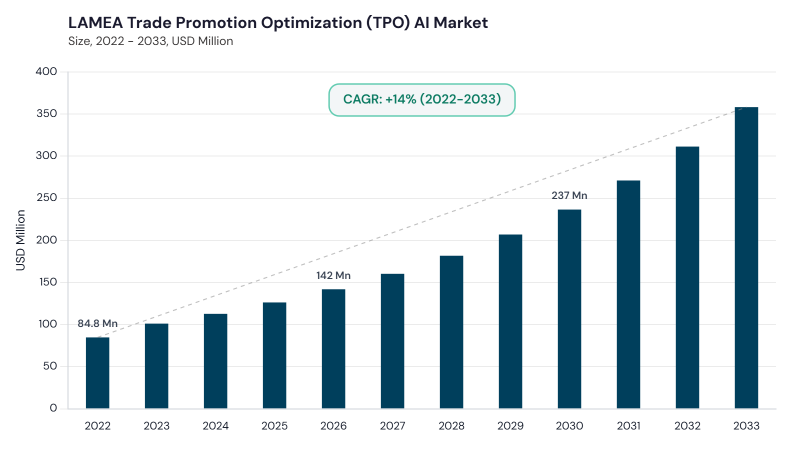
The LAMEA Trade Promotion Optimization (TPO) AI Market size is expected to reach $236.6 million by 2030, growing at a CAGR of 14.1% during the forecast period of 2026-2033.
The Brazil market dominated the LAMEA Trade Promotion Optimization (TPO) AI Market by Country in 2025 and would continue to remain the dominant market through 2033, thereby achieving a market value of $83.4 million by 2033, growing at a CAGR of 12.7% during the forecast period. The Argentina market is expected to witness a CAGR of 15.6% during 2026-2033. Additionally, the UAE market is projected to register a CAGR of 12.9% during the forecast period. Brazil and Saudi Arabia collectively accounted for approximately 41.3% share of the regional market in 2025.
The market has evolved significantly with the rapid digital transformation of retail and consumer goods sectors across Latin America, the Middle East, and Africa. Organizations increasingly rely on AI-driven trade promotion systems to optimize pricing, automate campaign planning, and improve promotional effectiveness in highly fragmented retail environments. Initially, adoption was concentrated among multinational consumer packaged goods companies and organized retail chains; however, cloud-native AI platforms and SaaS-based deployment models have expanded accessibility across mid-sized enterprises and regional distributors. Governments and enterprises across Saudi Arabia, the UAE, and Brazil have accelerated investments in AI infrastructure, cloud ecosystems, and data modernization initiatives, further strengthening market growth. The increasing integration of predictive analytics, machine learning, and real-time consumer behavior analysis has transformed conventional promotion management into an intelligence-driven operational function. In addition, the expansion of omnichannel commerce and e-commerce ecosystems continues to create substantial demand for AI-powered pricing and promotion optimization solutions.
The market is witnessing rising adoption of cloud-based AI platforms, automated trade spend management tools, and predictive demand sensing technologies. Businesses are increasingly utilizing AI-enabled analytics to improve pricing precision, reduce promotional inefficiencies, and optimize inventory planning amid fluctuating consumer demand patterns. AI-driven retail digitization across informal trade networks and SMEs is emerging as a major trend across developing economies within the LAMEA region. Furthermore, enterprises are integrating machine learning algorithms with supply chain and customer analytics systems to enable highly targeted and data-driven promotional strategies. Growing investments in digital payment infrastructure, mobile commerce, and retail data ecosystems are also supporting AI adoption across regional markets. Competitive dynamics are increasingly shaped by partnerships between enterprise software providers, retail analytics vendors, and cloud infrastructure companies focused on delivering scalable and localized AI capabilities.
The Solutions segment dominated the LAMEA Trade Promotion Optimization (TPO) AI Market by Component in 2025 and would continue to remain the dominant segment through 2033, thereby reaching a market value of $215.1 million by 2033, growing at a CAGR of 13.8% during the forecast period. The Services segment is expected to witness a CAGR of 14.6% during 2026-2033. The growing adoption of AI-enabled pricing engines, predictive analytics platforms, and trade optimization software among retailers and consumer goods companies is driving the dominance of the solutions segment. At the same time, enterprises increasingly require consulting, integration, customization, and managed services to maximize the effectiveness of AI deployment across fragmented retail ecosystems. Analysis & Future Outlook: The increasing complexity of omnichannel retail operations and rising demand for scalable AI deployment are expected to sustain strong growth opportunities across both solutions and services segments.
The Cloud-Based segment dominated the LAMEA Trade Promotion Optimization (TPO) AI Market by Deployment Mode in 2025 and is anticipated to continue its dominance through 2033, thereby achieving a market value of $233.0 million by 2033, growing at a CAGR of 14.2% during the forecast period. The On-Premise segment is projected to witness a CAGR of 14.0% during 2026-2033. Cloud deployment continues to gain traction due to lower infrastructure costs, operational flexibility, faster scalability, and easier integration with enterprise retail systems. Meanwhile, on-premise deployment remains relevant among organizations operating in highly regulated environments requiring enhanced data security and infrastructure control. Analysis & Future Outlook: Rising enterprise migration toward SaaS-enabled AI platforms and cloud-native analytics ecosystems is expected to reinforce long-term dominance of the cloud-based segment across the region.
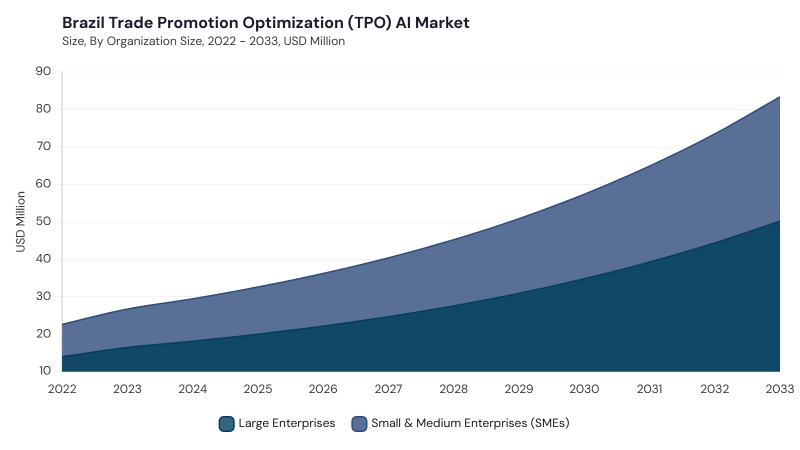
The Large Enterprises segment dominated the LAMEA Trade Promotion Optimization (TPO) AI Market by Organization Size in 2025 and is expected to continue its dominance through 2033, thereby reaching a market value of $216.7 million by 2033, growing at a CAGR of 13.8% during the forecast period. The Small & Medium Enterprises (SMEs) segment is anticipated to register a CAGR of 14.6% during 2026-2033. Large enterprises continue to lead adoption due to extensive retail operations, higher AI investment capabilities, and increasing deployment of predictive promotion management systems across multinational retail and FMCG networks. Simultaneously, SMEs are increasingly leveraging subscription-based AI solutions and cloud-native analytics platforms to improve promotional efficiency and operational competitiveness. Analysis & Future Outlook: Expanding SME digitalization and improving accessibility of low-cost AI platforms are expected to accelerate adoption across emerging regional markets.
The Price & Promotion Optimization segment dominated the LAMEA Trade Promotion Optimization (TPO) AI Market by Application in 2025 and is projected to reach a market value of $111.8 million by 2033, growing at a CAGR of 13.3% during the forecast period. The Other Application segment is expected to witness the fastest growth with a CAGR of 16.0% during 2026-2033. The dominance of the price and promotion optimization segment is driven by rising enterprise focus on improving pricing efficiency, maximizing promotional ROI, and strengthening trade spend visibility through AI-powered analytics. Meanwhile, expanding use cases involving customized promotional modeling, campaign orchestration, and advanced retail intelligence are supporting the rapid growth of other AI-driven applications. Analysis & Future Outlook: Broader integration of machine learning, predictive analytics, and real-time consumer insights is expected to diversify application capabilities and enhance operational intelligence across enterprises.
The Consumer Packaged Goods (CPG) segment dominated the LAMEA Trade Promotion Optimization (TPO) AI Market by Industry Vertical in 2025 and is expected to maintain its leadership position during the forecast period. The Other Industry Vertical segment is anticipated to witness the fastest growth, registering a CAGR of 19.7% during 2026-2033. Consumer packaged goods companies continue to invest heavily in AI-driven trade optimization solutions to improve retail execution, pricing strategies, and promotional planning across organized and informal retail channels. Simultaneously, industries such as automotive, industrial goods, and personal care are increasingly adopting AI-powered promotion management tools to optimize customer targeting and operational efficiency. Analysis & Future Outlook: The expanding application of AI-enabled trade promotion technologies beyond traditional retail and FMCG sectors is expected to create substantial long-term growth opportunities across diversified industries.
Free Valuable Insights: Trade Promotion Optimization (TPO) AI Market Size Worth USD 5.40 Billion billion by 2033
Brazil continues to represent the largest market for Trade Promotion Optimization (TPO) AI solutions within the LAMEA region, supported by the country’s expanding organized retail sector, growing e-commerce ecosystem, and rising investments in enterprise AI infrastructure. Consumer goods companies and retailers in Brazil are increasingly deploying AI-powered analytics platforms to optimize pricing strategies, improve inventory management, and strengthen promotion effectiveness across physical and digital sales channels.
The country also benefits from strong adoption of cloud computing technologies and growing integration of predictive analytics within supply chain and customer engagement systems. In addition, increasing smartphone penetration, digital payment adoption, and omnichannel retail expansion are enhancing the availability of real-time consumer data, enabling highly targeted promotional campaigns. Brazil’s strong presence of multinational FMCG companies and enterprise software vendors further supports the adoption of advanced trade optimization technologies. Moreover, ongoing digital transformation initiatives and investments in AI-driven retail modernization are expected to strengthen Brazil’s long-term market leadership across the LAMEA region.
By Component
By Deployment Mode
By Organization Size
By Application
By Industry Vertical
By Country

By Component
By Deployment Mode
By Organization Size
By Application
By Industry Vertical
By Country
Market will reach $236.6 million by 2030, growing at 14.1% CAGR during the forecast period.
Brazil dominates and will reach $83.4 million by 2033 at 12.7% CAGR during 2026-2033.
Digital transformation in retail and rising demand for data-driven promotion strategies fuel regional growth.
Cloud-based deployment led in 2025 and will continue dominating through the forecast period.
UAE market projects 12.9% CAGR during the forecast period.
Price & Promotion Optimization dominated in 2025 and will continue leading through 2033.
Our team of dedicated experts can provide you with attractive expansion opportunities for your business.



 Unique Offerings