“Global Industrial Sensors Market to reach a market value of USD 54.62 Billion by 2032 growing at a CAGR of 9.4%”
The Global Industrial Sensors Market size is expected to reach USD 54.62 billion by 2032, rising at a market growth of 9.4% CAGR during the forecast period.
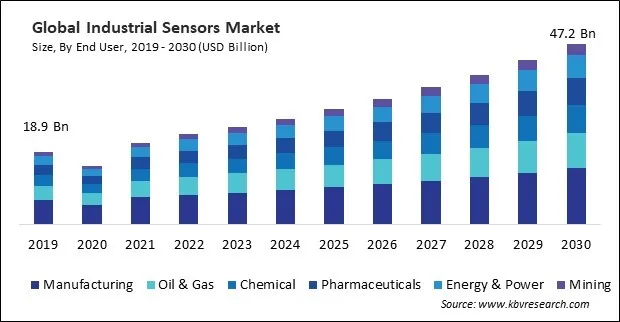
Industrial sensors refers to electronic devices that measure physical parameters like pressure, flow, temperature, vibration, and position, converting them into electrical signals for control and monitoring in industrial systems. Industrial sensors are fundamental to automation across energy, manufacturing, utilities, and logistics, allowing safety, precision, and efficiency. The industry has developed through the adoption of semiconductor-based and electrical sensors, which have enhanced accuracy, reliability, and size. With time, sensors have become integrated with control systems such as DCS and PLCs, transforming from simple measurement tools into smart devices capable of signal processing and digital communication. Industrial sensors are core components of smart factories, supporting predictive maintenance, real-time monitoring, energy optimization, and advanced automation across various sectors.
Recent trends in the industrial sensor market include deep integration with IIoT platforms, the development of intelligent, multi-functional sensors with embedded processing capabilities, and the rise of wireless and networked sensor technologies. These advancements allow flexible deployment, data-driven decision making, and faster response times at the edge. Competitive strategies among market players emphasize continuous innovation, global expansion, ecosystem partnerships, and improved customer support services. The competitive environment includes specialized sensor manufacturers and large automation conglomerates, differentiated by interoperability, technology focus, and service capabilities.
The major strategies followed by the market participants are Product Launches as the key developmental strategy to keep pace with the changing demands of end users. For instance, In October, 2025, STMicroelectronics introduced a new 5MP BrightSense CMOS image sensor family for industrial automation, security, and retail applications. Featuring hybrid global and rolling shutter modes, 3D stacking, and on-chip RGB-IR separation, these sensors enable high-speed, high-precision machine vision and object tracking. Additionally, In September, 2025, Honeywell launched its 13MM Pressure Sensor for cleanroom and high-purity environments, offering high accuracy, low drift, and SEMI F20 compliance. The sensor supports semiconductor manufacturing and other precision industries by reducing defects and improving production yield.
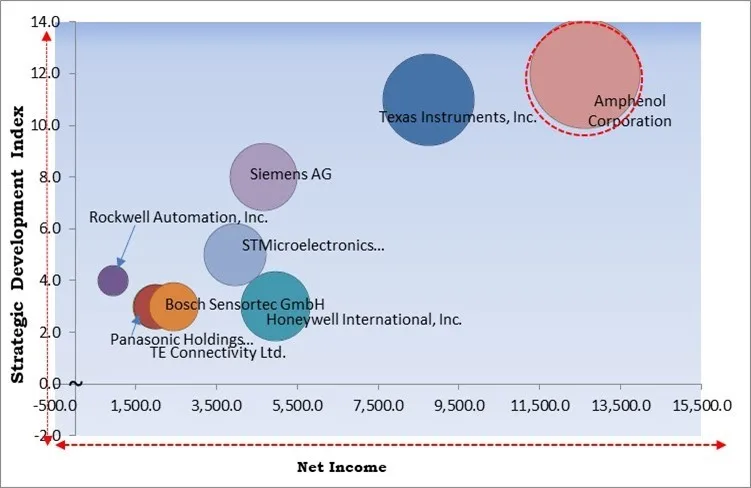
Based on the Analysis presented in the KBV Cardinal matrix; Siemens AG is the forerunners in the Industrial Sensors Market. Companies such as Honeywell International Inc., Texas Instruments, Inc. and TE Connectivity Ltd. are some of the key innovators in Industrial Sensors Market. In November 2023, Siemens AG launched three new wireless sensors for building management systems (BMS). These sensors offer a measurement accuracy of +/-2%. Additionally, they can measure a temperature range of 0°C – 50°C, humidity range of 0% – 100%, and CO2 concentration range of 0 – 5,000ppm.
The COVID-19 pandemic negatively impacted the industrial sensors market due to widespread manufacturing shutdowns and reduced industrial activity. Lockdowns and safety restrictions led to lower demand for sensors used in automation and process control. Global supply chain disruptions caused shortages of key components, increasing costs and delivery delays. Many end-use industries postponed capital investments, limiting new sensor adoption. Workforce constraints slowed installation and maintenance activities. Small and mid-sized manufacturers faced financial stress, further restraining market growth during the pandemic period. Thus, the COVID-19 pandemic had a negative impact on the market.
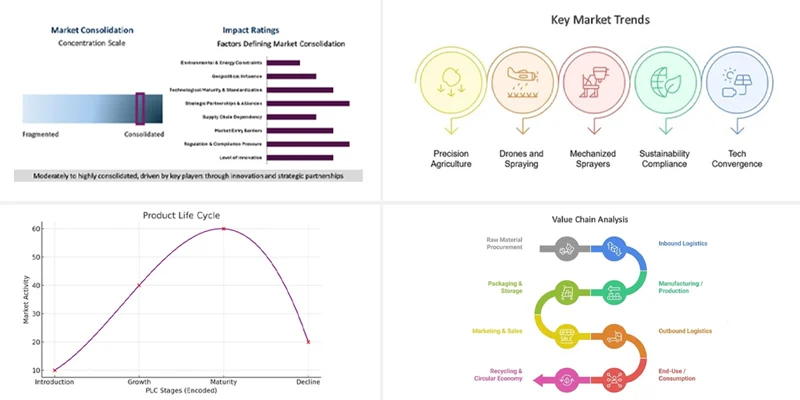

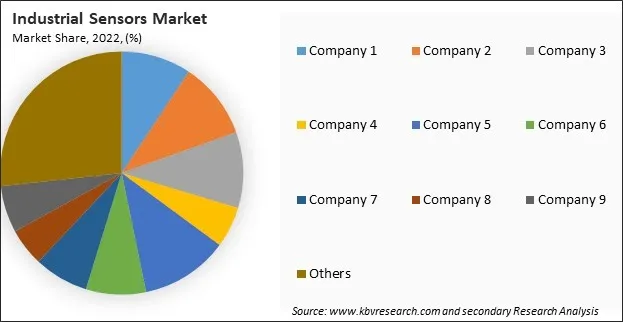
The leading players in the market are competing with diverse innovative offerings to remain competitive in the market. The above illustration shows the percentage of revenue shared by some of the leading companies in the market. The leading players of the market are adopting various strategies to cater demand coming from the different industries. The key developmental strategies in the market are Acquisitions, and Partnerships & Collaborations.
Free Valuable Insights: Industrial Sensors Market size to reach USD 54.62 Billion by 2032
Based on packaging type, the industrial sensors market is characterized into unpotted and potted. The potted segment attained 37% revenue share in the industrial sensors market in 2024. Potted industrial sensors are valued for their enhanced durability, as the encapsulation process provides protection against moisture, vibration, dust, and harsh operating conditions. This packaging type supports consistent sensor performance in demanding industrial settings such as heavy manufacturing, energy, and outdoor installations.
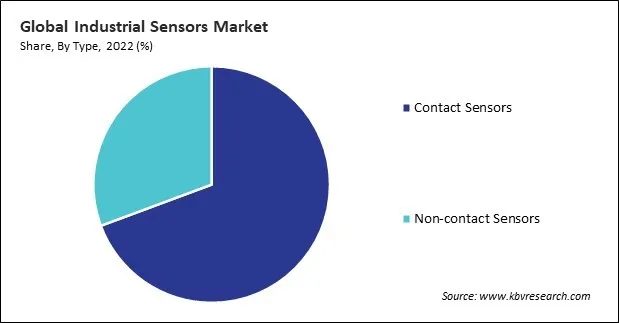
On the basis of type, the industrial sensors market is classified into contact sensors and non-contact sensors. Non-contact sensors are designed to detect and measure physical parameters without direct interaction with the target, making them ideal for applications involving high-speed processes, fragile materials, or extreme operating conditions. Their use is prominent in automation systems, robotics, safety monitoring, and advanced manufacturing environments, where minimizing wear, contamination, and mechanical stress is critical.
Region-wise, the industrial sensors market is analyzed across North America, Europe, Asia Pacific, and LAMEA. The Asia Pacific segment gained 35% revenue share in the industrial sensors market in 2024. In North America and Europe regions, the industrial sensors market is anticipated to growth at a significant rate. The market expansion is supported by strong adoption of automation, advanced manufacturing infrastructure, smart factory technologies, and integration of IIoT and predictive maintenance. Canada and the United States are key contributors for the market with high demand in aerospace, automotive, pharmaceuticals, and energy sectors, shaped by efficiency regulations, stringent safety, and heavy R&D investment. The regional market continued to grow because of its focus on digital transformation and innovation within industrial operations. Moreover, Europe fire truck market experiences growth with substantial deployment of sensor systems across machinery, automotive, chemical, and renewable energy industries. Nations such as France, Germany, and the UK are leading sensor adoption through Industry 4.0 initiatives and sustainability targets, where environmental compliance sensors and real-time monitoring sensors are largely required. Also, Europe’s strong regulatory environment and focus on energy efficiency support the continued growth of advanced sensing solutions.
The industrial sensors market is projected to capture prominent market share in the Asia Pacific and LAMEA region. This is because of expanding manufacturing bases, rapid industrialization, and large-scale automation investment in India, Japan, China, and South Korea. The region’s government initiatives such as China’s industrial modernization programs, adoption of smart manufacturing, and robust growth in automotive and electronic sectors, contribute to market’s expansion. Adoption of IIoT and predictive technologies also accelerates demand for advanced sensor solutions. Furthermore, the LAMEA industrial sensors market is experiencing growth. This is because of increasing industrialization and infrastructure projects. Also, the demand for sensors is growing in mining, utilities, oil & gas, and manufacturing applications, especially in countries like Mexico, Saudi Arabia, Brazil, and the UAE. Ongoing investments in smart technology integration and automation are offering lucrative opportunities for industrial sensor deployment.
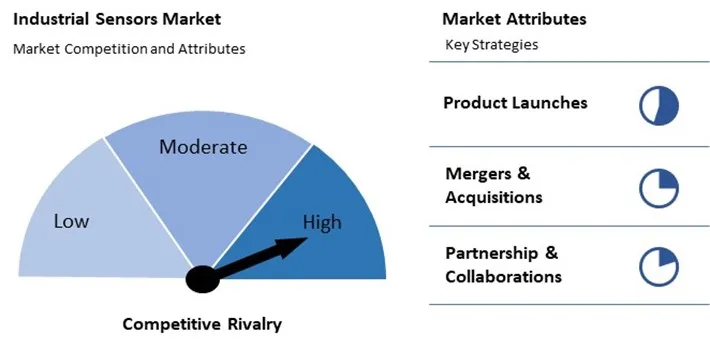
Competition in the industrial sensors market is intense, driven by rapid technological advancements and increasing demand for automation across industries. Players focus on innovation, quality, and cost-efficiency to differentiate offerings. Market rivalry pushes continuous improvement in sensor accuracy, connectivity, and integration with IoT and AI systems. Price pressures persist as suppliers vie for large contracts, while customization and after-sales support have become key competitive factors. Strategic partnerships and regional expansion further shape the competitive landscape.
| Report Attribute | Details |
|---|---|
| Market size value in 2025 | USD 29.12 Billion |
| Market size forecast in 2032 | USD 54.62 Billion |
| Base Year | 2024 |
| Historical Period | 2021 to 2023 |
| Forecast Period | 2025 to 2032 |
| Revenue Growth Rate | CAGR of 9.4% from 2025 to 2032 |
| Quantitative Data | Volume in Thousand Units, Revenue in USD Billion, and CAGR from 2025 to 2032 |
| Number of Pages | 824 |
| Number of Tables | 1038 |
| Report coverage | Market Trends, Revenue Estimation and Forecast, Segmentation Analysis, Regional and Country Breakdown, Competitive Landscape, Market Share Analysis, Porter’s 5 Forces Analysis, Company Profiling, Companies Strategic Developments, SWOT Analysis, Winning Imperatives |
| Segments covered | Packaging Type, Type, End User, Sensor Type, Region |
| Country scope |
|
| Companies Included | Rockwell Automation, Honeywell International, Texas Instruments Incorporated, Panasonic, STMicroelectronics, TE Connectivity, Siemens, Amphenol Corporation, Bosch Sensortec, and Dwyer Instruments LLC |
By Packaging Type
By End User
By Type
By Sensor Type
By Geography
The market size is projected to reach USD 54.62 Billion by 2032.
The industrial sensors market is projected to grow at a CAGR of 9.4% between 2025 and 2032.
Integration of Industrial Internet of Things and real-time data connectivity, coupled with accelerating industrial automation and smart manufacturing, is driving market growth.
Rockwell Automation, Honeywell International, Texas Instruments Incorporated, Panasonic, STMicroelectronics, TE Connectivity, Siemens, Amphenol Corporation, Bosch Sensortec, and Dwyer Instruments LLC
The Contact Sensors segment led the Global Industrial Sensors Market by Type in 2024; thereby, achieving a market value of $34.14 billion by 2032.
The Asia Pacific market dominated the Global Industrial Sensors Market by Region in 2024, and would continue to be a dominant market till 2032; thereby, achieving a market value of $19.78 billion by 2032.
Our team of dedicated experts can provide you with attractive expansion opportunities for your business.













 Unique Offerings