“Global Healthcare Interoperability Solutions Market to reach a market value of USD 11.22 Billion by 2032 growing at a CAGR of 13.5%”
The Global Healthcare Interoperability Solutions Market size is expected to reach USD 11.22 billion by 2032, rising at a market growth of 13.5% CAGR during the forecast period.
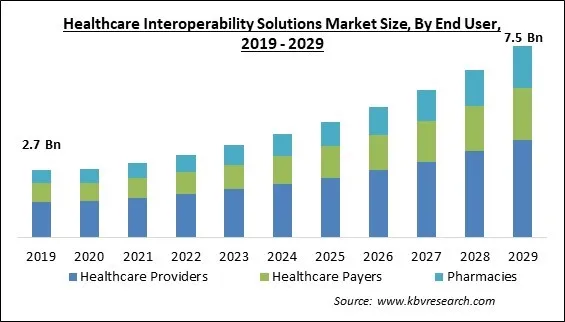
Healthcare interoperability is the ability of different healthcare information devices, systems, and applications to securely exchange and use electronic health data so that information can follow patients effortlessly across care settings. It has developed from basic, manual data sharing into advanced digital frameworks that allow real-time connectivity among electronic health records, imaging systems, labs, payers, and patient-facing tools. Policy milestones like the 21st Century Cures Act in the US, and the HITECH Act, alongside global digital health initiatives, have surged adoption by promoting HER use, encouraging standardized data exchange, and discouraging information blocking. Open standards such as FHIR have become central to this transformation, allowing modern APIs and consistent data formats that support vendor-agnostic interoperability, scalable across healthcare ecosystems.
Interoperability is being shaped by regulatory mandates, a rising focus on patient-centered, integrated care, and widespread FHIR adoption. Regulators and governments drive adoption through certification programs, patient data access policies, and open API requirements, while technology providers invest in cloud-based, secure platforms and advanced governance frameworks. Market competition includes traditional health IT vendors, API-focused firms, and cloud providers, with differentiation based on ecosystem partnerships, standards compliance, data security, and analytics capabilities. In conclusion, interoperability has moved beyond data exchange to become a strategic enabler of reduced administrative burden, enhanced care coordination, and fully connected healthcare networks globally.
The major strategies followed by the market participants are Partnerships as the key developmental strategy to keep pace with the changing demands of end users. For instance, In October, 2025, InterSystems Corporation teamed up with Google Cloud to integrate HealthShare with Google Cloud’s Healthcare API, creating a scalable, real time, harmonised data foundation that strengthens data interoperability and enables healthcare organisations to leverage unified data for AI driven analytics and improved clinical and operational outcomes. Additionally, In September, 2025, Koninklijke Philips N.V. teamed up with Masimo to integrate advanced Masimo monitoring technologies into Philips’ patient monitoring platforms. The collaboration enhances interoperability by unifying measurement data from diverse monitoring devices, simplifying clinical workflows and supporting connected care delivery.
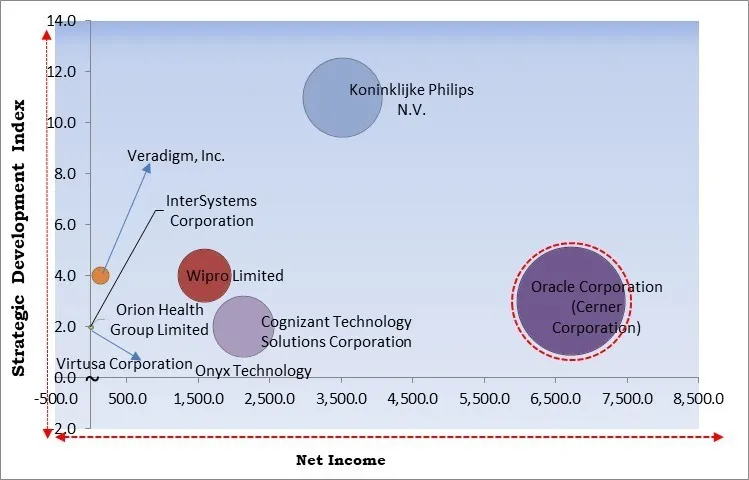
Based on the Analysis presented in the KBV Cardinal matrix; Oracle Corporation is the forerunner in the Healthcare Interoperability Solutions Market. Companies such as IBM Corporation, Cognizant Technology Solutions Corporation, and GE HealthCare Technologies Inc. are some of the key innovators in Healthcare Interoperability Solutions Market. In October, 2025, GE HealthCare Technologies Inc. teamed up with Queen’s Health Systems and Duke Health to co-develop a cloud-first, AI-driven hospital operations platform within its CareIntellect suite. The solution will leverage predictive analytics to improve patient flow, decision-making, and operational interoperability, with frontline expertise guiding real-time insights for smarter care delivery.
At the beginning of COVID-19, the Healthcare Interoperability Solutions Market slowed down a bit because healthcare providers put more focus on emergency response and critical care than on updating their IT systems. Budget changes, operational uncertainty, and implementation problems caused many interoperability projects to be put on hold. As the pandemic went on, it became clear that fragmented data systems had problems, which showed how important it is for healthcare facilities to be able to share data without any problems. Interoperability became a key factor in being able to keep track of patient data, test results, and vaccination records. Later, government funding and flexible rules sped up the use of interoperable platforms. Investments in digital health infrastructure made it possible for telehealth integration and real-time data exchange. Overall, the pandemic showed how important interoperability is for business strategy, putting the market on a stronger path to growth after the pandemic. Thus, the COVID-19 pandemic had an initially negative but ultimately positive impact on the Healthcare Interoperability Solutions Market.

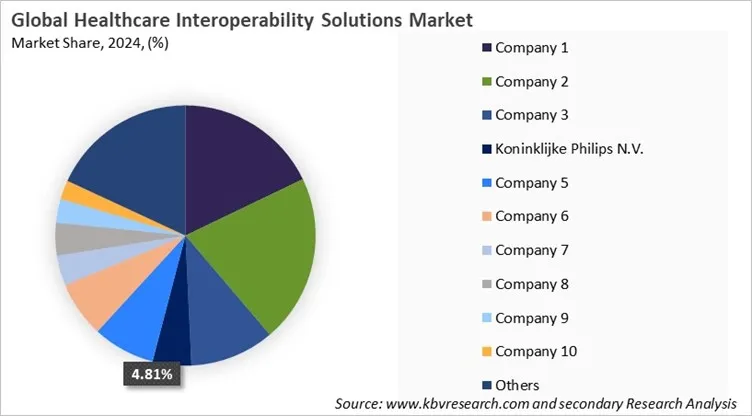
The leading players in the market are competing with diverse innovative offerings to remain competitive in the market. The above illustration shows the percentage of revenue shared by some of the leading companies in the market. The leading players of the market are adopting various strategies to cater demand coming from the different industries. The key developmental strategies in the market are Acquisitions, and Partnerships & Collaborations.
Free Valuable Insights: Healthcare Interoperability Solutions Market size to reach USD 11.22 Billion by 2032
Based on type market is characterized into services and software. The software segment attained 48% revenue share in the healthcare interoperability solutions market in 2024. Interoperability software enables seamless data exchange across EHRs, laboratories, imaging systems, enterprise platforms, and health information exchanges. The shift toward cloud-based, API-driven, and standards-compliant solutions has accelerated software adoption worldwide.
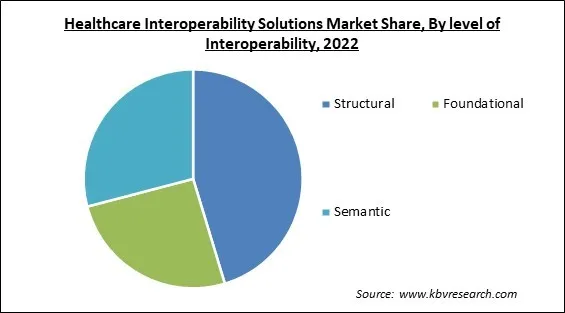
On the basis of level of interoperability, the healthcare interoperability solutions market is classified into structural, foundational, and semantic. The foundational segment recorded 26% revenue share in the healthcare interoperability solutions market in 2024. This level ensures that data can be transmitted from one system to another without addressing interpretation or clinical meaning. Foundational interoperability is widely used in health information networks, public health reporting, and cross-organizational data exchange initiatives.
Region-wise, the healthcare interoperability solutions market is analyzed across North America, Europe, Asia Pacific, and LAMEA. The North America segment recorded the largest revenue share in the healthcare interoperability solutions market in 2024. The healthcare interoperability solutions market is estimated to experience expansion in the North America and Europe region. This is because of high EHR adoption, strong regulatory and governmental support for patient access standards and data exchange, and advanced health IT infrastructure. The US market is driven by federal initiatives such as the broad deployment of FHIR-based APIs, the 21st Century Cures Act, and deep investments from major health IT vendors, whereas Canada also witness steady growth through national digital health programs. Additionally, Europe healthcare interoperability solutions market is anticipated to grow at a steady pace. The market is driven by strong regulatory frameworks such as GDPR protecting data privacy and eHealth initiatives promoting cross-border data exchange, and a well-developed healthcare infrastructure. Regional nations such as France, Germany, and the UK are key contributors investing in standardized interoperability frameworks and national health IT strategies that enhance patient outcomes and care coordination. The region’s focus on harmonized standards and collaborative digital health deployment helps in driving adoption and deeper integration of health information systems across both private and public sectors.
In the Asia Pacific and LAMEA regions, the healthcare interoperability solutions market is anticipated to grow at a significant rate in the upcoming years. The market is driven by increasing government funding for health IT modernization, expanding digital healthcare infrastructure, and rising demand for connected care in countries such as Japan, India, China, Australia, and South Korea. Telehealth expansion, rapid healthcare digitization, and supportive national policies are some of the elements supporting expansion as providers shift from paper-based systems to interoperable digital platforms. Furthermore, the LAMEA healthcare interoperability solutions market is anticipated to expand at a significant rate. The region’s healthcare systems are modernizing with interoperability needs integrated into national digital health strategies, particularly in Brazil. Further, the Middle East and Africa witness increasing investments in healthcare IT and digital transformation as part of broader reforms.
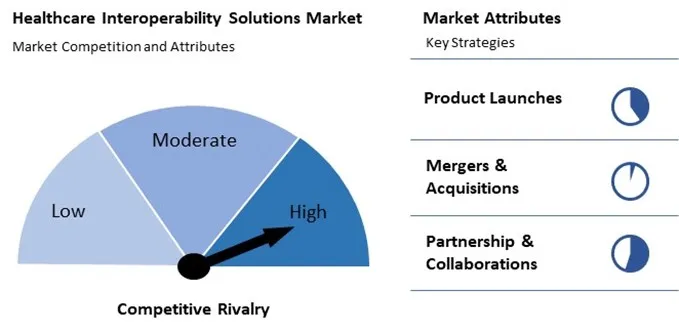
The Healthcare Interoperability Solutions Market is highly competitive, featuring a mix of large health IT vendors, specialized platform providers, system integrators, and emerging digital health companies. Competition is primarily driven by regulatory compliance, adherence to data standards, scalability, cybersecurity capabilities, and integration with diverse healthcare systems. Providers differentiate through cloud-based solutions, multi-platform interoperability, and partnerships with public and private healthcare organizations. Market leaders focus on innovation, standards alignment, and robust support services to secure long-term adoption and maintain a competitive edge.
| Report Attribute | Details |
|---|---|
| Market size value in 2025 | USD 4.62 Billion |
| Market size forecast in 2032 | USD 11.22 Billion |
| Base Year | 2024 |
| Historical Period | 2021 to 2023 |
| Forecast Period | 2025 to 2032 |
| Revenue Growth Rate | CAGR of 13.5% from 2025 to 2032 |
| Number of Pages | 696 |
| Number of Tables | 568 |
| Report coverage | Market Trends, Revenue Estimation and Forecast, Segmentation Analysis, Regional and Country Breakdown, Competitive Landscape, Market Share Analysis, Market Share Analysis, Porter’s 5 Forces Analysis, Company Profiling, Companies Strategic Developments, SWOT Analysis, Winning Imperatives |
| Segments covered | Type, Level of Interoperability, End User, Healthcare Providers Type, Region |
| Country scope |
|
| Companies Included | Oracle Corporation, Epic Systems Corporation, InterSystems Corporation, Koninklijke Philips N.V., Veradigm LLC, IBM Corporation, NextGen Healthcare, Inc., GE HealthCare Technologies Inc., Cognizant Technology Solutions Corporation and Infor, Inc. (Koch Industries) |
By Type
By Interoperability
By End User
By Geography
This Market size is expected to reach USD 11.22 Billion by 2032.
The healthcare interoperability solutions market is projected to grow at a CAGR of 13.5% between 2025 and 2032.
Regulatory mandates and government policy frameworks, alongside growing adoption of EHR systems and digital health infrastructure, are driving market growth.
Oracle Corporation, Epic Systems Corporation, InterSystems Corporation, Koninklijke Philips N.V., Veradigm LLC, IBM Corporation, NextGen Healthcare, Inc., GE HealthCare Technologies Inc., Cognizant Technology Solutions Corporation and Infor, Inc. (Koch Industries)
The Structural segment is generating maximum revenue share in the Global Healthcare Interoperability Solutions Market by Level of Interoperability in 2024; thereby, achieving a market value of $4.62 billion by 2032.
The North America region dominated the Global Healthcare Interoperability Solutions Market by Region in 2024, and would continue to be a dominant market till 2032; thereby, achieving a market value of $4.34 billion by 2032.
Our team of dedicated experts can provide you with attractive expansion opportunities for your business.









 Unique Offerings