“Global Energy Tracking and Monitoring System Market to reach a market value of USD 38.41 Billion by 2032 growing at a CAGR of 7.1%”
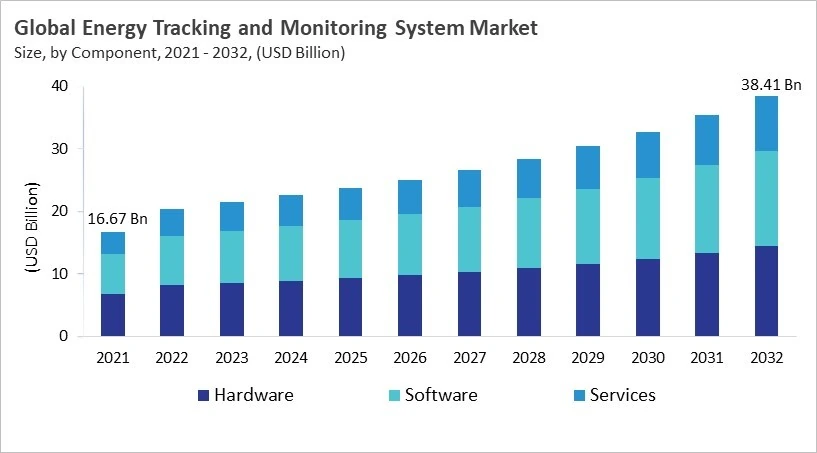
The Global Energy Tracking and Monitoring System Market size is estimated at $23.74 billion in 2025 and is expected to reach $38.41 billion by 2032, rising at a market growth of 7.1% CAGR during the forecast period (2025-2032). Investments in advanced tracking and monitoring systems are going up because of more automation in factories, the growth of smart grids, stricter rules about energy efficiency, and more companies committing to being environmentally friendly. Combining IoT, AI-based analytics, and cloud platforms makes it easier to see what's going on and lowers costs.
Energy tracking and monitoring systems are digital solutions combining IoT sensors, smart meters, cloud-based analytics, and control-integrated tools-designed to analyze, measure, and optimize energy use across commercial, industrial, residential, and utility sectors. Their role has expanded from basic consumption measurement to a strategic enabler of energy efficiency, emissions reduction, and grid stability. Global policy frameworks and standards have played a significant role in this development: The International Energy Agency prioritizes verification and measurement as central to clean energy transitions. Regulatory initiatives in Europe and North America, propelled by bodies like the National Institute of Standards and Technology, the US Department of Energy, and the European Commission, surged interoperability standards, smart meter deployment, and transparent billing, thereby creating a strong infrastructure base for advanced energy intelligence platforms.
The energy tracking and monitoring systems market has further matured through renewable energy integration, industrial digitalization, and sustainability-driven strategies. Leading OEMs, including Schneider Electric, Siemens, Honeywell, and ABB, have shifted to integrated digital ecosystems that embed energy analytics into automation, building systems, and grid management. Key trends shaping the market include cloud integration and IoT for real-time and predictive optimization, advanced metering infrastructure, and rapid expansion of smart metering and net-zero goals through reporting features and carbon accounting. The competitive landscape is largely driven by cybersecurity, platform integration depth, interoperability, and sustainability alignment, as energy monitoring develops from a cost-management tool into a core component of global decarbonization goals and enterprise digital transformation.
The major strategies followed by the market participants are Partnerships as the key developmental strategy to keep pace with the changing demands of end users. For instance, In October, 2021, LG Honeywell International, Inc. and Qualcomm have expanded their partnership to integrate AI and wireless technologies into industrial solutions, enhancing real-time monitoring, data analytics, and efficiency. These innovations support smarter energy tracking, enabling faster, more accurate insights across energy and manufacturing facilities. Moreover, In April, 2025, ABB Ltd. and Samsung Electronics integrate ABB’s InSite energy management system with SmartThings platforms, enhancing energy tracking, load management, and smart appliance control. This collaboration boosts energy efficiency, offers real-time insights, and simplifies energy monitoring for residential and light commercial buildings.
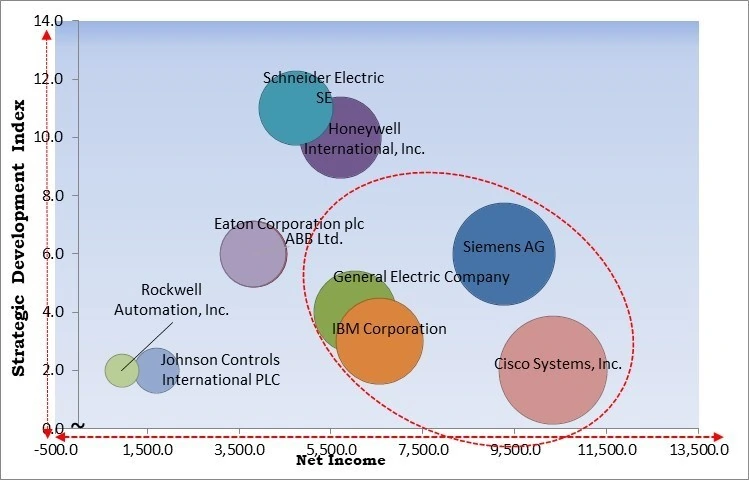
Based on the Analysis presented in the KBV Cardinal matrix; Cisco Systems, Inc., Siemens AG, General Electric Company and IBM Corporation are the forerunners in the Energy Tracking and Monitoring System Market. In October, 2024, Cisco Systems, Inc. and Honeywell partnered to optimize building energy use through AI-powered systems that adjust HVAC, lighting, and ventilation based on real-time occupancy. The solution improves energy efficiency, reduces emissions, and enhances comfort, supporting environmental goals and hybrid work models. Companies such as Honeywell International, Inc. and Schneider Electric SE are some of the key innovators in Energy Tracking and Monitoring System Market.
The COVID-19 pandemic harmed the Energy Tracking and Monitoring System Market because widespread lockdowns and operational restrictions made it hard for businesses and industries to do business, which led to a drop in demand for new installations right away. Supply chain problems, like the lack of electronic parts and logistical issues, slowed down ongoing projects and made it more expensive for vendors and integrators to do business. Because of financial uncertainty, businesses had to put off capital-intensive energy optimization projects, especially small and medium-sized businesses. Also, a lack of workers and problems getting to the site made it hard to install, maintain, and integrate services. All of these things together slowed the growth of the market and kept it from growing as quickly during the peak phases of the pandemic. Thus, the COVID-19 pandemic had a negative impact on the market.

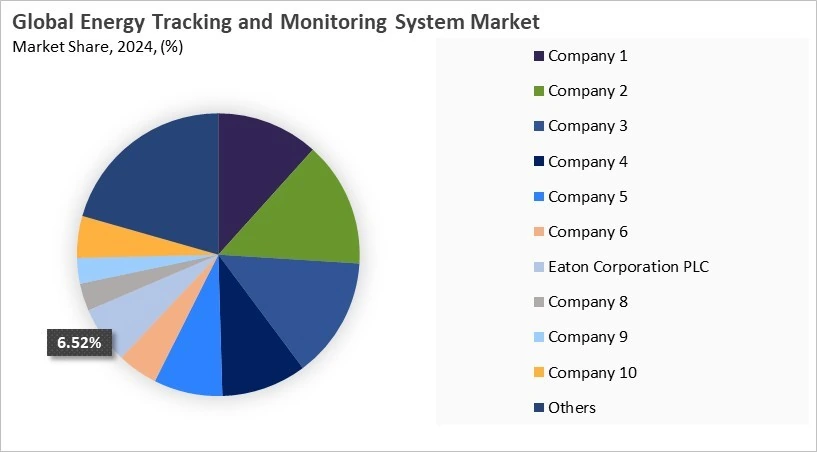
The leading players in the market are competing with diverse innovative offerings to remain competitive in the market. The above illustration shows the percentage of revenue shared by some of the leading companies in the market. The leading players of the market are adopting various strategies in order to cater demand coming from the different industries. The key developmental strategies in the market are Acquisitions, and Partnerships & Collaborations.
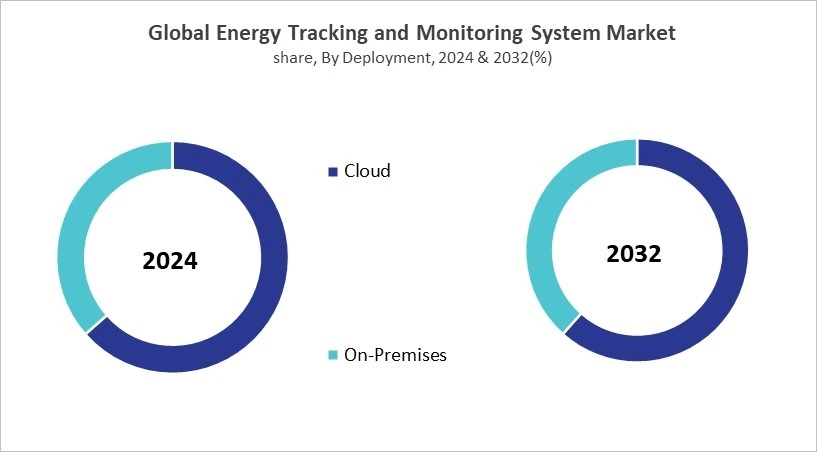
Based on Deployment, the market is segmented into Cloud, and On-Premises. The On-Premises segment acquired 36% revenue share in the market in 2024. This deployment model remains relevant for organizations that prioritize complete control over data management, system customization, and internal security protocols. On-premises solutions are often implemented by enterprises operating in highly regulated industries where data sovereignty and privacy are critical concerns.
Based on Component, the market is segmented into Hardware, Software, and Services. The Software segment attained 39% revenue share in the market in 2024. Software platforms serve as the analytical and visualization backbone of energy management systems, transforming raw consumption data into actionable insights. These solutions provide centralized dashboards, automated reporting tools, predictive analytics, and performance benchmarking capabilities that help organizations optimize energy usage. Increasing adoption of cloud computing and artificial intelligence technologies has significantly enhanced the analytical depth and scalability of software platforms.
Free Valuable Insights: Energy Tracking and Monitoring System Market Size to reach $38.41 by 2032
Region-wise, the energy tracking and monitoring system market is analyzed across North America, Europe, Asia Pacific, and LAMEA. The Asia Pacific segment recorded 34% revenue share in the market in 2024. The energy tracking and monitoring systems market is anticipated to grow at a significant rate in North America. The growth is supported by grid modernization programs, strong regulatory support, and high technology adoption. Regional nations leverage smart grid investments, advanced metering infrastructure, and strict energy efficiency standards to expand deployment across commercial buildings, utilities, and industrial facilities. Integration of IoT sensors, cloud-based analytics, and predictive platforms is propelled by demand for real-time visibility, decarbonization goals, and demand response capabilities. Furthermore, Europe energy tracking and monitoring systems market is expanding rapidly. The market is driven by sustainability mandates and aggressive energy efficiency, with widespread smart meter rollouts supported by national governments and the European Union. European nations emphasize transparent billing, consumer awareness, and strict performance reporting, fuelling adoption in both commercial and residential segments.
In the Asia Pacific region, the energy tracking and monitoring systems market is predicted to capture a prominent share. This is owing to rising energy demand, urbanization, and rapid industrialization across the region. Regional nations are expanding digital energy solutions and smart infrastructure to enhance efficiency and support renewable integration. Additionally, increasing focus on electrification, smart cities, and sustainability commitments propel demand for integrated monitoring platforms, leading to market expansion. Likewise, the LAMEA energy tracking and monitoring systems market is growing at a steady pace. Energy tracking systems are largely adopted in utilities and major industrial sectors to reduce losses, support renewable penetration, and address reliability challenges. Public-private partnerships and government initiatives in nations with grid modernization agendas are driving investments.
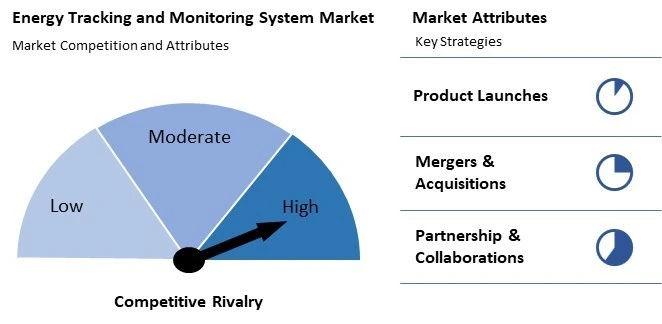
Energy Tracking and Monitoring involves a Lot of competition. The system market is very competitive because there is a growing need for energy-efficient solutions and new technologies. Players are trying to stand out by being innovative, customizable, and able to work with larger energy management platforms. Competition in the market drives constant improvements in features, user experience, and customer service. Strategic partnerships, changing standards, and more industries using them all make competition even stronger. This creates a dynamic environment where companies are always trying to improve their capabilities and value propositions.
| Report Attribute | Details |
|---|---|
| Market size value in 2025 | USD 23.74 Billion |
| Market size forecast in 2032 | USD 38.41 Billion |
| Base Year | 2024 |
| Historical period | 2021 to 2023 |
| Forecast Period | 2025 to 2032 |
| Revenue Growth Rate | CAGR of 7.1% from 2025 to 2032 |
| Number of Pages | 612 |
| Tables | 459 |
| Report Coverage | Market Trends, Revenue Estimation and Forecast, Segmentation Analysis, Regional and Country Breakdown, Competitive Landscape, Market Share Analysis, Porter’s 5 Forces Analysis, Company Profiling, Companies Strategic Developments, SWOT Analysis, Winning Imperatives |
| Segments Covered | Deployment, Component, Application, End-User, Region |
| Country Scope |
|
| Companies Included | Honeywell International, Inc., Schneider Electric SE, Siemens AG, ABB Ltd., Johnson Controls International PLC, General Electric Company, Eaton Corporation plc, Cisco Systems, Inc., IBM Corporation, and Rockwell Automation, Inc. |
By Deployment
By Component
By Application
By End-User
By Geography
Our team of dedicated experts can provide you with attractive expansion opportunities for your business.






 Unique Offerings