“Global Digital Asset Custody Market to reach a market value of USD 3.24 Trillion by 2032 growing at a CAGR of 22%”
The Global Digital Asset Custody Market size is expected to reach USD 3.24 Trillion by 2032, rising at a market growth of 22.0% CAGR during the forecast period.
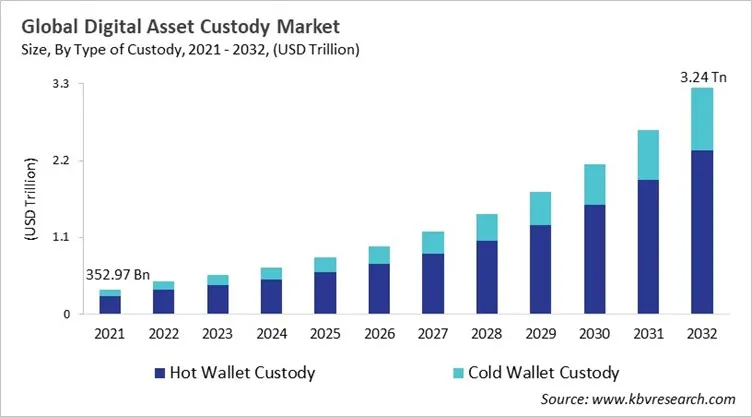
Digital asset custody has developed as a crucial part of developing digital finance ecosystem, shifting from simple cryptocurrency storage to a fully institutionalised service unveiling blockchain-based and tokenized markets. The digital asset custody market’s development has been supported by regulatory clarity, increasing institutional participation, and technological maturity. Innovations like cold storage, multi-signature wallets, and cryptographic controls have made secure large-scale custody viable. With traditional financial institutions largely embracing tokenization, and digital assets, custody has become essential infrastructure-combining the governance, trust, and risk management of finance with the technological agility required for blockchain-based operations.
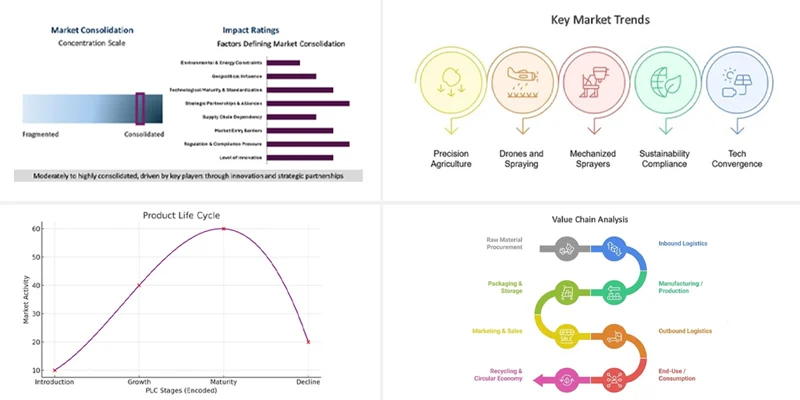
The digital asset custody market is experiencing an intensely competitive landscape as fintech innovators, crypto-native custodians, and traditional financial institutions converge. Key market players are expanding geographically, embedding institutional trust frameworks, and obtaining regulatory licences to attract large-scale investors. Companies offering end-to-end custody ecosystems, enterprise integration, and cross-chain compatibility are well-positioned to capture institutional demand. Key market players excel in technological agility, mature banks leverage regulatory strength and brand credibility, leading to collaboration and market consolidation. With custody services evolving from safekeeping to active infrastructure allowing tokenized finance, players combining innovation, compliance, and scale will lead the market.
The COVID-19 pandemic made it harder to keep digital assets safe because more people were working from home, which increased cybersecurity and key-management risks. The market was also very unstable, which made operational and counter-party risks worse. Regulators started to pay more attention to measures that would help keep the economy stable, which took resources and attention away from creating frameworks for digital-asset custody. Because of this, progress in this area was slowed down for new ideas and improvements to infrastructure. Institutional investors became more careful and put off new digital-asset strategies because of uncertainty and a lack of clear regulations. The lack of strong licensing and oversight frameworks made it even harder for growth and institutional adoption to happen. In general, the pandemic showed that digital asset custody systems had weaknesses and slowed their progress toward more financial integration. Thus, the COVID-19 pandemic had a negative impact on the market.

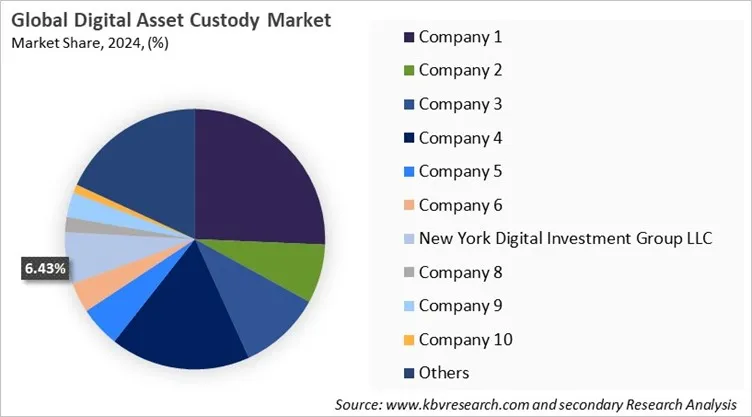
The leading players in the market are competing with diverse innovative offerings to remain competitive in the market. The above illustration shows the percentage of revenue shared by some of the leading companies in the market. The leading players of the market are adopting various strategies in order to cater demand coming from the different industries. The key developmental strategies in the market are Acquisitions, and Partnerships & Collaborations.
Based on type of custody, the digital asset custody market is characterized into hot wallet custody and cold wallet custody. The cold wallet custody segment attained 26% revenue share in the digital asset custody market in 2024. In contrast, the cold-wallet custody category, often referenced in regulatory guidance as “offline storage” or “deep-cold” vaulting, catered to clients whose priority was long-term safekeeping rather than day-to-day liquidity. Government and public-sector reports highlighted that cold-storage solutions, typically disconnected from the internet and often located in geographically secure facilities, played a critical role in mitigating cyber-intrusion risk, safeguarding high-value holdings and supporting fiduciary-style custody mandates.
On the basis of deployment, the digital asset custody market is classified into cloud-based and on-premise. The on-premise segment recorded 40% revenue share in the digital asset custody market in 2024. The on-premise deployment model saw custodians installing and managing all infrastructure within their own data centres or secure facilities, thereby retaining maximum direct control over hardware, networking, key-storage devices, and client-asset segregation. Public-sector commentary noted that this approach appealed especially to entities with stringent regulatory obligations, heightened security mandates or needs for strict data-governance oversight.

Free Valuable Insights: Global Digital Asset Custody Market size to reach USD 3.24 Trillion by 2032
Region-wise, the digital asset custody market is analyzed across North America, Europe, Asia Pacific, and LAMEA. The North America segment recorded 39% revenue share in the digital asset custody market in 2024. The digital asset custody market is predicted to experience prominent growth in the North America and Europe region. North America benefits from a strong ecosystem of institutional investors and a rapidly developing regulatory environment. Trusted companies, fintech firms, and large banks are actively entering the market, supported by regulatory guidance from entities such as OCC, SEC, and FINRA, which are clarifying rules around digital-asset tokenized and safekeeping securities. The US and Canada host several licensed custodians offering insurance coverage, audit frameworks, and institutional-grade security. Moreover, the European market is driven by regulatory alignment through frameworks like MiCA is creating a transparent and unified landscape, encouraging both crypto-native firms and traditional custodians to expand their offerings. The UK, Switzerland, and the European Union are developing as strategic hubs, with strong governance standards and a focus on investor protection, supporting the market adoption.
In the Asia Pacific and LAMEA regions, the digital asset custody market is anticipated to grow at a substantial rate in the upcoming years. This is because of blockchain innovation, rising regulatory openness, and rapid digitalization. In the Asia Pacific, nations like Japan, Singapore, South Korea, and Hong Kong are establishing themselves as key digital asset financial centers, providing licensing regimes that balance innovation. Institutional adoption is rapidly increasing, backed by fintech firms and banks integrating custody solutions with trading services. Additionally, the LAMEA digital asset custody market is growing substantially, with regional regulators formalizing crypto-custody frameworks. The Middle East region is offering positive opportunities with progressive regulations and collaborations with global custodians and regional firms. Also, regulatory evolution, technological innovation, and rising institutional confidence are supporting expansion for digital asset custody market.
| Report Attribute | Details |
|---|---|
| Market size value in 2025 | USD 807.5 Billion |
| Market size forecast in 2032 | USD 3.24 Trillion |
| Base Year | 2024 |
| Historical Period | 2021 to 2023 |
| Forecast Period | 2025 to 2032 |
| Revenue Growth Rate | CAGR of 22.0% from 2025 to 2032 |
| Number of Pages | 586 |
| Number of Tables | 561 |
| Report coverage | Market Trends, Revenue Estimation and Forecast, Segmentation Analysis, Regional and Country Breakdown, Market Share Analysis, Porter’s 5 Forces Analysis, Company Profiling, Companies Strategic Developments, SWOT Analysis, Winning Imperatives |
| Segments covered | Type of Custody, Deployment, Asset Type, End-use, Service Type, Region |
| Country scope |
|
| Companies Included | Coinbase Global, Inc., Anchorage Digital (Anchor Labs, Inc.), Fidelity Digital Asset Services, LLC, Fireblocks Inc., Ledger SAS, Bitcoin Suisse AG, New York Digital Investment Group LLC, Cactus Custody Holding Company, Sygnum Bank AG, Tangany GmbH |
By Type of Custody
By Deployment
By Asset Type
By End-use
By Service Type
By Geography
This Market size is expected to reach USD 3.24 Billion billion by 2032.
The digital asset custody market is projected to grow at a CAGR of 22% between 2025 and 2032.
Institutional adoption of digital assets driven by increasing regulatory clarity and established frameworks.
Coinbase Global, Inc., Anchorage Digital (Anchor Labs, Inc.), Fidelity Digital Asset Services, LLC, Fireblocks Inc., Ledger SAS, Bitcoin Suisse AG, New York Digital Investment Group LLC, Cactus Custody Holding Company, Sygnum Bank AG, Tangany GmbH.
The Cloud-based segment dominated the Global Digital Asset Custody Market by Deployment in 2024; thereby, achieving a market value of $1.94 trillion by 2032.
The North America market dominated the Global Digital Asset Custody Market by Region in 2024, and would continue to be a dominant market till 2032; thereby, achieving a market value of $1,215.5 Billion by 2032.
Our team of dedicated experts can provide you with attractive expansion opportunities for your business.








 Unique Offerings