The sample copy of this report is available for access.
“Global Arcade Games Center Market to reach a market value of USD 29.89 Billion by 2033 growing at a CAGR of 10.7%”
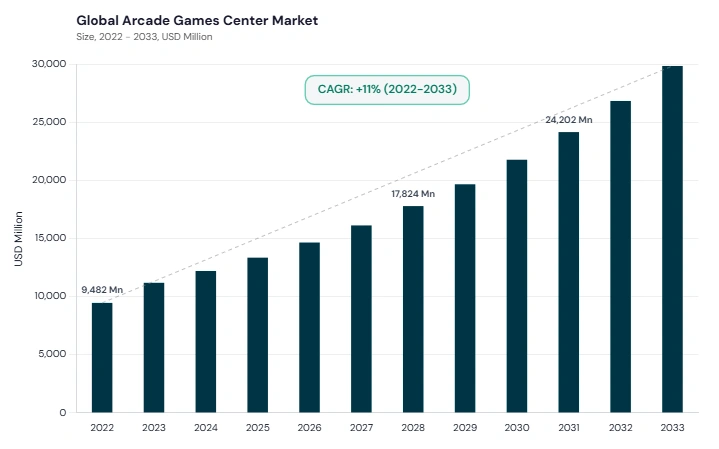
The Global Arcade Games Center Market size is expected to reach USD 29.89 Billion by 2033, rising at a market growth of 10.7% CAGR during the forecast period.
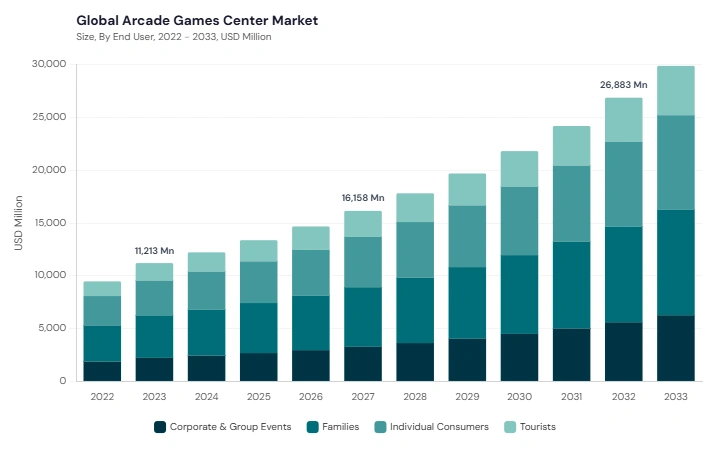
The market is witnessing strong momentum due to rising demand for immersive out-of-home entertainment experiences. Increasing integration of VR, AR, simulation gaming, and social gaming formats is further supporting the expansion of arcade gaming centers globally. Growing investments in family entertainment centers, shopping mall entertainment zones, and competitive gaming experiences are also contributing to market growth during the forecast period.
The Global Arcade Games Center Market has evolved significantly from traditional coin-operated gaming venues into integrated entertainment destinations offering immersive and socially engaging experiences. Early arcade centers primarily focused on mechanical and electronic gaming machines, but the market has steadily transformed with advancements in digital gaming technologies, motion simulation systems, virtual reality, and multiplayer interactive experiences. The growing popularity of experiential entertainment among families, teenagers, and young adults has further accelerated the modernization of arcade gaming environments worldwide.
Today, technologies such as virtual reality (VR), augmented reality (AR), AI-powered gaming systems, interactive LED installations, and connected gaming ecosystems are reshaping the arcade industry. Arcade operators are increasingly integrating digital payment systems, real-time multiplayer competitions, and loyalty-based engagement platforms to improve customer retention and revenue generation. Additionally, the expansion of eatertainment concepts and family entertainment centers is positioning arcade venues as broader recreational hubs rather than standalone gaming centers.
The major strategies followed by the market participants are Expansion and Technology Integration as the key developmental strategies to strengthen customer engagement and improve market positioning. For instance, in June 2025, Dave & Buster’s introduced a nationwide tech-powered leaderboard system enabling players across locations to compete for rewards and rankings, enhancing customer engagement and competitive gameplay experiences. Additionally, in April 2026, KidZania partnered with Kaspersky Lab to launch a cybersecurity-themed interactive role-play experience that combines digital education with immersive entertainment, strengthening customer engagement and innovation within entertainment venues.
The COVID-19 pandemic had a significantly negative impact on the Arcade Games Center Market due to widespread lockdowns, social distancing restrictions, and temporary closure of entertainment venues across the globe. Since arcade centers heavily depend on physical customer footfall and in-person engagement, the sudden operational shutdowns resulted in sharp revenue declines for operators.
Additionally, consumers increasingly shifted toward home-based gaming platforms, including online gaming, consoles, and mobile gaming applications during the pandemic period. The prolonged closure of entertainment venues also created financial pressure on arcade operators due to ongoing maintenance costs, lease expenses, and employee management challenges. Even after reopening, customer concerns regarding hygiene and shared gaming equipment continued to affect foot traffic and operational efficiency. Thus, the COVID-19 pandemic had a negative impact on the market.
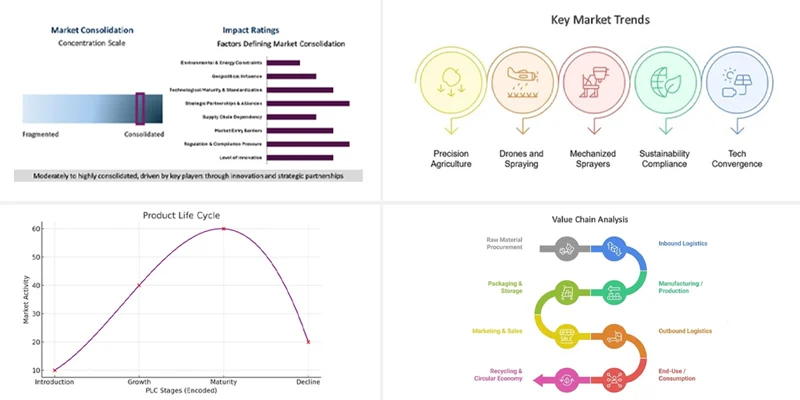

The global Arcade Games Center Market is highly fragmented with the presence of numerous regional operators and entertainment companies across different geographies. The top companies collectively account for approximately 46.3% of the global market share, while regional and independent operators continue to hold a substantial share due to the location-based nature of arcade entertainment businesses.
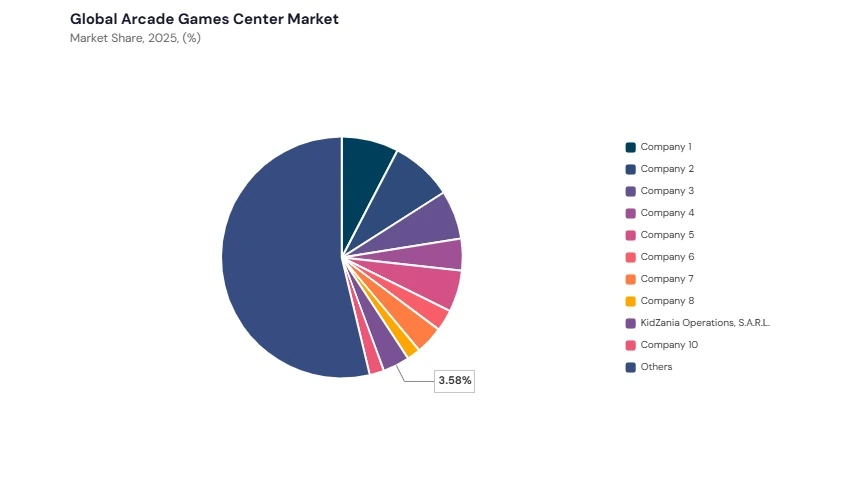
Dave & Buster’s Entertainment, Inc. holds a leading position in the organized arcade entertainment segment with an estimated market share of 8.3% in 2025, supported by its strong eatertainment business model and extensive presence across North America. Timezone Entertainment and Round One Entertainment also maintain strong market positions, particularly across Asia Pacific and the United States. Meanwhile, companies such as Bandai Namco Holdings Inc. and Sega Sammy Holdings Inc. continue to strengthen their market presence through vertically integrated gaming operations and continuous investment in immersive gaming technologies.
The market is witnessing growing investments in VR gaming zones, multiplayer simulation platforms, esports-based attractions, and digital engagement ecosystems. Increasing demand for family entertainment experiences and social gaming concepts is expected to further intensify competition and support long-term market growth globally.
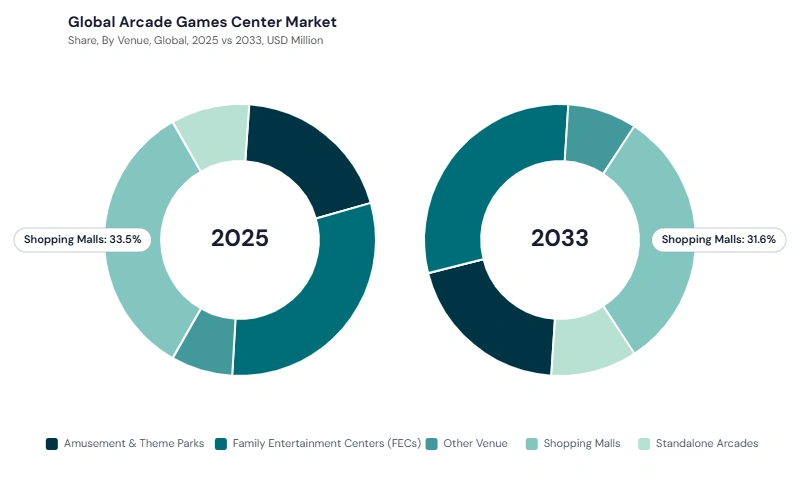
On the basis of venue, the arcade games center market is classified into Shopping Malls, Family Entertainment Centers (FECs), Amusement & Theme Parks, Standalone Arcades, and Other Venue. The Shopping Malls segment acquired the largest revenue share in the arcade games center market in 2025. The dominance of this segment is driven by increasing consumer footfall across retail destinations and growing integration of entertainment facilities within shopping complexes. Family entertainment centers also recorded a significant market share due to increasing consumer demand for immersive and all-in-one recreational experiences.
Based on type, the arcade games center market is classified into Video Games, Redemption Games, Electro-Mechanical Games, Simulation Games, Pinball & Retro Arcade Games, and Other Type. The Video Games segment acquired the largest revenue share of 32.48% in 2025 owing to rising demand for multiplayer gaming, VR-based attractions, and interactive digital gaming experiences. Redemption games also continue to witness strong adoption due to reward-driven engagement models and family-oriented entertainment preferences.
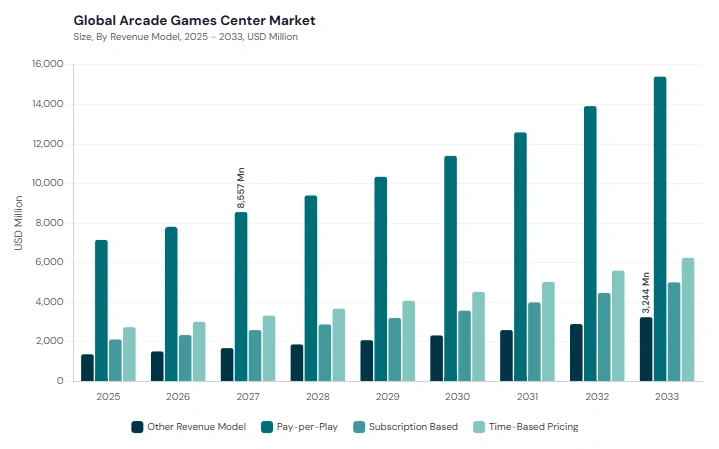
By revenue model, the arcade games center market is divided into Pay-per-Play, Subscription Based, Time-Based Pricing, and Other Revenue Model. The Pay-per-Play segment recorded the largest revenue share of 53.44% in 2025 due to its affordability, flexibility, and widespread consumer preference for individual gaming sessions. Time-based pricing models are also gaining traction among entertainment venues as they encourage longer customer engagement and increased gaming participation.
On the basis of end user, the arcade games center market is segmented into Families, Individual Consumers, Corporate & Group Events, and Tourists. The Families segment acquired the largest revenue share of 35.42% in 2025 owing to growing consumer preference for shared recreational activities and family-oriented entertainment experiences. Arcade gaming venues are increasingly being used for celebrations, social gatherings, and group entertainment activities, further supporting segment growth.
Free Valuable Insights: Arcade Games Center Market Size to reach $29.89 Billion by 2033
Region-wise, the Arcade Games Center Market is analyzed across North America, Europe, Asia Pacific, and LAMEA. The North America segment recorded the largest revenue share of 37.90% in 2025 due to the presence of advanced entertainment infrastructure, high consumer spending on leisure activities, and strong adoption of immersive gaming technologies.
Asia Pacific is expected to witness significant growth during the forecast period due to rising urbanization, growing gaming culture, and increasing investments in family entertainment infrastructure across countries such as Japan, China, South Korea, and India. Europe also continues to witness steady growth driven by expanding arcade entertainment venues and rising consumer interest in social gaming experiences.
The Arcade Games Center Market is highly competitive and characterized by increasing focus on immersive gaming technologies, customer engagement platforms, and integrated entertainment concepts. Competition primarily revolves around innovation in VR gaming, simulation experiences, multiplayer gaming systems, and interactive digital environments. Operators are also investing in AI-enabled analytics, cloud-connected gaming infrastructure, and mobile-based loyalty systems to improve customer retention and operational efficiency.
The market includes a mix of global entertainment brands, regional arcade chains, and independent operators competing across various customer demographics and entertainment formats. Partnerships with technology providers, gaming developers, and entertainment brands continue to influence competitive positioning and long-term market expansion strategies.
| Report Attribute | Details |
|---|---|
| Market size value in 2026 | USD 14.68 Billion |
| Market size forecast in 2033 | USD 29.89 Billion |
| Base Year | 2025 |
| Historical period | 2021 to 2024 |
| Forecast Period | 2026 to 2033 |
| Revenue Growth Rate | CAGR of 10.7% from 2026 to 2033 |
| Number of Pages | 739 |
| Tables | 900 |
| Report Coverage | Market Trends, Revenue Estimation and Forecast, Segmentation Analysis, Regional and Country Breakdown, Competitive Landscape, Market Share Analysis, Porter’s 5 Forces Analysis, Company Profiling, Companies Strategic Developments, SWOT Analysis, Winning Imperatives |
| Segments Covered | Type, Revenue Model, Venue, End User, Region |
| Country Scope |
|
| Companies Included | Dave & Buster’s Entertainment, Inc., Timezone Entertainment Pvt. Ltd., Round One Entertainment Inc., Bandai Namco Holdings Inc., Sega Sammy Holdings Inc., Cineplex Inc., Cinergy Entertainment Group, Inc., KidZania, Scene75 Entertainment Centers, Malpani Group |
By Type
By Revenue Model
By Venue
By End User
By Geography
Valued at USD 14.68 billion in 2026, reaching USD 29.89 billion by 2033 at 10.7% CAGR during 2026-2033.
Shopping malls lead with 33.49% market share, projected to hit USD 9.43 billion by 2033 at 9.9% CAGR during the forecast period.
Dave & Buster's Entertainment, Timezone Entertainment, Round One Entertainment, and Bandai Namco Holdings dominate the space.
North America commands 37.90% market share, reaching USD 10.90 billion by 2033 at 10.1% CAGR during 2026-2033.
VR and AR integration, social entertainment demand, and family entertainment center expansion are accelerating adoption.
Pay-per-play captures 53.44% market share, projected to reach USD 15.40 billion by 2033 at 10.2% CAGR during the forecast period.
Our team of dedicated experts can provide you with attractive expansion opportunities for your business.








 Unique Offerings