The sample copy of this report is available for access.
“Global Analytical Instrumentation Market to reach a market value of by 2033 growing at a CAGR of %”
The Global Analytical Instrumentation Market is expected to reach $88.2 billion by 2033, growing at a CAGR of 5.7% during (2026 – 2033).
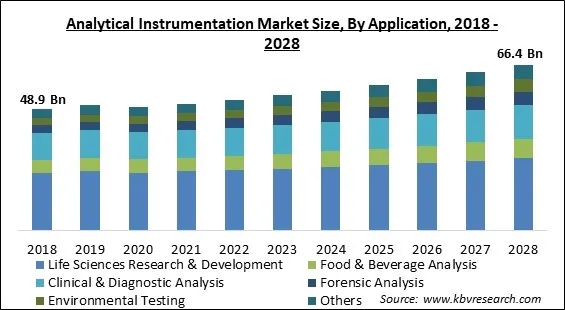
This is driven by increasing demand for advanced testing solutions across multiple industries. Rising adoption of precision diagnostics is further supporting market expansion by improving accuracy and efficiency in laboratory processes. Growing pharmaceutical research activities and continuous advancements in drug development are also contributing to higher demand for sophisticated laboratory technologies.
The Analytical Instrumentation Market has evolved from basic laboratory measurement tools into a sophisticated ecosystem of automated instruments, software platforms, services, and digitally connected analytical workflows. The market is increasingly shaped by demand for high precision, faster testing, regulatory compliance, and advanced data interpretation across pharmaceutical, biotechnology, clinical, food safety, environmental, forensic, and industrial applications.
Today, analytical instrumentation supports a broad range of functions including chemical analysis, biological testing, molecular characterization, process monitoring, quality assurance, contaminant detection, and clinical diagnostics. The adoption of AI-enabled analytics, laboratory automation, cloud-connected systems, and high-throughput instruments is strengthening market expansion by improving productivity, reproducibility, and decision-making across laboratories.
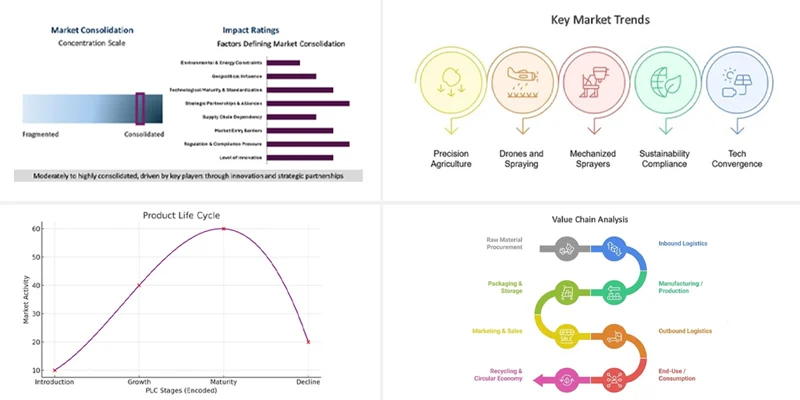

The global Analytical Instrumentation market is moderately consolidated, with the top ten companies accounting for approximately 89.16% of total market share, while the remaining 10.84% is held by other players. Thermo Fisher Scientific leads the market, supported by its broad portfolio across chromatography, mass spectrometry, spectroscopy, microscopy, molecular analysis, laboratory automation, software, services, and consumables.
Shimadzu, Waters, and Bruker form a competitive second tier with strong capabilities in chromatography, spectroscopy, mass spectrometry, thermal analysis, NMR, proteomics, and advanced scientific research instrumentation. Revvity, Illumina, HORIBA, and Metrohm further support market depth through diagnostics, genomics, spectroscopy, environmental analysis, titration, and process analytical systems.
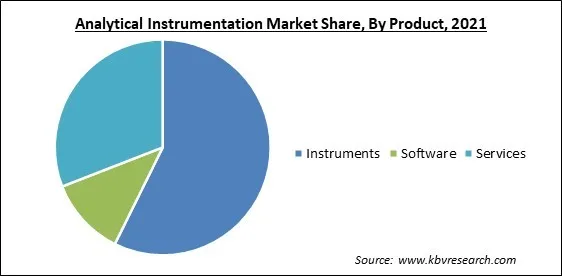
Based on product, the market is segmented into instruments, services, and software. The Instruments market dominated the Global Analytical Instrumentation Market by Product in 2025, and would continue to be a dominant market till 2033; thereby, achieving a market value of $52422.9 million by 2033, growing at a CAGR of 5.3 % during the forecast period. The services segment is expanding steadily as laboratories increasingly require maintenance, calibration, validation, training, consulting, and technical support to ensure instrument reliability and regulatory compliance.
Based on application, the market includes life sciences research & development, clinical & diagnostic analysis, food & beverage analysis, environmental testing, forensic analysis, and other applications. The Life Sciences Research & Development market dominated the Global Analytical Instrumentation Market by Application in 2025, and would continue to be a dominant market till 2033; thereby, achieving a market value of $36592.7 million by 2033, growing at a CAGR of 4.7 % during the forecast period. Clinical & diagnostic analysis continues to grow as healthcare institutions and diagnostic laboratories adopt advanced testing systems for disease detection, biomarker analysis, and precision diagnostics.
Based on technology, the market is segmented into Chromatography, Polymerase Chain Reaction (PCR), Spectroscopy, Microscopy, Sequencing, Flow Cytometry, Microarray, and Other Technology. The Chromatography market dominated the Global Analytical Instrumentation Market by Technology in 2025, and would continue to be a dominant market till 2033; thereby, achieving a market value of $18779.8 million by 2033, growing at a CAGR of 4.6 % during the forecast period. PCR technology is witnessing strong adoption due to increasing demand for molecular diagnostics, infectious disease detection, genetic analysis, and personalized medicine applications.
Region-wise, the Analytical Instrumentation Market is analyzed across North America, Europe, Asia Pacific, and LAMEA. The North America market dominated the Global Analytical Instrumentation Market by Region in 2025, and would continue to be a dominant market till 2033; thereby, achieving a market value of $33316.6 million by 2033, growing at a CAGR of 5.2 % during the forecast period. The Asia Pacific market is expected to witness a CAGR of 6.3% during (2026 - 2033). Additionally, The Europe market is expected to witness a CAGR of 5.4% during (2026 - 2033).
Europe remains a major market due to strong regulatory frameworks, pharmaceutical research, food safety testing, environmental monitoring, and clinical diagnostics adoption. Asia Pacific is witnessing strong momentum driven by expanding healthcare infrastructure, pharmaceutical manufacturing, biotechnology research, and increasing laboratory modernization. LAMEA is gradually expanding with rising adoption of laboratory technologies across healthcare, pharmaceuticals, environmental monitoring, and industrial testing.
The market is highly innovation-driven, with competition centered on analytical accuracy, sensitivity, automation, software integration, regulatory compliance, instrument reliability, and after-sales service quality. Vendors are differentiating through AI-enabled workflows, smart laboratory platforms, high-throughput instruments, and sustainability-focused product development.
Strategic partnerships, acquisitions, and digital ecosystem expansion are becoming important competitive tools as companies seek to offer integrated laboratory solutions rather than standalone instruments. Regional service networks and localized support capabilities are also increasingly important for customer retention and market penetration.
By Product
By Application
By Technology
By Geography
Expected to reach USD 88.2 billion by 2033, growing at a 5.7% CAGR during the forecast period.
Instruments lead, projected to achieve a market value of USD 52.42 billion by 2033.
Top companies include Agilent Technologies, Thermo Fisher Scientific, and PerkinElmer.
Life Sciences Research & Development dominates, expected to reach USD 36.59 billion by 2033.
North America leads with a projected market value of USD 33.32 billion by 2033.
Chromatography leads, expected to achieve a market value of USD 18.78 billion by 2033.
Our team of dedicated experts can provide you with attractive expansion opportunities for your business.








 Unique Offerings