“Global Visual Cloud Market to reach a market value of USD 300.78 Billion by 2032 growing at a CAGR of 12.3%”
The Global Visual Cloud Market size is estimated at $133.57 billion in 2025 and is expected to reach $300.78 billion by 2032, rising at a market growth of 12.3% CAGR during the forecast period (2025-2032). The strong growth of this market is driven by rising demand for cloud-based video analytics, remote monitoring, AI-powered imaging, and real-time visualization across industries such as smart cities, healthcare, media, and security. Rapid cloud adoption, 5G deployment, and AI integration justify the projected market expansion and sustained.
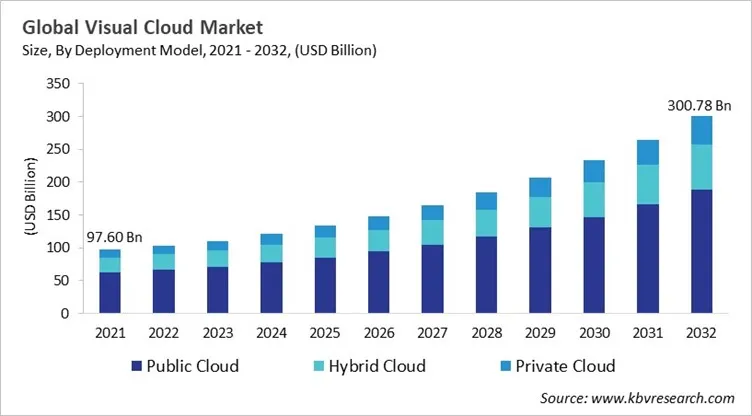
Visual cloud refers to cloud architectures and services purpose-built to render, deliver, render, and analyze visual data like interactive graphics, video streams, and immersive 3D content over the internet. Major cloud vendors such as Google Cloud, Microsoft Azure, and AWS have made GPU-surged visual processing largely accessible, allowing organizations to offload compute-intensive workloads to scalable cloud platforms. This shift supports applications like cloud gaming, streaming, remote rendering, AR/VR, and AI-driven visual analytics, offering greater efficiency, flexibility, and global reach. The development of GPU-optimized cloud instances supported by partnerships with hardware leaders such as NVIDIA has been a critical enabler, enabling real-time rendering and advanced video processing to operate reliably.
The visual cloud market has expanded along with advancement in high performance cloud infrastructure, generative AI, and network connectivity. Hyperscalers are largely investing in AI-optimized servers, specialized processors, and integrated software stacks to support real-time simulation, video, and visual data workloads. The advent of 5G, edge computing, fiber networks, and high-speed multi-cloud connectivity has reduced latency, thereby making cloud-based experiences viable for time-sensitive use cases. The visual cloud has developed from basic compute and strong services into a high-value segment of cloud ecosystem, supporting high-quality visual experiences across sectors like enterprise collaboration, entertainment, healthcare, and industrial applications while allowing rapid innovation.
The major strategies followed by the market participants are Partnerships as the key developmental strategy to keep pace with the changing demands of end users. For instance, In February, 2025, Google LLC announced the partnership with Amdocs, a Telecommunications company to transform 5G network operations using AI. Amdocs’ new Network AIOps solution, powered by Google Cloud's Vertex AI and BigQuery, automates network management, enhances service reliability, and improves customer experiences by using AI-driven insights, predictive maintenance, and automated workflows. Additionally, In January, 2025, Microsoft Corporation teamed up with Pearson, an education company to address the AI skills gap by providing AI-powered learning and skilling solutions. The collaboration will leverage Microsoft’s Azure and AI tools to enhance Pearson's learning and assessment services, enabling global enterprises to reskill workers and build AI proficiency, driving career growth.
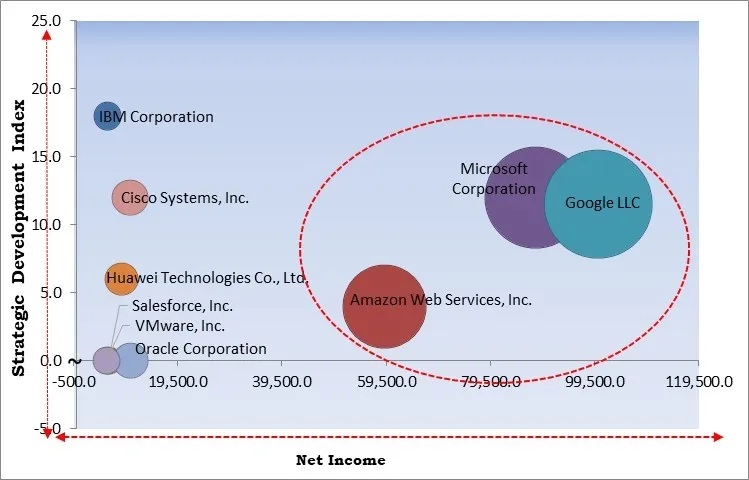
Based on the Analysis presented in the KBV Cardinal matrix; Google LLC, Microsoft Corporation, and Amazon Web Services, Inc. are the forerunners in the Visual Cloud Market. Companies such as Oracle Corporation, Cisco Systems, Inc., and Huawei Technologies Co., Ltd. are some of the key innovators in Visual Cloud Market. In March, 2025, Microsoft Corporation teamed up with the Government of Kuwait to establish an AI-powered Azure Region, accelerating digital transformation and AI adoption. The collaboration aims to drive economic growth, enhance public services, and foster AI innovation across industries. It includes initiatives in cloud transformation, cybersecurity, AI literacy, and workforce development.
The COVID-19 pandemic had a very good effect on the visual cloud market because it made people work from home, work together online, and use online services much more quickly. More businesses started using cloud-based video processing, storage, and streaming solutions to keep their operations going and hold virtual meetings and training. The education sector greatly increased demand by using e-learning and virtual classrooms a lot. Telemedicine and remote diagnostics sped up the adoption of healthcare, while lockdowns made people watch more digital entertainment. All these things together increased investment in cloud infrastructure and supported long-term growth in the visual cloud market.

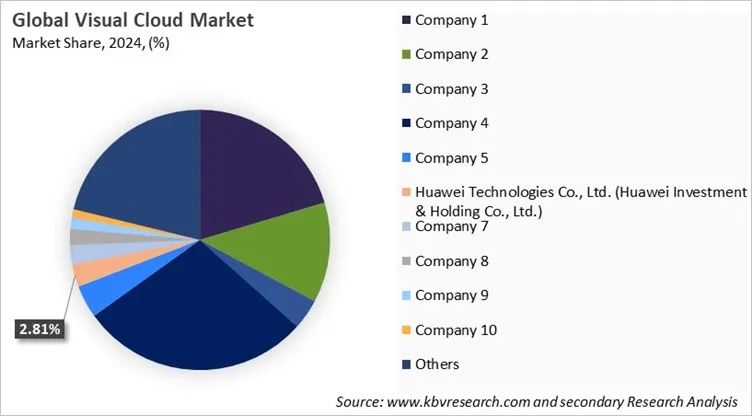
The leading players in the market are competing with diverse innovative offerings to remain competitive in the market. The above illustration shows the percentage of revenue shared by some of the leading companies in the market. The leading players of the market are adopting various strategies to cater demand coming from the different industries. The key developmental strategies in the market are Acquisitions, and Partnerships & Collaborations.
Free Valuable Insights: Visual Cloud Market size to reach 300.78 Billion by 2032
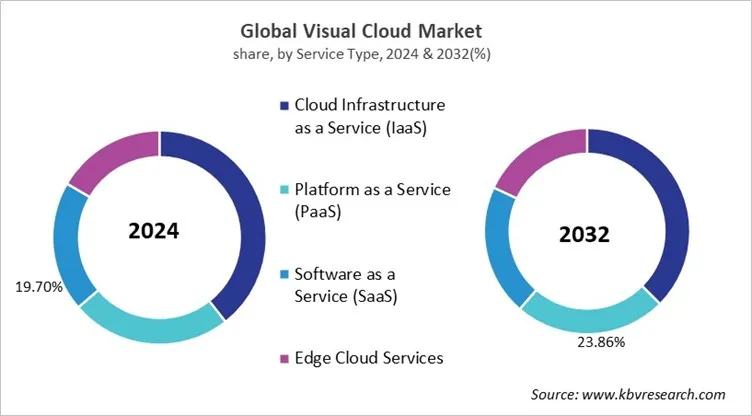
Based on Service Type, the Visual Cloud Market is segmented into Cloud Infrastructure as a Service (IaaS), Platform as a Service (PaaS), Software as a Service (SaaS), and Edge Cloud Services. The platform as a service segment provides a comprehensive development and deployment environment tailored for building, testing, and managing visual cloud applications. This service type abstracts much of the underlying infrastructure complexity, allowing developers to focus on application logic, visual processing workflows, and user experience design.
Based on End User Industry, the Visual Cloud Market is segmented into Media & Entertainment, Gaming, Retail & E-Commerce, Manufacturing, Healthcare, Education, and Other End Use. The Gaming segment attained 17% revenue share in the market in 2024. The gaming end user segment extensively utilizes visual cloud technologies to support high-performance graphics rendering, real-time streaming, and interactive gameplay experiences. Visual cloud platforms enable game developers and service providers to offload computationally intensive rendering tasks to cloud-based GPUs, allowing users to access complex games on a wide range of devices.
Region-wise, the Visual Cloud Market is analyzed across North America, Europe, Asia Pacific, and LAMEA. The North America segment recorded 39% revenue share in the market in 2024. In the North America and Europe region, the visual cloud market is anticipated to grow at a significant rate. This is because of early adoption of high-performance services, advanced cloud infrastructure, and robust presence of hyperscalers such as Microsoft Azure, Google Cloud, and AWS. Canada and the US are driving demand through accelerated usage of cloud gaming, AR/VR applications, OTT streaming platforms, and enterprise video analytics, driven by edge computing investments, high 5G penetration, and strong R&D investment. Furthermore, the video cloud market is expected to witness expansion during the projection period. The market expansion is supported by strict data privacy regulations such as GDPR, digital transformation initiatives, and rising cloud adoption in finance, media, and industrial applications. European vendors balance innovation with regulatory compliance to support the visual cloud market. The visual cloud market is estimated to experience prominent growth in the Asia Pacific and LAMEA region. The visual cloud market is driven by massive internet and smartphone penetration, rapid digitization, and government initiatives like India’s Digital India, and extensive 5G rollouts in Japan, China, and South Korea. This growth is particularly supported by streaming, mobile video consumption, cloud gaming, and AI-driven visual services as consumers and organization raise demand for richer digital experience. Furthermore, LAMEA visual cloud market is predicted to capture substantial growth. This is because of rising digital inclusion, expanding cloud infrastructure investments, and regulatory modernization. Also, the market is driven by cloud modernisation initiatives, and public sector digitization.
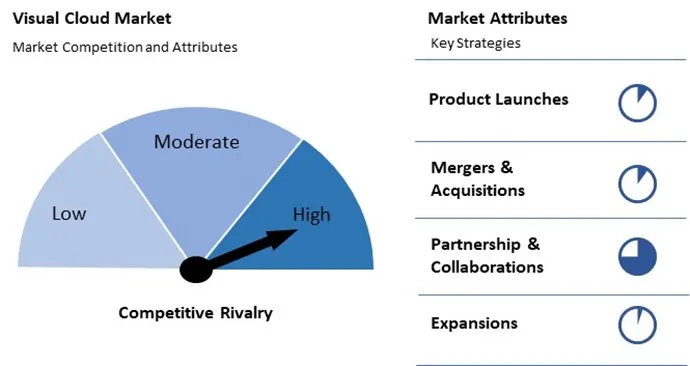
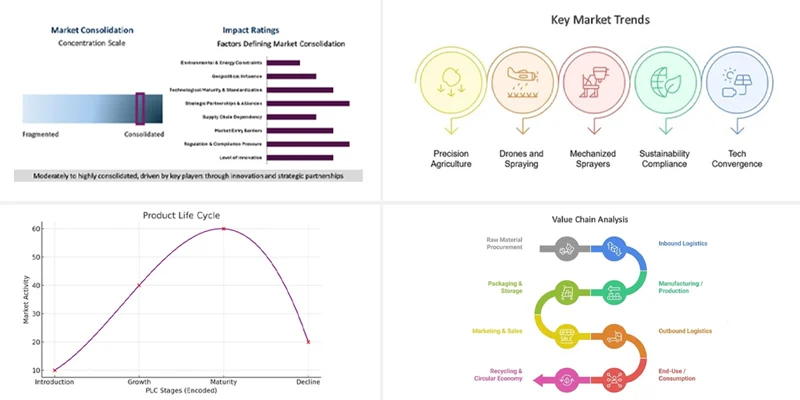
The visual cloud market is highly competitive and moderately consolidated, with competition driven primarily by technological innovation rather than pricing. Providers compete based on platform scalability, GPU and AI integration, low-latency performance, and the ability to support complex visual workloads such as video analytics, rendering, and immersive applications. Strong ecosystems, developer support, and industry-specific solutions are key differentiators. High infrastructure investment requirements and regulatory compliance needs create significant entry barriers, reinforcing the dominance of established platforms.
| Report Attribute | Details |
|---|---|
| Market size value in 2025 | USD 133.57 Billion |
| Market size forecast in 2032 | USD 300.78 Billion |
| Base Year | 2024 |
| Historical Period | 2021 to 2023 |
| Forecast Period | 2025 to 2032 |
| Revenue Growth Rate | CAGR of 12.3% from 2025 to 2032 |
| Number of Pages | 670 |
| Number of Tables | 518 |
| Report coverage | Market Trends, Revenue Estimation and Forecast, Segmentation Analysis, Regional and Country Breakdown, Competitive Landscape, Market Share Analysis, Porter’s 5 Forces Analysis, Company Profiling, Companies Strategic Developments, SWOT Analysis, Winning Imperatives |
| Segments covered | Deployment Model, Application, Service Type, End User Industry, Region |
| Country scope |
|
| Companies Included | Microsoft Corporation, Google LLC (Alphabet Inc.), IBM Corporation, Amazon Web Services, Inc. (Amazon.com, Inc.), Oracle Corporation, Huawei Technologies Co., Ltd. (Huawei Investment & Holding Co., Ltd.), VMware, Inc. (Broadcom Inc.), Cisco Systems, Inc., Salesforce, Inc. and Rackspace Technology, Inc. |
By Deployment Model
By Application
By Service Type
By End User Industry
By Geography
The market size is projected to reach USD 300.78 Billion by 2032.
The visual cloud market is projected to grow at a CAGR of 12.3% between 2025 and 2032.
Digital media streaming and OTT content delivery, combined with AI, machine learning, and real-time analytics integration, are driving market growth.
Microsoft Corporation, Google LLC (Alphabet Inc.), IBM Corporation, Amazon Web Services, Inc. (Amazon.com, Inc.), Oracle Corporation, Huawei Technologies Co., Ltd. (Huawei Investment & Holding Co., Ltd.), VMware, Inc. (Broadcom Inc.), Cisco Systems, Inc., Salesforce, Inc. and Rackspace Technology, Inc.
The Cloud Infrastructure as a Service (IaaS) segment led the Global Visual Cloud Market by Service Type in 2024; thereby, achieving a market value of $112.74 billion by 2032.
The North America region dominated the Global Visual Cloud Market by Region in 2024, and would continue to be a dominant market till 2032; thereby, achieving a market value of $111.24 billion by 2032.
Our team of dedicated experts can provide you with attractive expansion opportunities for your business.












 Unique Offerings