“Global Virtualized Evolved Packet Core (vEPC) Market to reach a market value of USD 45.29 Billion by 2032 growing at a CAGR of 25.7%”
The Global Virtualized Evolved Packet Core (vEPC) Market size is expected to reach $45.29 billion by 2032, rising at a market growth of 25.7% CAGR during the forecast period.
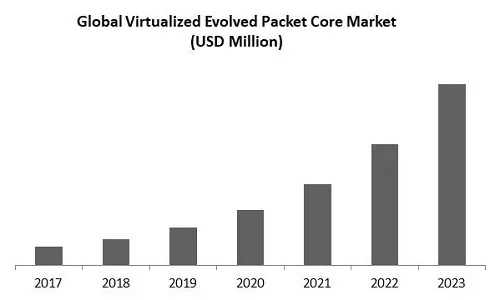
The virtualized evolved packet core market has developed as a core component of modern telecom networks, allowing the transition from hardware-based EPC systems to cloud-driven, flexible architectures that support LTE-advanced, LTE, and early 5G deployments. The development began with the adoption of NFV, enabling key functions like PGW, MME, SGW, and PCRF to run on commercial servers rather than proprietary equipment. This transition enhanced scalability, reduced costs, and also provided operators with the agility to manage increasing data traffic driven by IoT expansion, broadband growth, and the rising use of video and cloud services. Governments’ digital infrastructure is developing compact solutions for smart infrastructure, industrial automation, enterprise connectivity, and smart infrastructure. With operators shifting towards 5G, vEPC is becoming a hybrid solution allowing non-standalone 5G rollouts while maintaining essential LTE functionalities.
The virtualized evolved packet core market continues to develop through trends like containerization, cloud-native architectures, edge-integrated cores, and private LTE/5G deployments that support low-latency applications. Leading market players are emphasizing cloud transformation, partnerships with global cloud providers, and R&D investments to improve automation, orchestration, and network scaling capabilities. They also adopt open standards to assure interoperability with telecom carriers and governments for large-scale connectivity projects. The competition in the market remains intense with participation from cloud companies, telecom OEMs, and software defined networking vendors.
The COVID-19 pandemic had a positive effect on the maca extract market because it made people more interested in their health, immunity, and overall well-being. People became more aware of preventive healthcare, which led to more people using natural supplements to boost their energy, manage stress, and feel more alive. At the same time, widespread lockdowns led to a rapid rise in e-commerce, making maca-based products much easier to find and buy. Manufacturers responded by creating new formulas and advertising functional benefits that fit with the needs of people living during the pandemic. All of these things together made the market more in demand and created a long-lasting, health-focused way of consuming that still helps the market grow after the pandemic. Thus, the COVID-19 pandemic had a Positive impact on the market.

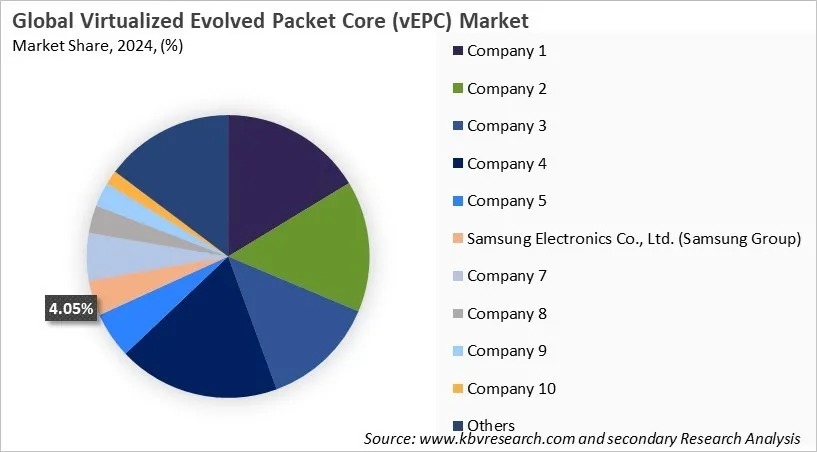
The leading players in the market are competing with diverse innovative offerings to remain competitive in the market. The above illustration shows the percentage of revenue shared by some of the leading companies in the market. The leading players of the market are adopting various strategies in order to cater demand coming from the different industries. The key developmental strategies in the market are Acquisitions, and Partnerships & Collaborations.
Based on End User, the market is segmented into Telecom Operators, Enterprises & Industrial Applications, MVNE / MVNOs, Government & Public Safety, and Cloud Service Providers. The Enterprises & Industrial Applications segment attained 14.01% revenue share in the market in 2024. The enterprises and industrial applications segment reflects a growing adoption landscape for vEPC, particularly as private networks, mission-critical automation, and edge-driven connectivity become increasingly important. Many industries are moving toward solutions that enable secure, low-latency, and high-capacity network performance, which supports continuous data processing and machine-level communication for digital operations.
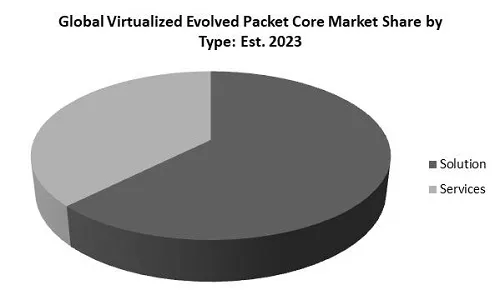
Based on Deployment Mode, the market is segmented into Cloud-based, On-premise, and Hybrid. The On-premise segment attained 28.65% revenue share in the market in 2024. The on-premise deployment mode remains significant due to its role in secure, private, and direct infrastructure control, particularly suited for mission-critical network operations that require closed environments and strict regulatory compliance. This deployment structure enables organizations to maintain full governance over data flow, network configuration, and security layers while reducing reliance on third-party hosting environments.
Free Valuable Insights: Virtualized Evolved Packet Core (vEPC) Market size to reach USD 45.29 Billion by 2032
Region-wise, the Virtualized Evolved Packet Core (vEPC) Market is analyzed across North America, Europe, Asia Pacific, and LAMEA. The Asia Pacific segment recorded 36.73% revenue share in the market in 2024. The virtualized evolved packet core market is estimated to experience substantial growth in the North America and Europe region. The market is driven by early 5G deployments, advanced telecom infrastructure, and strong government support for digital transformation. Vendors in these regions have largely adopted containerized vEPC and cloud-native solutions to reduce operational costs, enhance network flexibility, and support high-bandwidth applications like IoT, enterprise connectivity, and video streaming. OEMs collaborate with leading cloud vendors to offer private and hybrid LTE solutions, while regulators encourage innovation through smart city initiatives, spectrum allocation, and national broadband programs. The presence of technology startups and telecom equipment manufacturers propels competition, emphasizing automation, high performance, and integration with emerging 5G networks.
In the Asia Pacific and LAMEA regions, the virtualized evolved packet core market is witnessing significant growth over the projection period. The market is driven by increasing mobile broadband adoption, rising demand for private LTE and enterprise solutions, and expanding LTE networks. Governments in nations like China, South Africa, India, and China are supporting telecom modernization through digital inclusion initiatives, smart city projects, and infrastructure investments which propel vEPC integration. Operators emphasized scalable, cost-efficient, and modular virtualized cores to meet rising data traffic and industrial connectivity requirements. OEMs offer edge-enabled and compact vEPC solutions suitable for developing markets, allowing low-latency applications and faster 5G readiness. The market competition is driven by multinational OEMs, regional telecom operators, and software providers delivering cloud-integrated, flexible, and regionally compliant solutions.
| Report Attribute | Details |
|---|---|
| Market size value in 2025 | USD 9.13 Billion |
| Market size forecast in 2032 | USD 45.29 Billion |
| Base Year | 2024 |
| Historical Period | 2021 to 2023 |
| Forecast Period | 2025 to 2032 |
| Revenue Growth Rate | CAGR of 25.7% from 2025 to 2032 |
| Number of Pages | 559 |
| Number of Tables | 401 |
| Report coverage | Market Trends, Revenue Estimation and Forecast, Segmentation Analysis, Regional and Country Breakdown, Market Share Analysis, Porter’s 5 Forces Analysis, Company Profiling, Companies Strategic Developments, SWOT Analysis, Winning Imperatives |
| Segments covered | End User, Deployment Mode, Application, Region |
| Country scope |
|
| Companies Included | Nokia Corporation, Ericsson AB, Cisco Systems, Inc., Huawei Technologies Co., Ltd. (Huawei Investment & Holding Co., Ltd.), ZTE Corporation, Samsung Electronics Co., Ltd. (Samsung Group), NEC Corporation, Tech Mahindra Limited, Intel Corporation, and IBM Corporation |
By End User
By Deployment Mode
By Application
By Geography
The market size is projected to reach USD 45.29 billion by 2032.
The virtualized evolved packet core (vEPC) market is projected to grow at a CAGR of 25.7% between 2025 and 2032.
Rapid global shift toward 5G deployment and network modernization, driving demand for scalable, agile, and cost-efficient networks.
Nokia Corporation, Ericsson AB, Cisco Systems, Inc., Huawei Technologies Co., Ltd. (Huawei Investment & Holding Co., Ltd.), ZTE Corporation, Samsung Electronics Co., Ltd. (Samsung Group), NEC Corporation, Tech Mahindra Limited, Intel Corporation, and IBM Corporation
The Cloud-based segment led the maximum revenue in the Global Virtualized Evolved Packet Core (vEPC) Market by Deployment Mode in 2024, thereby, achieving a market value of $24.2 billion by 2032.
The Asia Pacific region dominated the Global Virtualized Evolved Packet Core (vEPC) Market by Region in 2024, and would continue to be a dominant market till 2032; thereby, achieving a market value of $17.2 billion by 2032.
Our team of dedicated experts can provide you with attractive expansion opportunities for your business.







 Unique Offerings