“Global Tea Extract Market to reach a market value of USD 4.62 Billion by 2032 growing at a CAGR of 7.5%”
The Global Tea Extract Market size is expected to reach $4.62 billion by 2032, rising at a market growth of 7.5% CAGR during the forecast period.
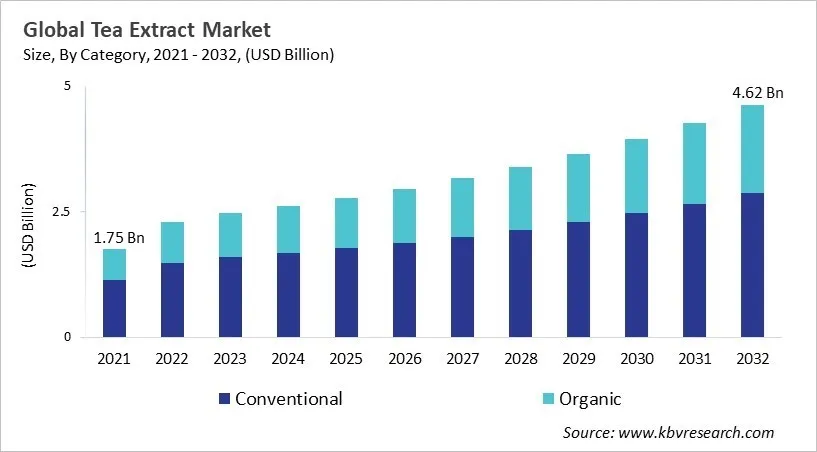
The tea extract market has evolved from conventional tea plantation into a large-scale industry that deals in beverages, nutraceuticals, cosmetics, and functional foods. Advancements in the extraction methods facilitated producers to separate tea’s bioactive compounds, producing concentrated and unique formats. Furthermore, growing recognition of health benefit like anti-inflammatory properties and antioxidants, with the government support and multinational funding, shifted tea extracts into premium good. The market has transformed toward traceability, sustainability, and Innovation in product formats, along with consumer demand for natural, functional ingredients, has led to widespread adoption in many fields.
Some important trends are a focus on health and wellness, a move into uses other than traditional tea drinks, and a push for organic farming and sustainability. To get into new markets, companies are coming up with new ways to deliver goods, putting money into research and development, and moving to new locations. Product innovation, supply chain integration, and mergers or acquisitions to reach more people are all part of competitive strategies. COVID-19, on the other hand, had a big effect on the market. It broke down supply chains, caused labor shortages, lowered demand in foodservice channels, and put a strain on companies' finances, which slowed down expansions and new product launches, which hurt market growth.
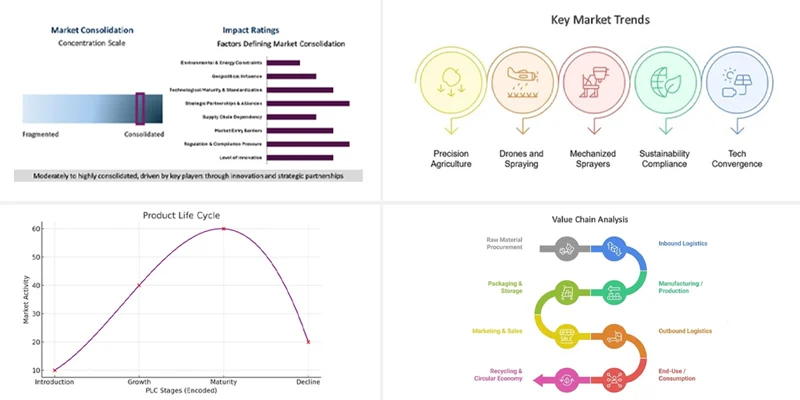

The COVID-19 pandemic significantly disrupted the global tea extract market by impairing supply chains, restricting the movement of goods, and causing border closures, which led to delays in raw material sourcing. Key end-use sectors, including foodservice, cafés, and restaurants, experienced prolonged closures, resulting in a sharp decline in demand, especially for premium and specialty tea extract products. Labor shortages due to health concerns and social distancing further constrained tea harvesting and processing capacities, reducing overall production. Additionally, increased operational costs related to safety protocols and logistics, coupled with declining revenues, pressured profit margins and forced many companies to defer investments and product launches, ultimately impeding market growth. Thus, the COVID-19 pandemic had negative impact on the market.
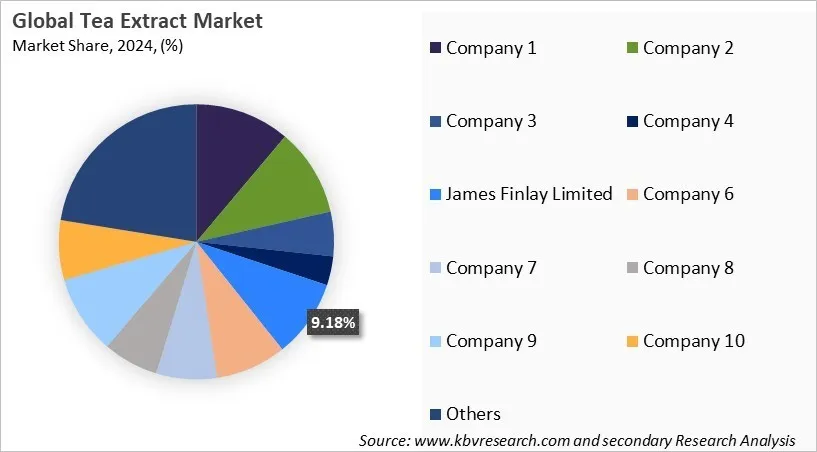
The leading players in the market are competing with diverse innovative offerings to remain competitive in the market. The above illustration shows the percentage of revenue shared by some of the leading companies in the market. The leading players of the market are adopting various strategies in order to cater demand coming from the different industries. The key developmental strategies in the market are Acquisitions, and Partnerships & Collaborations.
Based on Category, the market is segmented into Conventional and Organic. The organic segment attained 36% revenue share in the tea extract market in 2024. This segment is driven by growing consumer awareness of health, wellness, and sustainable sourcing practices. Organic tea extracts are often favored by health-conscious individuals who seek products free from synthetic chemicals and pesticides. The rising demand for clean-label and environmentally friendly products has given this segment significant momentum, with increasing applications in premium beverages, dietary supplements, and natural health products.
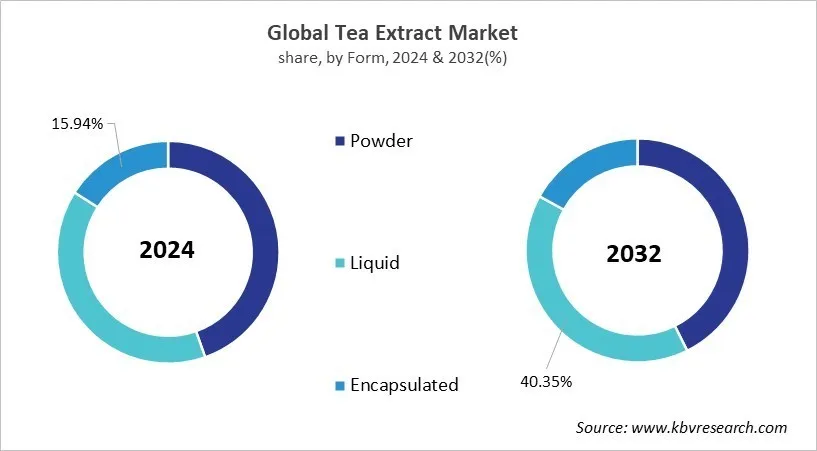
Based on Form, the market is segmented into Powder, Liquid, and Encapsulated. The liquid segment recorded 39% revenue share in the tea extract market in 2024. This type is valued for its quick solubility and effectiveness in providing a rich, authentic tea flavor. It is extensively used in ready-to-drink beverages, syrups, and other liquid-based applications. The liquid form appeals to industries seeking a faster production process and a product that closely replicates the natural tea experience, thereby making it a strong choice for premium and on-the-go beverage categories. Its adaptability to modern beverage trends makes it a crucial contributor to market growth.
Based on Type, the market is segmented into Green Tea Extracts, Black Tea Extracts, Oolong Tea Extracts, and Other Type. The black tea extracts segment recorded 31% revenue share in the tea extract market in 2024. Another key segment is black tea extracts, which are known for their robust flavor and widespread use in traditional tea beverages as well as in processed food products. Black tea extracts are commonly applied in ready-to-drink tea, bakery items, confectionery, and flavoring solutions due to their distinct taste profile. Their cultural popularity and established consumer base have enabled them to maintain consistent demand.
Free Valuable Insights: Global Tea Extract Market size to reach USD 4.62 Billion by 2032
Region-wise, the tea extract market is analyzed across North America, Europe, Asia Pacific, and LAMEA. The Asia Pacific segment gained 41% revenue share in the tea extract market in 2024. The tea extract market is growing in North America as more and more people want functional drinks, dietary supplements, and clean-label foods that are good for their health. The US is the leader in the region, with more and more uses for ready-to-drink teas, sports nutrition, and cosmetics with antioxidants. Europe has a long history of drinking tea, and this has led to a focus on organic, sustainable, and traceable sourcing, which has increased demand for nutraceuticals and personal care products. Germany, the UK, and France are at the top of the list. These countries have strict rules and a strong preference among consumers for natural products, which helps the market grow steadily.
Asia-Pacific is the biggest market for tea extracts because China, India, and Japan are all major producers. At the same time, demand for instant powders, nutraceuticals, and functional blends is growing in the region. Rapid urbanization and rising health awareness are still driving innovation and the variety of products in the region. The market is still new in LAMEA, except for Mexico, but it has a lot of potential, especially in the Middle East and Africa where natural and herbal products are becoming more popular. Latin American countries outside of Mexico are slowly starting to use tea extracts in foods and drinks that are good for your health. This makes the region a good place for growth.
| Report Attribute | Details |
|---|---|
| Market size value in 2025 | USD 2.78 Billion |
| Market size forecast in 2032 | USD 4.62 Billion |
| Base Year | 2024 |
| Historical Period | 2021 to 2023 |
| Forecast Period | 2025 to 2032 |
| Revenue Growth Rate | CAGR of 7.5% from 2025 to 2032 |
| Number of Pages | 559 |
| Number of Tables | 551 |
| Report coverage | Market Trends, Revenue Estimation and Forecast, Segmentation Analysis, Regional and Country Breakdown, Market Share Analysis, Porter’s 5 Forces Analysis, Company Profiling, Companies Strategic Developments, SWOT Analysis, Winning Imperatives |
| Segments covered | Category, Form, Type, Application, Technology, Region |
| Country scope |
|
| Companies Included | Synthite Industries Ltd., MartinBauer, Kemin Industries, Inc., Tata Consumer Products Limited (Tata Group), James Finlay Limited, Archer Daniels Midland Company, AVT Natural Products Ltd, Indena S.p.A., Taiyo International (Taiyo Kagaku Corporation), and Dohler GmbH |
By Category
By Form
By Type
By Application
By Technology
By Geography
This Market size is expected to reach USD 4.62 Billion billion by 2032.
The tea extract market is projected to grow at a CAGR of 7.5% between 2025 and 2032.
Rising health and wellness trends fueling the expansion of functional foods and beverages.
Synthite Industries Ltd., MartinBauer, Kemin Industries, Inc., Tata Consumer Products Limited (Tata Group), James Finlay Limited, Archer Daniels Midland Company, AVT Natural Products Ltd, Indena S.p.A., Taiyo International (Taiyo Kagaku Corporation), and Dohler GmbH
The Powder segment captured the maximum revenue in the Global Tea Extract Market by Form in 2024, thereby, achieving a market value of $2.0 billion by 2032.
The Asia Pacific region dominated the Global Tea Extract Market by Region in 2024, and would continue to be a dominant market till 2032; thereby, achieving a market value of $2.0 billion by 2032.
Our team of dedicated experts can provide you with attractive expansion opportunities for your business.












 Unique Offerings