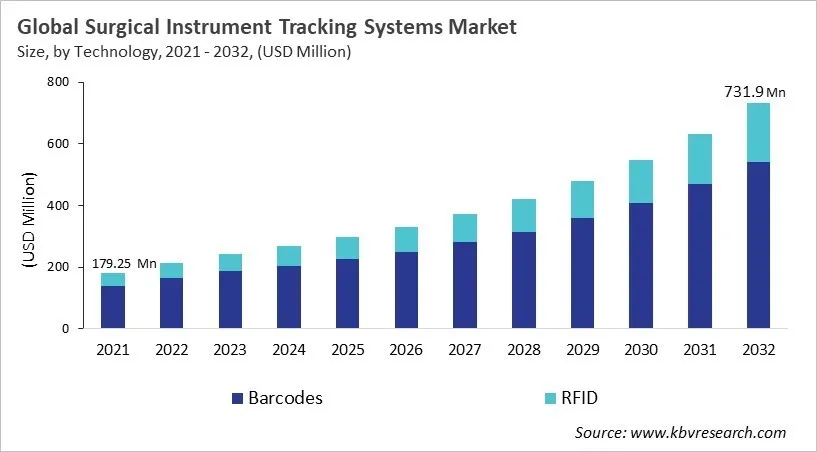
“Global Surgical Instrument Tracking Systems Market to reach a market value of USD 731.90 Million by 2032 growing at a CAGR of 13.7%”
The Global Surgical Instrument Tracking Systems Market size is expected to reach $731.9 million by 2032, rising to a market growth of 13.7% CAGR during the forecast period.
The barcode element is evolving as healthcare systems become more digitally integrated. The transition from 1D to 2D barcodes, like DataMatrix and QR codes, is a notable trend. Instead of just using trays or kits, these codes may store a lot more data in a smaller space, allowing you to keep track of every instrument. The use of barcode-based traceability solutions is being encouraged by regulatory bodies such as the European Union and the U.S. FDA, which require adherence to Unique Device Identification (UDI).
The global supply chain for surgical instrument tracking systems experienced significant issues because of the COVID-19 pandemic. Important components like RFID tags, barcode labels, scanners, and software modules were produced and delivered more slowly because of lockdowns and other restrictions in manufacturing hubs. This slowed market growth by making it more difficult to promptly install and use tracking systems in surgical centres and hospitals. To concentrate on urgent COVID-19 cases and reduce the risk of virus transmission, hospitals worldwide postpone elective surgeries. As a result, the demand for surgical instruments and the systems that monitor them fell precipitously. Instead of investing in new tracking technologies, healthcare providers now fund respiratory care equipment and emergency supplies. Thus, the COVID-19 pandemic had a negative impact on the market.

The world is seeing a significant increase in operations due to the aging population, the rise in chronic illnesses, and the advancements in minimally invasive surgery. As per the International Society of Aesthetic Plastic Surgery, total surgical and non-surgical procedures increased by 3.4% in 2023, up to 34.9 million. The pressure on hospitals and surgical facilities to increase operational efficiency while maintaining patient safety and standards compliance is growing. Hospital-Acquired Infections (HAIs), which can occur when surgical instruments are not used or cleaned appropriately, are one of the primary challenges in these environments. As a result, there is an increasing demand for surgical tool monitoring systems worldwide. This is due to an increasing number of surgeries and the pressing need to prevent hospital-acquired infections.
Governments and regulatory bodies around the world are making it more difficult to monitor and hold medical devices accountable. Every piece of medical equipment, including surgical instruments, must have a Unique Device Identification (UDI) number issued by the US Food and Drug Administration (FDA). Surgical instruments must also be tracked and documented in an orderly manner, according to the European Union's Medical Device Regulation (EU MDR). Because of the increasing pressure from regulatory and certification frameworks to ensure traceability and accountability, healthcare institutions are implementing surgical tool tracking systems much more quickly.
The hardware (such as barcode scanners, RFID readers, and surgical tray tracking tools) and software that monitor and track surgical equipment from inventory and sterilisation to use in the operating room comprise surgical instrument tracking systems. Long-term advantages of these systems include facilitating surgeries, improving patient safety, and reducing the number of lost instruments. However, the initial cost of setting it up is a major obstacle.
Based on technology, the surgical instrument tracking systems market is characterized into barcodes and RFID. The RFID segment procured 24% revenue share in the surgical instrument tracking systems market in 2024. The RFID market is quickly gaining popularity, delivering increased capabilities for real-time tracking and better automation. You don't have to scan RFID tags directly in line of sight, which makes it faster to handle a lot of instruments. This technology makes things go more smoothly, assists with keeping track of supplies, and lowers the number of mistakes individuals make when getting ready for surgery and putting things back together after surgery.
| Category | Details |
|---|---|
| Use Case Title | Confidential |
| Date | 2025 |
| Entities Involved | Confidential |
| Objective | Enable real-time location and inventory tracking of surgical instruments using passive and active RFID tags in digitally connected OR environments. |
| Context and Background | RFID technology allows non-line-of-sight tracking of instruments, supporting automation, loss prevention, and usage analytics. It is increasingly deployed in high-end private hospitals and surgical centers aiming for smart OR transformation. |
| Description | Cleveland Clinic partnered with STANLEY Healthcare to implement RFID-tagged surgical tools across its cardiac and orthopedic ORs. Passive UHF RFID tags were embedded into instrument handles, while Terso cabinets enabled real-time stock management. The system auto-updated instrument usage, flagged missing tools, and synchronized with case schedules. |
| Key Capabilities Deployed |
|
| Regions Covered |
|
| Benefits |
|
| Source | Confidential |
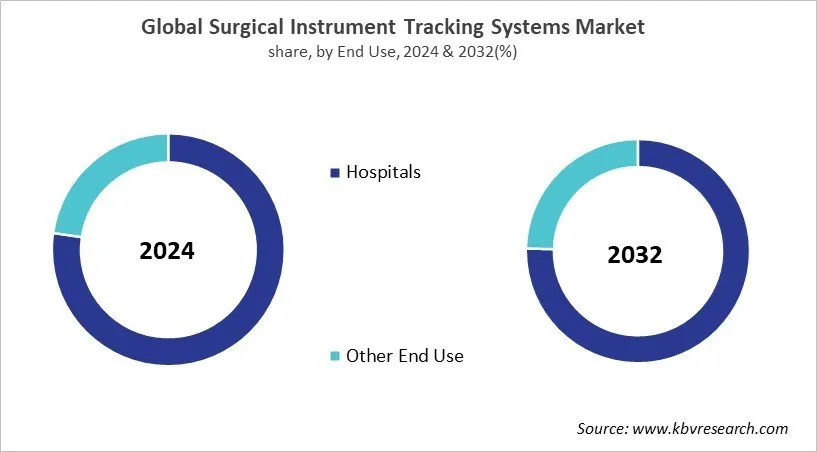
By end use, the surgical instrument tracking systems market is divided into hospitals and others. The others segment garnered 23% revenue share in the surgical instrument tracking systems market in 2024. Ambulatory surgical centres (ASCs), speciality clinics, dental surgery units, and educational institutions or research groups are all included in the "others" category. Although these facilities typically treat fewer patients than hospitals, safety, accuracy, and traceability are still crucial. Barcode-based systems are widely used by small businesses due to their low cost and ease of setup.
On the basis of product, the surgical instrument tracking systems market is classified into hardware, software, and services. The software segment recorded 39% revenue share in the surgical instrument tracking systems market in 2024. A significant component of the intelligent system that monitors surgical instruments is the software. These platforms give you the digital tools and data management systems you need to monitor the location, frequency, and maintenance of your tools. Sophisticated software helps with regulatory reporting, automatically tracks inventories, and connects to hospital IT systems.
Free Valuable Insights: Global Surgical Instrument Tracking Systems Market size to reach USD 731.90 Million by 2032
Region-wise, the market is analyzed across North America, Europe, Asia Pacific, and LAMEA. The North America segment recorded 36% revenue share in the surgical instrument tracking systems market in 2024. Due to its extensive surgical procedures, strict regulations, and advanced healthcare system, North America leads the market. In the United States and Canada, hospitals and surgical centres are spending a lot of money on tracking systems to reduce errors, make procedures safer, and comply with FDA and Joint Commission standards. Because there are strong IT networks and skilled personnel in this area, there are many RFID and integrated software systems.
| Report Attribute | Details |
|---|---|
| Market size value in 2024 | USD 268.39 Million |
| Market size forecast in 2032 | USD 731.90 Million |
| Base Year | 2024 |
| Historical Period | 2021 to 2023 |
| Forecast Period | 2025 to 2032 |
| Revenue Growth Rate | CAGR of 13.7% from 2025 to 2032 |
| Number of Pages | 305 |
| Number of Tables | 338 |
| Report coverage | Market Trends, Revenue Estimation and Forecast, Segmentation Analysis, Regional and Country Breakdown, Porter’s 5 Forces Analysis, Company Profiling, Companies Strategic Developments, SWOT Analysis, Winning Imperatives |
| Segments covered | Technology, End Use, Product, Region |
| Country scope |
|
| Companies Included | Fortive Corporation, Becton, Dickinson and Company, Xerafy Singapore Pte Ltd., Ternio Group, LLC, Getinge AB, Steris PLC, Censis Technologies, Inc., ScanCARE Pty Ltd, B. Braun Melsungen AG, and Integra Lifesciences Holdings Corporation |
By Technology
By End Use
By Product
By Geography
This Market size is expected to reach $731.9 million by 2032.
Rising Incidence Of Surgical Procedures And Hospital-Acquired Infections (Hais) are driving the Market in coming years, however, Lack Of Tangibility And Physical Inspection restraints the growth of the Market.
Fortive Corporation, Becton, Dickinson and Company, Xerafy Singapore Pte Ltd., Ternio Group, LLC, Getinge AB, Steris PLC, Censis Technologies, Inc., ScanCARE Pty Ltd, B. Braun Melsungen AG, and Integra Lifesciences Holdings Corporation
The expected CAGR of this Market is 13.7% from 2023 to 2032.
The Hospitals segment led the maximum revenue in the Market by End Use in 2024, thereby, achieving a market value of $551.7 million by 2032.
The North America region dominated the Market by Region in 2024, and would continue to be a dominant market till 2032; thereby, achieving a market value of $248.1 million by 2032.
Our team of dedicated experts can provide you with attractive expansion opportunities for your business.







 Unique Offerings